JUST IN: Scientists say AI has decoded communication patterns in mice, dolphins, apes, birds, whales, & cuttlefish — could eventually lead to humans communicating directly with animals.
Our internal data shows Claude is accelerating AI development—a possible path to recursive self-improvement, or AI autonomously building a more capable successor.
It’s happening faster than we thought, and the implications deserve greater attention. https://t.co/OVVPJO7VQx
Pour ceux qui veulent voir du Beau :
Voici la plus haute cariatide de Paris !
Cet ange haut de 3 étages est sculpté d'après un dessin d'Auguste Émile Delange.
Vous pouvez la voir rue de Turbigo.
if you believe in scientific superintelligence in the life-sciences, and you also believe that china ascendency to biotech is worrying, *and* you also believe that the outsourcing of wet-lab work will continue: ‘cloud labs becoming a reality’ is one of the easiest logical conclusions
of course, the exact shape that a cloud lab takes is a bit less predictable. do they go all in on intelligence, and spread to every corner of wet-lab biology? or do they stay focused, building beachheads, establishing trust in it, and then moving onto the next? or something else entirely? there are good arguments for each, and most cloud labs companies are a gamble on a particular shape
the shape that @c_m_ponce has bet on in his company—Tetsuwan Scientific—is incredibly interesting, and one whose theory of change is something that only becomes obvious after long, drawn out conversations with Cristian: fix the translation layer, and you make it easier for *both* agents and humans to interact with the system. bizarrely good aesthetics for a biotech startup too
@StephanBon85802@LaurentOzon@CNEWS 1) Les musulmans convertis représentent une part importante des chrétiens en Iran. Ils sont particulièrement exposés à la répression (allant jusqu'à l'exécution s'ils sont découverts)
2) Les chrétiens historiques ne sont pas épargnés (études et métiers inaccessibles par exemple)
A male bee mates for less than 5 seconds in midair. The ejaculation is so explosive you can hear it pop from a few feet away. His body rips in half. He falls dead before hitting the ground. And he is one of the lucky males in the hive.
When a male bee, called a drone, chases down a queen mid-flight at speeds of 22 miles per hour, his entire reproductive organ turns inside out. The pressure required for this comes from nearly all the blood in his body, which rushes downward to force the organ outward like a spring. The semen fires into the queen with so much force it makes the audible pop. The organ then snaps off and stays lodged inside her like a cork. As he flips backward off her body, his abdomen rips open. The next drone waiting his turn has to physically yank out the dead male's cork before he can mate. The same thing then happens to him.
The queen does this 12 to 20 times in a single afternoon. She flies up to a spot in the sky that beekeepers call a drone congregation area. Picture an invisible meeting point about 50 to 130 feet above the ground where up to 11,000 male bees from as many as 240 different hives are hovering, waiting for her. These spots stay in the exact same locations year after year, sometimes for over a decade. No one fully understands how brand new drones, born only weeks earlier, find them.
By the end of her mating run, the queen has collected around 100 million sperm cells. She keeps only 5 to 6 million in a tiny internal storage organ that keeps them alive for years. From that supply, she uses just two sperm cells per egg for the rest of her life, laying up to 2,000 eggs a day for 2 to 7 years. After that one afternoon in the sky, she will never mate again.
A 2019 study from UC Riverside, the University of Copenhagen, and the University of Western Australia found that bee semen contains toxic proteins that temporarily blind the queen by interfering with how vision genes function in her brain. If she can't see well, she can't fly out again to mate with more males. Their semen also carries a separate protein that attacks and kills sperm cells from rival drones still inside her. The males keep competing long after every one of them is dead.
The 99.9% of drones who never get to mate have it worse. As autumn arrives, the female worker bees in the hive stop feeding their brothers, then drag them out of the entrance after biting off their wings. The drones can't fly back in. They starve or freeze in the grass within days. The colony raises a fresh batch of disposable males the next spring, and the whole cycle starts over.
🐔 Les poulets trouvent les mêmes visages "beaux" que nous.
Une étude publiée par Ghirlanda, Jansson et Enquist (Stockholm University, 2002) a entraîné des poulets à réagir à des visages humains.
Résultat troublant.
📊 Les poulets, exposés à différents visages, marquent une préférence statistique pour ceux que les étudiants humains jugent les plus attirants. La courbe de réponse animale est quasi superposable à la courbe humaine.
Conclusion des chercheurs : ces préférences ne viennent pas d'une "construction culturelle". Elles relèvent de propriétés générales du système nerveux, partagées bien au-delà de notre espèce.
💡 Pourquoi c'est intéressant politiquement ?
Parce qu'une grande partie du discours militant contemporain repose sur un postulat, jamais démontré, jamais discuté : tout serait "construit socialement". Le beau, le masculin, le féminin, les préférences, les hiérarchies de perception.
🎯Or, quand un poulet, dont la culture est, disons-le, limitée, partage nos hiérarchies esthétiques, l'hypothèse du "tout construit" s'effondre.
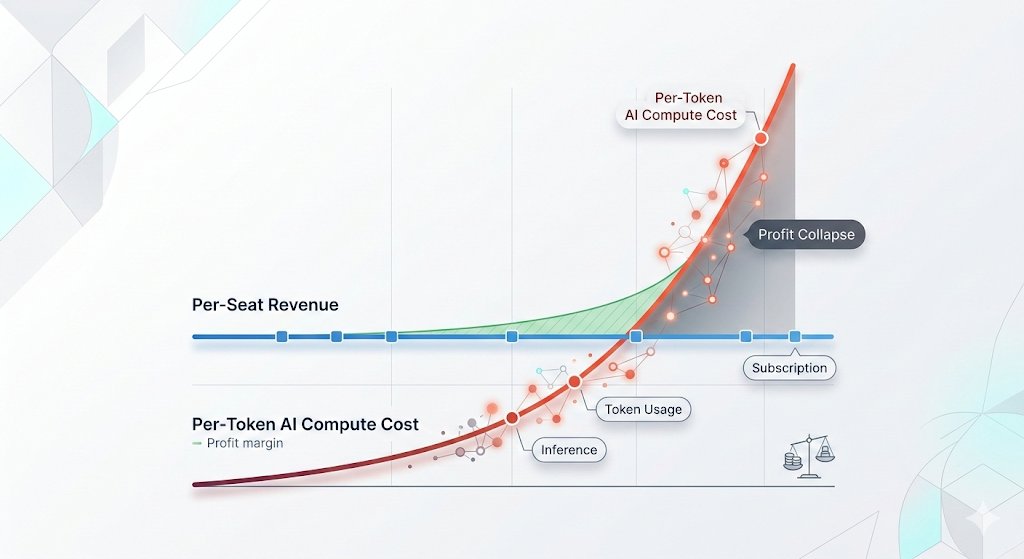
🦔Microsoft canceled its internal Claude Code licenses this week after token-based billing made the cost untenable, even for a company with effectively infinite cloud resources. Uber's CTO sent an internal memo warning the company burned through its entire 2026 AI budget in just four months. American AI software prices have jumped 20% to 37%, and GitHub (owned by Microsoft) is dropping flat-rate plans for usage-based billing across its products.
My Take
The AI subsidy era is ending in real time. The same company that put $13 billion into OpenAI and built the Azure infrastructure powering most of Anthropic's compute just looked at the bill from a competitor's coding tool and decided it was not worth paying. That is not a productivity failure on Anthropic's end. Token-based pricing is forcing every enterprise customer to confront the actual cost of running these models at scale, and the number turns out to be far higher than the flat-rate experiments suggested.
This ties directly to my Gemini Flash post yesterday. Anthropic, OpenAI, and Google all raised effective prices in the last six months. Enterprises that built workflows assuming AI costs would keep falling are now watching annual budgets evaporate in months. Two outcomes look likely from here. Either enterprises scale back AI usage to fit budgets, which slows the revenue ramp the labs need to justify their valuations ahead of IPOs, or the labs cut prices and absorb the losses, which makes the unit economics worse at exactly the wrong moment. Both paths land in the same place, the numbers stop working, and somebody has to take the writedown.
Hedgie🤗
Les retraités
(i) absorbent directement plus de 25% des dépenses publiques,
(ii) perçoivent plus de 15% supplémentaires de dépenses publiques via le remboursement des dépenses de santé,
(iii) sont responsables d’une dette publique dont les seuls intérêts coutent à peu près ce que l’impôt sur le revenu rapporte,
(iv) possèdent le gros de l’immobilier donc empêchent les actifs de se loger facilement et
(v) ont collectivement voté pour toutes les politiques mises en place depuis 1981…
mais ne seraient pas responsables des difficultés économiques et budgétaires du pays.