My 5 Golden Rules of Bitcoin:
1. Don’t Trust. Verify.
2. The Stack Stays Silent.
3. Not Your Keys, Not Your Coins.
4. Time in the Protocol Beats Timing the Market.
5. Stay Humble. Stack Sats.
Bitcoin isn't digital gold. It's not locked in by math. You can kill it.
The man who ran money at Peter Thiel's hedge fund came on to explain who's trying — and why the only thing protecting Bitcoin is the people who run nodes.
@mattkratter — Bitcoin University founder, former Clarium / Thiel-world macro trader, early Palantir investor — joins me to lay out the fight consuming Bitcoin right now in plain English: why he says Bitcoin Core has "gone rogue," the spam war over OP_RETURN and BIP-110 he calls Bitcoin's last stand, why consensus flows from culture and not code, who actually controls the network (hint: not the miners), and how to mine Bitcoin from home for about $10 a day.
Send this to anyone who thinks Bitcoin can't be stopped.
TIMESTAMPS:
00:00 Intro
01:00 Physics dropout to literature — Stanford & Berkeley
05:27 René Girard & meeting Peter Thiel
07:56 Becoming a trader: Thiel Macro → Clarium
12:43 The PayPal mafia, network effects & the dot-com bottom
20:23 Global macro at Clarium & the 2003 housing-blowup call
24:08 Napster, PayPal & the "new world currency"
28:32 Government as the ultimate customer — Palantir & the CIA (In-Q-Tel)
36:00 Deep-state roots — is Peter Thiel captured?
49:32 Culture is upstream of consensus
57:00 Bitcoin isn't magic — nodes, immutability & the spam risk
1:01:42 Why spam is a problem — tragedy of the commons
1:04:30 Spam since Satoshi & the 2014 OP_RETURN war
1:14:30 The changing of the guard at Bitcoin Core
1:18:43 Core uncaps OP_RETURN to 100,000 bytes
1:28:00 Consensus flows from culture — the 2nd Amendment analogy
1:35:20 BIP-110 — the temporary soft fork
1:44:00 Why small blocks — and running nodes in Cuba
2:18:55 SegWit & the 2017 UASF — how 500 nodes won
2:24:00 The miners are just employees — node runners set the rules
2:41:46 "Firing the miners" — changing proof-of-work
2:55:18 Bitcoin Core went rogue — the last stand
2:58:50 You can kill Bitcoin
3:01:20 Mine Bitcoin from home for ~$10/day, KYC-free
3:11:09 Where to find Matt
▶️ https://t.co/8FOZUmSj1b
“Art can be on Bitcoin” doesn’t answer the question.
Gambling can be on Bitcoin.
Porn can be on Bitcoin.
Corporate databases can be on Bitcoin.
The question isn’t can. The question is whether consuming scarce blockspace for those purposes strengthens Bitcoin’s monetary utility.
And no, $DOG doesn’t make Bitcoin better money.
If Bitcoin is anti-cult of personality, then why are you so obsessed with the personality?
I said American HODL helped orange-pill me. That’s a statement of fact, not hero worship.
Different voices reach different people. That’s how network effects work.
You’re arguing about whether you like the messenger. I’m talking about whether the messenger was effective.
Those are not the same thing.
Bitcoin is for enemies, not just the people you approve of.
Respectfully, I think this misses one of the most important lessons $Bitcoin has taught us over the years.
$BTC doesn't spread because everyone agrees with each other. #Bitcoin spreads because people arrive at the same destination from COMPLETELY different starting points.
Bitcoin didn't reach tens of millions of people because everyone sounded like @aantonop, @LynAldenContact , @gladstein@PrestonPysh@americanhodl8 or even @verysmallclaims. It reached tens of millions of people because all of those voices existed simultaneously. Some people were orange-pilled by economics. Some by human rights. Some by technology. Some by investing. Some by philosophy. Some by self-interest. The network grew because different messengers reached different audiences.
Whether you personally like a messenger is separate from whether that messenger has been effective.
The reality is that different voices resonate with different people. The person who orange-pilled me might not be the person who orange-pills you. The person who reaches a conservative may not be the person who reaches a progressive. That's not a flaw.... it's a fucking feature.
Bitcoin adoption is ultimately a network effect. Network effects grow when ideas reach diverse audiences through diverse messengers. Remember that bitcoin is not only good for you, but for your enemies enemies as well. The protocol doesn't ask who you voted for, what religion you practice, what country you're from, or whether you agree with the person who introduced you to it. It works for all of us equally.
That's why I've never understood the instinct to drive away voices simply because they aren't your preferred style. You don't have to agree with every opinion someone has ever expressed to acknowledge that they may have helped bring thousands of people into Bitcoin.
And frankly, during periods like this, those voices matter more than ever. Bear markets have a way of draining conviction. Lowering morale. Causing people to lose sight of the larger thesis. What the Bitcoin community NEEDS in moments like this is not less conviction, but more informed conviction. We need articulate, confident voices who understand Bitcoin, monetary history, macroeconomics, market cycles, and human psychology. People capable of reminding everybody why they bought in the first place. Not because they are infallible, and not because everyone must agree with them, but because CONVICTION IS CONTAGIOUS conviction is contagious just as fear is contagious. I've learned throughout Bitcoin's history, some of its strongest periods of growth have been preceded by individuals willing to publicly defend the long-term thesis when sentiment was weak and confidence was scarce.
In fact, if we genuinely believe Bitcoin is a tool that can improve the world, then we should want it marketed to people who don't think like us, vote like us, live like us, or even... like us.
Because the goal isn't ideological conformity.
The goal is adoption.
Bitcoin is for everybody.
Bitcoin is for enemies.
And if we're only willing to welcome people who already think exactly like we do, then we're not really building a global monetary network.... we're building an exclusive club meant to keep some people out.
Fuck this guy.
@JoeCarlasare@crypt0e It’s all the fucking bears and doomers and gloomers on this apps. We need @americanhodl8 to come back to twitter. He and his mentality are needed now more than ever in the space.
There's something quietly profound about Grumpy's "Twenty Five." What initially feels like a warm, lo-fi indie rock song gradually reveals itself to be something far more complex… a meditation on love, transformation, identity, and the fear that becoming the person you're meant to be might change everything around you. The song's subtle harmonic dissonance, emotionally charged guitar work, and ultimately hopeful resolution make for one of the most intriguing listens I've encountered this year.
✍️: @methodman13
Click the link below or in our profile to check out the full review.
https://t.co/0haFOxKuVJ
#Grumpy
#TwentyFive
#IndieRock
#Shoegaze
#HeavenSchmitt
#BayonetRecords
#IndieMusic
#AlternativeRock
#DreamPop
#LoFiMusic
#TransArtists
#LGBTQMusic
#MusicReview
#SongReview
#EmergingArtists
#BandToWatch
#IndependentMusic
#MusicDiscovery
#AlternativeMusic
#NowPlaying
#MusicJournalism
#MusicBlog
#NewMusicFriday
#BlurredCulture
Some songs demand analysis. Others simply ask you to come along for the ride.
Babe Rainbow's new single "Polymuscalsaccharide" hooked me from its opening fuzzy bassline and never let go. While I found myself wishing for a larger chorus at first, I eventually realized that the groove itself was the payoff. The song's laid-back psychedelic vibe, sun-soaked instrumentation, and repeated refrain of "You get it. You get it." create a mood that's impossible to resist.
By the time the song ended, my response was simple:
Yes, I get it.
And yes, I like it.
✍️: @methodman13
Click the link below or in our profile to check out the full review.
https://t.co/H1dMqvlAuP
#NewMusic
#IndieMusic
#PsychedelicRock
#MusicDiscovery
#BabeRainbow
#Polymuscalsaccharide
#AcidAndHoney
#IndieRock
#PsychRock
#AlternativeMusic
#AustralianMusic
#MusicReview
#NowPlaying
#SummerPlaylist
#NewMusicFriday
#RecordCollector
#VinylCommunity
#MusicJournalism
#BlurredCulture
#AlbumReview
Known to many music fans through his work with @PearlJam, @eddievedder's Earthlings, and numerous collaborations throughout his career, Josh Klinghoffer's solo project @Pluralone1 reveals a different side of the acclaimed multi-instrumentalist.
Following the release of A Drop In The Ocean, Blurred Culture spoke with Klinghoffer about songwriting, grief, vulnerability, belief systems, Taylor Hawkins, aging, and the increasingly complex relationship between technology and human connection.
The conversation explores many of the themes that run throughout the album, including self-examination, uncertainty, and the idea that even the smallest creative act can still matter in a world that often feels overwhelming.
✍️: @methodman13
Read the full interview on Blurred Culture.
https://t.co/JY8DxDLDKH
#JoshKlinghoffer
#Pluralone
#PearlJam
#AlternativeRock
#MusicInterview
#IndieRock
#RockMusic
#SingerSongwriter
#NewMusic
#AlbumRelease
#TaylorHawkins
#EddieVedder
#OrgMusic
#MusicJournalism
#BlurredCulture
@Pluralone1
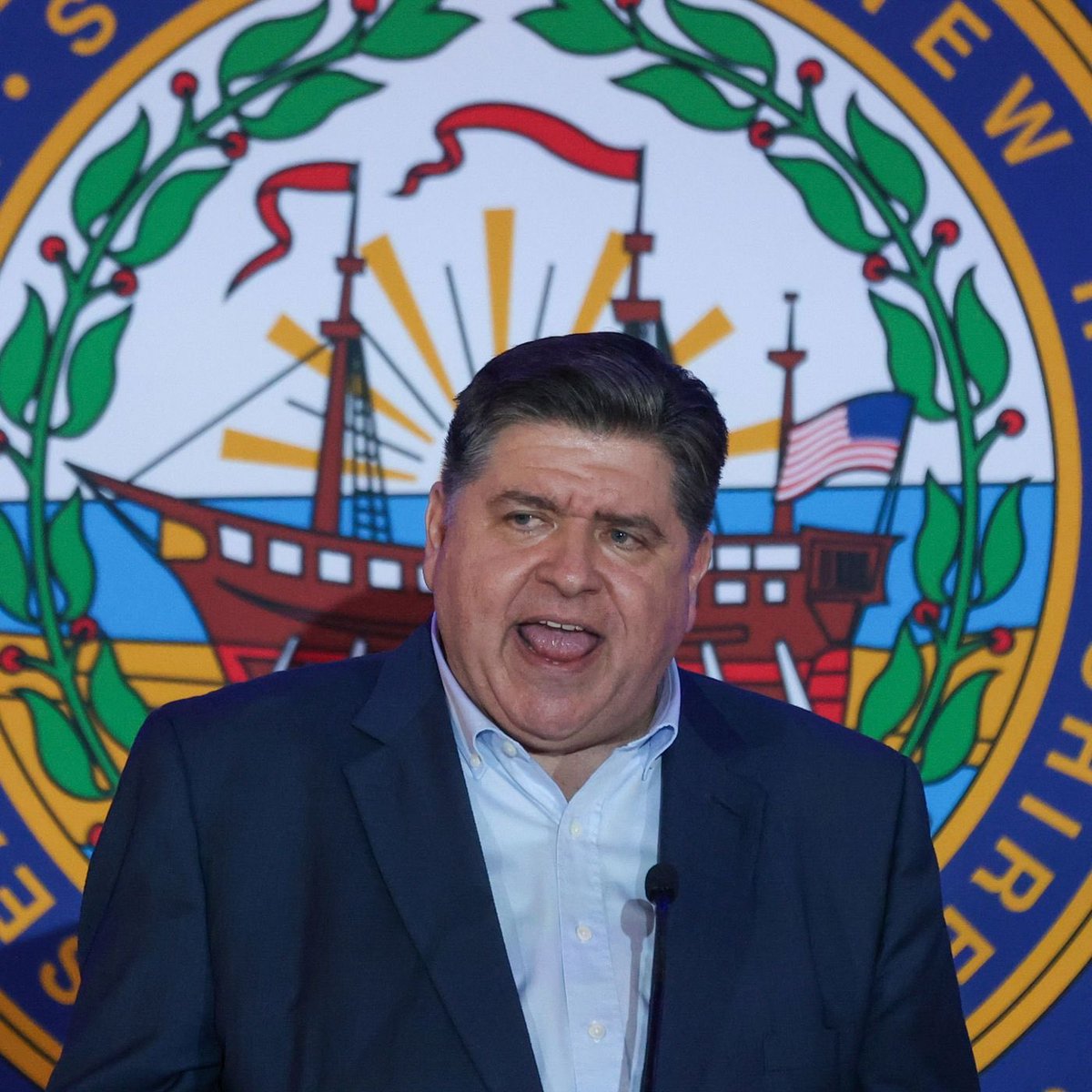
As a former Democrat, @GovPritzker’s highlights one of the many reasons why I changed my registration to Independent years ago. @TheDemocrats … you are going to lose a HUGE swath of campaign dollars for generations to come if this proliferates into other states. Pay attention.
🚨 ILLINOIS ENACTS MOST AGGRESSIVE BITCOIN TAX IN THE 🇺🇸 US
Governor J.B. Pritzker has signed Illinois’ new Digital Asset Tax Act into law.
Starting January 1, 2027, Illinois will impose a 0.20% tax on the gross value of digital assets exchanged, transferred, or stored for customers.
In practice:
• Buy Bitcoin? Pay the tax.
• Transfer Bitcoin? Pay the tax.
• Store BTC with a custodian? Pay the tax.
Move $1 million through a bank wire, ACH transfer, brokerage account, or traditional custodian and Illinois takes nothing.
Move that same $1 million as a digital asset and the state takes $2,000.
The tax applies regardless of whether there is any profit, income, or capital gain. It is levied simply because a digital asset is being exchanged, transferred, or stored.
Critics argue this creates a first-of-its-kind regime that singles out blockchain-based activity while leaving analogous banking, brokerage, custody, and payment services untouched.
The law targets the service layer of the digital asset economy. While trading for one’s own account is excluded, businesses facilitating exchange, transfer, or custody for customers must collect and remit the tax, with customers ultimately liable if it is not collected.
The Crypto Council for Innovation warned that Illinois is becoming a national outlier by adopting a transaction-based tax on digital assets that has no comparable equivalent for stocks, bonds, derivatives, bank deposits, or traditional financial transactions anywhere else in the country.
Industry groups say the law is a powerful incentive for entrepreneurs, startups, and investment to leave Illinois for more competitive jurisdictions.
Perhaps most surprising is the timing. Illinois only recently adopted the Digital Assets and Consumer Protection Act (DACPA), a framework many viewed as a constructive approach to blockchain innovation. This new tax represents a sharp reversal.
The question now is whether other states follow Illinois’ lead, or whether this becomes a case study in how to drive an emerging industry elsewhere.