MEE is a scientific journal promoting new methods in #ecology & #evolution, and facilitating their dissemination and uptake by the #research community.
Our September issue is out!🚨
This month's cover features a green and golden bell frog (Litoria aurea), now listed as endangered 🐸
Read the full issue here 👇
https://t.co/prjYvgNQXR
📖Published📖
An integrated model of territory occupancy and mark-recapture data for estimating spatial variation in survival. Read here 👇
https://t.co/xlVi1B90Nk
📖Published📖
Authors introduce a novel, cost-effective, miniaturized PM2.5 datalogger (‘smoke logger’) that collects sub-hourly particulate matter data throughout entire fire seasons.
Read here👇
https://t.co/9y6Q54KkDw
📖Published📖
Check out our new research article 👉 Distinguishing pairwise species spatial associations from multi-species distribution patterns
Read the whole article here 👇
https://t.co/TY9zaKvsBm
📖 Published📖
This review argues that edge AI systems enable timely and scalable ecological observations, but realising their full potential depends on closer collaboration 🤖 🧪 🌏️
👉️ https://t.co/OX2hMMCDNj
📖 Published 📖
Theia: An end-to-end edge-AI mobile framework for high-throughput field phenotyping and on-device geometric morphometrics 🖥️ 📊 🌻
👉️ https://t.co/UPwzoP0bcn
📣 Call for proposals!
We're currently accepting proposals for our new cross-journal Special Feature: '70 Years of ecological genetics: Past, present, and future' until November 5th! 🧬 📈 🌏️
Find out more here👇️
https://t.co/lIVFMkIzgN
📖 Published 📖
This approach reveals where particular regions of climatic space are common or rare, how isolated they are and how these properties influence species richness across dimensions 🗺️ 🦔 📈
👉️ https://t.co/KwXq96MoX2
New blog post!🚨
Read our newest blog post 'Defining species’ ranges in practice, not just in theory' 🐟️ 🗺️ 🦅
Find the blog post here🧪 🌏️ 👇️
https://t.co/vbyU43DQiJ
📖 Published📖
Through simulation, this study found that reliably detecting range edge shifts may require decades of data or more, suggesting that many global change studies in this field are underpowered 🗺️ 🐦⬛ 🧪
👉️ https://t.co/sUyrudQApL
New blog post!🚨
Author Derya Akkaynak describes how to see underwater colour accurately in 'The photograph you didn’t take: why underwater colour science starts before the shutter' 📸 🪸 🌈
Find the blog post here🧪 🌏️ 👇️
https://t.co/bgkVOTm89h
📖 Published📖
This study explains the consequences for quantitative imaging and introduce the 3P Protocol for distortion-free colour imaging underwater 🪸 🌊 📸
👉️ https://t.co/kFsDPYKAPc
📖Published📖
Here, authors describe EMITS, a tool that implements EM-based abundance estimation purpose-built for fungal ITS communities from long-read sequencing 🧬
Read more here👇
https://t.co/tYf4gPSMDK
Our October issue is out now! 🚨
This month's cover image shows a red fox (Vulpes vulpes) beside a mountain road. The image highlights the vulnerability of wildlife moving through landscapes crossed by human infrastructure 🛣️
Read the issue now 👇
https://t.co/tiuvA8cWrG
The Data Management Better Science Guide has been updated! 🚨
A big thank you to Natalie Cooper and Robert Barber for editing the guide, and everyone who contributed to the writing! (1/3)
Since the guide was first published in 2014, the culture around data in ecology and evolution has changed significantly. This revised guide helps researchers at all career stages integrate effective data management throughout the entire data lifecycle (2/3)
📖Published📖
Here, authors present miFRED, an accessible computational approach to quantify functional redundancy of microbial phenotypes and communities based on phenotypic rather than genetic annotation 🦠
Read here👇
https://t.co/ZHBrBqEKSx
📖Published📖
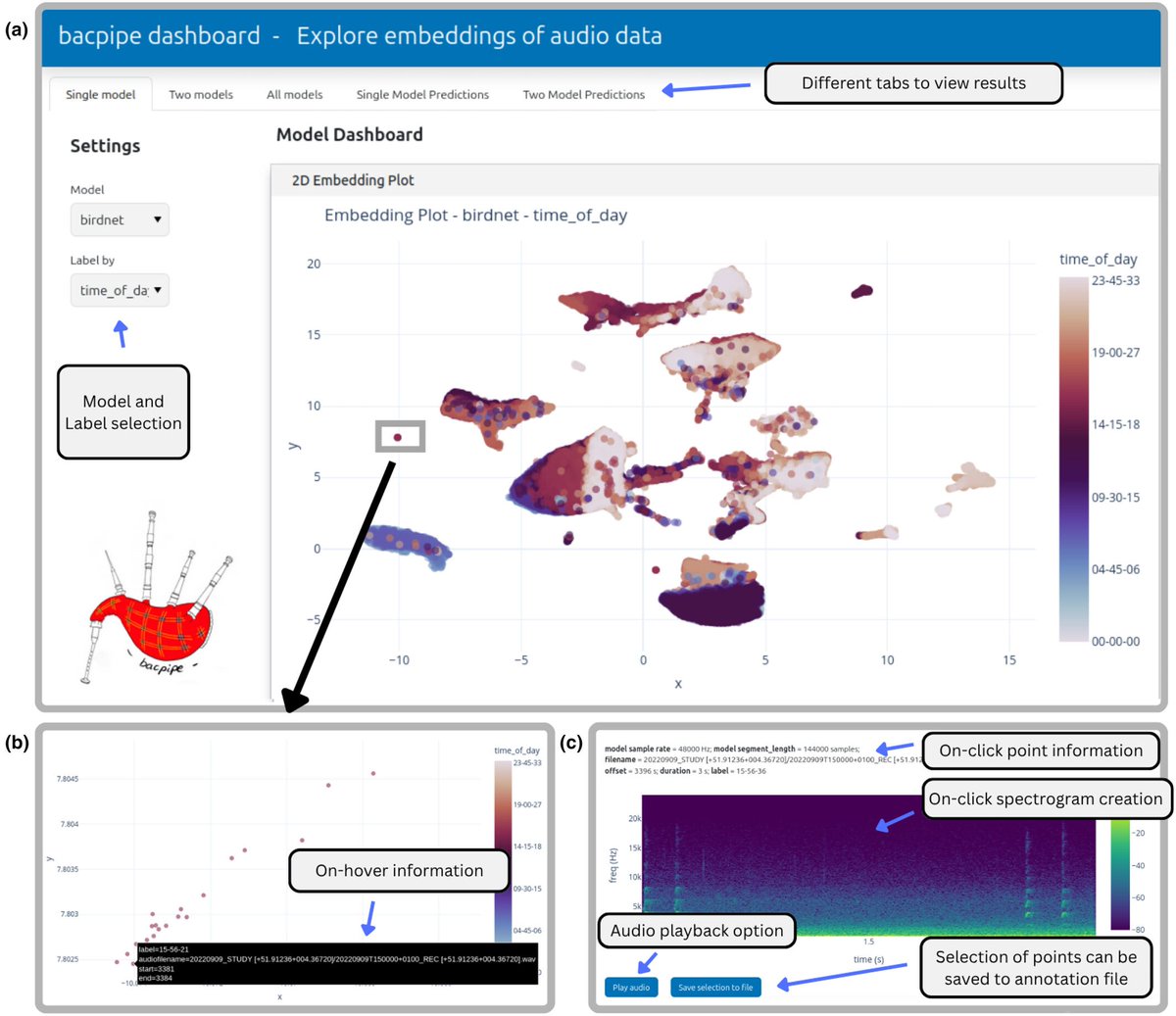
This paper introduces bacpipe, a collection of bioacoustic deep learning models and evaluation pipelines accessible through a graphical and programming interface, designed for both ecologists and computer scientists.
Read here👇
https://t.co/C51Ha7IYTS
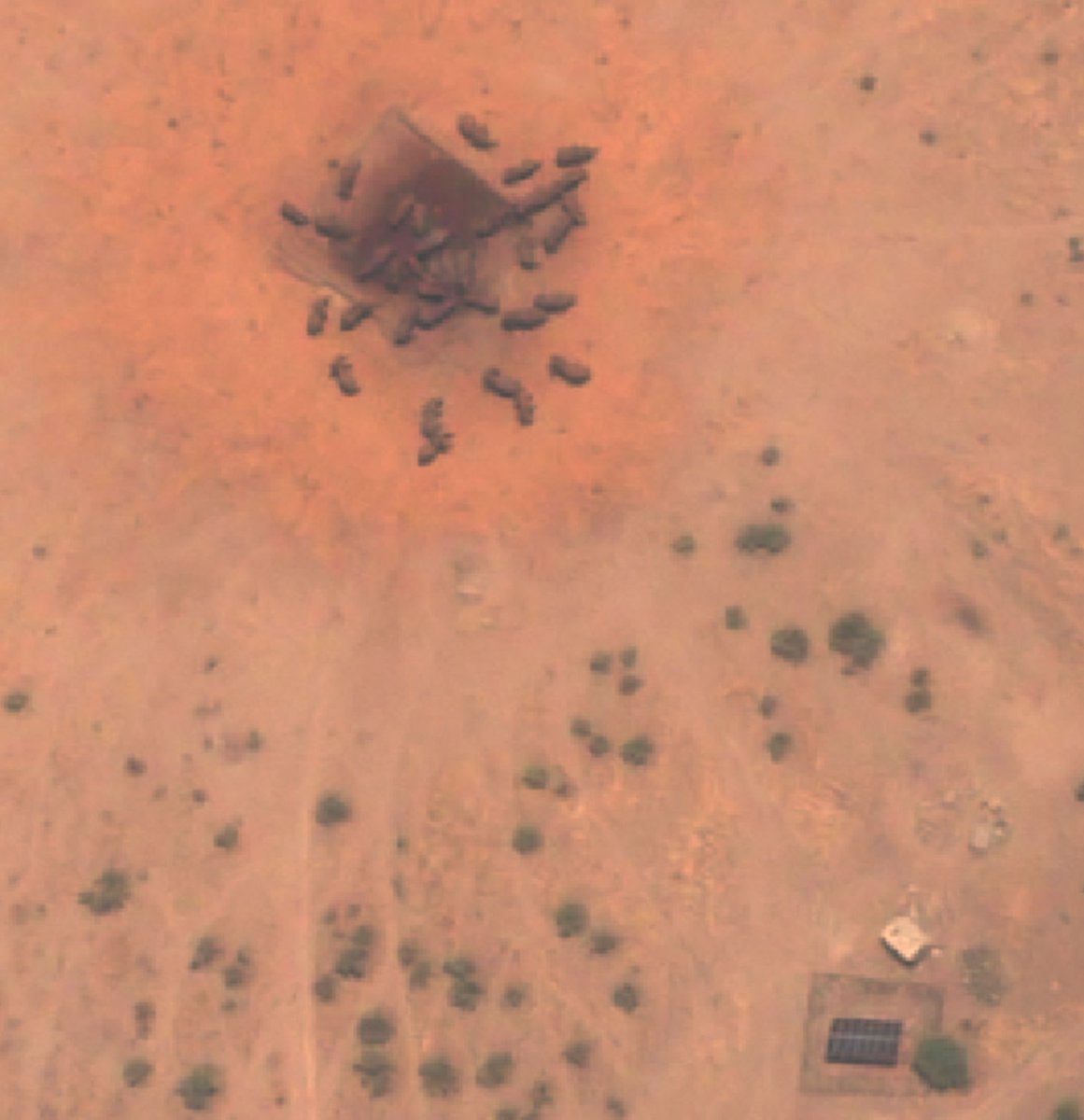
💡 Can we count elephants from space?
🐘 Wilks et al. share their experience investigating the potential use of satellite surveys to identify elephants in the heterogeneous terrain of Botswana, Africa.
👇 Read here!
https://t.co/NPHbQJkUAa
📖Published📖
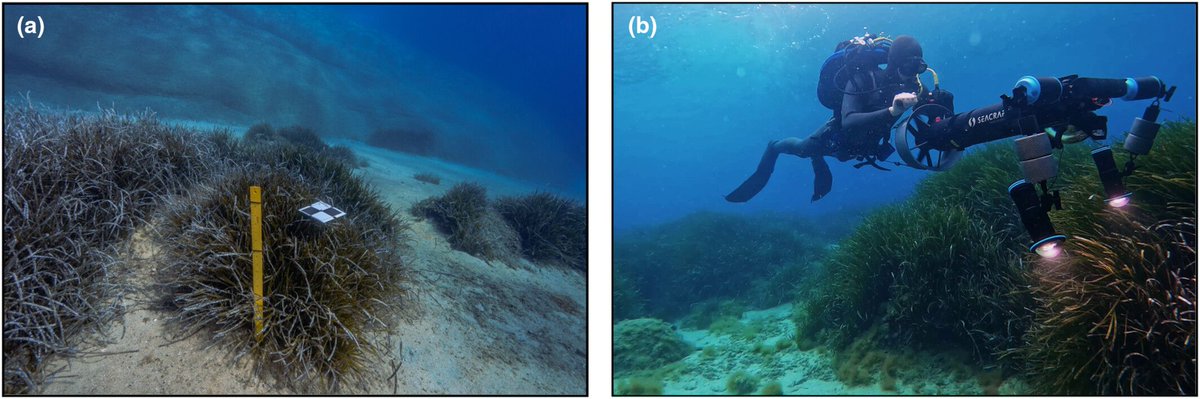
A validated 3D point-cloud analysis workflow for the creation of seagrass canopy height models
Read the article here👇
https://t.co/BPgcWtyKZv