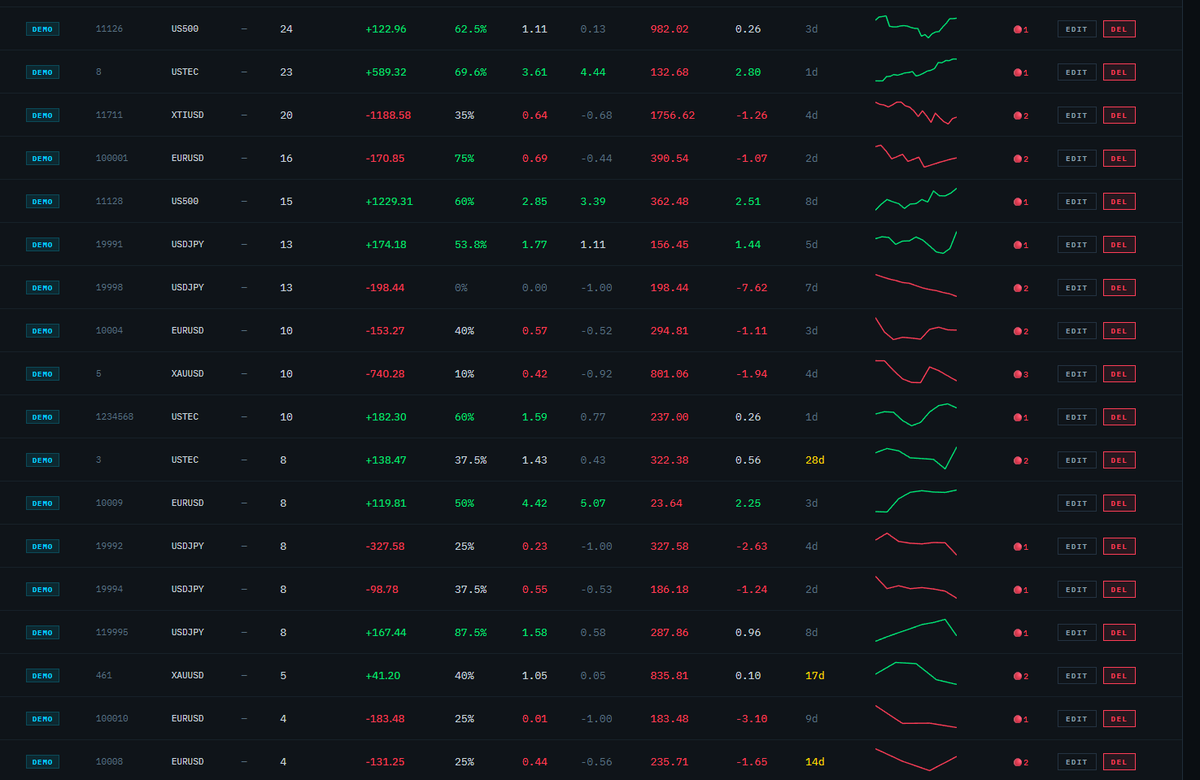
New ATH in the portfolio, in Q2, I came up with a standard, professional process of creating and stress testing strategies, followed by a forward-test procedure. More strategies will be added in the following months.
@dmartin_nq I remember coding one of his strategies, a follower of his asked me to do it for him but the results were negative. I think Tom's discretion is what made the strategy profitable. He's the only discretionary trader i know that's actually profitable.
@kieran__duff And here i am with my live testing phase of a strategy being insanely more profitable than the actual backtest . Very rare to happen, calling it luck for my own safety :))
@ZenomTrader Understood. They use dirty tactics which are effective at luring beginners. From there, the new traders will waste years and money with low quality info before finding a real trader to learn from ( if they are lucky enough to find someone legit).
This is my forward testing account. After a new strategy passes stress and robustness testing, i track its live performance here for 3 months, if the live performance matches the backtest, i deploy it on my LIVE ACCOUNT. The strategies you see were deployed jan/feb 2026.
@kieran__duff Every furu promotes psychology because it's so subjective and they can get away with selling garbage info. They will give you some unprofitable concepts to use, then when you see no results, he blames your psychology so they are not responsible, it's conveninent for them.
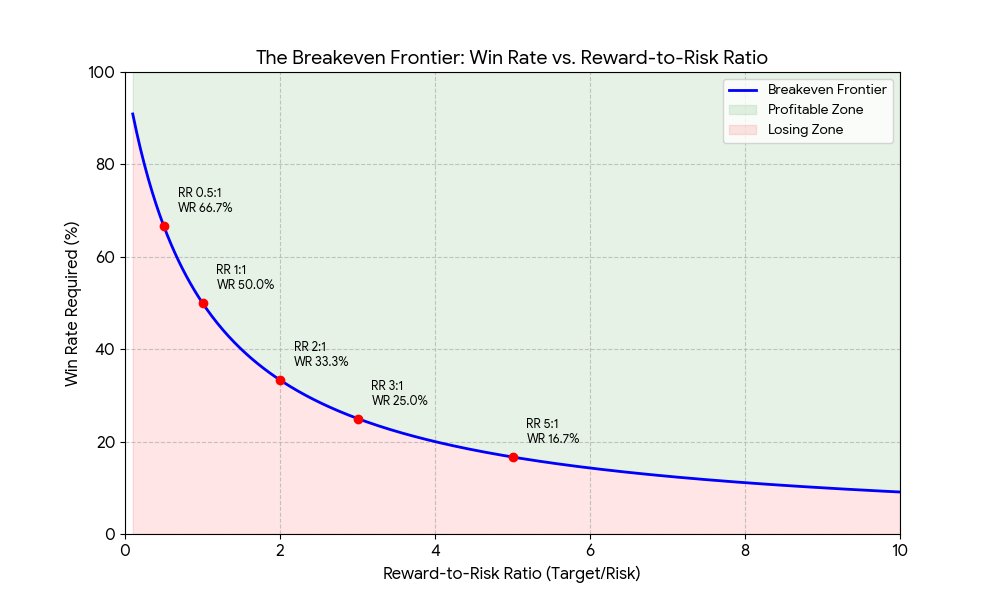
@rotrade93 Trade frequency is the 3rd variable often overlooked. A decent sample size of trades with a 30% WR and 3R is ~5% alpha this is the edge that casinos have on average. to be profitable you need a small increase from the BE relationship between WR and RR and decent trade frequency.
@ajdoestrading "Dudes" don't even have a real strategy to start with. If you need 6 months to learn a strategy there is a 99.9% chance that you learn from a bullshit course seller.
@aryatrades69@Captainib_ A profit factor > 2 is overfit 99% of the time. the "fair" strategies that succeed over the long run usually have <1.5 profit factor.