Meanwhile a clip of South African World Cup coverage has gone viral after their opening match against Mexico. 🇿🇦😶
Both Quinton Fortune and Benni McCarthy were speechless. 😂
Alleged N2b Nigeria Air Fraud: How Sirika Allegedly Used Ethiopian Airlines as Fake Nigeria Air-Witness
The 12th Prosecution Witness, PW12, Christopher Odofin, in the trial of the former Minister of Aviation, Hadi Abubakar Sirika, on Wednesday, June 10, 2026, told Justice S.C. Oriji of the Federal Capital Territory, FCT, High Court Abuja, how Sirika allegedly passed off an aircraft belonging to Ethiopian Airline as that of the promised Nigeria Air by the government of the late President Muhammadu Buhari.
The decoy aircraft, adorned with the livery of the promised Nigeria Air, found its way on the tarmac of the Nnamdi Azikiwe International Airport, Abuja on May 27, 2023, being three days to the expiration of the tenure of the Buhari government and was flown back to Addis Ababa in the morning of May 29, 2023, being the handover date to the successor government.
Hadi Sirika is facing prosecution by the Economic and Financial Crimes Commission, EFCC on amended six-count, bordering on alleged abuse of office and misappropriation of public funds to the tune of over N2 billion, alongside his daughter, Fatima Hadi Sirika, son-in-law, Hamma Jalal Sule, and Al Buraq Global Investment Limited.
The contract for the setting up of Nigeria Air was awarded to Tianaero Nigeria Limited, belonging to Gabriel Tilmann, a close associate and friend of the former minister.
Reading from a portion of contract agreement with Ethiopian Airline, the witness, an investigator with Economic and Financial Crimes Commission, EFCC said “The aircraft will depart from Addis Ababa (ADD) late evening of May 26, 2023 for it to be positioned early morning of May 27, 2023 at the Abuja (ABV) airport. The aircraft will stay in ABV airport for static display of Nigeria Air livery until May 28, 2023. The aircraft will leave ABV airport early morning on May, 29, 2023. The chartered flight will be operated by the Ethiopian Airline crew in Ethiopian Airline uniform. The Federal Government of Nigeria and Nigeria Air may put together local models who will be in Nigeria Air uniforms to pose for ceremonial pictures. The models may come to Addis Ababa so they may fly with the chartered flight to ABV.”
The witness told the court that the display of the aircraft in Abuja International Airport was deliberately planned to coincide with the end of the first defendant’s tenure as Nigeria’s Minister of Aviation and Aerospace Development on May 29, 2023 and to pass the aircraft off as the actualization of his promise of the return of Nigeria Air. After the less than 72 hours display of the aircraft, he stated that the Nigeria Air logo was removed from the aircraft and flown back to Ethiopian Airlines in Addis Ababa.
The witness further disclosed that the investigating team was also able to ascertain that Ethiopian Airlines entered into a charter arrangement for the static display of the Nigeria Air livery for a duration of just three days, beginning from May 27 to May 29, 2023 based on information and documents received from the airline following a letter from it, dated June 12, 2023, in response to the EFCC’s request for information regarding Nigeria Air. And that though the purpose of the contract was for the establishment of Nigeria Air, the charter agreement with Ethiopian Airlines was entered on May 24, 2023, five days to the expiration of the defendant’s tenure for just a static display of the Nigeria Air logo on an aircraft.
All the documents tendered in evidence by the prosecution were shown to have been duly signed, authorized, and accompanied by certificates of identification and were not objected to by any of the counsels to the four defendants.
Among the exhibits is a compact disk containing a voice note from the first defendant, Hadi Sirika, marked Exhibit 37, which the prosecution counsel applied to be played in the court at the next adjourned date.
“We have a confession that the media has not given appropriate attention. Kawu Baraje was a leading Chieftain of the APC & he has confessed that they imported the foreign machineries who have become bandits. How much more evidence do you need? Why is the media not following up?”
History of slavery in the Muslim world
In his book, "Slaves and Slavery", Duncan Clarke defines slavery as “the reduction of fellow human beings to the legal status of chattels,
The word ‘slave’ and its cognates in most modern European languages is derived from ‘sclavus’ meaning ‘slav’, the ethnic name for the inhabitants of the coast of Bosnia on the eastern shores of the Adriatic Sea.
For the Islamic world, Slavs provided the major source of slaves in the 250 or so years between the defeat at the battle of Poitiers in AD 732 that forced the consolidation of their dramatic conquests across North Africa and the Iberian peninsula, cutting back the flow of war captives and the expansion of the import of black Africans across the Sahara.
Paul Lovejoy estimates that some 9.85 million Africans were shipped out as slaves to Arabia and, in small numbers, to the Indian subcontinent as follows.
Between AD 650 and 1600, an average of 5,000 Africans were shipped out by the Arabs annually. This makes a rough total of 7.25 million.
Then, between 1600 and 1800, another 1.4 million Africans were shipped out by the Arabs. The 19th century represented the highest point of the Arabian trade where 12,000 Africans were shipped out every year. The total figure for the 19th century alone was 1.2 million slaves to Arabia.
David Livingstone, the British missionary/traveller/explorer was so upset by the way the Arabs treated their African slaves that he wrote back home in 1870:
“In less than it takes to talk about it, these unfortunate creatures — 84 of them, wended their way into the village where we were. Some of them, the eldest, were women from 20 to 22 years of age, and there were youths from 18 to 19, but the large majority was made up of boys and girls from 7 years to 14 or 15 years of age.
“Each of them had his neck in a large forked stick, weighing from 30 to 40 pounds, and five or six feet long, cut with a fork at the end of it where the branches of a tree spread out.
“The women were tethered with bark thongs, which are, of all things, the most cruel to be tied with. Of course, they are soft and supple when first striped off the trees, but a few hours in the sun make them about as hard as the iron round packing cases.
The little children were fastened by thongs to their mothers. “As we passed along the path which these slaves had travelled, I was shown a spot in the bushes where a poor woman the day before, unable to keep on the march, and likely to hinder it, was cut down by the axe of one of these slave drivers.
“We went on further and were shown a place where a child lay. It had been recently born, and its mother was unable to carry it from debility and exhaustion; so the slave trader had taken this little infant by its feet and dashed its brains out against one of the trees.
“For various reasons, including the harshness of the terrain and endemic warfare among local clans, Bosnia proved the most convenient and long-lasting of these slave-supplying regions.
Whichever clan gained a temporary upper hand was always willing to sell its captured rivals in exchange for the goods of the Mediterranean world in the markets of the ancient Romanised city of Ragusa (present-day Dubrovnik). From there, Slavs were shipped as slaves by Venetian merchants, to supply new markets in the Islamic world.”
The trade in slaves ended when the Ottoman Turks conquered the region in 1463. “The effective closure of the last major source of slaves on the European continent,” says Clarke, “thus co-incidentally took place at the same time as the Portuguese explorations of the West African coast which were to open up the second and most devastating route for the exploitation of Africans as slaves.”
Such was the brutality meted out to the Africans by the Arabs. Like the Atlantic trade, the Arabian trade’s “middle passage” was equally as horrible and terrifying. The “middle passage” describes the harrowing journey lasting several months from Africa’s west coast to the Americas during which millions of Africans, packed like sardines in the slave ships, died of thirst, hunger, rough seas, and sometimes from the sheer brutality inflicted by the European slavers.
In the Arabian trade, the trudge across the Sahara, in leg and neck chains, and as Livingstone describes above, necks in large forked sticks and hands tied with bark thongs, was particularly harsh on the African slaves.
The Arab slavers did not only march their African captives to Arabia, they also sometimes sold them to European slavers.
In modern times, the popular image of African slavery springs from the vision of a tormented male suffering under the lash of unceasing labour on some “New World” sugar plantation.
Yet the real face of servitude finds its focus in the forced migration of millions of girls and young women across the Sahara and the Horn of Africa into the institutions of Islamic concubinage.
Why they preferred women?
While in the European “New World ”, the measure of a man’s stature was mapped out and calibrated on the physical dimensions of an empire built upon the sinews of forced masculine labour.
In the Islamic Orient wealth was a reflection of prestige, young girls were the vessels of males' hubris, the mats of male pleasure ground, the malleable material to be shaped to the master’s will.
Thus, women slaves in the Arab world were often turned into concubines living in harems, and rarely as wives, their children becoming free.
A large number of male slaves and young boys were castrated and turned into eunuchs who kept watch over the harems.
Castration was a particularly brutal operation with a survival rate of only 10%.
“The combined effect of all these factors,” says Duncan Clarke, “was a steady demand for slaves throughout the Islamic world, which had a cover story to be met from wars, raids, or purchases along the borders with non-Islamic regions.
Although some of these slaves came from Russia, the Balkans, and central Asia, the continuing expansion of Islamic regimes in sub-Saharan Africa made black Africans, the major source.”
So invasive was the practice of slavery into the economic, political, demographic, cultural, social, and religious life of Africa and persisted for so many centuries, that while its effects varied both geographically and temporally in intensity, slavery out-distances in scale and scope any single or combination of disasters — natural or man-made, which descended upon the continent.
Slavery unquestionably checked population growth in Africa and consequentially placed tremendous pressure on gender and marital relationships during the three critical centuries of European expansion to global domination.
In this sense, the feminine-oriented Arab slave trade, though neither motivated nor executed with economic benefits as the prime objective, caused far greater demographic damage and consequently greater economic decline, with its excessive poaching of the reproductive potential of the harvested areas.
The Arab slave trade began long before the Islamic conquest of Africa, remained at a relatively low level compared to the Atlantic slave trade did not become illegal or abolished, and was maintained till well after the colonization of Africa.
The Arabian trade was outlawed in Ethiopia only in 1935 in order to gain international support against the Italian invasion.
In the Atlantic trade, the slaves came predominantly from Africa’s west coast with a male/female ratio of two-to-one.
In the Arabian trade, the slaves were exclusively from the Savannah and the Horn of Africa and favoured females over males at a ratio nearing three-to-one.
When slavery in the Black Sea area (the traditional source of the best-grade female slaves for the Arab market) dried up, it triggered an even greater demand for Ethiopian “red” slaves, in particular the Galla and Oromo on account of their unquestioned beauty and willing sexual temperament.
While the Europeans paid a higher price for male slaves than females, the reverse was the case with the Arabs.
Moreover, while the European/New World slavers profited mainly from male labour, the Arabs saw profit in sexual satisfaction/reproductive potential. (The offspring of the union between Islamic master and female slave was born free, out of respect of the child’s Islamic paternity. Any offspring of the Atlantic trade were born into slavery).
“The laws of Islam,” as the historian Hugh Thomas attests, “were in some ways more benign in respect of slavery than were those of Rome.
Slaves were not to be treated as if they were animals. Slaves and freemen were equal from the point of view of God. The master did not have power of life and death over his slave property.”
But to the Africans shipped across the Red Sea, the “benign” Islamic laws provided little comfort — they were still slaves of Islamic masters who had unfettered sexual access to them (if they were female) or castrated and turned into eunuchs (if they were men).
The upshot of this gender profile of the respective slave-classes in the Atlantic/New World and the Arab/Oriental world explains the large and visible population of African origin in the New World where sexual relations between white and black was the exception while in the Arab world where miscegenation was the practice, the slave trade has left few visible traces.
Five years ago, a British TV documentary showed how poorly the descendants of African slaves in Pakistan were treated by the authorities.
The racial discrimination was so bad that one of the African descendants recounted on camera how, even in sports, they were not picked to represent Pakistan at national and international levels no matter how good they were.
The Arab slave trade began long before the Islamic conquest of Africa, remained at a relatively low level compared to the Atlantic slave trade did not become illegal or abolished, and was maintained till well after the colonisation of Africa.
Deprived of ideology, ritual, and the African rite of passage to adulthood and social membership, female slaves were uncommonly vulnerable to conversion to Islam (the benefits of manumission aside). Manumission describes a child born of a female slave and a free Islamic father is thus born free.
Even to this day, Arab slave traders are still at work in Sudan and Mauritania, buying and selling black Africans.
"How can just a political aide have access to Emeka Ike's data? If a political aide can access such information, then imagine what politicians themselves can access.
As far as I'm concerned, the 2027 election is already tainted. Let's stop deceiving ourselves. If they have access to your database, then we have a serious problem.
We should even thank God that it was a political aide who exposed this. If it were an ordinary Nigerian who released such information, security operatives would have invited that person for investigation by now."
— Rufai Oseni reacts to the release of Emeka Ike's data by Wike's aide, Lere Olayinka.
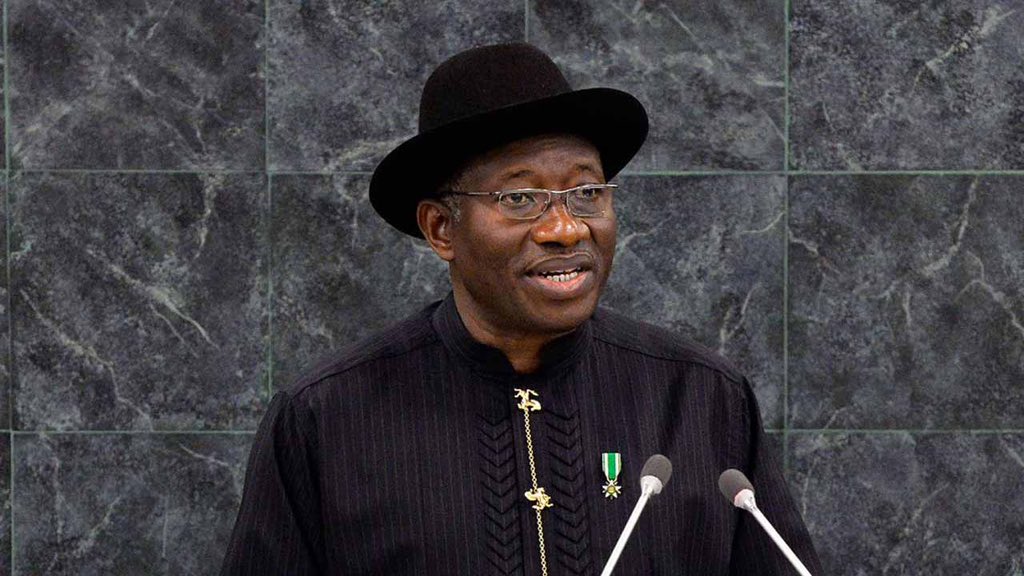
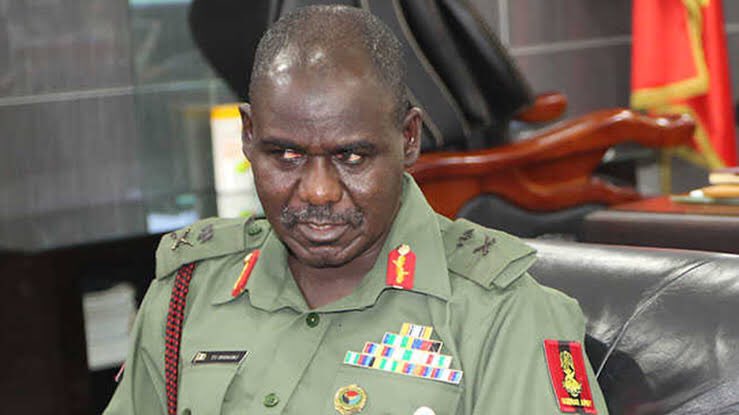
LT. Gen Ihejirika already cleared Sambasi Forest of remnants of Boko Haram prior to 2015 General elections.
Recall, GEJ postponed the elections to enable his COAS achieve that.
So why has Buratai, a son of Borno, refuse or is unable to clear his homestead of the BH, 5yrs after?
WATCH:
As Goodluck Jonathan’s General had already routed/pushed back the Boko Haram into the fringes of Sambisa Forest. The BH were almost completely decimated!
Unfortunately, luck ran out on him as Buhari, Lai Mohammed & the APC cooked up many lies & propaganda against him..😒
First images of the kidnapped retired Army General kidnapped with his wife along matazu highway Katsina... they are passing bandits kingpin kachalla maha request to release his boys in exchange for the retired General and his wife freedom
@NigeriaStories Lol..its funny how some south African elements are on Nigerian forum/comment section looking for attentions and engagements.
Or are they obsessed with Nigerians ?
💯 right. The El-Salvador President just told the world why terrorism is thriving in a country like Nigeria 🇳🇬. Just listen to his submission… something we all know but don’t want to address.