Did retail investors buy the dip in September? Despite the Nifty 50 falling 6% and Sensex 5.82%, retail investors turned net buyers in the secondary market, purchasing ₹10,572 crore. A sharp reversal from July and August’s net selling.
#nifty50#RetailInvestors#StockMarket
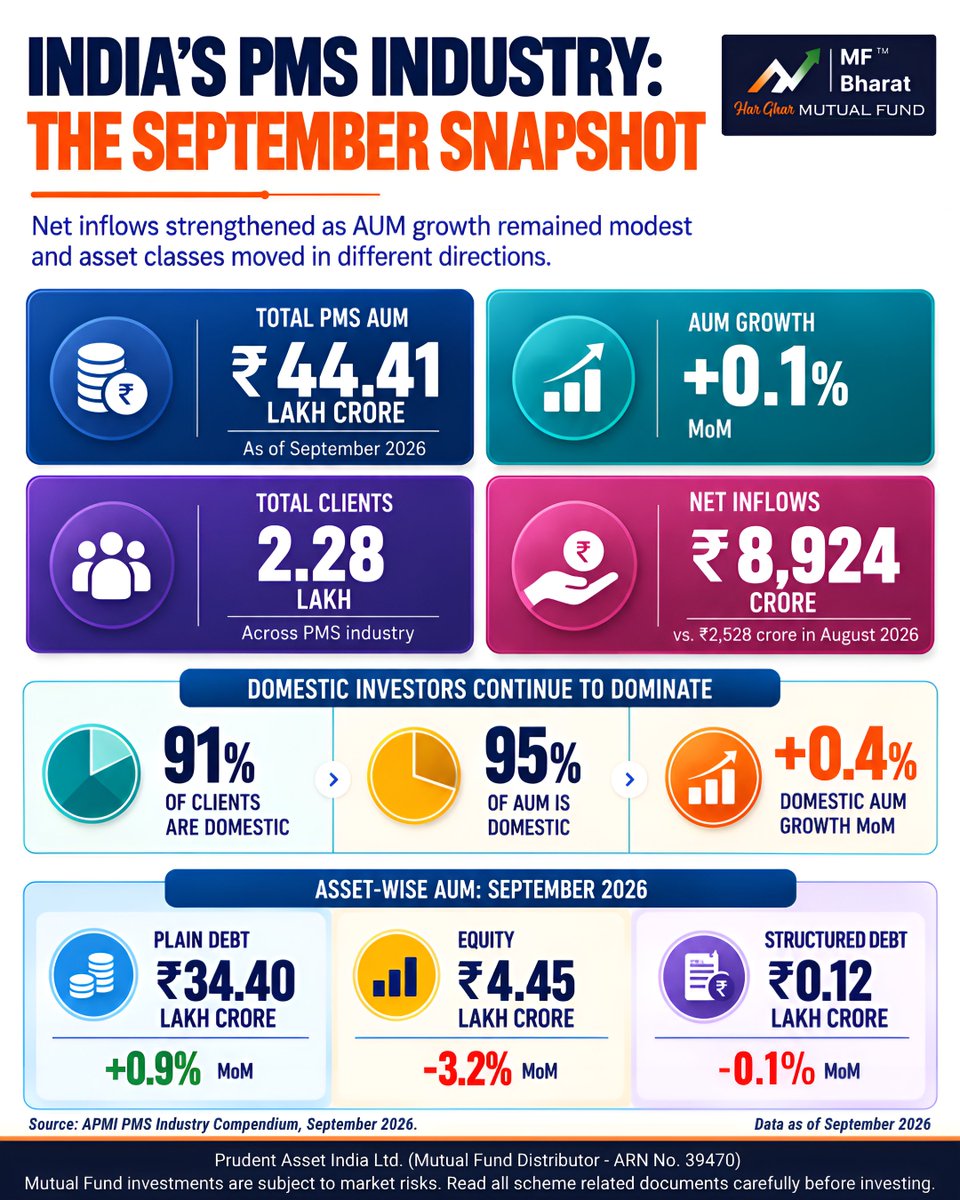
India’s PMS industry saw contrasting asset-class trends in September: Plain Debt AUM rose 0.9%, while Equity AUM declined 3.2%. Despite ₹8,924 crore in net inflows, total AUM grew only 0.1% MoM, highlighting uneven momentum.
#PMS#Investments#StockMarket
SBI MF remained India’s largest fund house by average AUM in Q2 FY27. DSP MF led the top 10 in quarterly growth, while Mirae Asset entered the top 10, replacing Tata MF.
The rankings highlight both established dominance and shifting competition.
#MutualFunds#AUM#AMFI#SBI
Asia’s currencies are moving in different directions in 2026. While the won and renminbi have appreciated, the rupee has weakened nearly 5%. The contrast underlines how external pressures can outweigh domestic policy support in currency markets.
#INR#AsianMarkets#Rupee
India’s NFO market raised ₹2,708 crore in September. Equity schemes topped NFO collections, raising ₹998 crore across five launches. Index funds raised ₹669 crore across six. The comparison is notable: equity schemes mobilised more capital despite having fewer NFOs.
#NFO
India’s inflation trajectory is turning into a key macroeconomic risk. Rising food prices are pushing headline CPI higher, putting household purchasing power under pressure and making the RBI’s balancing act between growth and price stability more challenging.
#inflation#cpi
India’s MF industry saw a striking divergence in September: record SIP contributions and strong equity inflows, but heavy debt outflows pulled down overall AUM and net flows. Retail participation remains resilient, even as asset allocation shifts.
#MutualFunds#SIP#investments
Demat account growth remains strong over the longer term, even as monthly additions fluctuate. The key signal is the expanding investor base and not just the month-to-month change in new accounts.
#DematAccounts#FinancialAwareness#IndianMarkets
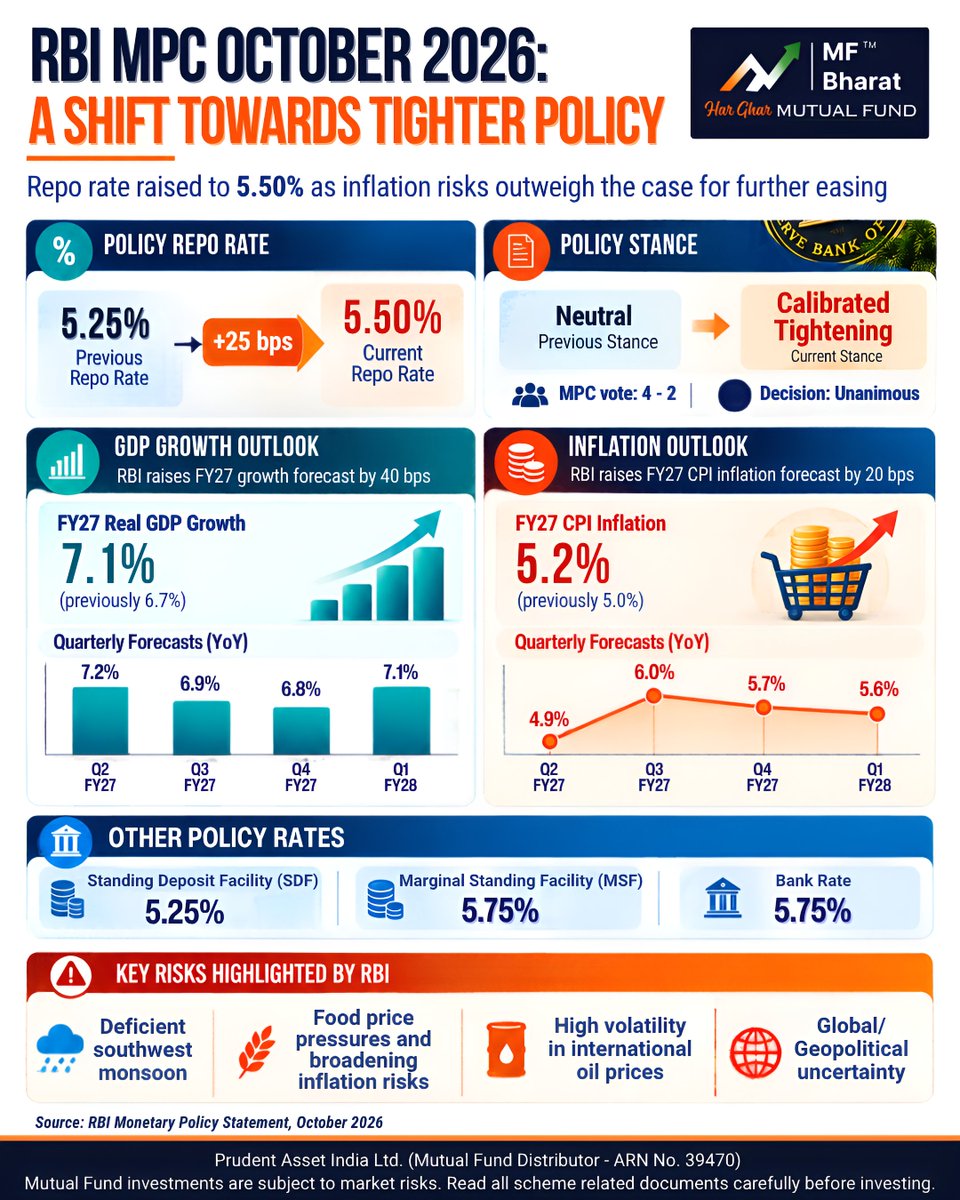
The RBI’s shift from a neutral stance to calibrated tightening signals that inflation risks are taking priority over further easing. Higher growth projections offer comfort, but food prices, oil volatility and global uncertainty complicate the outlook.
#RBI#MonetaryPolicy
India’s weak 2026 performance has a double impact for foreign investors: falling equity prices and rupee depreciation. That’s why dollar returns look worse than local returns and why currency stability matters for India’s global investment appeal.
#IndianMarkets#Investing
India’s household savings are gradually becoming more diversified. Bank deposits remain important, but managed investments are gaining ground faster, pointing to a broader shift towards market-linked and professionally managed financial assets.
#MutualFunds#Investing
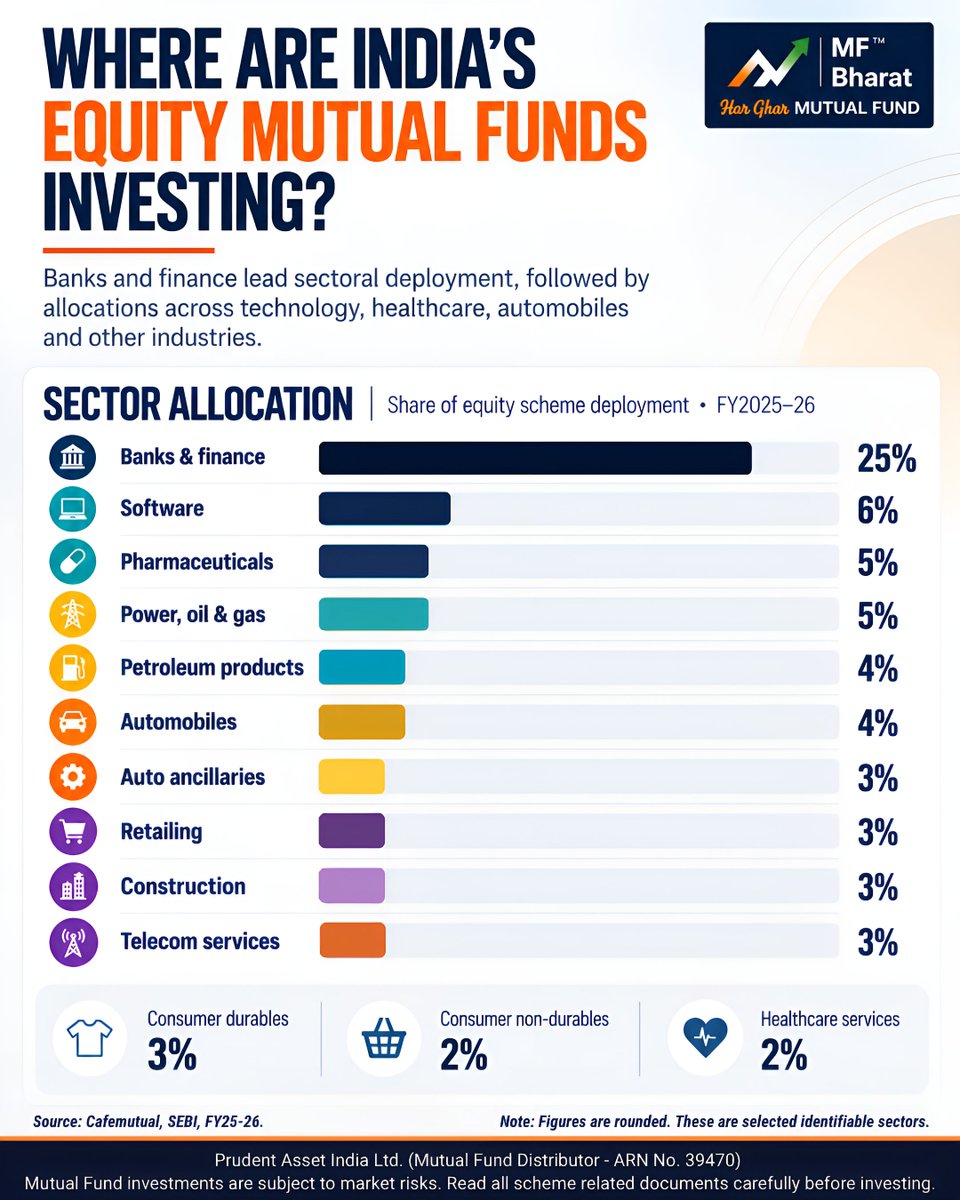
India’s equity MF portfolios show a clear sector tilt towards financials, with banks & finance accounting for the largest allocation. Technology, pharma, energy and auto form the next layer, reflecting a mix of financial, consumption and industrial exposure.
#MutualFunds#Equity
The geography of India’s mutual fund investor base is changing. While Tier I continues to add investors, Tier II has accelerated sharply, pointing to deeper participation from emerging cities. Tier III remains a large base, but its pace of new additions has moderated.
#MutualFund
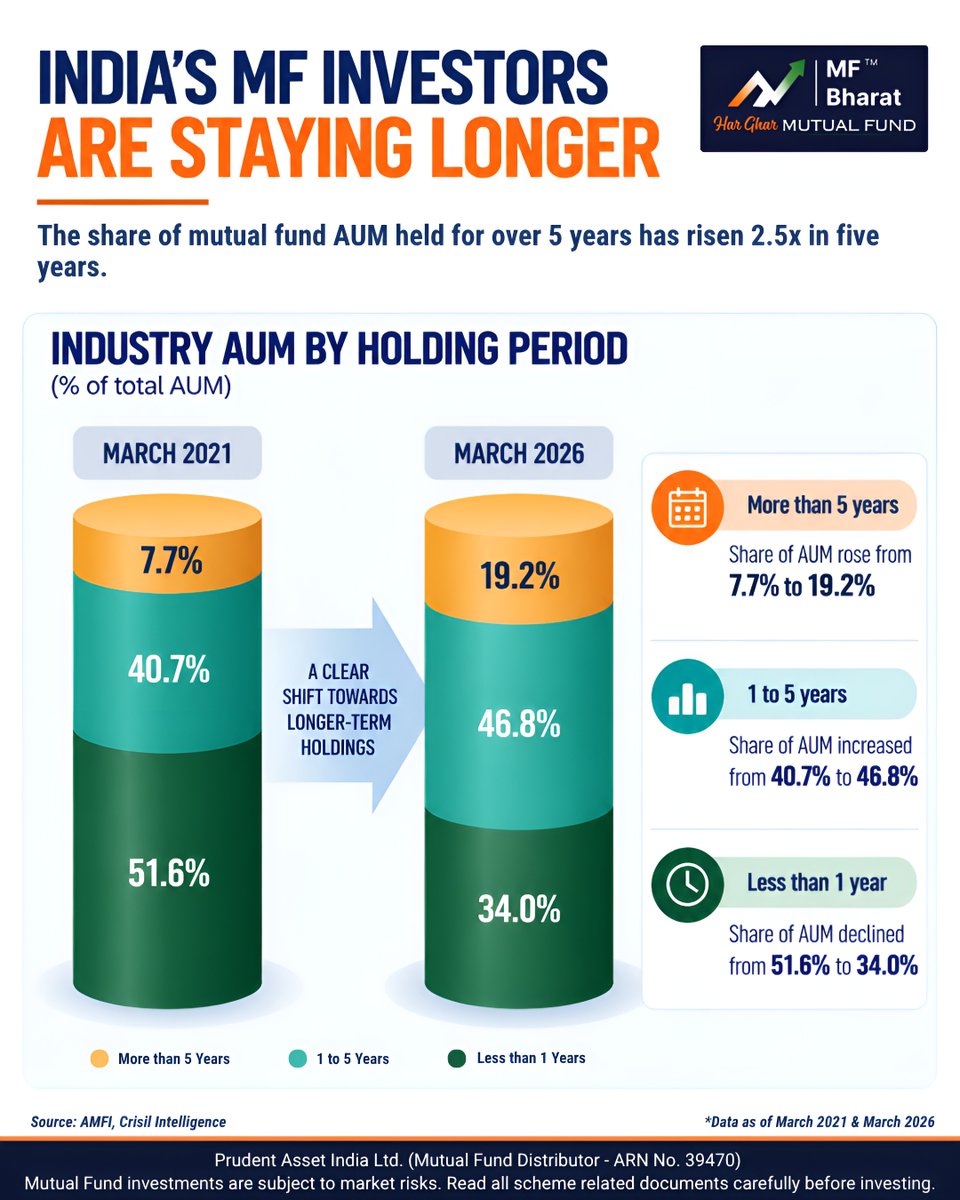
India’s mutual fund investors appear to be showing greater holding discipline, with AUM increasingly shifting towards longer holding periods. The trend suggests a gradual move away from short-term positioning towards more patient, long-term participation.
#MutualFunds#Investing
SEBI approves major PMS reforms, introducing a new ₹25 lakh PRIM route, wider investment options and simpler compliance.
With a 1% fixed management-fee cap, the reforms could reshape portfolio management and expand investor access.
#SEBI#PMS#MFBharat
IRDAI proposes major insurance reforms to curb mis-selling, lower insurer expense limits and improve commission transparency. The proposals could reshape insurance distribution and benefit policyholders.
#IRDAI#InsuranceReforms#insurance#markets
SEBI’s net-settlement proposal could make large mutual fund transactions more efficient by reducing temporary funding needs. But it is not blanket netting: eligibility is scheme-wise, while securities must still be delivered on a gross basis.
#MutualFunds#SEBI#investing
India’s MF industry reached ₹87.08 lakh crore in August. Record SIP contributions of ₹32,297 crore and stronger equity inflows signal resilient participation. But ₹8,127 crore in debt outflows points to allocation shifts.
#MutualFunds#Investing
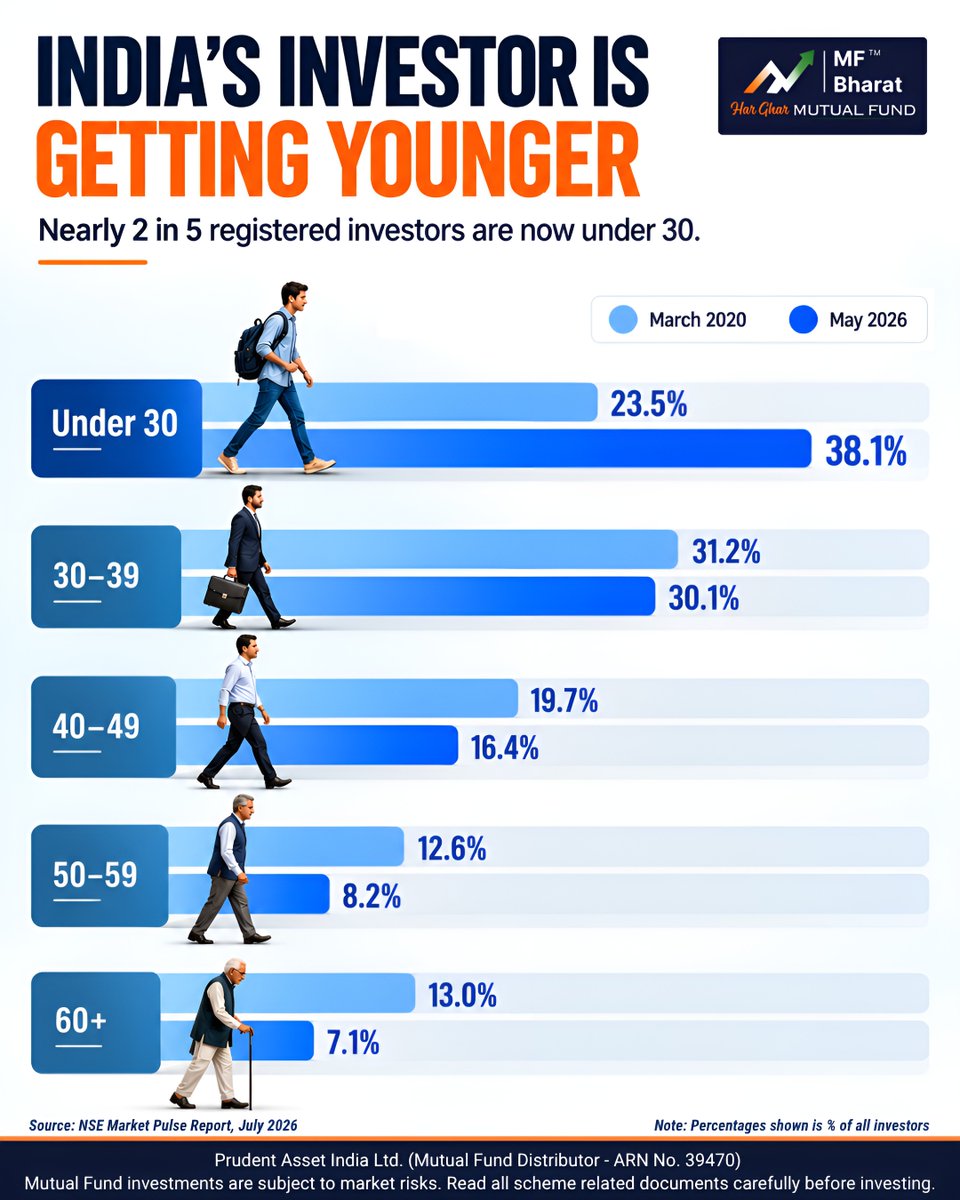
The composition of India’s investor base is changing. Under-30 investors now account for 38.1%, up from 23.5% in Mar 2020, while the 60+ share fell from 13% to 7.1%. Younger investors are becoming increasingly important to India’s markets.
#Investing#NSE#stockmarket#invester
Mutual fund participation is spreading beyond India’s biggest financial centres. Cities outside the top 15 now account for 30.36% of industry AUM, up from 14.4% in FY2014-15. Smaller cities are becoming a bigger source of industry growth.
#MutualFunds#India#AMFI#Invetments