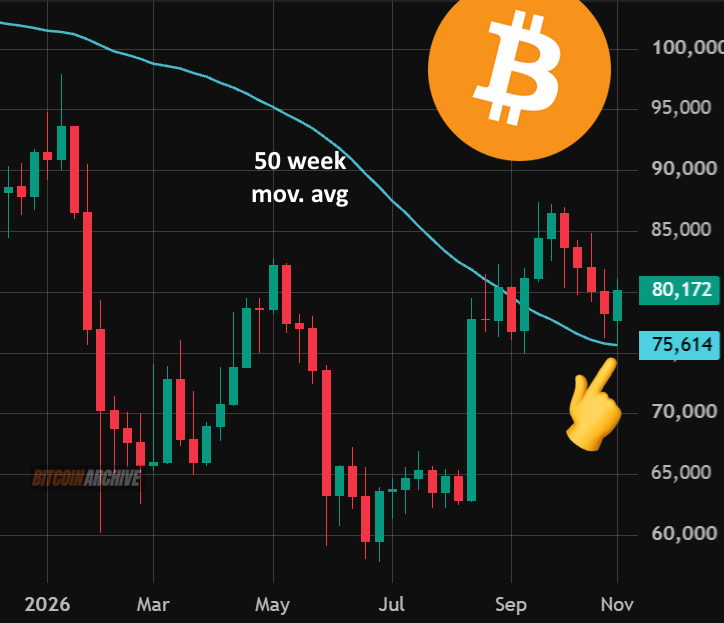
Institutions quietly bought about $4.11 billion of Bitcoin through US spot funds last quarter. And no, that's not nothing.
Between July and September they added roughly 49,229 BTC net, which ended nine straight months of selling. You'd never guess it from price action right now, since the current selloff is doing all the talking. But that's exactly the kind of thing that gets buried: retail panic on the surface, funds stacking underneath.
Here's my honest take. The flow data matters more than the noise, and the folks who actually move size spent Q3 reversing course, not dumping.
The trade-off I'll own: fund flows can flip fast, and one quarter isn't a trend. I'm not calling a bottom here, and I'm definitely not telling anyone what to do with their money. But I think it's a mistake to read this dip as institutions walking away. They weren't. They were buying.
That's the story the charts aren't telling yet.
@BitcoinArchive However, it remains to be seen whether long-term holders will step in to absorb the supply, and whether the selling pressure will truly subside.
@Cointelegraph This is an important development. Preparing for quantum-resistant security early could be a big step for the long-term future of the XRP Ledger.
The interesting thing about eCash on Bitcoin isn't the tech, it's the tradeoff: you get instant, near-free, private payments, but you're trusting a mint to hold the actual bitcoin.
That's what Cashu and Fedimint are. Cashu mints issue ecash tokens backed by bitcoin reserves, using blind signatures so the mint can't see who's spending what. Fedimint takes the same idea and splits custody across a federation of guardians instead of one operator, so no single person holds the keys. Both sit on top of Bitcoin as a usability layer rather than changing the base chain at all.
And that's the honest pitch. Lightning is fast but it leaks metadata and gets clunky at small amounts. On-chain is final but slow and public. Ecash fills the gap in between, and it does it by reintroducing a trusted party, which is exactly the thing Bitcoin people hate.
My take: this is a real design choice, not a flaw to hand-wave away. The mechanism only works if the mint is actually solvent and the federation is actually independent. Those are the two things I'd want to see measured before I'd call any of this mature.
So watch the reserves, not the demos.
@stedas Energy consumption is definitely something crypto can't ignore. Finding the right balance between security, efficiency and sustainability will be important going forward.
Bitcoin isn't acting like digital gold right now. It's acting like the S&P 500 with extra leverage.
The correlation between BTC and the S&P hit 0.80 over the last 30 US sessions. Since 2020, it's spent most of its life way below that. So this is an outlier, not the norm.
And it explains a lot of the whipsaw we've all been sitting through. The "bitcoin is decorrelating" story sounds great until the CPI print drops and BTC does exactly what equities do, just faster.
Here's the trade-off I'll accept: I don't think this kills the long-term case for BTC as a hedge against currency debasement. Not even close. But if you're sizing positions today off that story, you're using a map that doesn't match the terrain in front of you.
For now, macro sets the direction. Bitcoin just picks the amplitude.
@BitcoinMagazine@ColeMacro@Strive Looks like Strive may be adding more BTC. Interesting to see more public companies treating Bitcoin as part of their treasury strategy.