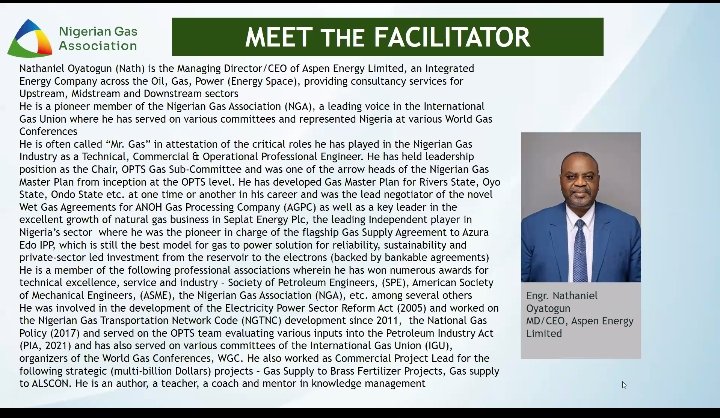
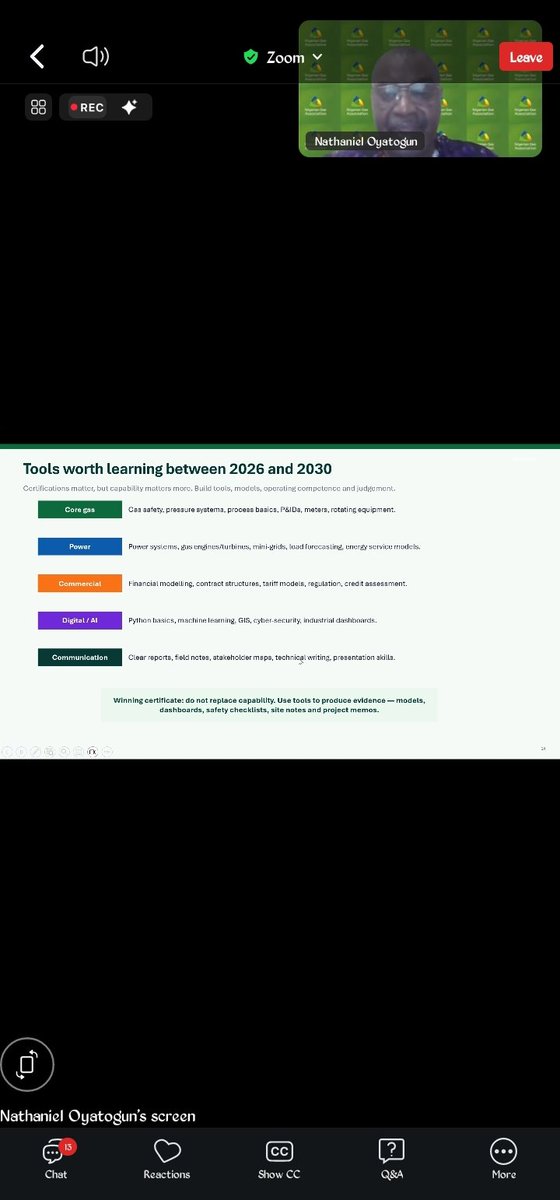
The opportunity in the gas sector goes beyond technical roles. Thank you so much, NGA @Nig_Gas_Assoc for this great Webinar.
NGA Students and Young Professionals Connect, July 2026— Emerging Opportunities in Nigeria's Gas Economy: Where should young professionals focus?
To God be all the glory for the gift of life and yet another birthday anniversary.
I celebrate you and i pray God gives you divine health, strength, joy and peace as you take Nigeria to her Eldorado of great wealth and opportunities.
Akanbi, omo olodo ide.
I love you and I am so proud of you.
- Senator Oluremi Tinubu, CON
INEC’s Review of Section 65: Between the People’s Mandate and the Commission’s Discretion
By the Electoral College Nigeria
The Independent National Electoral Commission (INEC) has begun the process of reviewing Section 65 of the Electoral Act, a move that has once again brought to the fore a vital question in our democracy: how do we balance institutional discretion with democratic certainty?
Section 65 was introduced in the 2022 Electoral Act as a corrective mechanism. It grants INEC the authority to review election results declared under duress or in clear violation of the law before final announcements are made. In theory, this provision is a step to buffer against manipulation at collation centres, a final guardrail against flawed results. But in practice, the absence of clear procedure, defined limits, and transparent engagement around this power has raised valid concerns.
At Electoral College Nigeria, we have always emphasized that elections are not merely technical exercises but they are expressions of the people’s will. And when technical powers like those in Section 65 are unclear, they threaten to cloud rather than clarify democratic outcomes.
As INEC seeks to review this controversial section, we offer our thoughts not from a place of opposition, but from a firm belief that every reform must reinforce trust, not deepen cynicism.
When Section 65 was passed into law, the context was important. Nigeria had seen numerous instances of results being declared under suspicious conditions, whether due to the intimidation of electoral officers, violent disruptions, or clear mathematical inconsistencies. Voters, civil society, and international observers alike had called for a framework that would allow for the correction of such errors before they were legitimized by final declarations.
The idea was noble. But noble intentions in governance must always be backed by process, predictability, and restraint. Sadly, Section 65 as it currently stands offers too much power without process.
It states that INEC has the power to review any result “wrongly” declared under duress or in contradiction of the law. However, it does not state:
•What specific conditions trigger this review,
•How long INEC has to act once a result is declared,
•What constitutes a “wrongful” declaration,
•Whether affected parties have the right to be heard during such reviews, or
•Whether a reviewed result can be challenged outside of a tribunal.
This legal ambiguity, if left unchecked, has the potential to compromise the credibility of the Commission and confuse the electorate. Power must never be wielded in shadows, especially when it comes to something as sacred as the people’s vote.
At Electoral College Nigeria, we believe that the legitimacy of any election lies in public confidence, not just legal compliance. When the lines between law and discretion are blurred, especially in a country with a long history of electoral controversy, trust becomes the first casualty.
If Section 65 must be reviewed, it must be reviewed with the people in mind and not just the Commission. A power this consequential should never be executed in isolation or in silence.
INEC should in the spirit of transparency
•Convene a national consultative forum involving civil society organizations, legal experts, party representatives, and electoral practitioners to jointly shape a revised framework;
•Publish a clear procedural guideline for invoking Section 65 that outlines what triggers a review, who is consulted, how long the process takes, and how the public is informed;
•Ensure transparency in its application, with written justifications published for every review decision taken under this provision;
•Provide a mechanism for independent oversight or appeal because a process with no room for review is a process that is open to abuse.
@electoralcollng The review of Section 65. This is about restoring the sanctity of the vote and giving citizens full confidence that their voices will count and be counted correctly. Let's embrace checks and balancing.