The WhatsApp group is now open! It’s completely free—click to join:
https://t.co/GxF7DjpFoV
Please read the following rules before joining. If you don’t agree with them, please don’t join:
What to post in the group:
Earnings calendars, summary of announcements, valuation notes, and your own trading records (Include both profits and losses)
What not to post in the group: stock picks, “jump on the bandwagon” calls, target returns, or insider information
If you make a mistake, it will remain in the chat history—do not delete or retract your statement
This is free.
Administrators use their real names and public accounts; they do not remain anonymous or change their accounts
$NTAP closed at an all-time high. This Oracle service hasn’t been included in this quarter’s revenue yet. The stock hit another new intraday high today.
On October 6, it closed at 228.45, with an intraday high of 230.49. The 52-week high at that time was 231.90. In after-hours trading, it closed at 229.30.
Today’s open was around 232, with a low of 230.83, a high of 237.49, and a close near 235.9—up about 3%. The stock remained firmly below the 224–233 trading range throughout the session.
It broke through 232 but didn’t reach 240. It didn’t retest 216, nor did it return to the price at which she sold.
The seller’s target of 206 remains below the current price. ONTAP is set to launch as OCI’s native managed storage, utilizing Oracle’s own console, APIs, and billing—not as an afterthought. The selling point is that existing ONTAP workloads in data centers can be migrated as-is; the two companies will sell the solution together, with the goal of running AI right next to the data. Contract value, launch date, and revenue share were not disclosed.
Last quarter’s public cloud revenue was $206 million, accounting for only about 10% of total revenue of $2.03 billion. First-quarter revenue was $2.03 billion, up 30% year-over-year. Hybrid cloud revenue was $1.82 billion, and all-flash array revenue was $1.3 billion, up 47% year-over-year.
GAAP earnings per share were 1.88, and non-GAAP earnings per share were 2.58. Second-quarter guidance is 2.025–2.175 billion, with non-GAAP earnings per share of 2.54–2.64. Full-year guidance has been revised upward to 7.975–8.225 billion, with non-GAAP earnings per share of 9.73–10.03.
The next earnings report is scheduled for around December 1. Director Carrie Palin sold 5,000 shares at an average price of 216.43 on October 2, for approximately 1.08 million. Her direct holdings now stand at 6,660 shares, a reduction of about 43%. The transaction was filed on October 6.
The 10% public cloud figure explains why this partnership hasn’t been included in this quarter’s results yet. The 235 refers to the amount that can be billed from an as-is migration, not what has already been billed. On December 1, we’ll be looking to see if there are any signs of OCI within the 2.025–2.175 billion range.
The full report will be sent separately. The contact number is on the homepage.
#QQQ #STOCK #NTAP
$NTAP closed at an all-time high. This Oracle service hasn’t been included in this quarter’s revenue yet. The stock hit another new intraday high today.
On October 6, it closed at 228.45, with an intraday high of 230.49. The 52-week high at that time was 231.90. In after-hours trading, it closed at 229.30.
Today’s open was around 232, with a low of 230.83, a high of 237.49, and a close near 235.9—up about 3%. The stock remained firmly below the 224–233 trading range throughout the session.
It broke through 232 but didn’t reach 240. It didn’t retest 216, nor did it return to the price at which she sold.
The seller’s target of 206 remains below the current price. ONTAP is set to launch as OCI’s native managed storage, utilizing Oracle’s own console, APIs, and billing—not as an afterthought. The selling point is that existing ONTAP workloads in data centers can be migrated as-is; the two companies will sell the solution together, with the goal of running AI right next to the data. Contract value, launch date, and revenue share were not disclosed.
Last quarter’s public cloud revenue was $206 million, accounting for only about 10% of total revenue of $2.03 billion. First-quarter revenue was $2.03 billion, up 30% year-over-year. Hybrid cloud revenue was $1.82 billion, and all-flash array revenue was $1.3 billion, up 47% year-over-year.
GAAP earnings per share were 1.88, and non-GAAP earnings per share were 2.58. Second-quarter guidance is 2.025–2.175 billion, with non-GAAP earnings per share of 2.54–2.64. Full-year guidance has been revised upward to 7.975–8.225 billion, with non-GAAP earnings per share of 9.73–10.03.
The next earnings report is scheduled for around December 1. Director Carrie Palin sold 5,000 shares at an average price of 216.43 on October 2, for approximately 1.08 million. Her direct holdings now stand at 6,660 shares, a reduction of about 43%. The transaction was filed on October 6.
The 10% public cloud figure explains why this partnership hasn’t been included in this quarter’s results yet. The 235 refers to the amount that can be billed from an as-is migration, not what has already been billed. On December 1, we’ll be looking to see if there are any signs of OCI within the 2.025–2.175 billion range.
The full report will be sent separately. The contact number is on the homepage.
#QQQ #STOCK #NTAP
$NTAP (I’ll send you the full report separately via WhatsApp; you can find my number on my profile page)
Closed at an all-time high. That Oracle service hasn’t been included in this quarter’s revenue yet.
ONTAP is set to launch as native managed storage for OCI, utilizing Oracle’s own console, APIs, and billing—not just retroactively added as an afterthought. The key selling point is that existing ONTAP workloads in data centers can be migrated as-is; the two companies are selling them together with the goal of running AI right next to the data.
Contract value, launch date, and revenue split were not disclosed. Public cloud revenue last quarter was $206 million, accounting for only about 10% of total revenue of $2.03 billion. First-quarter revenue was $2.03 billion, up 30% year-over-year. Hybrid cloud revenue was $1.82 billion, and all-flash array revenue was $1.3 billion, up 47% year-over-year.
GAAP earnings per share were $1.88, and non-GAAP earnings per share were $2.58. Second-quarter guidance is 2.025–2.175 billion, with non-GAAP earnings per share of 2.54–2.64. Full-year guidance was raised to 7.975–8.225 billion, with non-GAAP earnings per share of 9.73–10.03.
The next earnings report is scheduled for around December 1. Analysts’ target price is 206, below the current price. Director Carrie Palin sold 5,000 shares on October 2 at an average price of 216.43, for approximately 1.08 million. Her direct holdings now stand at 6,660 shares, a reduction of about 43%.
Submitted on October 6. The stock closed at 228.45 that day, with an intraday high of 230.49. The 52-week high is 231.90. After-hours trading closed at 229.30. Today’s range is more likely to be 224–233. Only if it breaks above 232 can we talk about 240; if it drops back to 216, it will first return to the price at which she sold.
#QQQ #STOCK #NTAP
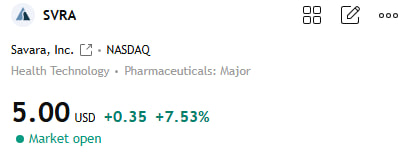
$SVRA +7% Savara Inc. is a clinical-stage biopharmaceutical company. The company focuses on rare respiratory diseases. It has a drug division dedicated to respiratory diseases. Its lead candidate, molgramostim, is an inhaled granulocyte-macrophage colony-stimulating factor (GM-CSF) currently in Phase III clinical development for the treatment of autoimmune pulmonary alveolar proteinosis (aPAP).
$NTAP (I’ll send you the full report separately via WhatsApp; you can find my number on my profile page)
Closed at an all-time high. That Oracle service hasn’t been included in this quarter’s revenue yet.
ONTAP is set to launch as native managed storage for OCI, utilizing Oracle’s own console, APIs, and billing—not just retroactively added as an afterthought. The key selling point is that existing ONTAP workloads in data centers can be migrated as-is; the two companies are selling them together with the goal of running AI right next to the data.
Contract value, launch date, and revenue split were not disclosed. Public cloud revenue last quarter was $206 million, accounting for only about 10% of total revenue of $2.03 billion. First-quarter revenue was $2.03 billion, up 30% year-over-year. Hybrid cloud revenue was $1.82 billion, and all-flash array revenue was $1.3 billion, up 47% year-over-year.
GAAP earnings per share were $1.88, and non-GAAP earnings per share were $2.58. Second-quarter guidance is 2.025–2.175 billion, with non-GAAP earnings per share of 2.54–2.64. Full-year guidance was raised to 7.975–8.225 billion, with non-GAAP earnings per share of 9.73–10.03.
The next earnings report is scheduled for around December 1. Analysts’ target price is 206, below the current price. Director Carrie Palin sold 5,000 shares on October 2 at an average price of 216.43, for approximately 1.08 million. Her direct holdings now stand at 6,660 shares, a reduction of about 43%.
Submitted on October 6. The stock closed at 228.45 that day, with an intraday high of 230.49. The 52-week high is 231.90. After-hours trading closed at 229.30. Today’s range is more likely to be 224–233. Only if it breaks above 232 can we talk about 240; if it drops back to 216, it will first return to the price at which she sold.
#QQQ #STOCK #NTAP
$NTAP (I’ll send you the full report separately via WhatsApp; you can find my number on my profile page)
Closed at an all-time high. That Oracle service hasn’t been included in this quarter’s revenue yet.
ONTAP is set to launch as native managed storage for OCI, utilizing Oracle’s own console, APIs, and billing—not just retroactively added as an afterthought. The key selling point is that existing ONTAP workloads in data centers can be migrated as-is; the two companies are selling them together with the goal of running AI right next to the data.
Contract value, launch date, and revenue split were not disclosed. Public cloud revenue last quarter was $206 million, accounting for only about 10% of total revenue of $2.03 billion. First-quarter revenue was $2.03 billion, up 30% year-over-year. Hybrid cloud revenue was $1.82 billion, and all-flash array revenue was $1.3 billion, up 47% year-over-year.
GAAP earnings per share were $1.88, and non-GAAP earnings per share were $2.58. Second-quarter guidance is 2.025–2.175 billion, with non-GAAP earnings per share of 2.54–2.64. Full-year guidance was raised to 7.975–8.225 billion, with non-GAAP earnings per share of 9.73–10.03.
The next earnings report is scheduled for around December 1. Analysts’ target price is 206, below the current price. Director Carrie Palin sold 5,000 shares on October 2 at an average price of 216.43, for approximately 1.08 million. Her direct holdings now stand at 6,660 shares, a reduction of about 43%.
Submitted on October 6. The stock closed at 228.45 that day, with an intraday high of 230.49. The 52-week high is 231.90. After-hours trading closed at 229.30. Today’s range is more likely to be 224–233. Only if it breaks above 232 can we talk about 240; if it drops back to 216, it will first return to the price at which she sold.
#QQQ #STOCK #NTAP
Oil gave the record back its excuse. Brent is back over $101 after Houthi strikes on Saudi airports and a Gulf storm threat. WTI is back near $90. Tuesday’s dip under $100 was the excuse. Wednesday’s open does not have it.
#Oil#Brent
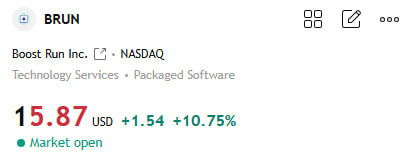
$BRUN—NVIDIA’s preferred cloud partner. A five-year agreement worth 525.6 million, providing GB300 NVL72, plus network storage and CPU nodes. The counterparty listed in the 8-K filing is Cohere. The stock touched 16 today but didn’t close above that level.
Closed at 14.33 on Monday. Before the market opened this morning, the price fluctuated, hovering around 14, with a market cap of approximately 1.1 billion. Opened at 15.61 today, with a low of 14.79 and a high of 16.25; in the afternoon, it traded around 15.3–15.5, up about 7%. The trading range of 12.50–16.50 held throughout the session.
The 16 level was breached and not held; 18 is out of the question. The 12 level wasn’t retested, and the refund right for July 2027 wasn’t priced separately today.
The term for each rack is approximately five years from the date of acceptance. If the agreed-upon minimum volume has not been accepted by July 15, 2027, Cohere may terminate the agreement and recover the advance payment.
The company has added the total value of signed contracts to over 2.6 billion, calculated based on the amounts customers have committed to pay during the contract period, including prepayments—not yet recognized revenue. Second-quarter revenue was 31.1 million, up 270% year-over-year. At that time, the total contract value was 1.9 billion.
As of June 30, unrestricted cash stood at 120.2 million. The reverse merger was just completed on May 8. The procurement agreement with Dell is worth 1.44 billion, and negotiations are ongoing for an additional 4 to 5 billion in hardware. The year-end recurring revenue target is approximately 400 million. The 52-week high was 42, and the stock has been trending downward since June. Initial infrastructure acceptance is expected to begin in early Q2 2027.
2.6 billion is the committed amount. 31.1 million is the confirmed amount. The 16.25 purchase of Cohere is subject to acceptance; it has not yet been accepted.
A new private group has been created. The number is on the homepage.
#QQQ #STOCK #BRUN
$BRUN Boost Run is an NVIDIA Preferred Cloud Partner. The five-year agreement is valued at 525.6 million, providing GB300 NVL72 computing power, along with network storage and CPU nodes. The 8-K filing identifies the counterparty as Cohere. The term for each rack is approximately five years from the date of acceptance.
If the agreed-upon minimum scale is not accepted by July 15, 2027, Cohere may terminate the agreement and recover the advance payment. The company has added the total value of all signed contracts to over 2.6 billion, calculated based on the amounts customers have committed to pay during the contract period, including advance payments, rather than revenue already recognized. Second-quarter revenue was 31.1 million, up 270% year-over-year.
(A new private WhatsApp group has been launched; personal numbers are listed on the homepage.)
At that time, the total contract value was 1.9 billion. As of June 30, unrestricted cash stood at 120.2 million. The backdoor listing was just completed on May 8. The procurement agreement with Dell is worth 1.44 billion, and the company is still negotiating an additional 4 to 5 billion in hardware. The year-end recurring revenue target is approximately 400 million. The 52-week high was $42, but the stock has been on a steady decline since June.
This morning, there were pre-market quotes showing an increase, as well as intraday quotes showing a decline, hovering around $14, with a market capitalization of approximately $1.1 billion. Today’s range looks more like $12.50–$16.50. Only after it holds steady at $16 can we talk about $18; if it drops back to $12, the market is discounting the refund right for July 2027.
#QQQ #STOCK #BRUN
$BNR Founded in 2014, Ranshi Medicine’s mission is “to safeguard the light of life through science.” The company focuses on developing innovative, reliable, and clinically valuable companion diagnostic and early detection products for cancer. Its business and R&D efforts primarily cover: 1) precision medicine testing for cancer patients; 2) collaborations with global anti-cancer pharmaceutical companies on biomarkers and companion diagnostics; and 3) multi-cancer early detection based on liquid biopsy.
$BRUN Boost Run is an NVIDIA Preferred Cloud Partner. The five-year agreement is valued at 525.6 million, providing GB300 NVL72 computing power, along with network storage and CPU nodes. The 8-K filing identifies the counterparty as Cohere. The term for each rack is approximately five years from the date of acceptance.
If the agreed-upon minimum scale is not accepted by July 15, 2027, Cohere may terminate the agreement and recover the advance payment. The company has added the total value of all signed contracts to over 2.6 billion, calculated based on the amounts customers have committed to pay during the contract period, including advance payments, rather than revenue already recognized. Second-quarter revenue was 31.1 million, up 270% year-over-year.
(A new private WhatsApp group has been launched; personal numbers are listed on the homepage.)
At that time, the total contract value was 1.9 billion. As of June 30, unrestricted cash stood at 120.2 million. The backdoor listing was just completed on May 8. The procurement agreement with Dell is worth 1.44 billion, and the company is still negotiating an additional 4 to 5 billion in hardware. The year-end recurring revenue target is approximately 400 million. The 52-week high was $42, but the stock has been on a steady decline since June.
This morning, there were pre-market quotes showing an increase, as well as intraday quotes showing a decline, hovering around $14, with a market capitalization of approximately $1.1 billion. Today’s range looks more like $12.50–$16.50. Only after it holds steady at $16 can we talk about $18; if it drops back to $12, the market is discounting the refund right for July 2027.
#QQQ #STOCK #BRUN
$BRUN Boost Run is an NVIDIA Preferred Cloud Partner. The five-year agreement is valued at 525.6 million, providing GB300 NVL72 computing power, along with network storage and CPU nodes. The 8-K filing identifies the counterparty as Cohere. The term for each rack is approximately five years from the date of acceptance.
If the agreed-upon minimum scale is not accepted by July 15, 2027, Cohere may terminate the agreement and recover the advance payment. The company has added the total value of all signed contracts to over 2.6 billion, calculated based on the amounts customers have committed to pay during the contract period, including advance payments, rather than revenue already recognized. Second-quarter revenue was 31.1 million, up 270% year-over-year.
(A new private WhatsApp group has been launched; personal numbers are listed on the homepage.)
At that time, the total contract value was 1.9 billion. As of June 30, unrestricted cash stood at 120.2 million. The backdoor listing was just completed on May 8. The procurement agreement with Dell is worth 1.44 billion, and the company is still negotiating an additional 4 to 5 billion in hardware. The year-end recurring revenue target is approximately 400 million. The 52-week high was $42, but the stock has been on a steady decline since June.
This morning, there were pre-market quotes showing an increase, as well as intraday quotes showing a decline, hovering around $14, with a market capitalization of approximately $1.1 billion. Today’s range looks more like $12.50–$16.50. Only after it holds steady at $16 can we talk about $18; if it drops back to $12, the market is discounting the refund right for July 2027.
#QQQ #STOCK #BRUN
October hold is the base case. December is not. Traders put about a 76%–78% chance on no move this month. A December hike is still largely priced. Wednesday’s minutes matter more than another jobs recap.
#FOMC#FedWatch
$CBRS
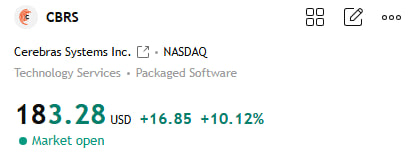
The market is trading on whether OpenAI still recognizes it, not on how many wafers have already been delivered. Today’s mention of “close partner” made up for half of Friday’s loss.
It closed at 166.43 on Friday. Reports that day indicated that GPT-6.1 Sol’s Ultrafast model used NVIDIA rather than Cerebras, causing the stock to drop nearly 20% at one point during the session.
In pre-market trading, the stock reached around 177, up about 6%. It opened at 175 today, with a low of 174.5 and a high of 185.3. In the afternoon, it hovered around 182, up about 9%–10%.
The upper boundary of the 168–185 trading range was tested. The stock held steady at 180 but did not reach 195. The 52-week low of 161 was not retested, and the partnership was not viewed as a failure to deliver.
Before Monday’s market open, Altman referred to Cerebras as a “close partner” and said the two companies were working together to accelerate output.
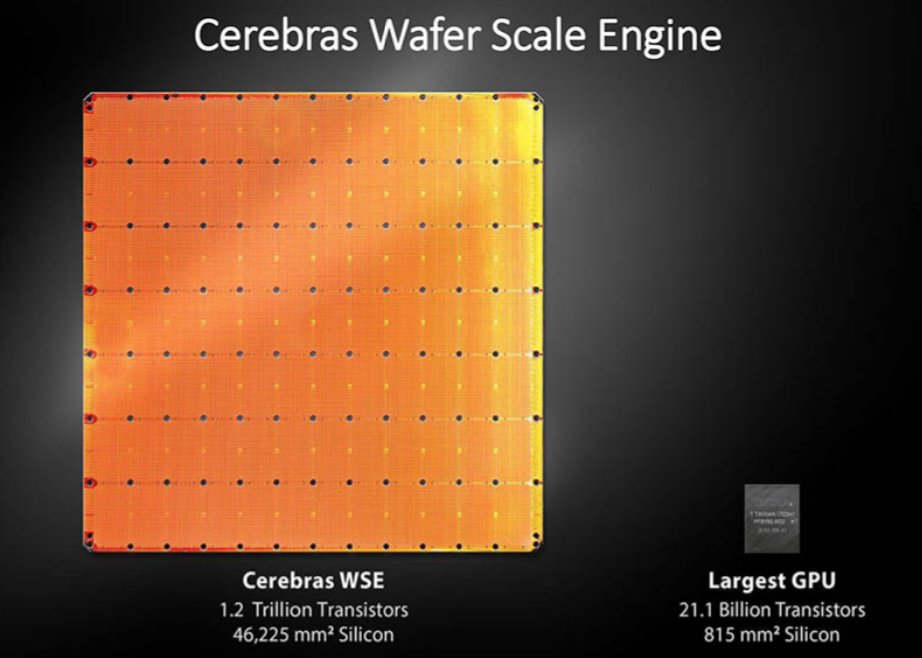
The multi-year agreement signed in January covers 750 megawatts of wafer-level systems, valued at over 10 billion; other reports indicate the contract exceeds 20 billion and includes an option to purchase an additional 1.25 gigawatts by the end of 2030. In the second quarter, the company recognized 56.8 million in revenue related to this arrangement, accounting for approximately 32% of GAAP revenue.
Second-quarter GAAP revenue was 180.1 million, up 74% year-over-year; core revenue was 209.9 million, doubling year-over-year. GAAP gross margin was 14%, and core gross margin was 41%; the company remains unprofitable. Cash on hand stands at 8.6 billion.
Remaining performance obligations total 25.4 billion, but only about 22% is expected to be recognized over the 24 months through June 2028. Market capitalization is approximately 39.5 billion, roughly 1.6 times the backlog. 52-week range: 161–386. Analysts’ average price target is approximately 292; Mizuho’s target is 300.
The next earnings report is scheduled for around November 19.
A single statement from a partner can push the price back up from 166 to 182. Recognizing only 22% of the 25.4 billion over two years indicates that deliveries are still to come. On November 19, the focus will be on whether this arrangement can continue to generate revenue—not on today’s statement.
This is not investment advice.
#QQQ #STOCK #CBRS
$CBRS is trading on whether OpenAI still recognizes it, not on how many wafers have already been delivered.
On Friday, reports emerged that GPT-6.1 Sol’s Ultrafast model used NVIDIA chips instead of Cerebras, causing the stock price to drop nearly 20% at one point.
Before the market opened on Monday, Altman described Cerebras as a “close partner,” adding that the two companies are working together to increase production speed. The multi-year agreement signed in January covers 750 megawatts of wafer-level systems, valuing the company at over 10 billion; other reports suggest the contract is worth over 20 billion and includes an option to purchase an additional 1.25 gigawatts by the end of 2030.
In the second quarter, the company recognized 56.8 million in revenue related to this arrangement, accounting for approximately 32% of GAAP revenue. Second-quarter GAAP revenue was 180.1 million, up 74% year-over-year; core revenue was 209.9 million, doubling year-over-year. GAAP gross margin was 14%, and core gross margin was 41%, though the company remains in the red. Cash on hand stands at 8.6 billion.
Remaining performance obligations total 25.4 billion, but only about 22% is expected to be recognized over the 24 months through June 2028. Market capitalization is approximately 39.5 billion, roughly 1.6 times the backlog. The 52-week range is 161–386. Analyst targets average around 292, with Mizuho setting a target of 300.
The next earnings report is scheduled for around November 19. Friday’s close was 166.43. In premarket trading, the stock reached the 177 range, up about 6%. Today’s trading range is more likely to be 168–185. Only after it firmly holds above 180 can we talk about 195; if it drops back to 161—the 52-week low—the partnership will be treated as a non-delivery.
#QQQ #STOCK #CBRS
$CBRS is trading on whether OpenAI still recognizes it, not on how many wafers have already been delivered.
On Friday, reports emerged that GPT-6.1 Sol’s Ultrafast model used NVIDIA chips instead of Cerebras, causing the stock price to drop nearly 20% at one point.
Before the market opened on Monday, Altman described Cerebras as a “close partner,” adding that the two companies are working together to increase production speed. The multi-year agreement signed in January covers 750 megawatts of wafer-level systems, valuing the company at over 10 billion; other reports suggest the contract is worth over 20 billion and includes an option to purchase an additional 1.25 gigawatts by the end of 2030.
In the second quarter, the company recognized 56.8 million in revenue related to this arrangement, accounting for approximately 32% of GAAP revenue. Second-quarter GAAP revenue was 180.1 million, up 74% year-over-year; core revenue was 209.9 million, doubling year-over-year. GAAP gross margin was 14%, and core gross margin was 41%, though the company remains in the red. Cash on hand stands at 8.6 billion.
Remaining performance obligations total 25.4 billion, but only about 22% is expected to be recognized over the 24 months through June 2028. Market capitalization is approximately 39.5 billion, roughly 1.6 times the backlog. The 52-week range is 161–386. Analyst targets average around 292, with Mizuho setting a target of 300.
The next earnings report is scheduled for around November 19. Friday’s close was 166.43. In premarket trading, the stock reached the 177 range, up about 6%. Today’s trading range is more likely to be 168–185. Only after it firmly holds above 180 can we talk about 195; if it drops back to 161—the 52-week low—the partnership will be treated as a non-delivery.
#QQQ #STOCK #CBRS
Friday’s tape was a short list. SOX +2.4%. Nvidia tagged $237.87, about $5.7 trillion. AMD is in the $1 trillion club. Equal-weight S&P only managed about +0.3%. The index is fine. The average stock is not.
#NVDA#SOXX
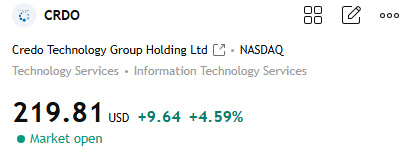
$CRDO rose from 187 to around 224 in two days. 309 remains above, with a gap in between. Today, it touched a high of 231 but retreated back below 220 before the close.
It closed at 210.17 on Thursday, up 7.9%, with a session low of 195. Today it opened around 215, trading in a range of approximately 212–231.6; in the afternoon, it traded between 218 and 219, up about 4%. The upper boundary of the 210–228 trading range was breached. The price briefly held above 225 but failed to sustain it; 240 is out of the question. It did not retest 195, and the optical story was not interpreted today as a pullback in the copper cable segment.
First-quarter revenue was 479 million, up 115% year-over-year. Copper-based active cables remain the core business. The optical business is gaining momentum: the target for this fiscal year exceeds 600 million, with ZeroFlap, silicon photonics chips, and optical DSPs each projected to exceed 100 million. The company acquired DustPhotonics in August to bolster its silicon photonics capabilities. ZeroFlap is collaborating with Oracle to reduce link jitter in AI clusters. The next earnings report is scheduled for approximately December 2.
Market capitalization is approximately 40 billion, with a P/E ratio of about 75. 52-week range: 86–309. Copper cable shipments are still ongoing. The current price already factors in next year’s optical business revenue. The two-day rebound filled the sentiment gap, not the gap leading up to 309.
Copper cable explains the current situation. The optical business explains whether the stock can go higher. The failure to hold 225 indicates the market hasn’t yet treated the second growth engine as a sure thing.
#QQQ #STOCK #CRDO
$CRDO
The price rebounded from 187 to 224 in two days. The 52-week high remains at 309, with a gap in between. It closed at 210.17 yesterday, up 7.9%. After opening today, it reached the 224 level, rising another 7% or so. Q1 revenue was 479 million, up 115% year-over-year.
Copper-based active cables remain the core business, while the company is ramping up its optical business: the target for the optical business this fiscal year exceeds 600 million, with ZeroFlap, silicon photonics chips, and optical DSPs each expected to surpass 100 million. In August, the company acquired DustPhotonics to strengthen its silicon photonics capabilities. ZeroFlap is collaborating with Oracle to reduce link jitter in AI clusters. The next earnings report is scheduled for approximately December 2.
Market cap is approximately 40 billion, with a P/E ratio of about 75. The 52-week range is 86–309. Copper cable shipments are still ongoing. The current price has already factored in next year’s projected share of the optical business. Today’s range is more likely 210–228.
Only if it holds steady at 225 can we talk about 240; if it drops back to 195—yesterday’s low—the fiber story will initially be treated as a copper cable-driven pullback.
#QQQ #STOCK #CRDO
$CRDO
The price rebounded from 187 to 224 in two days. The 52-week high remains at 309, with a gap in between. It closed at 210.17 yesterday, up 7.9%. After opening today, it reached the 224 level, rising another 7% or so. Q1 revenue was 479 million, up 115% year-over-year.
Copper-based active cables remain the core business, while the company is ramping up its optical business: the target for the optical business this fiscal year exceeds 600 million, with ZeroFlap, silicon photonics chips, and optical DSPs each expected to surpass 100 million. In August, the company acquired DustPhotonics to strengthen its silicon photonics capabilities. ZeroFlap is collaborating with Oracle to reduce link jitter in AI clusters. The next earnings report is scheduled for approximately December 2.
Market cap is approximately 40 billion, with a P/E ratio of about 75. The 52-week range is 86–309. Copper cable shipments are still ongoing. The current price has already factored in next year’s projected share of the optical business. Today’s range is more likely 210–228.
Only if it holds steady at 225 can we talk about 240; if it drops back to 195—yesterday’s low—the fiber story will initially be treated as a copper cable-driven pullback.
#QQQ #STOCK #CRDO
WTI ~$89.40, down about 3.5%. Brent back under $100. EU talked diesel and crude stock releases after U.S. pressure. Energy inflation eased for a morning. Hormuz did not. #Oil
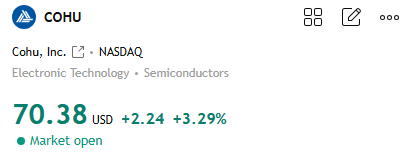
$COHU
They don’t sell lithography machines. They sell sorters that clamp chips in place, control their temperature, test them, and then release them. Today, the price briefly touched the 70 resistance level.
It closed at 68.14 on Tuesday. In pre-market trading, it reached 69–70. Today it opened at 68.4, hit a high of 70.7, a low of 67.4, and closed around 70.2, up about 3%. The 67.5–71 trading range remains intact. 70 is the first resistance level—it was tested—but 71 wasn’t held.
The 74–75 range is close to the year-to-date high of 74.60, but the price didn’t reach it today. The price hasn’t retreated to 66, and buying pressure from the rebound off the September low hasn’t stopped. The old support structure lies below 68; a collapse is still a long way off.
Wells Fargo views TSMC’s 2-nanometer capacity expansion and its second campus in Dallas as catalysts for growth in the equipment sector.
Reports indicate monthly capacity could reach 120,000 wafers by year-end, up from previous estimates of 90,000–100,000. Clients include Apple, NVIDIA, AMD, and Qualcomm, followed by Broadcom, Marvell, and Amazon. As wafer production increases, packaging, testing, and final product testing will expand accordingly. Cohu is not part of that lithography order; it operates in the testing segment.
Second-quarter revenue was $149 million, up 38% year-over-year, with non-GAAP earnings per share of $0.26. Utilization rates for the testing unit were approximately 80% at the end of June; the company views this line as a threshold for customers to resume capital expenditures. Computing-related orders accounted for 46% of system orders, up 150% year-over-year.
Full-year revenue growth guidance has been raised to approximately 35%. High-performance computing revenue is estimated at 100–110 million, with the AI opportunity pipeline totaling approximately 850 million. The Eclipse sorter features active thermal management and can handle approximately 4,000 watts; in Q2, the company secured a 26 million follow-on order for testing high-power data center processors.
Neon has shipped products for HBM3, HBM4, and HBM4E, and has completed certification at a Taiwanese packaging and testing facility. Q3 guidance is 170 million ± 7 million, compared to consensus estimates of approximately 146 million at the time. Cash and investments total approximately 498 million. Production capacity in Malaysia is doubling. The next earnings call is scheduled for approximately October 28.
The CEO sold shares in September as planned at prices of 60 and 65; this is not a signal regarding fundamentals, nor does it indicate an increase in holdings. Wafer capacity expansion explains demand. Test orders are the key driver of revenue.
This is not investment advice.
#QQQ #STOCK #COHU
$COHU doesn’t sell lithography machines; it sells the sorters that hold chips in place, control their temperature, test them, and release them.
Wells Fargo views TSMC’s potential expansion of 2nm capacity and its second campus in Dallas as growth drivers for equipment stocks.
According to reports, monthly production capacity could reach 120,000 wafers by year-end, up from the previous estimate of 90,000 to 100,000 wafers. Customers include Apple, NVIDIA, AMD, and Qualcomm, with Broadcom, Marvell, and Amazon following. As wafer output increases, packaging, testing, and final product testing capacity will expand accordingly. CoHU isn’t part of that lithography order; it’s in the testing segment.
Q2 revenue was $149 million, up 38% year-over-year, with non-GAAP earnings per share of $0.26. Utilization rates for the test cells reached approximately 80% by the end of June; the company views this line as a threshold for customers to resume capital expenditures. Computing-related orders accounted for 46% of system orders, up 150% year-over-year.
Full-year revenue growth guidance was raised to approximately 35%; high-performance computing revenue is estimated at $100 million to $110 million, with an AI opportunity pipeline of approximately $850 million. The Eclipse sorter is equipped with active thermal management and can handle up to approximately 4,000 watts; in Q2, the company secured another $26 million in follow-on orders for testing high-power data center processors.
Neon testers have been shipped for HBM3, HBM4, and HBM4E, and have completed certification at a Taiwanese packaging and testing facility. Q3 guidance is 170 million ± 7 million; consensus at the time was approximately 146 million. Cash and investments total approximately 498 million. Production capacity in Malaysia is being doubled. 38.2 represents the old structure.
The price is already at 68; a break below that level would signal a collapse, but it’s currently far from it. Yesterday’s close was 68.14, and it touched 69–70 in premarket trading. The 52-week high is 74.60, having risen from around 18 over the past year. Today’s range looks more like 67.5–71, with 70 serving as the first resistance level.
Only after a firm hold above 71 can we talk about 74–75, which is close to the year-to-date high; a drop back to 66 would signal a pause in the buying momentum that has been building since the September lows. The next earnings report is scheduled for around October 28. The CEO sold shares in September as planned at 60 and 65—this isn’t a signal about fundamentals, but it also doesn’t indicate an increase in holdings.
#QQQ #STOCK #COHU
$COHU doesn’t sell lithography machines; it sells the sorters that hold chips in place, control their temperature, test them, and release them.
Wells Fargo views TSMC’s potential expansion of 2nm capacity and its second campus in Dallas as growth drivers for equipment stocks.
According to reports, monthly production capacity could reach 120,000 wafers by year-end, up from the previous estimate of 90,000 to 100,000 wafers. Customers include Apple, NVIDIA, AMD, and Qualcomm, with Broadcom, Marvell, and Amazon following. As wafer output increases, packaging, testing, and final product testing capacity will expand accordingly. CoHU isn’t part of that lithography order; it’s in the testing segment.
Q2 revenue was $149 million, up 38% year-over-year, with non-GAAP earnings per share of $0.26. Utilization rates for the test cells reached approximately 80% by the end of June; the company views this line as a threshold for customers to resume capital expenditures. Computing-related orders accounted for 46% of system orders, up 150% year-over-year.
Full-year revenue growth guidance was raised to approximately 35%; high-performance computing revenue is estimated at $100 million to $110 million, with an AI opportunity pipeline of approximately $850 million. The Eclipse sorter is equipped with active thermal management and can handle up to approximately 4,000 watts; in Q2, the company secured another $26 million in follow-on orders for testing high-power data center processors.
Neon testers have been shipped for HBM3, HBM4, and HBM4E, and have completed certification at a Taiwanese packaging and testing facility. Q3 guidance is 170 million ± 7 million; consensus at the time was approximately 146 million. Cash and investments total approximately 498 million. Production capacity in Malaysia is being doubled. 38.2 represents the old structure.
The price is already at 68; a break below that level would signal a collapse, but it’s currently far from it. Yesterday’s close was 68.14, and it touched 69–70 in premarket trading. The 52-week high is 74.60, having risen from around 18 over the past year. Today’s range looks more like 67.5–71, with 70 serving as the first resistance level.
Only after a firm hold above 71 can we talk about 74–75, which is close to the year-to-date high; a drop back to 66 would signal a pause in the buying momentum that has been building since the September lows. The next earnings report is scheduled for around October 28. The CEO sold shares in September as planned at 60 and 65—this isn’t a signal about fundamentals, but it also doesn’t indicate an increase in holdings.
#QQQ #STOCK #COHU
Nasdaq closed Wednesday at 26,861, +0.2%. NDX 30,409. S&P 7,652, −0.3%. Dow 50,906, −0.9%. Month: Nasdaq green. Dow and S&P red. Quarter: Dow the laggard. AI carried Q3. The long bond did not. #QQQ