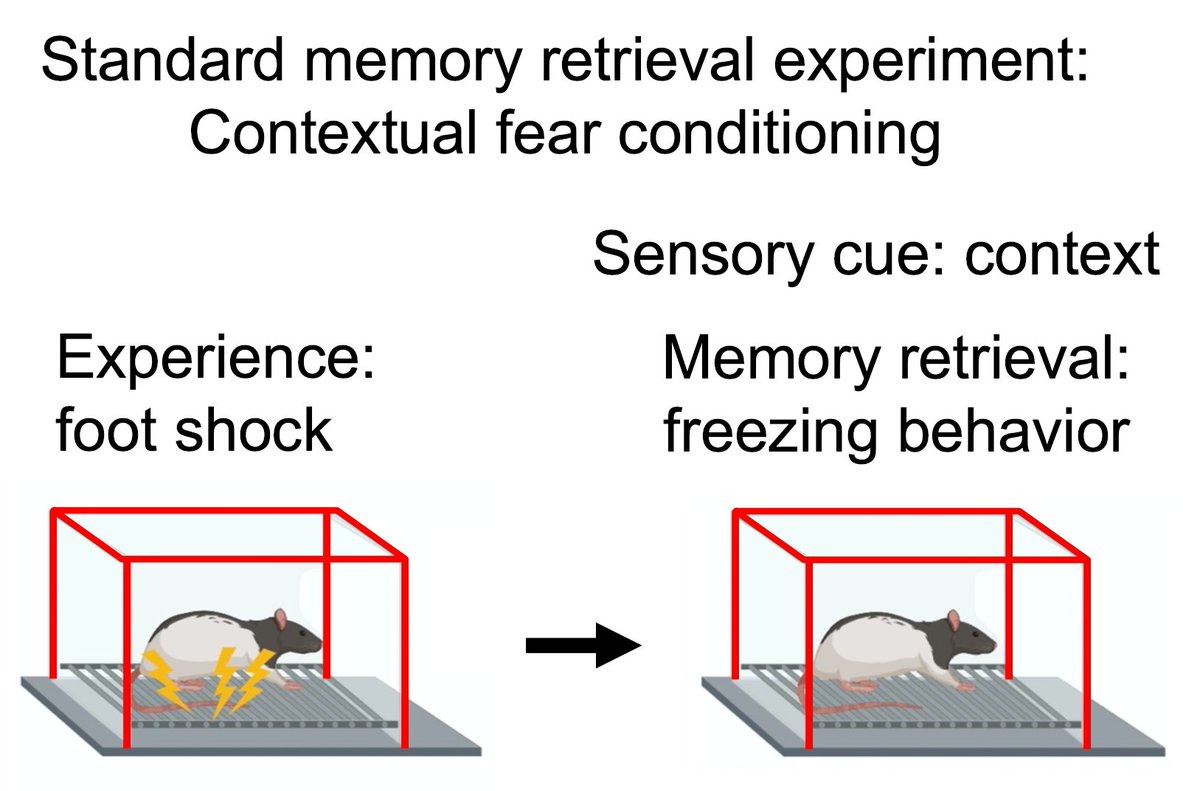
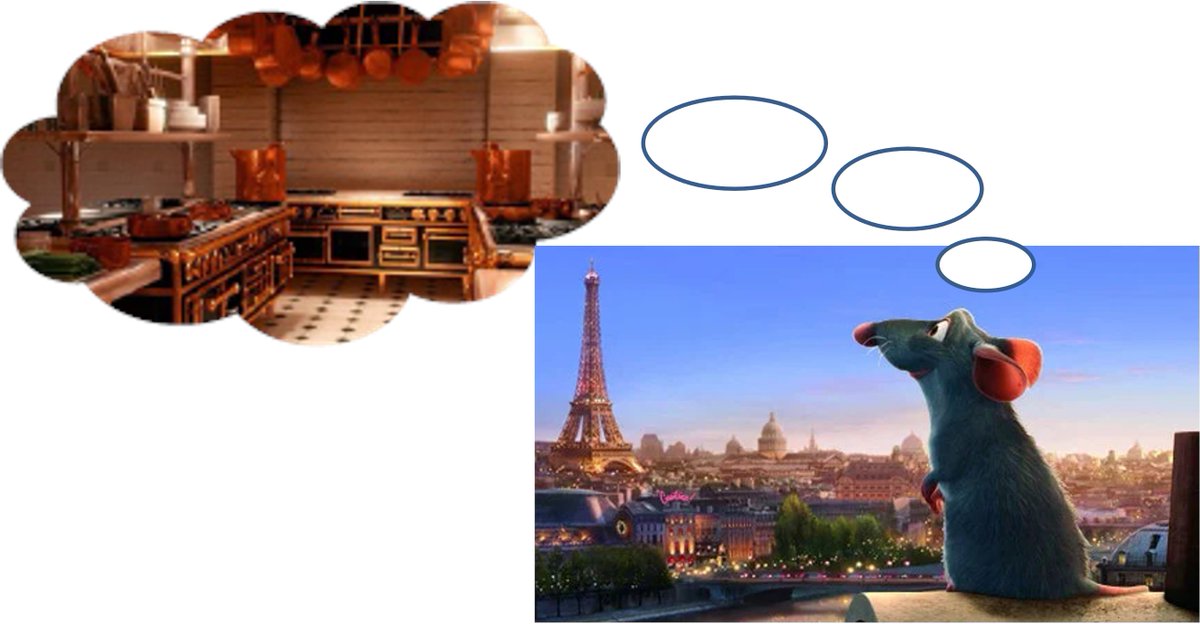
Animal models of memory retrieval trigger retrieval with cues and measure retrieval with behavior. We built a neurofeedback paradigm for direct study of neural activity associated with memory retrieval separated from activity related to cues or behavior. https://t.co/i8OiKQCsqz
This paradigm can be used for direct study of neural signatures of memory retrieval in typical brains and in models of learning and memory disorders.
Thank you so much to everyone who worked on this project, including @ak_gillespie
A post-SfN reflection:
The social dynamics at SfN poster sessions are always fascinating. But also sometimes frustrating.
e.g.: A trainee in my lab (woman) mentioned noticing presenters ignoring her whenever there were other men at the poster. 😞
1/3
SFNers- if you’re around tomorrow morning (oct. 9, 8-12) come chat with me at poster 425.10/U35!
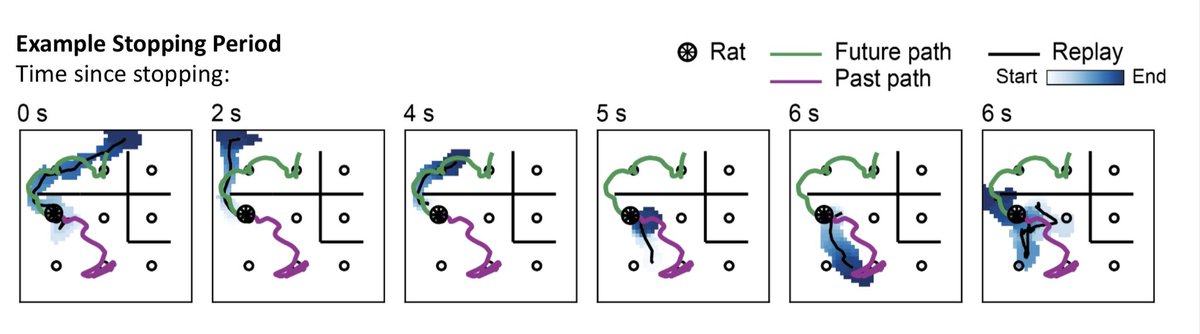
I’ll be presenting findings of a strict temporal organization to awake hippocampal replay, and what this counterintuitive organization reveals about the mechanisms generating replay
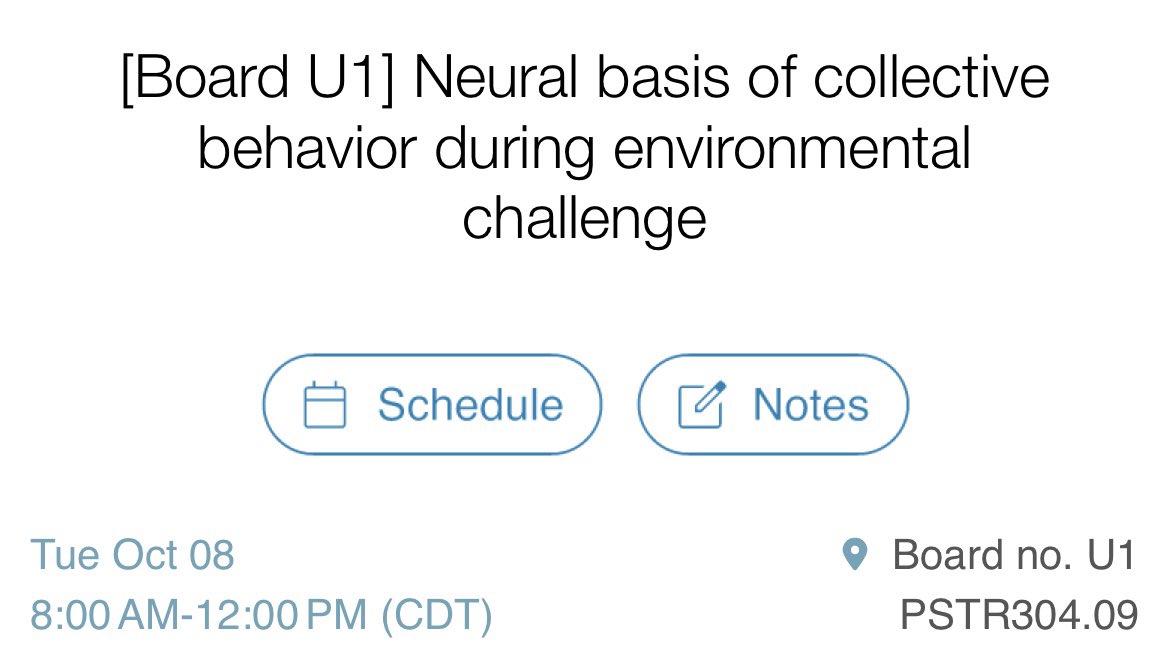
A little late to the party but I’m here #SfN24! I’m presenting a poster Tuesday morning (U1) on group coordination during thermal challenge! Come by and say hi 🙋🏻♀️🤗
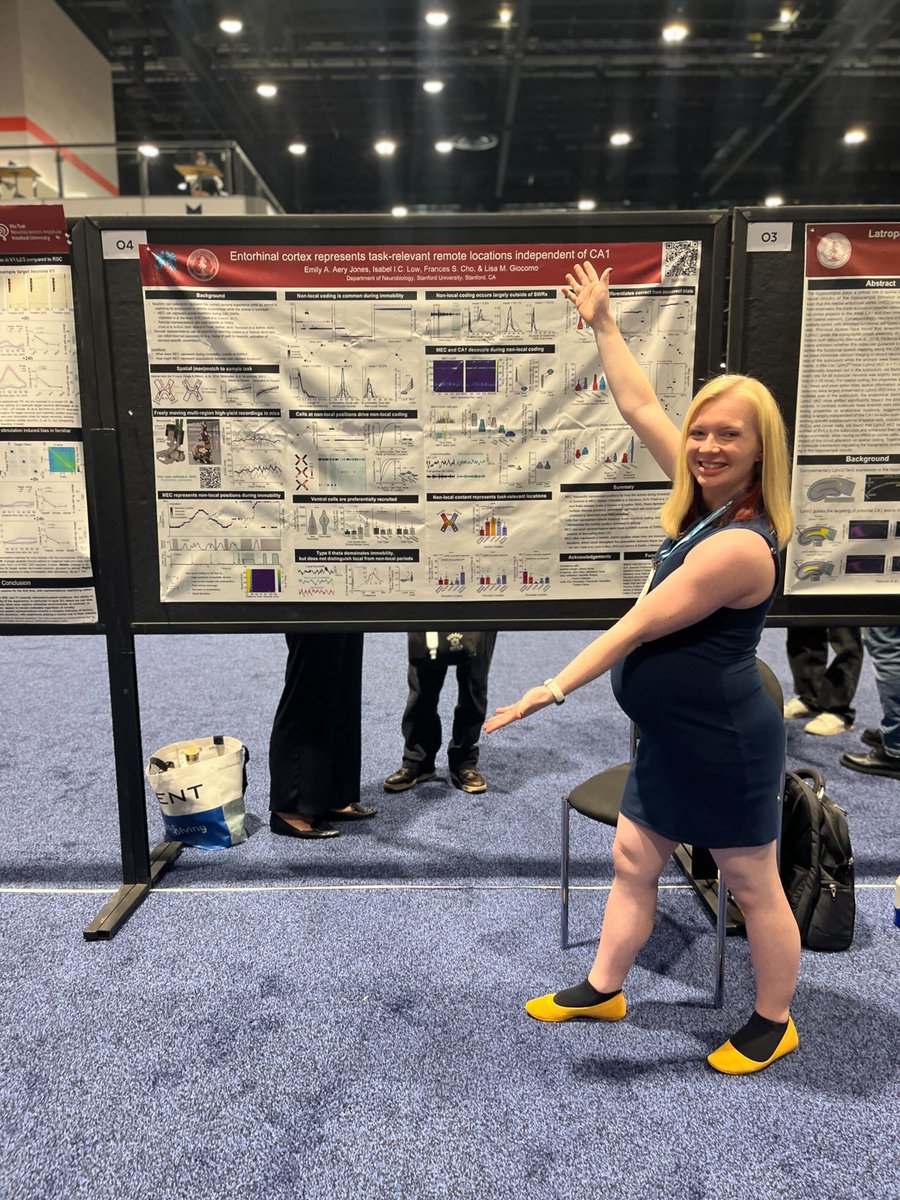
Spot the difference: same project, same conference, 1 year and 1 preprint and most of 1 pregnancy later. Thank you to everyone who stopped by my #SfN24 poster; I had a blast!
@dlevenstein@ak_gillespie @eric_denovellis @RhythmicSpikes That is a great question! One interpretation is that remote representations outside of SWRs are more amenable to control by the animal and so could support retrieval to inform upcoming decisions.
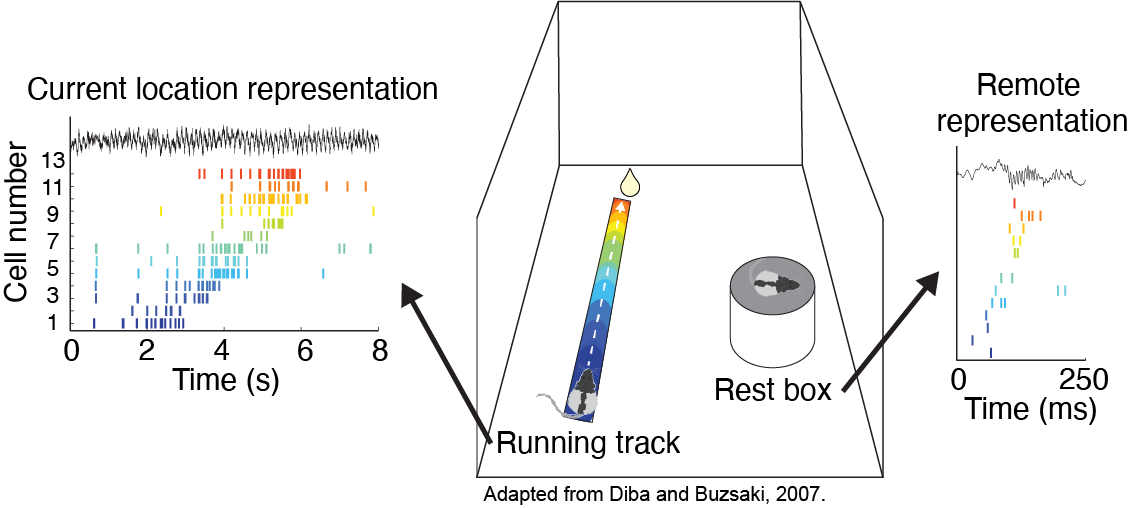
To isolate memory retrieval, we focused on hippocampal “place cells” that can represent an animal’s current location or remote locations that were visited previously. These remote representations are coordinated with activity across brain areas, consistent with memory retrieval.
Congratulations to Simons Foundation executive vice president of Autism & Neuroscience, Kelsey Martin, on her election to the @theNASciences! https://t.co/FdhwaGpPCC
Thank you coauthors, @ak_gillespie, @eric_denovellis, Josh Chu, and mentors, Loren Frank and Caleb Kemere and everyone who helped with this effort @RhythmicSpikes.
Also, please read Josh’s preprint describing the real-time spatial decoding system. https://t.co/qctV2Jk485
Our results provide a new animal model of directed memory retrieval.
These findings complement and extend recent beautiful examples of hippocampal neurofeedback including https://t.co/aiDeoqo5K0 and https://t.co/LYv1sCqzbh.
To do this, we needed to isolate neural activity specific to memory retrieval, because most animal models use sensory cues to drive retrieval and measure it by behavior. This makes it hard to separate retrieval-specific neural activity from activity related to other features.
Humans can choose to remember specific past events. Can animals do the same?
We used neurofeedback in rats to answer this question. Check out our preprint: https://t.co/rtPS70ypuL
#tweeprint below
As humans, we can remember past experiences and can choose what we remember based on internal goals. We wanted to find out if animals can also choose what experiences they remember. This can help model normal memory processes and how they differ in learning and memory disorders.