Check out our new paper published in @Nature: “Supply chain diversity buffers cities against food shocks”.
We find that cities with diverse food supply chains are better prepared to withstand the impacts of different types of shocks.
https://t.co/iZHIEX1MJU
When the pandemic lockdowns began, prices spiked as goods became scarce. Many people blamed complex, #globalized supply chains for the issue. But a recent study suggests that complex #supplychains may actually protect economies from shortages under stress. https://t.co/Sq5ug8Xgdu
Come and say hello! I will be online showing my poster “Supply Shocks in the Global Food trade Network” at #AGU21 from 4-6 pm. Our poster discusses the following question: How do supply shocks vary in frequency and intensity across food products and countries?
Online or in person – don't miss our #AGU21 session on climate change and agriculture today at 8 am CT. Impressive round of speakers including @jessfanzo, Toshi Hasegawa, @AlexRuane, Jon Proctor, @AlanRobock and many more. See you there!
Excited to be presenting our work on the resilience of urban food supply chains in #AGU21 tomorrow. Details below:
Session: Global Environmental Change 41B (GC41B)
When: Thursday Dec, 16 at 9:15-9:20AM (EST).
Where: Room 206-207 / online
@theAGU@PennStateCEE@PennStateWater
Excited to be presenting our work on the resilience of urban food supply chains in #AGU21 tomorrow. Details below:
Session: Global Environmental Change 41B (GC41B)
When: Thursday Dec, 16 at 9:15-9:20AM (EST).
Where: Room 206-207 / online
@theAGU@PennStateCEE@PennStateWater
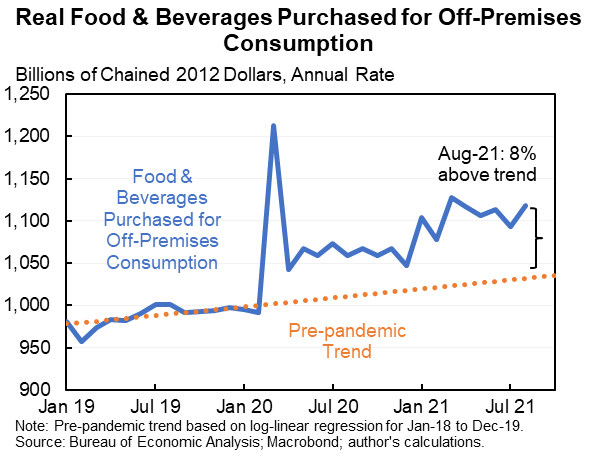
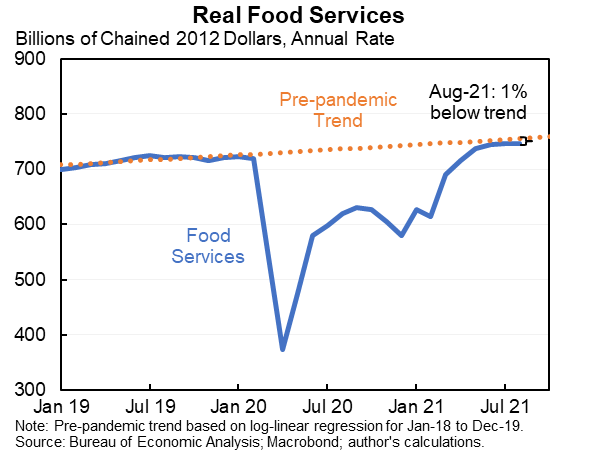
People are buying MUCH more food than every before. Purchases for off-premises consumption (e.g., supermarkets) are 8% above trend while food services (e.g., restaurants) are very close to trend.
These numbers are adjusted for inflation so a real increase in quantity or quality.
I'm happy to share that our paper has been included in Nature's Research Collection in support of the 26th UN Climate Change Conference of the Parties.
Check out our paper "Supply chain diversity buffers cities against food shocks" at: https://t.co/mwC6dqGRmB
#COP26#Foodsystems
This Collection for the 26th Conference of the Parties (#COP26) brings together content on the key pillars of COP26: solutions to challenges in mitigation, adaptation and finance. https://t.co/awvcFFyBW9
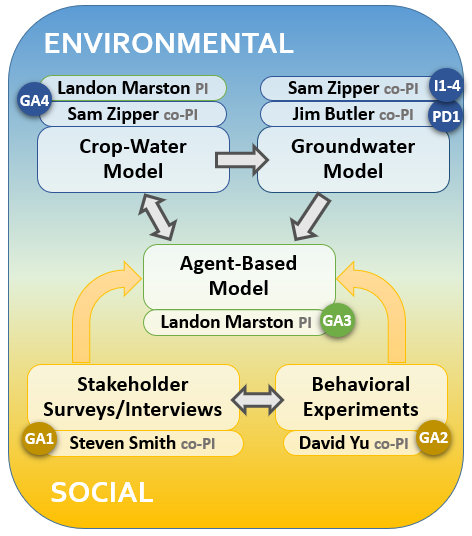
We are looking to fill several Intern/MS/PhD/Postdoc positions to work on an exciting interdisciplinary project related to sustainable groundwater governance! This NSF project (https://t.co/TMcjrb20nj) will integrate environmental and social sciences... 1/3
Barely six days after reaching the Tour de France podium in Paris, Richard Carapaz took the second Olympic gold in Ecuador's history. https://t.co/OKc1clzTEV
"We are fiddling while the world burns, floods and chokes" | Must-read piece by @EugeneRobinson (w/ a nod to yours truly) for the @WashingtonPost: https://t.co/gq4dhHiLVm
Finally, this work was possible thanks to the @NSF-funded FEWSION project (https://t.co/zGbj3n2lMi). Ben Ruddell and Richard Rushforth from FEWSION and @NAU are co-authors of the paper. The crucial FEWSION podcast made an episode about the paper:
https://t.co/GsLI8ltOZ3
Check out our new paper published in @Nature: “Supply chain diversity buffers cities against food shocks”.
We find that cities with diverse food supply chains are better prepared to withstand the impacts of different types of shocks.
https://t.co/iZHIEX1MJU
Also, a link to the Nature podcast episode in which my advisor and co-author of the paper Alfonso Mejia @PSUEngineering talks about the main findings.
https://t.co/rPU7T4Nkyv