BREAKING: A new U.S. study of over 2,500 kids across 23 states, led by a multi-center team of scientists, reports that fluoride in public drinking water during pregnancy is linked to lower cognition scores in children —even at levels considered "optimal" for dental health. The U.S. remains the most fluoridated nation on Earth. It's time for that to change. @SecKennedy@DrJBhattacharya
https://t.co/9jZgdIUjk0
"The public deserves to have someone come in that doesn't have an ideological axe to grind." - Michael Connett, Fluoride Litigation Attorney @michaelpconnett
Michael Connett argues that any major review of water fluoridation should be led by independent researchers without a history of advocating for the policy.
How important is it for scientific reviews to be led by people with no publicly stated position on the issue they're investigating?
🎥 Watch here: https://t.co/9SUfe4GCNO
Debunking a Recent Study Claiming Fluoride Has "No Effect on IQ"
In this clip from Derrick Broze's recent interview with fluoride trial attorney @michaelpconnett, Mr. Connett breaks down a recent study and subsequent mainstream media reports claiming that water fluoridation has no impact on the nuerodevelopment of children.
Watch the whole interview: Exclusive: Historic Fluoride Ruling Overturned – What Comes Next? with Michael Connett https://t.co/9aUUUOIcrl
NEW: Exclusive: Historic Fluoride Ruling Overturned – What Comes Next? with @michaelpconnett
Derrick sits down with attorney Michael Connett to discuss the recent decision by a federal appeals court to overturn the historic 2024 federal court ruling.
https://t.co/9aUUUOIcrl
The EPA claims to want to Make America Healthy Again.
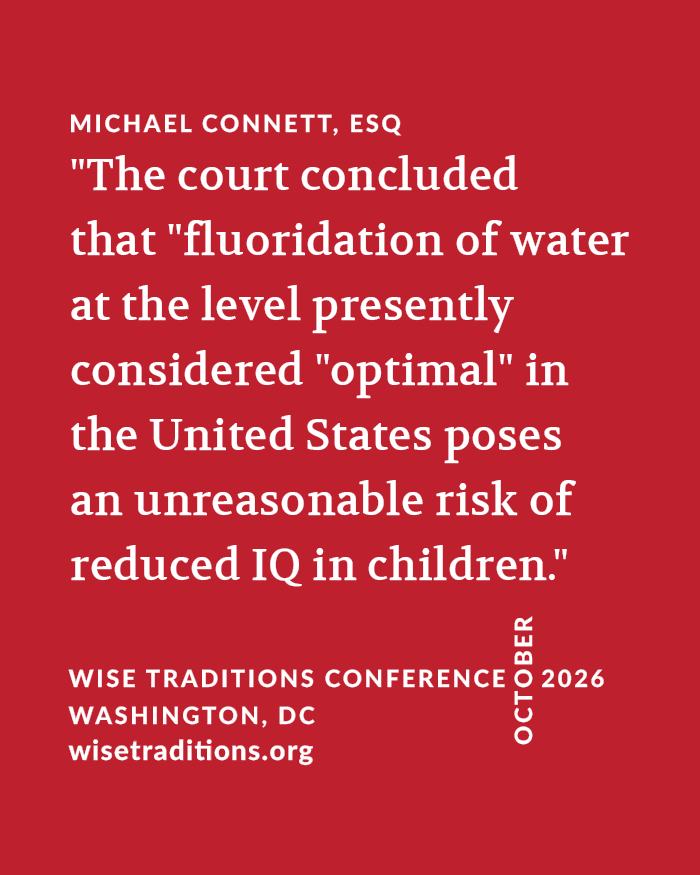
It had an opportunity to do just that on the fluoride issue. In the fall of 2024, a federal district court found (after hearing extensive expert testimony) that adding fluoride to water poses an unreasonable risk of neurological harm in children, and ordered EPA to eliminate this risk.
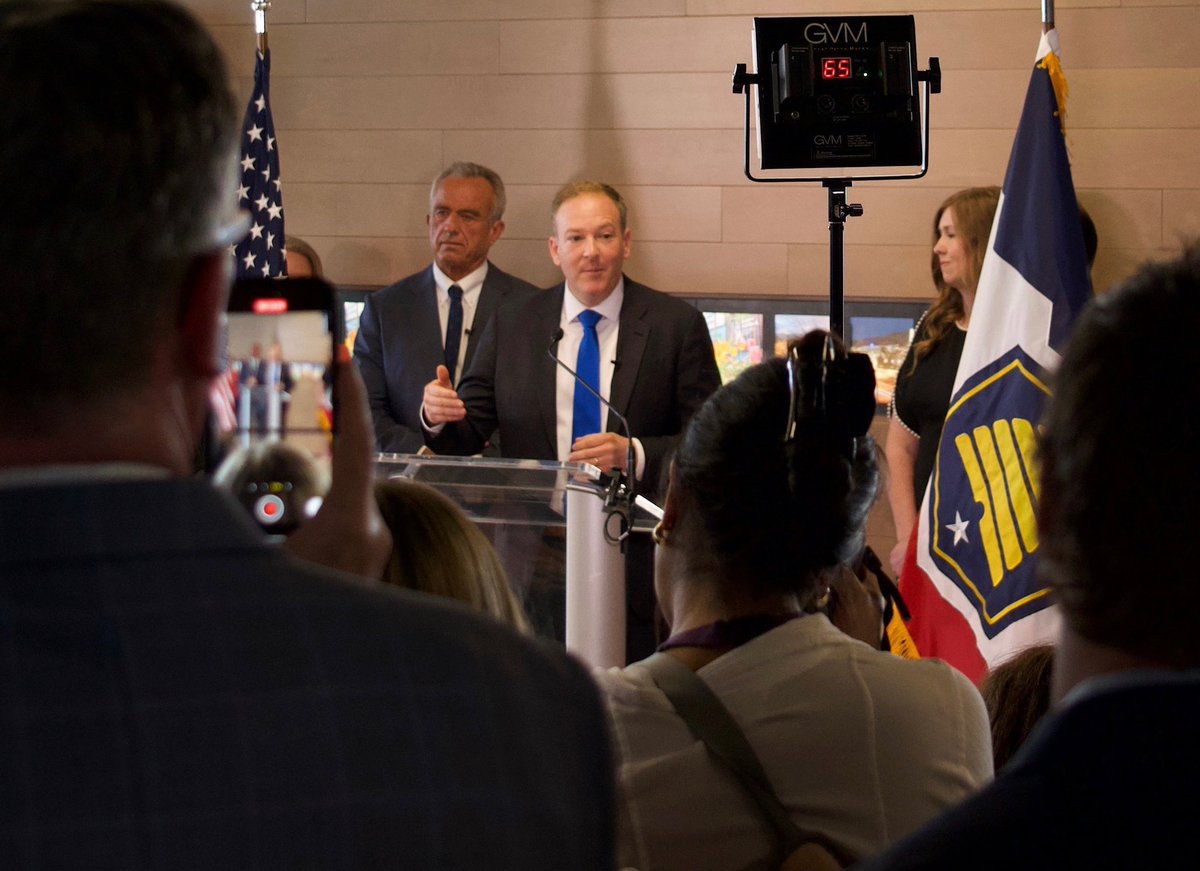
In the final days of the Biden administration, the EPA announced (as expected) its intention to appeal this landmark decision. This announcement, however, had no binding effect on Lee Zeldin and the new administration.
Zeldin had complete discretion to stand down on the appeal, and to follow the court's order to protect Americans from the health risks posed by fluoridation. Zeldin, however, chose to continue with the appeal.
Despite repeated pleas from the MAHA community, Zeldin and the EPA have persisted with its odious appeal. And now, based on a procedural technicality, a federal appeals court has granted Zeldin's request to vacate the district court's order.
EPA has thus officially undone a historic opportunity to protect the public from a toxic chemical added to most American water supplies (and all beverages and foods made with the water).
There are many ways to describe EPA's conduct here, but Making America Healthy Again is not one of them.
@SecKennedy@LeeMZeldin@FluorideAction@FluorideLawsuit
A federal court just told a judge to ignore years of fluoride safety data and travel back to 2020. The science didn't change. The courtroom rules did. @CHDTVLive@ChildrensHD@BrianHookerPhD
For the complete Defender story: https://t.co/7MS3sTzBBs
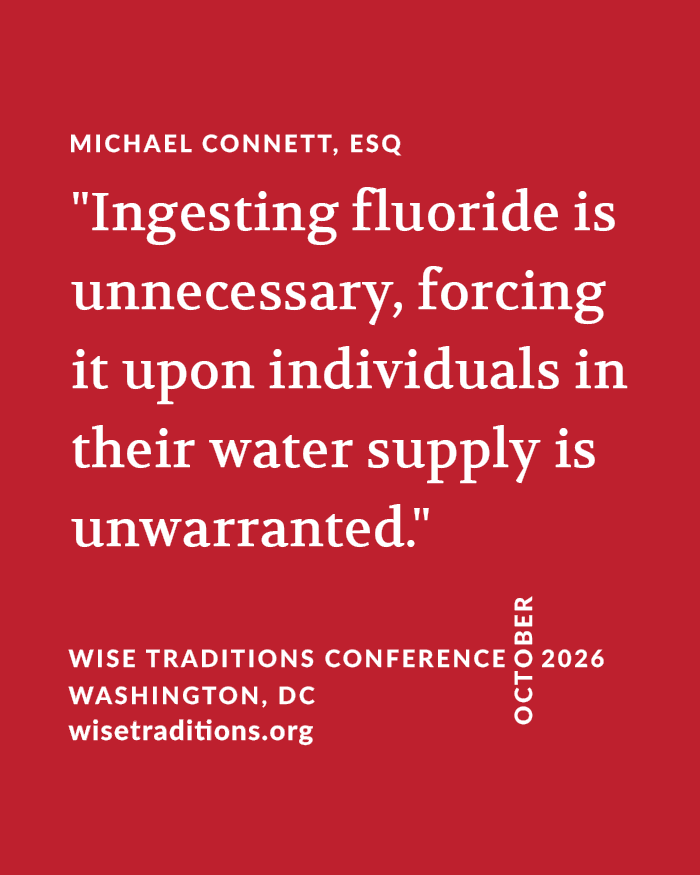
Michael Connett, Esq., will present at our 2026 Wise Traditions Conference that'll be held in DC October 16–18. Join us: https://t.co/bqdbemNTV4
Michael Connett @michaelpconnett is a partner at Siri & Glimstad LLP and lead attorney in the groundbreaking lawsuit on water fluoridation that resulted in a federal court concluding that fluoridation "poses an unreasonable risk of reduced IQ in children." This landmark judgment has sparked legislative efforts across the U.S. to end fluoridation. Mr. Connett is now litigating the first-ever class action lawsuits against the makers of fluoride toothpaste and mouthwash for falsely advertising these products as safe for young children. Mr. Connett has studied the effects of fluoride for over twenty years. He received his law degree magna cum laude from Temple Law School where he served as editor in chief of the Temple Law Review
If you are asking about human trials on fluoridated dental products, then the answer is no. I do not believe there has been an attempt to determine if the ingestion of these products is contributing to the effect. There are some retrospective analyses of fluoridation/epi studies (with mixed findings, most notoriously Singh 2003/2004), but these are not trials.
The studies that I find most informative are laboratory studies that have examined the resistance of enamel (containing varying levels of fluoride) to acid attack. These studies (discussed by Featherstone 1999, 2000) have found that the fluoride content of enamel, even when present at far higher levels than are seen in fluoridated areas (e.g., shark teeth), have little influence on the solubility of the enamel. If 35,000 ppm fluoride in enamel is unable to meaningfully protect against decay, then the amount of fluoride incorporated in enamel in fluoridated areas (which ranges from 50 to 2,500 ppm, depending on the depth) is even less likely to protect against it.
Consistent with this, human population studies have found little meaningful relationship between the fluoride content of the enamel and caries status of the tooth. (Armstrong 1963, Poulson 1975; Richards 1977, CDC 2001)
A new study is being touted as showing no relationship between fluoridated water and IQ. But here's what you should know.
The study focuses on a population in Wisconsin that was born in 1940 -- which is five years before any communities in the U.S. began fluoridating their water. This is an important limitation because the key window of vulnerability for fluoride's cognitive effects is the early years of life (in utero and infancy) when the brain is undergoing rapid development and the blood brain barrier does not yet adequately protect the baby from toxic chemicals.
Curiously, the authors *claim* they measured the effect of fluoridation "from birth." This is where it gets interesting.
The authors admit they have no data on water fluoride levels from the 1940s. None. That's a pretty serious limitation by itself. But it gets worse.
To get around this data gap, the authors relied on a 2020 publication that provides test results for about 2 wells per county in Wisconsin. To use this data, the authors needed to make several big assumptions. This is where it gets bad, real bad.
The authors assumed that if ONE well in a county had "optimal" fluoride levels (0.7 mg/L) then EVERY CHILD in that county was exposed to fluoridated water. This assumption, which is critical to the study, has basically no connection to reality. Why? Because the level of fluoride in a single well tells you virtually nothing about the level of fluoride in other wells, let alone in *all* other wells, let alone in *public water supplies* (which are often derived from surface waters, not well water).
Why does this matter? Because the study's use of a clearly erroneous measurement of early life exposure to fluoridated water made it virtually impossible for this study to detect an association between early-life fluoride exposure and IQ. It's like trying to determine if prenatal exposure to Tylenol is associated with autism by determining the Tylenol use of the child's neighbor rather than the child's mother.
Tests of intelligence and brain function were the same whether or not people drank fluoridated water growing up, a highly anticipated, long-term study finds. https://t.co/xsJOTCN7MI
The study didn’t look at benefits, but the one benefit that fluoridation aims to provide is a reduction in tooth decay. Fluoride does not treat the water itself, it treats the consumers of the water. Also, whereas fluoridation began on the premise that its main benefits come from ingestion, we now know the main benefits come from *topical* contact with the teeth. So there’s no need to actually swallow it. The risks on the other hand come from swallowing it, which makes the water supply a very unwise way of delivering this chemical (aka drug) to those who actually want it.
“The most pressing need right now is actual action to protect people, not another government review,” said Michael Connett, the attorney who represented the plaintiffs in the EPA lawsuit. “That’s what the court directed EPA to do, and which EPA is refusing.” https://t.co/cZ8ulr1N55
Yesterday, the EPA issued a press release on its new "review" of fluoride. EPA wants the MAHA movement to be focused on this press release.
But simultaneous to issuing this press release yesterday, EPA also filed a legal brief to further challenge a federal court order requiring EPA to take action to protect the public from fluoridation's "unreasonable risk" to health.
The time has come for action to reduce the public's exposure to fluoride; not just another government review. That is what the court ordered EPA to do, and what the MAHA movement should insist upon - especially since EPA's review will likely take 2 or more years to complete. @SecKennedy@FluorideAction@FluorideLawsuit
Building on great Make America Healthy Again momentum thanks to the leadership of @SecKennedy, the Trump EPA has been fast-tracking our scientific review of health concerns related to fluoride in drinking water. We are cutting four years off the usual Safe Drinking Water Act review schedule, and advancing gold standard science and radical transparency, particularly concerning childhood development and infant health outcomes. https://t.co/Fth0XXAOr0
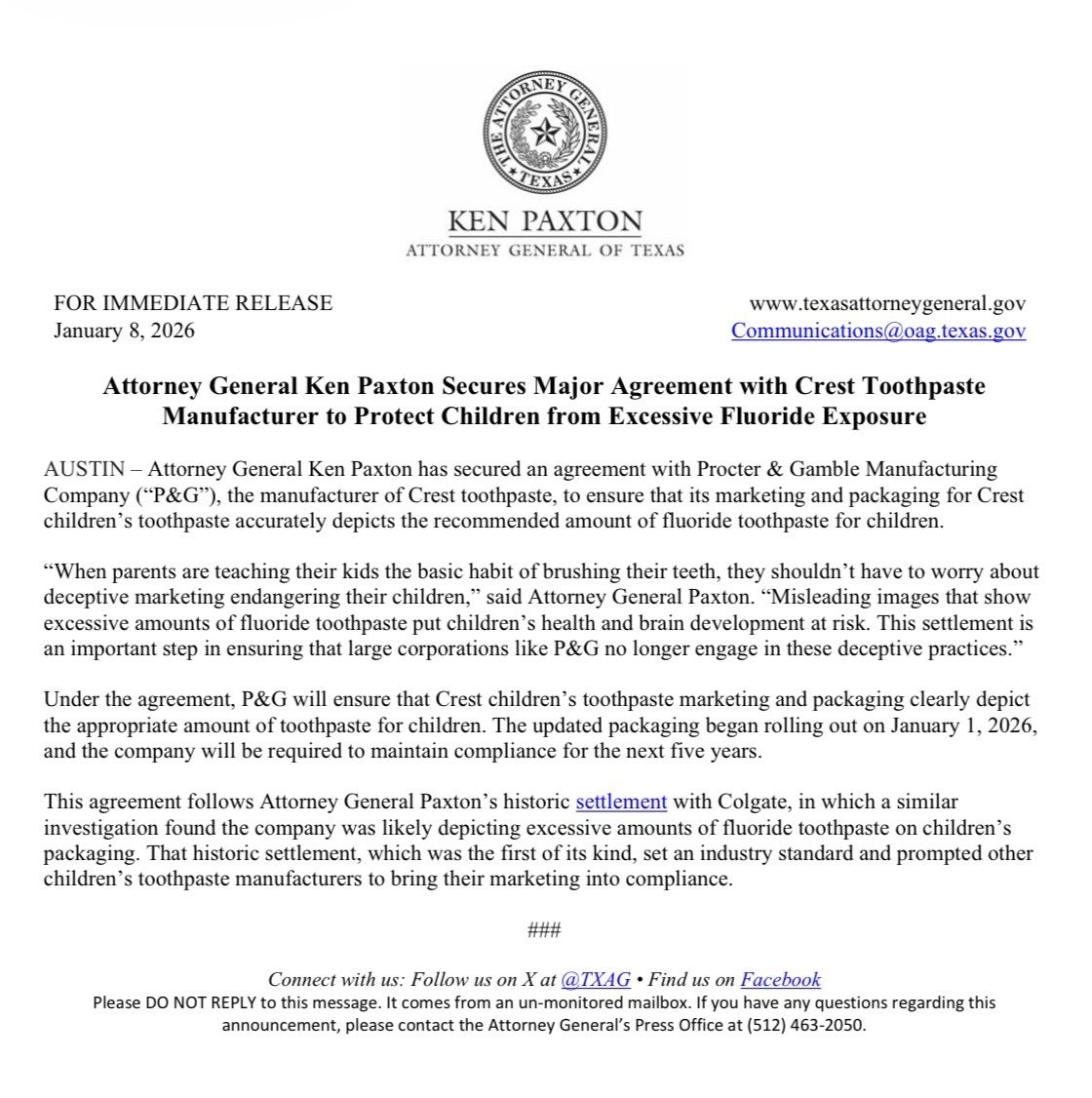
I applaud the Texas AG office for taking action to curb the widespread deceptive packaging of "kid's" fluoride toothpaste that puts the health of millions at risk.
But it is important to be aware that there is a major loophole in the agreement that will permit Procter & Gamble to continue deceiving parents of young children.
The agreement forbids P&G from showing full strips of toothpaste in its marketing materials for kids toothpaste. This is a very good step.
However, the agreement allows P&G to show "pea sized" images of fluoride toothpaste for children under 3. This is much more fluoride than is currently recommended, even by pro-fluoride organizations such as the ADA, AAP, and AAPD.
The current recommendation is that children under 3 use no more than a "smear" of paste, which is sometimes referred to as a "rice grain." The following image (from the ADA) shows how little a smear is, and how much greater a pea-size is in comparison.
Under P&G's agreement with Texas, P&G will be allowed to continue withholding this critical information from consumers. @FluorideAction@SecKennedy
Thanks, @SharylAttkisson! Florida made the right call to ban adding fluoride to community water systems. This decision protects pregnant moms and children from its neurotoxic effects.
It's time for other states to pick up the mantle and stop force-medicating their citizens.
https://t.co/S6a67zrnul