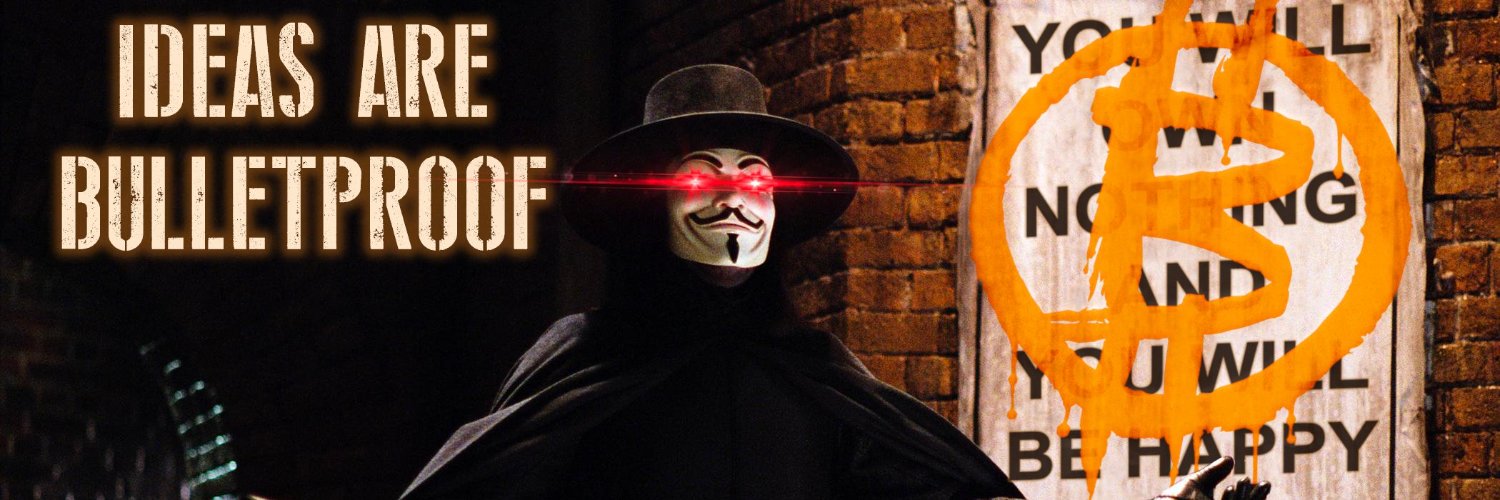
The left vs. right political divide is engineered and well maintained. If you identify with the left, there's a list of issues you should be against and in favor of. Unsurprisingly, if you identify with the right, you're supposed to take the opposite stance on these topics.
🧵1
@craigraw@AppStore .@appstore@apple@AppleSupport
This is what happens if you don't provide adequate protection against app spoofing. Developers will try to create it themselves.
How about you review and unblock Craig's dev account and add his DIY solution as a feature: Warning placeholders.
⚡️Foreign aid is a leverage system.
At the state level, aid is rarely pure generosity. It is a tool of influence.
Aid buys access.
Aid buys dependence.
Aid buys alignment.
Aid buys silence.
Aid buys voting behavior.
Aid buys military interoperability.
Aid buys basing rights, intelligence channels, elite relationships, procurement pipelines, and diplomatic obedience at key moments.
Military aid is the clearest version.
A country gets U.S. weapons, training, parts, software, logistics, maintenance, intelligence integration, and doctrine. That country does not just receive equipment. It gets pulled into an American operating system. Once that happens, the U.S. has leverage because spare parts, upgrades, munitions, targeting support, and future packages matter.
Economic aid works differently. It creates goodwill, embeds NGOs and contractors, supports preferred institutions, strengthens friendly elites, and gives Washington a seat inside the domestic structure of another country. The U.S. can then say: cooperate and the money flows; defy us and the money slows, conditions tighten, waivers disappear, or Congress starts asking questions.
This is also why aid is often paired with sanctions relief, loans, IMF/World Bank pressure, security guarantees, trade access, and diplomatic recognition. The full system is not “aid” alone. It is a menu of rewards and punishments.
The real mechanism is behavioral conditioning.
Do what Washington needs, and the door opens.
Cross certain lines, and the door closes.
That is exactly why the Iran framework is structured around waivers, frozen funds, oil access, enforcement, and behavior. Same operating logic. Benefits unlock after compliance. Pressure returns after violation.
The cleanest way to say it:
Foreign aid is not just help.
It is statecraft.
It is a payment system for influence.
It is a leash when dependence forms.
It is a bridge when alignment matters.
It is a weapon when withdrawn.
.@EvidesWaterbedr Als jullie willen dat mensen de meterstand op tijd doorgeven, dan heeft het misschien zin om ervoor te zorgen dat jullie systeem normaal werkt.
4x geprobeerd op zowel telefoon als computer en iedere keer zelfde resultaat. ⬇️ Inloggen, eveneens onmogelijk.
The vast majority of AI-generated infographics are a sign of lazy marketing. I never open/read any of them.
The goal of infographics is illustrating complex systems or concepts in a simple way.
Not dump a text summary in a bunch of boxes with icons and some fancy typography.
I still remember when internet providers were a brand thing.
Then, increased competition, bandwidth & mobile access commiditized your internet connection, shifting the consumer brand focus to devices & applications.
The same thing is happening to AI but at 10x-100x speed ⬇️
⚡️Fugu is the start of intelligence becoming a supply chain.
That is the deeper shift.
A single model is like a single factory. Powerful, expensive, impressive, but brittle.
If the factory shuts down, gets regulated, gets nerfed, gets too expensive, or falls behind, the whole operation is exposed.
An orchestration model is closer to a logistics network. It does not need to own every factory. It needs to know which factory to use, when to use it, how to combine outputs, how to verify quality, and how to route around failure.
That changes the economics of AI.
The old question was: who has the smartest model?
The new question becomes: who controls the allocation of intelligence?
That is a more powerful question because allocation sits above production. If Fugu knows that Model A is better at coding, Model B is better at scientific reasoning, Model C is better at visual analysis, Model D is cheaper for routine work, and Model E is safer for regulated tasks, Fugu becomes the decision layer. The model lab supplies capability. The orchestrator decides where capability gets used.
That is how model brands disappear.
Users will not care whether Fable, Mythos, Gemini, GPT, Opus, open models, private models, or specialist agents answered the subproblem. They will care whether the endpoint solved the work. The visible product becomes the orchestrator. The hidden models become interchangeable organs.
That is terrifying for frontier labs.
Because the lab that owns the best model can still lose the customer relationship if another layer owns the routing, memory, evaluation, workflow, and final synthesis. The model becomes expensive intelligence inventory. The orchestrator becomes the merchant, broker, foreman, auditor, and judge.
The real moat is not only routing.
The moat is comparative intelligence data.
Every task teaches the router which models fail, which models bluff, which models are cheap but good enough, which models are expensive but necessary, which models need verification, which models disagree, which domains require redundancy, and which outputs predict real-world success.
That becomes an intelligence market map.
Over time, the orchestrator knows the shape of the model world better than any individual model provider. It sees the whole field. It sees performance across live workflows rather than clean benchmarks. It sees actual failures, not marketing charts. It becomes the buyer’s agent for cognition.
That is the next power center.
A model lab wants you to believe its model is the answer.
An orchestrator wants to make every model a bidder.
That is a massive difference.
The Fable/Mythos event gave this architecture a geopolitical reason to exist. Before, orchestration was mainly a technical optimization: better answers, lower cost, lower latency, more specialization.
Now it becomes resilience against sovereign intervention.
Browse the comments to this thread. The horrendous EU overregulation doesn't just make it impossible for EU companies be competitive.
It prevents non-EU companies that are at the forefront of innovation from offering their products & services to anyone in the EU.
Introducing Sakana Fugu: A full multi-agent orchestration system accessible via a single model API.
Our ‘Fugu Ultra’ model matches the performance of Fable and Mythos, delivering frontier capability without the risk of export controls.
Try it: https://t.co/hhO6qTawgb 🐡
It's not that I think $MSTR is a scam and Saylor is this BTC cycle's villain. Neither do I think he's the Bitcoin Messiah.
I just don't want to spend my brain juice on studying the pro & con arguments.
Ignore the noise, HODL your BTC in self-custody and go touch some grass...
@Ben_deWaal@StevieJarosz@jyn_urso@JeffBooth It's a direct response to the air analogy you brought up and it's relevant because it extrapolates to everything else.
If it doesn't, it means someone gets to determine in which cases that principle does(n't) appy. In the end, that's always based on (threat of) violence.
@StevieJarosz@jyn_urso@Ben_deWaal@JeffBooth In the end, the discussion always boils down to the definition of property rights.
Is someone or a group of people allowed to determine what and how much an individual can own and what they can do with it?
Everything else is downstream from this definition.
@Teknium Pretty cool! For both this and backup function, I'm wondering how installed software packages are handled. I remember I created a rule on my first OC instance where it kept a checklist on GH of all system tweaks and installed software to make it easier to clone the instance.