It’d be cool to see case studies where you quantify the business value of Skydio’s autonomy capabilities with real world data i.e. faster time to respond, more inspections per employee, etc. Must be a fun exercise walking B2B execs through the added value of investing in a premium drone solution
Finished Hugh Wilford’s The CIA: An Imperial History.
Interesting and insightful read. I thought Wilford had some political bias, but overall I found it a valuable historical lens on the Central Intelligence Agency.
My biggest takeaway is that the CIA is best understood not simply as a Cold War institution, but as part of a longer history of informal western “empire” and statecraft: using intelligence, local intermediaries, media, economic influence, and covert action to shape outcomes abroad. Serendipitously it was interesting to learn about the impact Rudyard Kipling’s “Kim” had on the early members of the CIA after having just read the Jungle Book.
A few lessons that stood out:
1. Intelligence is never fully objective
Sherman Kent tried to bring scientific rigor to intelligence analysis (avoiding “weasel words” and encouraging the scientific method). Yet the CIA can face challenges from bias driven by:
• Mirror imaging, assuming foreign actors think like Americans (Bay of Pigs, Cuba)
• Ideological overfitting, seeing communism where nationalism may have mattered more (Vietnam)
• Elite echo chambers, over-reliance on candidates from similar backgrounds and assumptions
• Political incentives, intelligence shaped by the priorities of policymakers
Even elite institutions struggle to separate analysis from historical context and incentives.
2. Regime change can be easier than regime maintenance
Wilford’s examples in Iran and Vietnam suggest that early tactical success doesn’t guarantee long term strategic stability.
The CIA often succeeded when there was strong local support already present; unlike what happened with the Bay of Pigs. But once “their guy” gained power, local leaders have shown to have agency and pursued their own interests. This shows the ability of foreign stakeholders to influence a system without “controlling” it which may have been under appreciated.
3. Soft power matters as much as hard power
One of the most interesting sections covered the CIA’s work with:
• media and storytelling (Cord Meyer)
• universities and research institutions
• psychology and anthropology
• international development (schools, hospitals, policing)
The U.S. didn’t just project power through military force, but through institutions, narratives, and culture. Even Disney was shown to be a useful tool for winning the hearts and minds
4. Empire creates unintended consequences
Interventions don’t stay overseas illustrating the challenges associated with managing complex systems and societies. Wilford argues they often come home through:
• migration and cultural exchange (Cuba, Vietnam, Iran)
• distrust in institutions and conspiracy theories
• long-tail geopolitical issues
What made the book most relevant to me is how applicable these lessons feel today with the geopolitical events in Ukraine, Venezuela, Iran, and potentially Taiwan. I’ll be looking at the developments here with the following questions in mind… 1/ what agency is being demonstrated by country leaders where conflict is occurring; 2/ what blind spots may the US (and other superpowers) have when getting involved; 3/ how is the US exerting soft power along with hard power in these regions; and 4/ when these conflicts eventually reach a steady state what risks are there to the long term stability of the region.
Let me know if you have a recommendation for another book covering the CIA with a more favorable history of successes or Cold War intelligence to provide a counter balance
3 observability trends with the growth of AI:
In May, we’ve hosted a series of customer discussions in the Bay Area with leaders from some of the world's largest and most innovative organizations. The conversations reinforced the following trends we're seeing and inform how we design observability at AWS.
We're continuing these conversations in NYC and DC in June. If you're an engineering executive or IC who wants to engage with AWS Observability leadership, shoot me or your AWS representative a note.
1️⃣ Observability optimization at scale
As environments grow more complex, teams need better insights as they drown in telemetry from disparate sources. Customers are seeking ways to cost-effectively manage their data as they modernize and deploy AI into production.
At AWS, this is core to how our observability services across CloudWatch, Managed Prometheus, and OpenSearch were built: enterprise grade, cost-efficient, and scalable by design. For example, CloudWatch’s new Unified Data Store for logs and native OTel metrics experience (in preview) provides customers with a single place for their telemetry data.
2️⃣ Observability for AI workloads
Observability for AI ML workloads (token usage, latency, GPU performance, cost, etc) becomes increasingly important as customers deploy agents and LLMs into production.
We’ve made significant headway here with CloudWatch’s integration with Bedrock AgentCore providing teams with real-time insight into agent performance. Also, Amazon Managed Prometheus is becoming a builder’s go-to for GPU monitoring during model training.
3️⃣ AI-powered observability
It’s an exciting time for observability as AI transforms how customers identify and resolve issues; AI has a great opportunity to optimize the user experience with alarms and dashboards.
CloudWatch Application Signals with Investigations, OpenSearch's integration with Managed Prometheus, and our DevOps Agent are already helping customers reduce MTTR.
—
This space will evolve rapidly, and we look forward to sharing more soon. Like I said, if you are in NYC or DC this month and want to be part of the conversation please reach out to me or your AWS representative.
@awscloud #aws #awsdcsummit #awsnycsummit @AWS_Gov
I was surprised by how much I enjoyed Rudyard Kipling’s The Jungle Book. TJB provides a collection of stories layered with realism, myth, and moral philosophy. I first got exposed to Kipling by my Dad who gifted the poem If-; it’s great to rediscover his work. I got the book at Livraria Lello book shop in Porto. They make custom covers for classics and have cool aesthetics as a store - one of many reasons to check out Porto.
Kipling’s writings are great for both kids and adults. A few themes stood out across TJB’s stories that are foundational lessons:
1. The importance of order and discipline
Kipling repeatedly argues that discipline enables freedom. Baloo’s “Law of the Jungle” stands in sharp contrast to the chaos of the Bandar-log monkeys. Even in Her Majesty’s Servants, the military animals reveal how systems only function when each member fulfills their role.
2. Acting despite fear
Courage in Kipling is rarely fearless. Rikki-Tikki protects his adopted family from cobras despite concern for his safety. Likewise, the military animals openly acknowledge fear while still doing their duty. Kipling’s demonstrates his preference for people that are capable instead of flashy, and suggests to fall back on structured thinking and action when faced with fear.
3. Curiosity and knowledge matter
Mowgli defeated Khan the Tiger because he understands both the jungle and the village. Kotick the White Seal refuses complacency with the brutal hunters, and searches for sanctuary for his herd. Little Toomai discovered the elephants dancing which eluded adults for decades.
4. Accountability and ownership
One line that stuck with me: Baloo telling Mowgli that “sorrow doesn’t save punishment.” It’s not good enough to express regret, you must own your mistakes and learn in order to move forward.
While reading TJB, it was fun to learn more about how Kipling’s experiences across India, the UK, and the US along with second hand research of global affairs inspired his stories.
Let me know if there are writings by Kipling or others you recommend. Looking at you @atheneumbookclub !
@DanielLurie it’s jarring to see these scenes after Colden Kimber’s murder.
Can you please look into what could’ve been done by SF gov to prevent Kimber’s tragic death and push forward policy that can better protect SF residents from violence?
https://t.co/azMuHSO6eZ
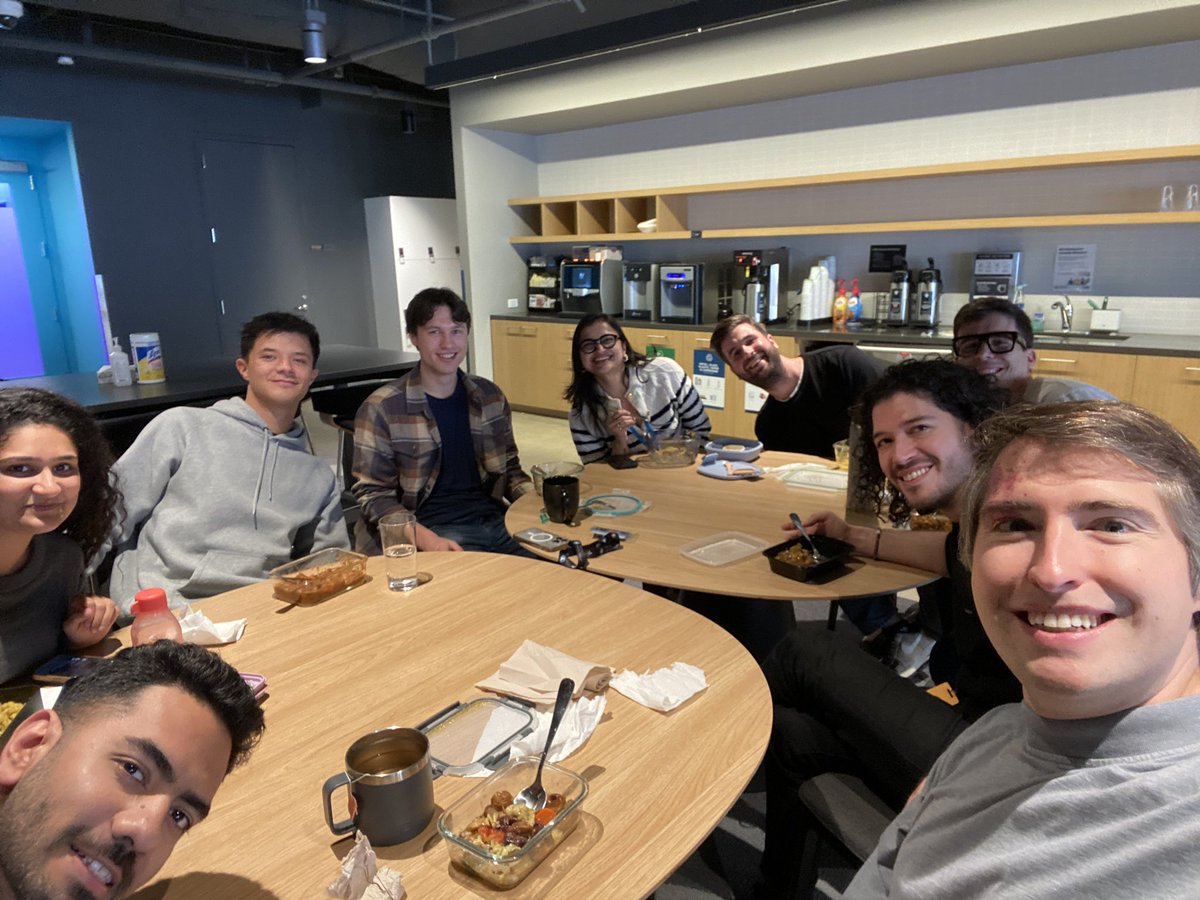
Coming back with @amazon new RTO policy has been energizing. First time I can remember having a serendipitous lunch with more than two people. We had fun catching up on holidays and the best home cooked meals. Excited for more chance encounters to come @awscloud
Demonstrating leadership and class since day 1 @MarkFarrellSF
Disappointed it didn’t go our way but still excited for SF’s future. Thank you for setting the example for us to rally around SF’s next leader. I hope you’ll continue to play a role in our city’s turnaround
In the face of early results, @MarkFarrellSFencourages San Franciscans to unite for the future of the city. “Let's make sure as San Franciscans that whoever the next mayor is, we all get behind him or her, it is the right thing to do.”
Vote Mark Farrell for #1 as SF Mayor @MarkFarrellSF
While in the Midwest I’ve been asked multiple times if SF is as bad as it looks. The city’s brand is damaged and I’m excited for Mark to bring us back. Check out this great interview to learn more
https://t.co/j2oehxdYU4
Excited to have @MarkFarrellSF as my #1 for mayor of San Francisco! I hope you’ll consider him too. It’s clear he has the vision & capability to tackle our city’s challenges across public safety, housing, economic vitality, education, etc starting on day 1.
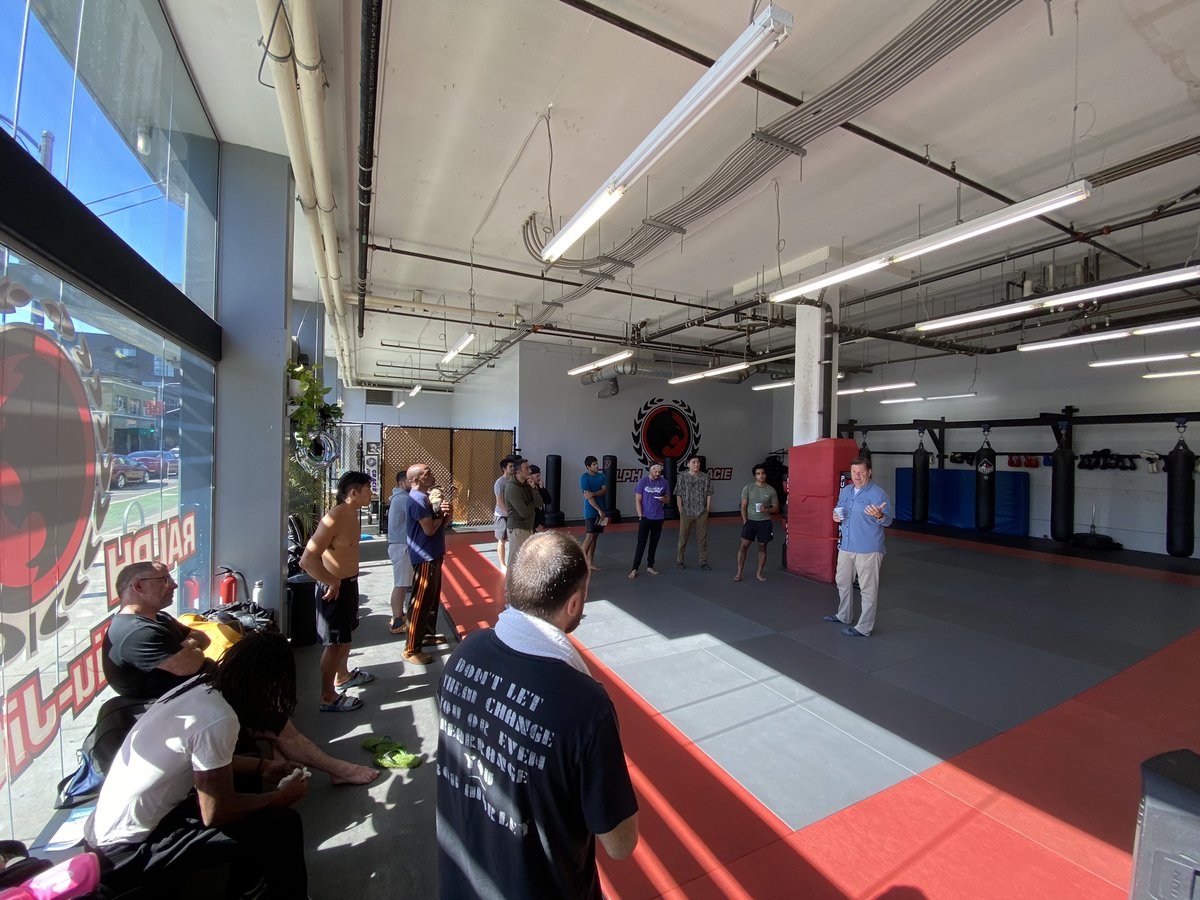
San Franciscans are frustrated with open drug use, poor street conditions, an economically impotent downtown, etc. I’m optimistic we’ll rebound. We had great turnout for SF mayor candidate @MarkFarrellSF who shared in detail how he’ll handle these challenges and move SF forward