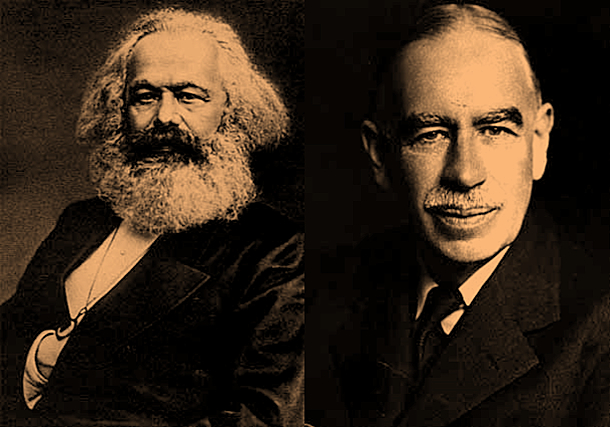
There is nothing that truly explains the condition of the world as it is today except the Bible. Man can describe the symptoms, but only Scripture exposes the disease. Politics may explain conflict. Psychology may explain behaviour. Sociology may explain patterns. But only the Word of God tells us why the human heart is so restless, corrupt, proud, violent, confused, and hostile to its Creator.
The Bible says, “The heart is more deceitful than all else and is desperately sick; who can understand it?” (Jeremiah 17:9). That one verse explains more about the world than all the proud theories of man. The problem is not merely bad systems, poor education, poverty, trauma, or lack of opportunity. Those things matter, but they are not the root. The root is sin.
Scripture tells us that men suppress the truth in unrighteousness, exchange the truth of God for a lie, and worship the creature rather than the Creator (Romans 1:18, Romans 1:25). That is the story of the world. Man rejects God, then wonders why everything collapses when God is removed from the centre.
This is why the world cannot heal itself. It keeps trying to fix rebellion without repentance, guilt without atonement, corruption without regeneration, and death without resurrection. But the Bible alone tells us the truth. Man is fallen. God is holy. Judgment is real. Christ is the only Saviour. Grace is the only hope.
So yes, the Bible alone explains the world as it is. Not because it flatters man, but because it tells the truth about him. And only the truth that exposes our ruin can lead us to the Christ who saves. “Sanctify them in the truth; Your word is truth” (John 17:17).
If there is one need that belongs to every human being, it is the remission of sins. Not education first. Not money first. Not healing first. Not better circumstances first. Our deepest need is forgiveness before a holy God, because every one of us has sinned against Him.
“All have sinned and fall short of the glory of God” (Romans 3:23).
This is the one burden no man can remove from himself. Good works cannot erase guilt. Religious effort cannot cleanse the conscience. Tears cannot pay the debt. Time cannot bury sin from the eyes of God. “Without shedding of blood there is no forgiveness” (Hebrews 9:22).
That is why Christ came. He did not come merely to improve our lives or give us moral lessons. He came to save sinners by bearing their guilt, shedding His blood, and securing real forgiveness for all who belong to Him.
“In Him we have redemption through His blood, the forgiveness of our trespasses, according to the riches of His grace” (Ephesians 1:7).
So the remission of sins is not a small doctrine. It is the mercy without which no soul can stand before God. Blessed is the man whose sin is forgiven, whose guilt is covered, and whose hope is found in Christ alone. “How blessed is he whose transgression is forgiven, whose sin is covered” (Psalm 32:1).
God cannot give us peace and happiness apart from Himself because there is no such thing. Peace is not a gift lying somewhere outside of God that He hands over to make us comfortable. True peace is found in Him, because He Himself is the source, substance, and keeper of the soul’s rest.
“You will keep him in perfect peace, whose mind is stayed on You, because he trusts in You” (Isaiah 26:3).
This is why the world can offer distraction, pleasure, success, comfort, and temporary relief, but it cannot give lasting peace. The soul was made for God, and nothing beneath God can satisfy what only God can fill. “In Your presence is fullness of joy; in Your right hand there are pleasures forever” (Psalm 16:11).
Christ did not promise peace as the world gives. He gives Himself. “Peace I leave with you; My peace I give to you; not as the world gives do I give to you” (John 14:27). The peace of Christ does not depend on perfect circumstances, because it rests on perfect reconciliation with God.
So we must stop asking God to give us happiness while we keep Him at a distance. He is not merely the giver of joy. He is our joy. He is not merely the giver of peace. He is our peace. “The Lord is my portion,” says my soul, “therefore I have hope in Him” (Lamentations 3:24).
We live in an era where noise is mistaken for wisdom and popularity for truth. But how did we get here — to a world that celebrates ignorance and mocks intelligence?
https://t.co/y9yakvrNKN
Every ‘equal society’ in history ended the same way: with force.
You cannot redistribute productivity without coercion.
That’s the part radical socialism never admits.
The more 'equality' you want, the more authoritarian it must become to enforce it.
Here's the truth some preachers are afraid to say: God loves you exactly as you are — and He loves you too much to leave you that way.
He doesn't want your religion. He doesn't want your rituals. He wants your repentance, your trust, and your life.
We cannot bend the Bible to fit the culture.
We cannot make God in our own image. And we cannot compromise the message just because the world finds it offensive.
The Gospel has always been offensive to pride. That's precisely what makes it so powerful.
Don't water it down. Don't dress it up. Just preach it.
Our words aren't just words. They're dispatches from the deepest parts of who we are. Every sarcastic jab, every whispered encouragement, every careless complaint—each one is a courier delivering the real condition of our hearts. We can manage our image, but our language eventually tells the truth.
The good news? A heart being transformed by God produces words that reflect it.
What are your words revealing?
The gospel does not flatter you. It confronts you.
It does not begin by fixing your circumstances or blaming what is outside of you. It begins by exposing what is within you. Scripture is clear about this. “The heart is more deceitful than all else and is desperately sick” Jeremiah 17:9. The greatest danger is not around us. It is in us.
We naturally want to point outward, to situations, to people, to environments. But Jesus turns that thinking upside down. “From within, out of the heart of men, proceed the evil thoughts” Mark 7:21. The problem is not first what happens to us. It is what lives in us.
This is why the gospel humbles a man. It strips away every excuse. It shows that we are not victims in need of adjustment, but sinners in need of redemption. “There is none righteous, not even one” Romans 3:10.
And until a person sees this, the cross will never make sense. Christ did not come to improve the outside. He came to deal with the inside. “Create in me a clean heart, O God” Psalm 51:10.
The gospel humbles because it tells the truth. The danger is real, and it is closer than we think.
"We have the assurance that in the storms of life, Jesus Himself will be standing with us. He is waiting to share our sorrows and to renew our courage. We are not alone, my friends. We never shall be. He is there all the time; all we need to do is open the door to Him." —Billy Graham
"How do I know He loves you and me? Because He sent His only Son to die on the cross for our sins. … Jesus Christ broke the power of evil and sin through His resurrection from the dead. Christ is alive!" —Billy Graham
Every single socialist experiment in human history has collapsed into the same predictable pattern: economic devastation followed by authoritarian control. From the Soviet Union's bread lines to Venezuela's hyperinflation, from Cuba's emigrant rafts to Cambodia's killing fields—the results are as consistent as they are catastrophic. Yet somehow, each new generation of collectivists insists their version will be different.
Meanwhile, the Austrian School predicted this outcome with mathematical precision. Ludwig von Mises proved in 1920 that rational economic calculation becomes impossible without market prices for capital goods. Without private ownership of the means of production, there are no genuine market prices. Without market prices, central planners cannot allocate resources efficiently—they're literally flying blind. What appears to be "planning" is actually chaos disguised by propaganda and enforced by violence. And when the inevitable shortages begin, the state has only two options: admit failure or double down with force. They always choose force.
British pedophile John Maynard Keynes and his disciples promised a "middle way" between capitalism and socialism, but their interventions merely delayed the reckoning. Every welfare state, every central bank manipulation, every government "stimulus" brings us closer to the same endpoint. The difference between social democracy and full socialism isn't one of kind—it's merely one of degree and timeline.
But the most damning evidence isn't theoretical—it's empirical. East versus West Germany. North versus South Korea. Cuba versus Chile. Hong Kong versus mainland China before 1979. Every controlled experiment in human history proves the same point: economic freedom creates prosperity, while state control creates misery.
Socialist true believers can dismiss Austrian theory all they want, but they cannot dismiss the mountains of corpses and the millions of refugees fleeing their utopias. Venezuela had the world's largest oil reserves and still managed to create toilet paper shortages. That's not bad luck—that's economic law in action.
"In Christ alone there is deliverance from the world's tortured thoughts, healing for weakened minds and bodies, and freedom from the sordid, destructive, and immoral habits that are destroying mankind." —Billy Graham
Most people think the alabaster box story was just about worship. It was a funeral service.
But the most shocking part isn't what happened, it’s who did it.
Scripture calls her "a woman of the city, who was a sinner." That is the polite way of saying she was an outcast. She had a very bad reputation.
She walked uninvited into a room full of religious elites. You can almost feel the air leave the room. The awkward silence. The stares. She knew exactly what they were thinking; that she was dirt.
But she didn't look at them. She only looked at Jesus.
When she got there, she didn't just pour the oil. She fell apart. She fell at his feet weeping, washing his feet with her tears. This wasn't a polite cry; it was a gut-wrenching sob.
Think about that level of pain. She wasn't crying pretty tears. She was sobbing.
Then, she did something completely scandalous. She didn't have a towel, so she unbound her hair to wipe his feet. In that culture, a woman letting her hair down in public was akin to stripping naked. It was shameful. Undignified.
She didn't care. She was willing to humiliate herself to honor him.
Simon, the religious leader hosting the dinner, watched this train wreck and thought, “If this guy was actually a prophet, he’d know what kind of filth is touching him.” He was disgusted by her history.
Jesus, however, was looking at her destiny.
He turned to Simon and asked, "Do you see this woman?"
Simon saw a problem. Jesus saw the only person in the room who loved him enough to prepare his body for burial. He looked at a woman who had been used, chewed up, and spit out by the world, and he gave her the one thing she never saw coming:
"Your sins are forgiven."
Maybe you feel like this woman. You feel like you’re carrying too much baggage to even look in God's direction. You think you need to clean up your act before you can walk into the room.
You are afraid that if people knew your story, they would judge you.
Let them judge.
Religion says "What a waste. God has to forgive you before He can accept you."
The Gospel says: "Come as you are. You are accepted so that you can be forgiven."
Religion demands you clean yourself up outside the door. Jesus opens the door and washes you Himself.
Don't let your past stop you.
Break the box. Pour out the tears.
Are you going to listen to those that sees what you were, or will you fix your gaze on Jesus who sees who you truly are and isn't ashamed of your mess?
#Christianity #BiblicalTruth #FaithOverFeelings #Forgiveness #Grace
Ellis Enobun
Hell was never created because God became angry and decided to stop loving humanity. That idea completely misunderstands God’s nature. Hell was created for Satan and his demons, it is their kingdom and their eternal dwelling place. Jesus Himself said that hell was prepared for “the devil and his angels.” It was never designed for human beings. From the beginning, God’s desire was for mankind to live with Him, rule with Him, and enjoy a deep, loving relationship with Him.
When God created Adam, He gave him dominion, authority, and intimacy with Himself. Adam walked with God without fear, shame, or separation. But when Adam rebelled and chose disobedience, sin entered into the world. Through that one act, humanity lost the dominion we once had and the relationship we once enjoyed with God. More than that, sin became our nature. We were no longer just people who sinned; we became people with a sinful nature. And that nature was no longer aligned with God, it became aligned with Satan.
Every nature belongs to a kingdom. God’s holy nature belongs to the Kingdom of God. Satan’s fallen nature belongs to the kingdom of darkness. When sin became our nature, we became connected to a kingdom that could not coexist with God’s kingdom. Hell is not simply a place of punishment, it is the kingdom that corresponds to Satan’s nature. And because God is holy, nothing sinful can dwell in His presence. This is not because God is cruel, but because holiness and corruption cannot mix.
Instead of abandoning humanity, God made a way of rescue. He did not lower His standard of holiness, and He did not destroy mankind. Instead, He designed a plan that would restore us completely. That plan was not religion, rules, or human effort. The plan was redemption. God Himself chose to step into His own creation. He took on human flesh in the person of Jesus Christ. Jesus lived the life we could not live, free from sin, and then willingly died the death we deserved.
On the cross, Jesus took our sin, our fallen nature, and the judgment that belonged to it. In exchange, He offers us His own nature, His righteousness, His life, and His relationship with the Father. Salvation is not just about escaping hell, it is about receiving a new nature that can dwell in God’s kingdom. This is why the gospel is not merely a message of forgiveness, but a message of transformation.
The love of God is clearly revealed in this plan. No loving God would go to such lengths if He did not deeply desire humanity. God did not send an angel, He came Himself. He did not demand that we climb up to Him, He came down to us. That is love in its purest form.
Now, the response God asks for is simple: belief. To believe in Jesus is to trust in what He has already done. Salvation is a gift, not a reward. But God never forces anyone to accept this gift. He respects human freedom because love that is forced is not love at all.
When a person rejects Jesus, God is not rejecting them. They are rejecting God’s offer to belong to His kingdom. There are only two kingdoms, there is no neutral ground. There is the Kingdom of God, where light, life, and truth dwell, and there is the kingdom of darkness, where Satan reigns. To reject God’s offer is to choose separation from Him, even if that choice is made unknowingly.
God honors human choice. If someone insists on living apart from Him, He allows that decision to stand. Hell, in this sense, is not God pushing people away, it is God allowing people to remain where they have chosen to be. Yet even in this, God’s love does not change. His love is stable, faithful, and unending. God never stops loving anyone, not in this life, and not in eternity.
Separation from God is not the absence of His love, it is the result of rejecting His presence. God’s judgment is not rooted in hatred, but in justice and respect for human freedom. The cross stands as eternal proof that God did everything possible to bring humanity back to Himself without violating His own holiness or our free will.
In the end, hell does not exist because God stopped loving us. Hell exists because God is holy, because Satan rebelled. The door to God’s kingdom remains open through Jesus Christ. Whoever believes receives new life, a new nature, and eternal fellowship with God. And this invitation is the greatest demonstration of God’s unchanging love for humanity.
Title: Jesus Writing on the Ground: A Silent Act That Spoke with Divine Authority (John 8)
In John chapter 8, the Gospel records one of the most mysterious actions of Jesus, an action that is never explained in words, yet overflows with meaning. When the scribes and Pharisees brought before Him a woman caught in adultery, they demanded a judgment. Instead of answering immediately, Jesus bent down and began to write on the ground with His finger. Scripture never tells us what He wrote. This silence is intentional, and for a Jewish reader, it speaks volumes.
To understand this moment, we must enter the world of Jewish law, culture, and covenant thinking. The scene unfolds in the Temple courts, a place of teaching, authority, and judgment. The accusers appeal to the Law of Moses, which commanded that adultery be punished. Their question was not rooted in justice but in entrapment. If Jesus upheld the law, He would appear merciless and risk Roman intervention. If He showed mercy, they could accuse Him of rejecting Moses. It was a legal trap designed to destroy Him.
Jesus response is astonishing. He does not speak. He stoops. He writes.
In Jewish Scripture, the finger of God is deeply significant. The Law itself was written by the finger of God on stone tablets at Mount Sinai. When Jewish readers hear that Jesus writes with His finger, they are meant to recall divine authority. This was not a random gesture. It was a silent declaration, the same authority that gave the Law was now standing before them. Jesus was not rejecting the Law, He was revealing its true heart.
The ground on which Jesus wrote also matters. In the Hebrew Scriptures, God is often associated with writing judgments and names in dust. Jeremiah 17:13 says that those who turn away from the Lord will have their names written in the earth, because they have forsaken Him. Many scholars believe Jesus may have been writing something related to sin, guilt, or the accusers themselves. Whether He wrote specific sins, names, or a verse of Scripture, the effect was undeniable. One by one, the accusers left, beginning with the oldest.
Age matters in Jewish culture. Elders were considered wiser and more accountable. Their departure first suggests conscience awakened by truth. The Law had exposed the woman, but Jesus act exposed the hypocrisy of the accusers. Jewish law required witnesses to be without guilt themselves and to carry out the sentence. When Jesus finally spoke, He said, “Let him who is without sin among you be the first to throw a stone.” This was not the abolition of the Law; it was its perfect application.
Another crucial cultural detail is that Jesus wrote twice. The text tells us He bent down and wrote, then stood and spoke, and then bent down again and wrote. In Jewish legal tradition, repetition establishes certainty. Two witnesses confirm truth. The double act of writing reinforces divine authority and finality. Judgment had been rendered, not against the woman, but against self-righteousness.
When all the accusers left, Jesus addressed the woman alone. “Woman, where are they? Has no one condemned you?” When she answered no, Jesus replied, “Neither do I condemn you. Go, and sin no more.” This moment captures the essence of the New Covenant. The Law revealed sin, but grace brought restoration. Yet grace did not excuse sin. Jesus did not say her actions were acceptable, He commanded transformation. Mercy and holiness met in perfect balance.
The Law was never meant to be a weapon for humiliation but a mirror leading to repentance. The scribes used the Law to trap, Jesus used it to heal. By writing on the ground instead of stone, Jesus symbolically showed that condemnation under the Law was temporary, but grace would endure.
This mystery also points forward to the cross. Just as Jesus stooped to write in the dust, He would soon stoop lower, bearing the sins of the world. The accusers dropped their stones, soon He would carry the judgment Himself. The One qualified to condemn chose instead to redeem.
Jesus writing on the ground remains a powerful lesson for us. It warns against religious pride and self-righteous judgment. It reminds us that God sees not only the obvious sinner but also the hidden sin. And it assures us that mercy triumphs over judgment when hearts are willing to repent.
If conservatism is not ultimately about economics, what is it about?
'The defence of the West.'
This, in one short, simple phrase is as near as I can come to expressing the overall mission of conservatives now. That defence involves securing our nations against internal and external threats alike.
I shall enlarge on those threats in a minute. But what are the core convictions we are defending? Not having time to pen a treatise, or even speak as long as a German politician, I shall set out my views with English brevity.
We conservatives believe that man has a basic sense of right and wrong and an amazing creativity when free to apply his talents; but we also believe that his nature is flawed, such that without restraints applied by convention and law he will destroy himself and others.
We believe in free, limited democratic government, as the framework most likely to minimise opportunities for mischief and abuse of power; but we scorn the association of vox populi with vox dei, knowing that no mere majority vote can make what is good bad or what is bad good.
We understand that in some areas government has to be strong. It has to be prepared to use force to defend the nation's security. We appreciate the majesty and rituals and pomp of the state, operating in its proper sphere. But we also believe that what is public ultimately exists for what is private—that it is the family (not the state or nation or even the Church), which is the basic institution of our society, without which all the rest collapses.
We are suspicious of attempts at institutional change, unless those institutions have become in their present form a threat to the whole future of the country—as the trade unions and nationalised industries were, for instance, in Britain when I became Prime Minister.
We view the world in which we live as in need, not of re-ordering according to master plans devised by enlightened experts, but rather of constant renewal according to timeless truths and rich traditions.
And so we are unashamedly patriots. For as Edmund Burke wrote two hundred years ago:
“To be attached to the sub-division, to love the little platoon to which we belong in society, is the first principle of public affection. It is the first link in the series by which we proceed towards a love of our country and to mankind”.
So here we stand. Rock solid. Rooted in a clear, tried, tested view of the world and the heavens and everything in them.
“Christ often comes in our darkest hour, bringing joy, peace, and glory like nothing else,” said Billy Graham.
As we approach Christmas, reflect on the night Jesus was born—a time marked by spiritual and moral darkness. Yet into that darkness, Christ brought light. That same light continues to bring hope, peace, and new life today. As you prepare your heart for Christmas, be encouraged that Jesus still meets us in our darkest moments. https://t.co/01aqLFGyxH