Steve Sweeney was reporting on the Israeli government’s murder of civilians in Lebanon when the IDF tried to assassinate him on camera. Here’s what American tax dollars are paying for.
0:00 Sweeney’s Close Encounter With an Israeli Missile Strike
11:37 Israel’s Bombing of St. Peter’s Burial Site
15:02 Hezbollah Protecting Christian Holy Sites
15:55 The Assassination Attempt on Sweeney’s Life
22:21 The British Government Taking Israel’s Side Over Its Own Citizens
31:06 Why Is Israel Bulldozing Olive Trees?
39:06 Why the Ukrainians Tried to Kidnap Sweeney
45:54 Is There More Freedom in Russia Than in Britain?
53:05 Why Is It Illegal to Criticize Israel in Britain?
1:02:20 Is Sweeney Planning to Remain in Lebanon?
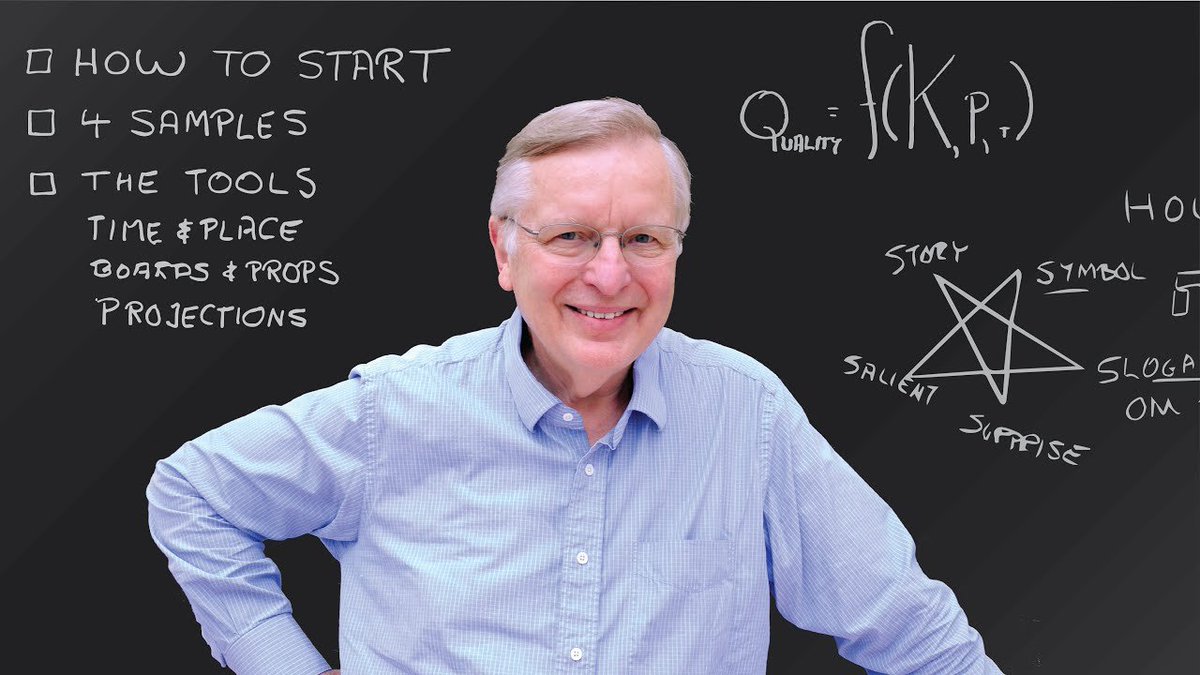
A MIT professor taught the same lecture every January for 40 years, and every single time it was standing room only.
I watched it at 2am and it completely rewired how I think about communication.
His name was Patrick Winston. The lecture is called "How to Speak."
His opening line hit like a truck: your success in life will be determined largely by your ability to speak, your ability to write, and the quality of your ideas in that order.
Not your GPA. Not your pedigree. Not your IQ. How you speak is what separates people who get heard from people who get ignored.
Here's the framework he drilled into MIT students for four decades.
He said never start with a joke. Start by telling people exactly what they're going to learn. Prime the pump before you pour anything in. He called it the "empowerment promise" give people a reason to stay in their seats within the first 60 seconds.
Then he broke down the 5S rule for making ideas stick: Symbol, Slogan, Surprise, Salient, and Story. Every idea worth remembering hits at least three of these.
The part that floored me was his "near miss" technique. Don't just show what's right show what almost looks right but isn't. That contrast is when the brain actually locks something in permanently.
His final rule before any big talk: end with a contribution, not a summary. Don't recap what you said. Tell people what you gave them that they didn't have before they walked in.
I've used this framework in pitches, interviews, and presentations ever since watching it, and the results are not subtle.
Patrick Winston passed away in 2019, but this lecture is still free on MIT OpenCourseWare. One hour, watched by millions, and it costs absolutely nothing.
The most important class MIT ever put on the internet isn't about code or math. It's about how to make people actually listen to you.
Admire the courage of employees within social media companies who became whistle blowers to testify that social media companies are aware of the harmfulness of some design features. See this article: https://t.co/DjIcn8S0Mx
How An Organization Mirrors The Founder https://t.co/86NYwGRrKM
This is an inspiring true-life story of an enlightened entrepreneur who is a created a culture that values, develops and motivates people.
@VivekUvaach
Laurie and Elizabeth Baker: How a partnership helped build community https://t.co/aDj5VLVSDI via @scroll_in
Cross-cultural Collaboration in the workplace is challenging enough, but it is interesting to see how productive this Indo-British family was.
Tolerance, Reformation And Retribution https://t.co/4dKoQg10tV Very thought-provoking post from our one-and-only Vivek Patwardhan @VivekUvaach
One of my best friends was a reformed dacoit, who was guilty of many murders & dacoities but reformed after reading the Bible in jail
The economist who invented equilibrium theory rejected it after losing $200 million.
Irving Fisher created the framework modern economists still worship today. In 1907, he published equilibrium economics—the idea that markets naturally move toward stable balance.
By 1929, Fisher was America's most famous economist. On October 15, he declared stocks "permanently high." His theory told him the market was rational.
Six days later came Black Tuesday.
Fisher lost everything. His sister-in-law paid his debts. Columbia gave him a house because he'd lost his own.
The devastation forced him to confront his mistake. In 1933, he published a new theory rejecting equilibrium entirely.
Fisher wrote: "It is as absurd to assume economic equilibrium as to assume the Atlantic Ocean can never be without a wave."
Yet in 2025, neoclassical economists still teach the theory Fisher abandoned.
They missed the Great Depression. Then reconstructed the same framework. And missed the 2008 crisis.
20 years after 2008, they're telling students to ignore critics who question equilibrium. Students who weren't even born when mainstream economics failed spectacularly.
I warned about 2008 in December 2005 using non-equilibrium dynamics. The warning signs were obvious once you stopped assuming equilibrium.
Capitalism is dynamic, creative, evolutionary. Forcing it into equilibrium means missing both crisis warnings and capitalism's greatest strengths.
Link in comments for the full breakdown of why equilibrium thinking keeps failing.
#Economics #Finance #EconomicTheory #Capitalism #FinancialCrisis #IrvingFisher #GFC #GreatDepression
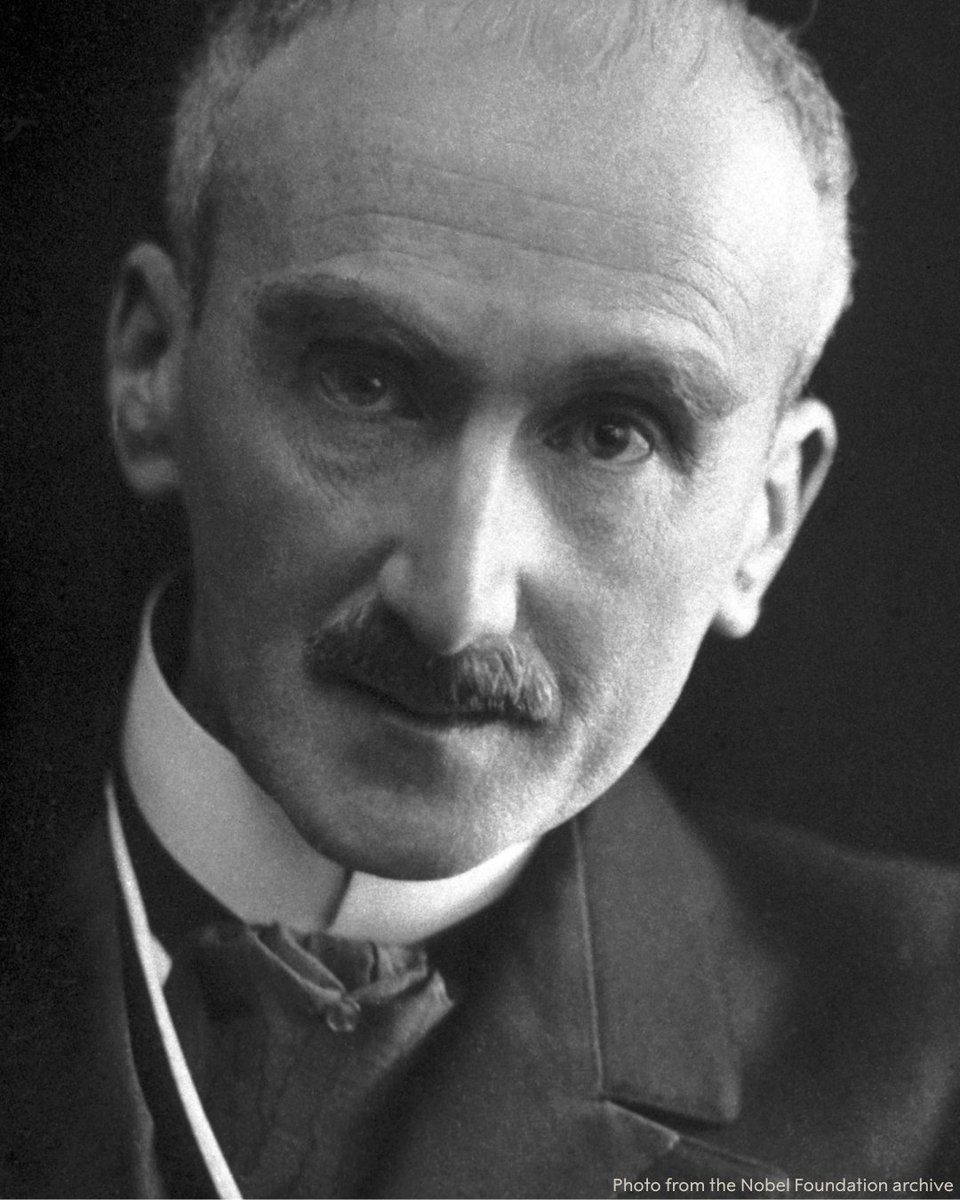
“An increase in the material means at the disposal of humanity may even present dangers unless it is accompanied by a corresponding spiritual effort.”
Philosopher and author Henri Bergson, awarded the 1927 Nobel Prize in Literature, reflected on the moral challenges of progress in his 1928 Nobel Prize banquet speech.
He noted that while the 19th century made tremendous technological advances – from steam to electricity – many assumed these inventions would automatically bring people closer and make society better. Instead, Bergson warned, without a matching effort toward moral and spiritual growth, technology can deepen divisions rather than bridge them.
His message still resonates today: our machines may connect us, but only our humanity can unite us.
#WorldPhilosophyDay
Collaboration Challenge - Interview with Marek Lis
Marek a "𝐂𝐨𝐥𝐥𝐚𝐛𝐨𝐫𝐚𝐭𝐢𝐨𝐧 𝐀𝐫𝐜𝐡𝐢𝐭𝐞𝐜t," uses a Nobel Prize-winning approach of Thomas Schelling. Read the LI post (a 5-min read).https://t.co/GMEZ2ChnAq
@sagarcasm A man of great personal integrity, he practiced "Servant Leadership" and played a crucial role as PM at a critical time. A Prime Minister who was trustworthy and who made us proud.
CP Vivek Phansalkar, I wish to commend the excellent service of Sub-Insp. Pawar today (at Dadar Police Station, West) in helping lodge an online Lost Item complaint for an ailing 89 year old Uncle of mine. Kudos to SI Pawar and his seniors! @MumbaiPolice@CPMumbaiPolice