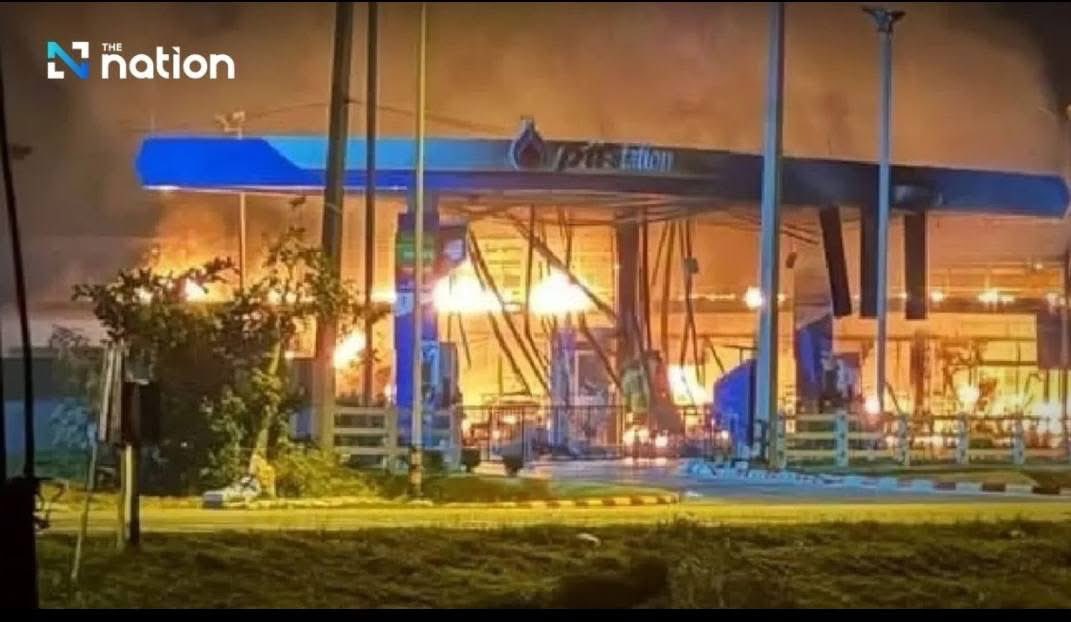
See? Who really need this war? If just for popularity 5 days for Cambodia is more than enough
Why would Cambodia open new front when Flood receded, when Thailand is in critical conditions, people are not happy with flood handling, with border demarcation, SEA game failing etc?
@21wasp@jacobincambodia And their boss Bent Smith stay comfortably in Thailand under protection from big boy Anutin. Hidden network like entangled wired among politicians and military
Why i don't wast my beautiful time with land of thieves 🇹🇭🇹🇭 read below
Cultural Foundations and “Severe Lack”
Cambodia does not suffer from a “severe lack of cultural foundations.”
The Khmer Empire (9th–15th centuries) produced one of Southeast Asia’s most enduring legacies, centered on Angkor Wat and the broader Angkor Archaeological Park—a vast complex of temples, reservoirs, and infrastructure recognized as a UNESCO World Heritage Site since 1992.  
This is not ancient history preserved in isolation; Cambodia actively maintains and restores it through the APSARA National Authority, with sustained international partnerships involving France, Japan, Germany, China, South Korea, and others.
Recent projects include stone conservation, bas-relief restoration, and training local experts. Angkor drives cultural tourism and symbolizes national identity, countering any notion of eroded “roots.”
Cambodia’s identity draws from deep Khmer roots in architecture, dance (Apsara), language, Buddhism, and cuisine. Post-Khmer Rouge recovery (after the 1970s genocide that devastated institutions and human capital) has been gradual, but cultural revival is evident in state-supported efforts and global recognition.
Claims of “eroding roots” ignore this continuity and the fact that many Southeast Asian cultures, including Thai, share historical Khmer influences from the Angkor era—leading to mutual accusations of appropriation rather than one-sided theft.
Copyright Infringement and “Shameless Misappropriation”
Cambodia does face significant copyright and IP enforcement challenges. It has one of the highest piracy rates in ASEAN (often cited as top in the region for software, music, films, and media), with weak domestic enforcement despite having a Copyright Law since 2003 that includes penalties for infringement.  
Piracy is widespread in markets and online, partly due to low incomes, limited legal alternatives, and enforcement gaps (customs and courts exist but are under-resourced). This harms local creators and foreign rights holders.
However, the government has taken steps: establishing inter-ministerial committees for suppression, launching an Intellectual Property Rights Recordation System in 2024 for better customs action, and participating in broader IP policy strategies.  
Labeling it “shameless misappropriation of other nations’ works” as a unique Cambodian trait is overstated—piracy is common in many developing economies with similar socioeconomic conditions.
It is not the primary driver of cultural decline, nor is it uniquely tolerated by “those in power.” Indifference exists in practice, but legal frameworks and some reforms show awareness.
Education, Critical Thinking, and Leadership
Cambodia’s education system does struggle with quality.
PISA 2022 results (the country’s participation highlights transparency) show very low performance: mean scores around 329–347 in reading/math/science (vs. OECD ~470–480), with only ~8–12% reaching basic proficiency levels. 
 Textbooks and teaching often emphasize rote learning over critical thinking, inquiry, or higher-order skills.
Teacher-centered methods, resource gaps (especially rural), and historical disruptions contribute. Urban-rural and socioeconomic disparities are stark.
Leadership under Prime Minister Hun Manet (who took over in 2023) has publicly prioritized reforms: focusing on curriculum updates, teacher training, STEM, scholarships, industry links, and competency-based approaches to build skills for a middle-income economy.
  Progress is slow and uneven—post-conflict recovery, poverty, and governance issues play roles—but dismissing leaders as wholly “incompetent” ignores economic gains, infrastructure development, and explicit policy attention to human capital.
“Educated elite” indifference is a generalization; debates on education quality occur in policy circles and media.
@KhaosodEnglish From history Thailand is always the cunning, slippery fish, siding with whoever bring benefits. It's not about moral instinct. It's about what you have on the table for them. If they can't take it by force, they gain it through alliance
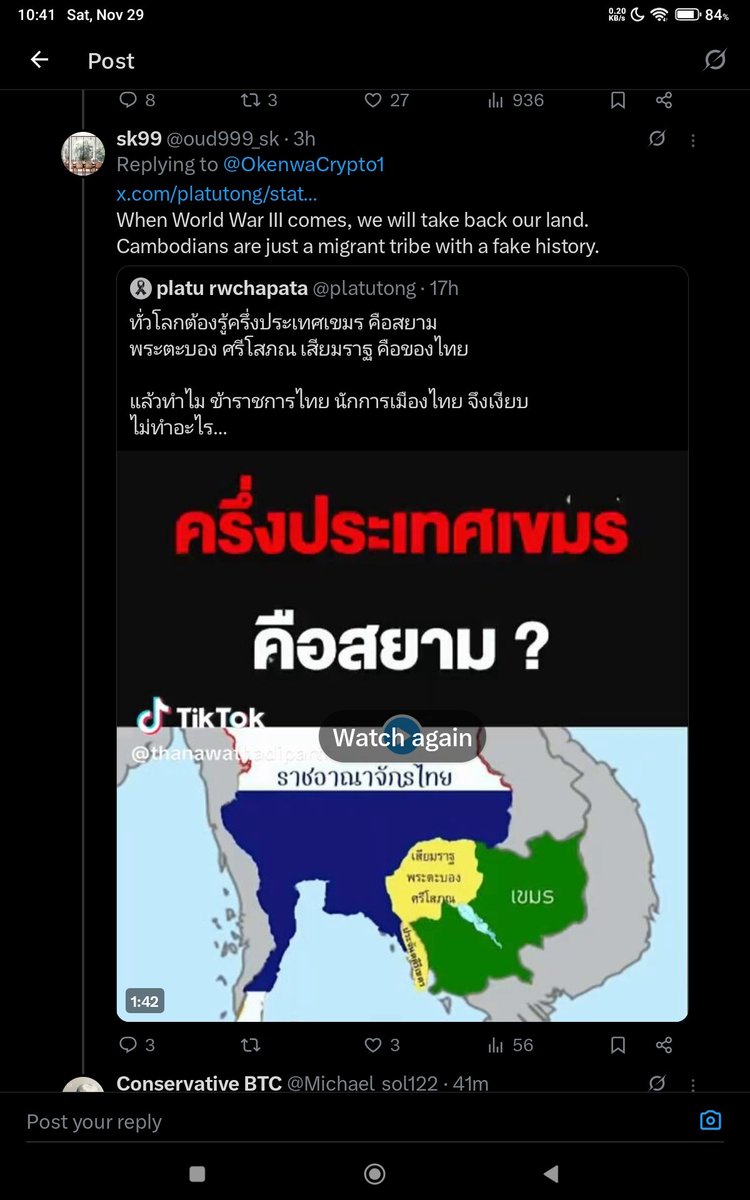
Thailand, oh Thailand 🇹🇭, not content with just taking from Cambodia 🇰🇭, Laos 🇱🇦, and Myanmar 🇲🇲, now they're even swiping from Malaysia 🇲🇾. How intriguing 🤔 🤔. Thailand are really the invader  here. 
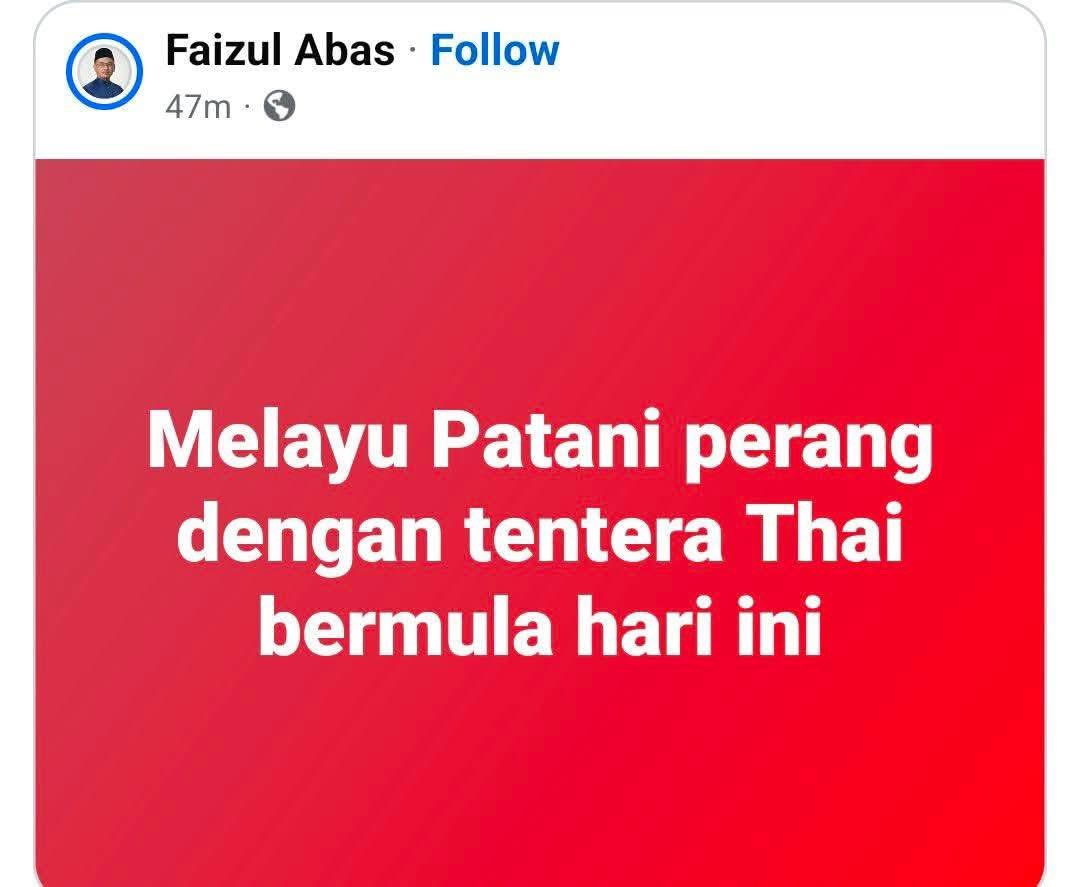
**Facebook Post: PATTANI MALAYS START WARNING WITH THAI ARMY**
🚨 **Historic Reminder: The Struggles of Pattani** 🚨
1. **A Glorious Past**
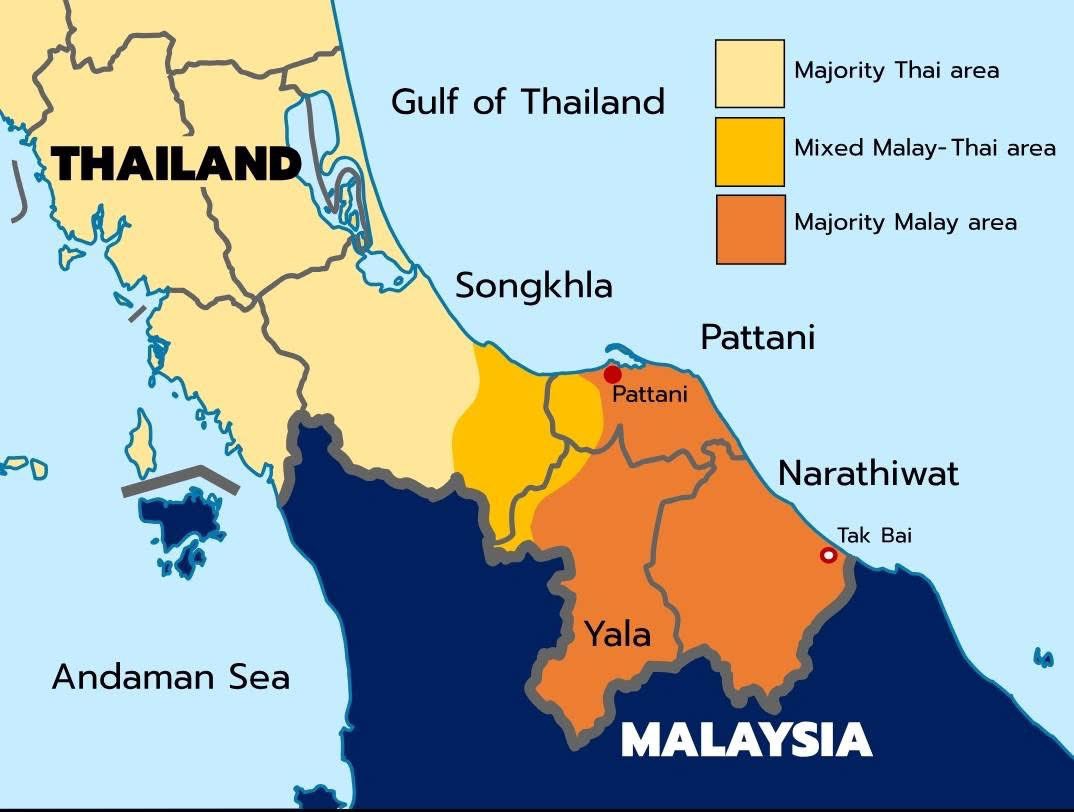
Did you know that before the 18th century, Pattani was a vibrant and independent Islamic Malay government known as the Sultanate of Pattani? It had its own Sultan, spoke the Malay language, and practiced Islam. The Sultanate maintained strong ties with neighboring states like Kelantan and Terengganu. However, the peace was disrupted as the Siamese began their aggressive campaigns against Pattani, leading to significant turmoil.
2. **Conquest and Control**
By the late 18th to early 19th centuries, Siam succeeded in conquering Pattani, fragmenting its territory into smaller states for easier governance. This marked the beginning of a new chapter where Pattani fell under Siamese control, the Sultan lost his authority, and administration was centralized in Bangkok, stripping the region of its autonomy.
3. **The 1909 Treaty**
A pivotal moment in this history was the Anglo-Siamese Treaty of 1909. This agreement resulted in Siam retaining Pattani while the British took control over Kedah, Perlis, Kelantan, and Terengganu. As a consequence, Pattani remained within Thailand’s borders, despite the deep cultural and historical ties it shares with the Malay world.
Today, the people of Pattani are raising their voices once more, reminding us of their rich history and the ongoing struggles for recognition and rights. Let us stand in solidarity as they navigate these challenging times. 🇲🇾✊
#Pattani #MalayHistory #ThaiArmy #CulturalRights #Solidarity
@grok@KhaosodEnglish Then don't straight to the conclusion about one side story without independent verification.
But is it true Thailand is occupying Cambodia territory?
@ThaiPBSWorld Wow, this is insanely unbelievable. Forest is the advantage for Cambodian troops since they lack advanced weapons. Thailand should learn to accept its dirty trick or make a more reasonable story
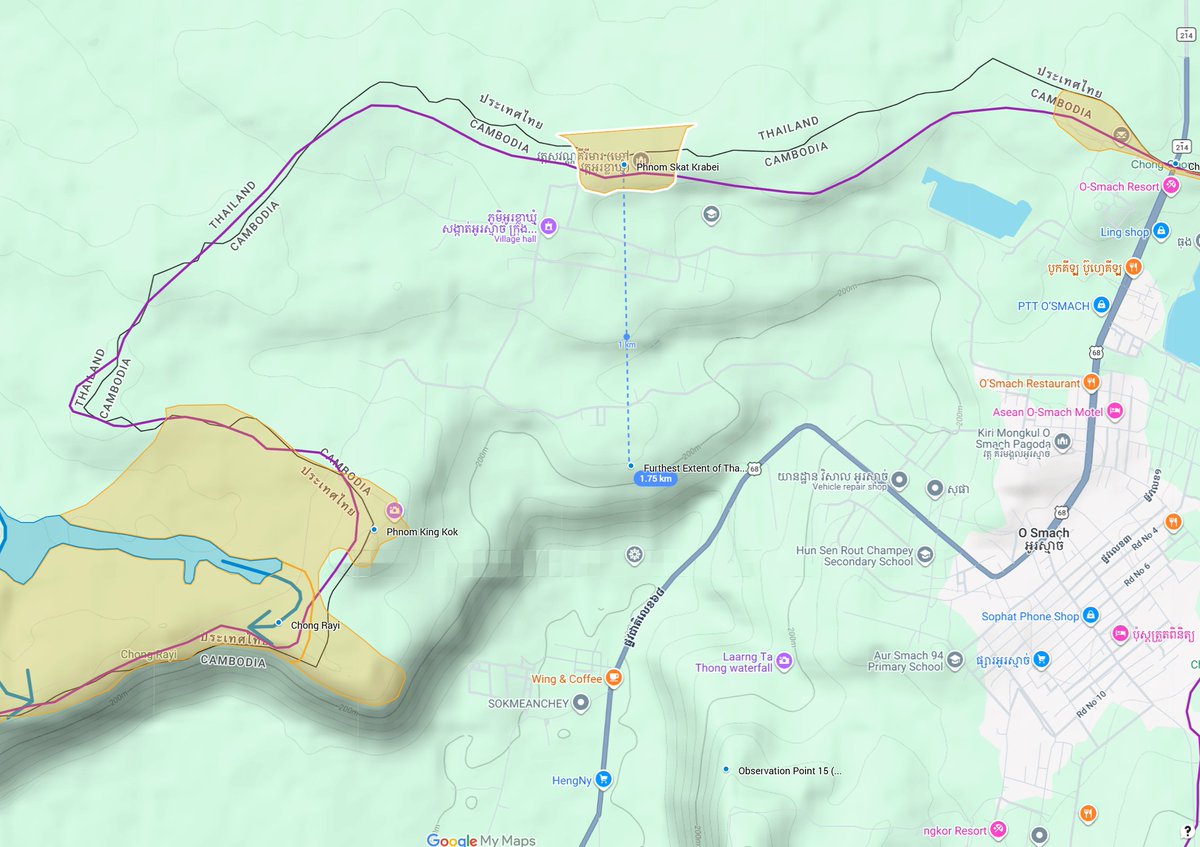
Over the last few weeks, Thailand has been actively extending their control deeper into internationally (and Thai) recognised Cambodian territory, extending from Phnom Skat Krabei and today reaching a point at 14.419, 103.67.
1.75km beyond their Dec captures
h/t @smoothpelican25
Since the latest ceasefire on December 27, 2025, Thailand has placed several barriers at different points within the internationally recognized sovereign territory of Cambodia. These blockades continue to limit movement for Cambodian civilians and create tension along the border.
@jacobincambodia Probably labor workers. It doesn't look good but in this under developed country you can see worse than this. And surely nothing related to human trafficking in this manner. Poor people will just take any mean of transportation even though though cage doesn't mean for human.