It is completely unacceptable for riders to have to avoid cars driving in the opposite direction during a 13 KM time trial. ⛔️
I have a rather radical position on the organisation of cycling races where, if you can't organise a relatively safe cycling race, I don't want your cycling race to exist.
That's especially true if you can't organise a 13 KM closed time trial circuit without multiple external vehicles entering the course.
On the same topic, in the case of Finlay Tarling (and many other non-fatal examples), the sport apparently accepts the possibility of "missing a few riders" with a rolling barrier system.
A rolling barrier system means that the police convoy closes roads as the race comes near, and unlocks them when the race is passed.
According to the early reports of the Volta a Portugal, the police convoy locks "prioritisied intersections" where cars are likely to be. This means there is a small but realistic chance that a non-priority intersection skipped by the police convoy results in a car entering the course.
Basically, the sport inherently accepts the possibility of riders getting hit by external vehicles. That in itself sickens me.
Some people will say there's no way to solve this, but I don't find "some riders might get hit" to be a good enough standard.
This sport can do better, everyone in it knows it.
@jeremycwhittle Agree. It is maddening and depressing. Deaths and serious injury on such a level aren't accepted in any other sport or workplace. I wrote this in 2012--not much has changed--in fact, it's only worse now. https://t.co/wJijHYEDOl
When one level of government spends my property tax dollars installing bike lanes and another level of government spends my income and sales tax dollars uninstalling them, I experience a unique, unnameable kind of rage.
The family of Finlay Tarling has authorised this GoFundMe. It's a legacy project focused on providing an opportunity for future generations of young Welsh riders to explore their passion for cycling.
Please share. 💛
https://t.co/j2x6ifCNAN
On balance, given the serial failings in safety, I think all races should be cancelled immediately and a fully independent investigation undertaken if a rider is killed during the event. This would be a radical move but if it saves lives, it’s worth it.
The former WorldTour pro reflects on how cycling’s growing obsession with watts, weight and results risks overshadowing the deeper purpose of sport
https://t.co/81koBbFuwg
@CanadianCycling So much is just wrong about this decision. It doesn't only affect 4 women but entire generation of endurance cyclists. And, not just track as most are multi discipline and can cross over.
Drafting...close calls, motorcycles and cars have long influenced the outcome — and the danger — of the peloton, says @michaelibarry
https://t.co/gzBRhEXI4D
As the technical and physical performance gains are maximized, teams will look to place more focus on mental well-being, which will also result in a healthier, happier peloton, @michaelibarry writes
https://t.co/bG1tOBLys0
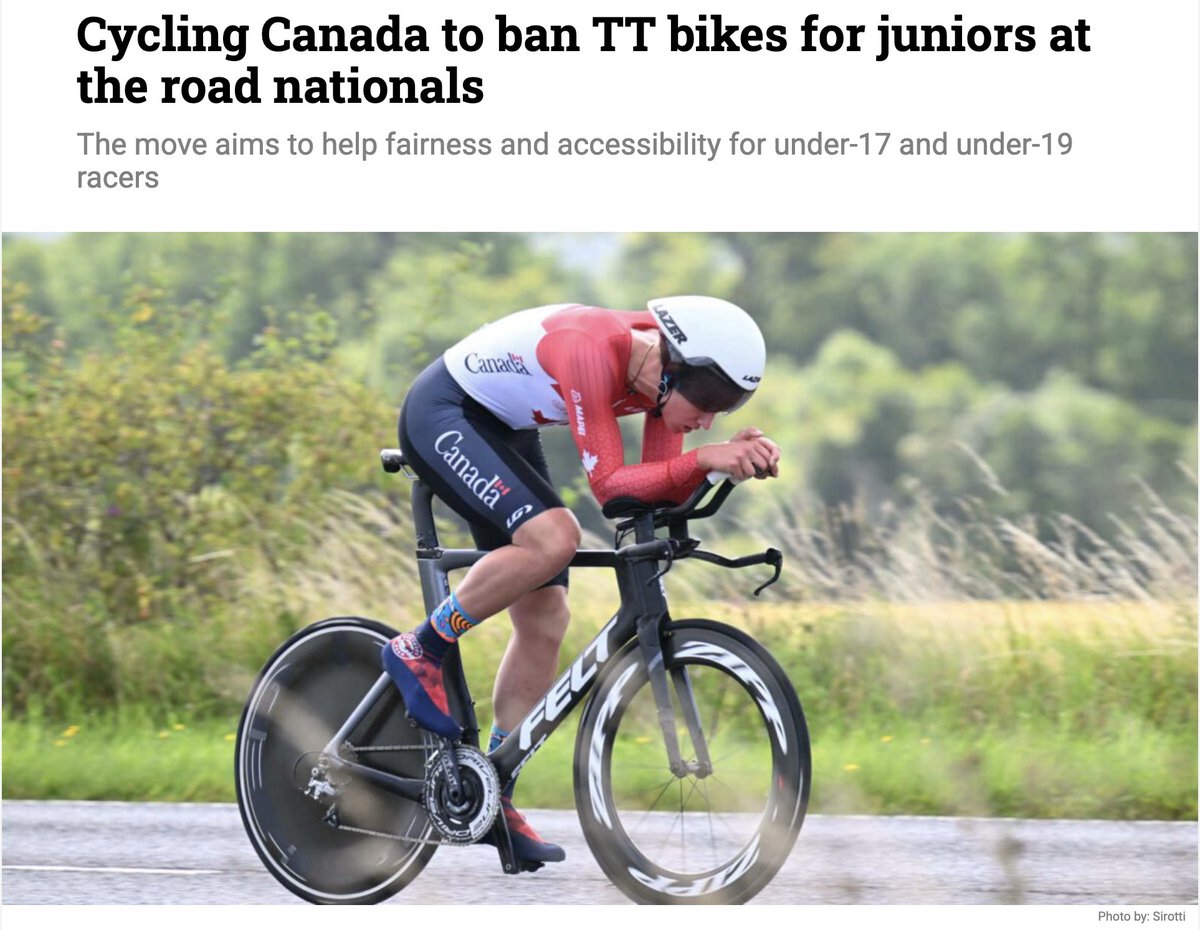
IMO, this is a brilliant move by @CyclingCanada. Anything that removes/lowers barriers to entry for age category riders has to be a good thing.
The only negative I can see from this is that those selected by Canada for the junior World's will have one fewer event specifically on their TT bike, but if other countries follow suit.....
Top riders are calling for gear restrictions to slow speeds and make racing safer. That may or may not help. The greater story is that they fear for their health/safety and want change. Here is an article on why they want speeds to drop and how races can be safer:
Why do so many children in the Netherlands cycle? 🌍🚴♂️
The BBC’s brilliant Newsround programme asked me to explore…
https://t.co/Ienf24z1NC
An uplifting little film for your feed 🌱
In business, sport and entertainment, Ai is influencing process and outcome. Cycling is no different. Pro teams will increasingly use Ai to analyze competition, plan tactical scenarios, and find blind spots which will affect roles in teams and increase race speeds.
When it comes to AI, the future is now. @michaelibarry shares his insights on how AI is increasingly shaping the role of the DS and what’s to come as we move forward
https://t.co/ycyZ2dgdBG
When it comes to AI, the future is now. @michaelibarry shares his insights on how AI is increasingly shaping the role of the DS and what’s to come as we move forward
https://t.co/ycyZ2dgdBG
READ THIS: "The car wastes more time than it saves & creates more distance than it overcomes." We’ve known this for a long time. Share this remarkable, completely relevant 1973 essay on car-dependancy by André Gorz, thankfully shared by @UnevenEarth.
https://t.co/3l9oS2lw9l
What’s the 90-day PB for corners taken without touching the brakes? If a racer executes the soft skills properly, they will be more efficient, conserve energy, and may win; yet the peak power values may not reflect this, @michaelibarry writes
https://t.co/IjmiNbHPCj