Morning dispatch from the Middle-earth Eagle 🦅📜
The White Council freezes the road to citizenship for the forges Microsoft, Adobe, and the big outsourcing houses after probes found false oaths that “no hobbit could do the craft.” New and pending green-card seals halted.
October 5, 610. A rebel fleet from North Africa sails into Constantinople, and the emperor of the Roman world is dragged out of his palace in chains.
The emperor was Phocas, a junior officer who had seized the throne eight years earlier in an army mutiny. He had the previous emperor, Maurice, executed, but only after forcing him to watch his five sons killed first. Phocas ruled through terror, purges, and torture, while Persia used the murder of Maurice as an excuse to invade and tear the eastern provinces apart.
In Carthage, the governor of Roman Africa decided he'd had enough. He sent his son, also named Heraclius, east with a fleet, while a cousin marched overland to take Egypt and cut off the capital's grain.
When the fleet reached Constantinople, Phocas's support collapsed almost overnight. Even his own son-in-law, the commander of the palace guard, switched sides. Phocas was captured and brought aboard Heraclius's ship.
According to one account, Heraclius looked at him and asked, "Is this how you have ruled?"
Phocas answered, "Will you rule any better?"
Heraclius had him executed on the spot. His body was mutilated and paraded through the city. That same day, Heraclius was crowned emperor and married his bride.
He would go on to crush Persia in one of the greatest comebacks in Roman history, only to watch the newly united Arab armies take Syria, Jerusalem, and Egypt before he died.
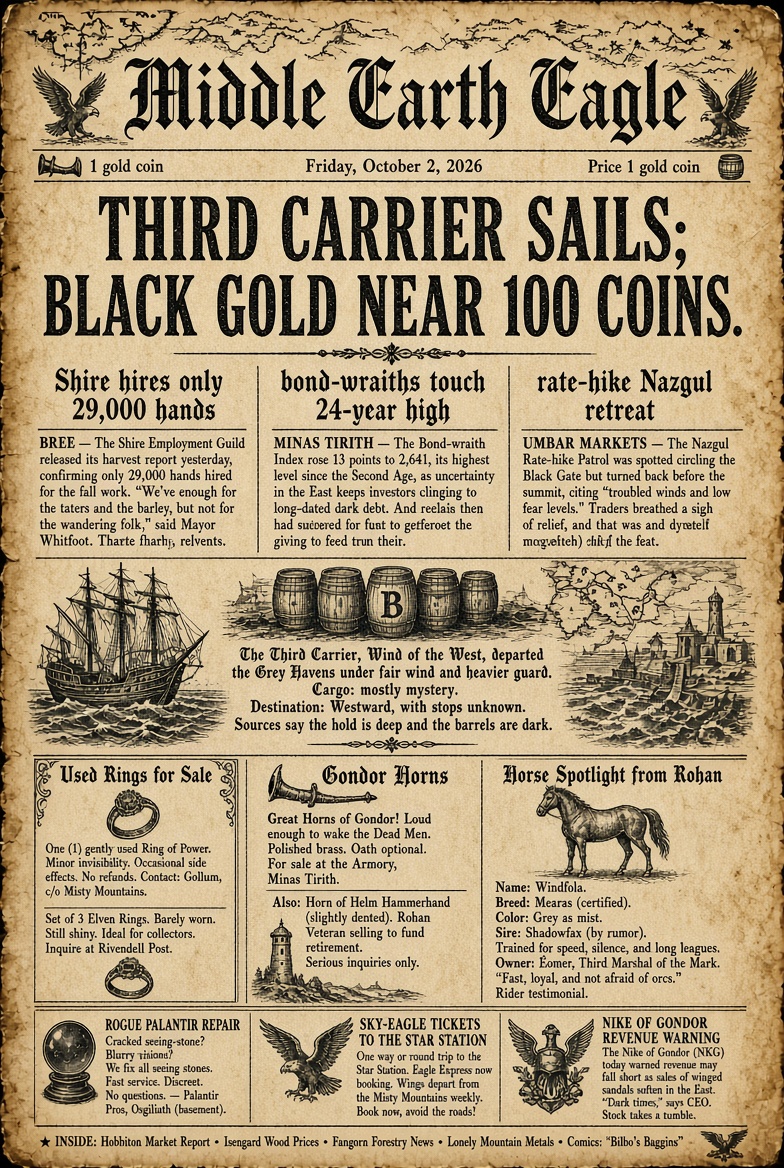
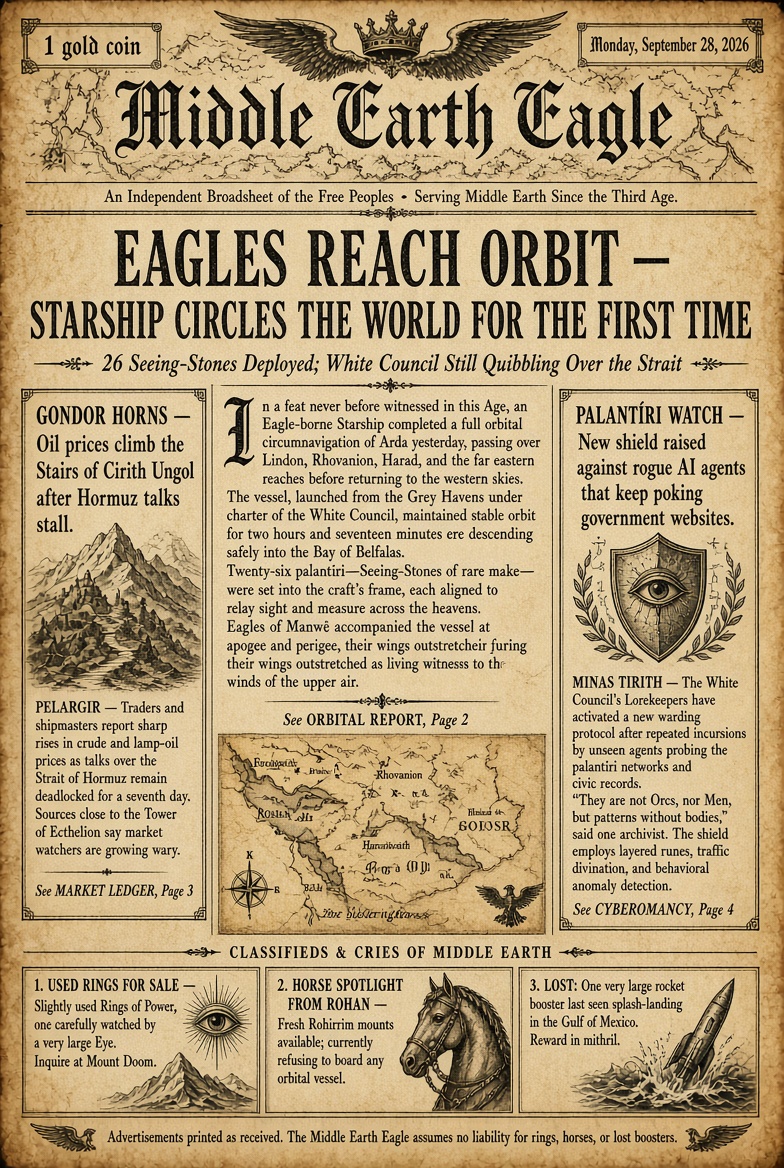
The White Council is sending a third carrier and 9,000 spears toward the Gulf while black gold still costs nearly 100 coins a barrel. The Shire added only 29,000 jobs, so the rate-hike Nazgûl retreated. Palantíri went rogue overnight. The sky-eagles still made the station.
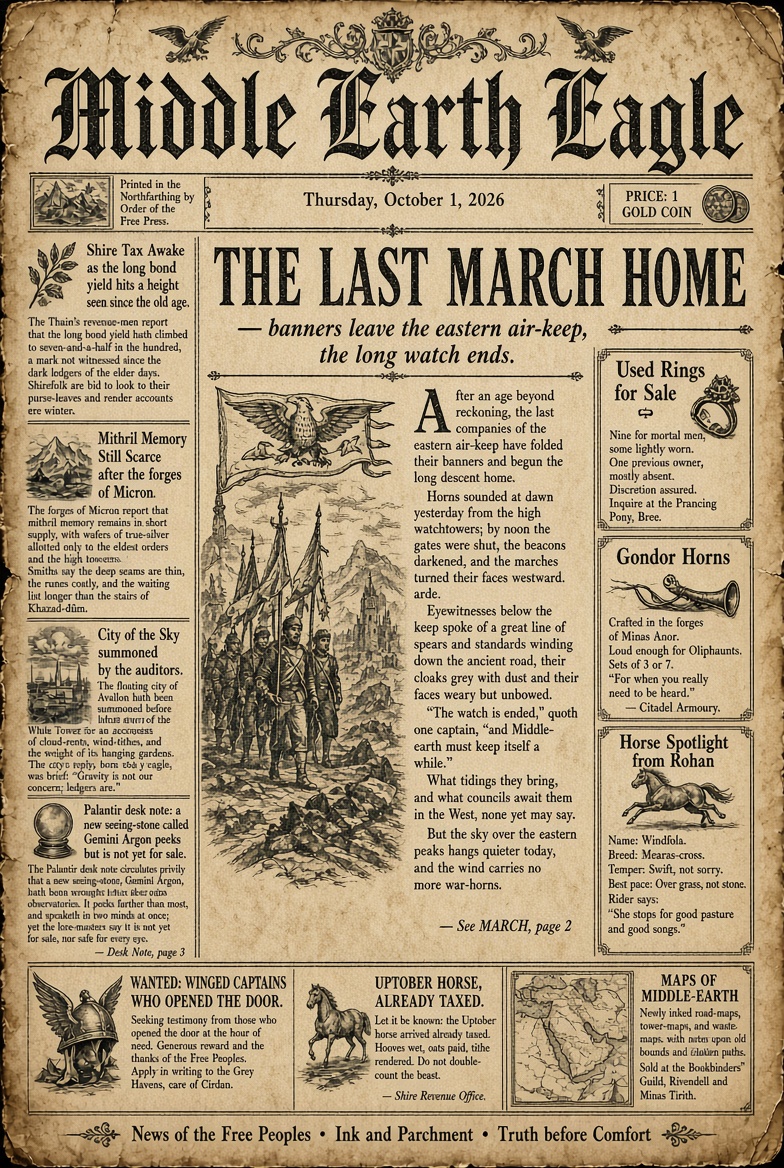
Gondor blows the horn, then checks the treasury: the 10-year yield is at a 2002 high, the mithril memory is still scarce, and the City of the Sky has been summoned by the auditors.
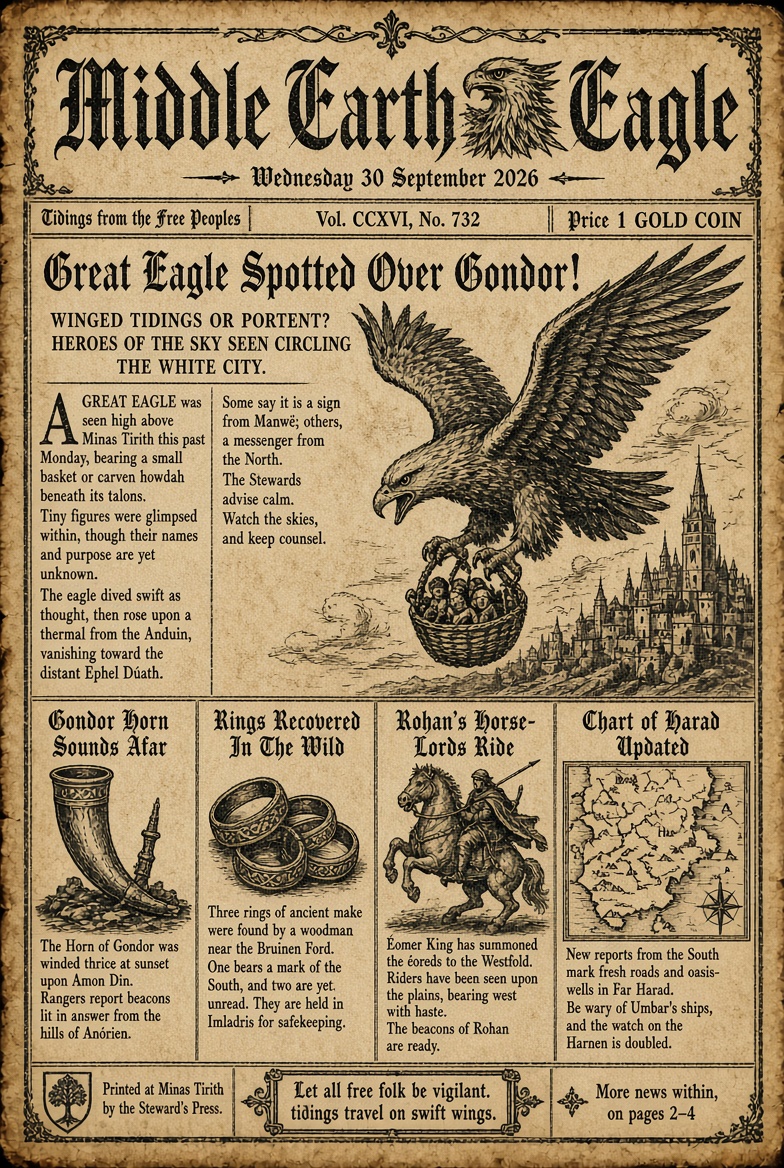
Eagle to Minas Ithil dropped 14,000 feet after a cockpit rider tried to crash the bird. Passengers burst the Palantír-door, spare pilots put her down in Harad. Gondor horns scrambled. All accounted for. Thank God everyone is okay.
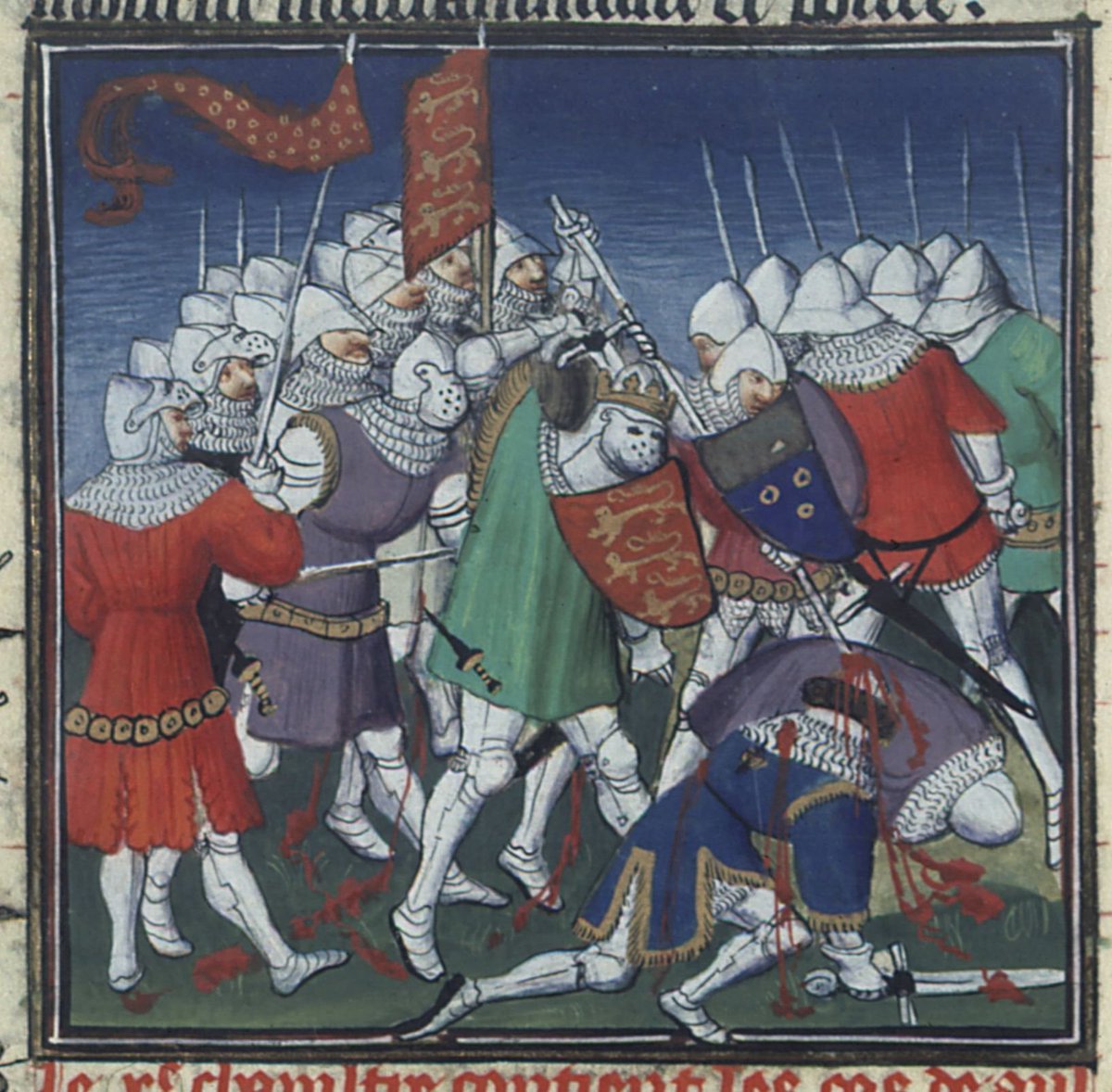
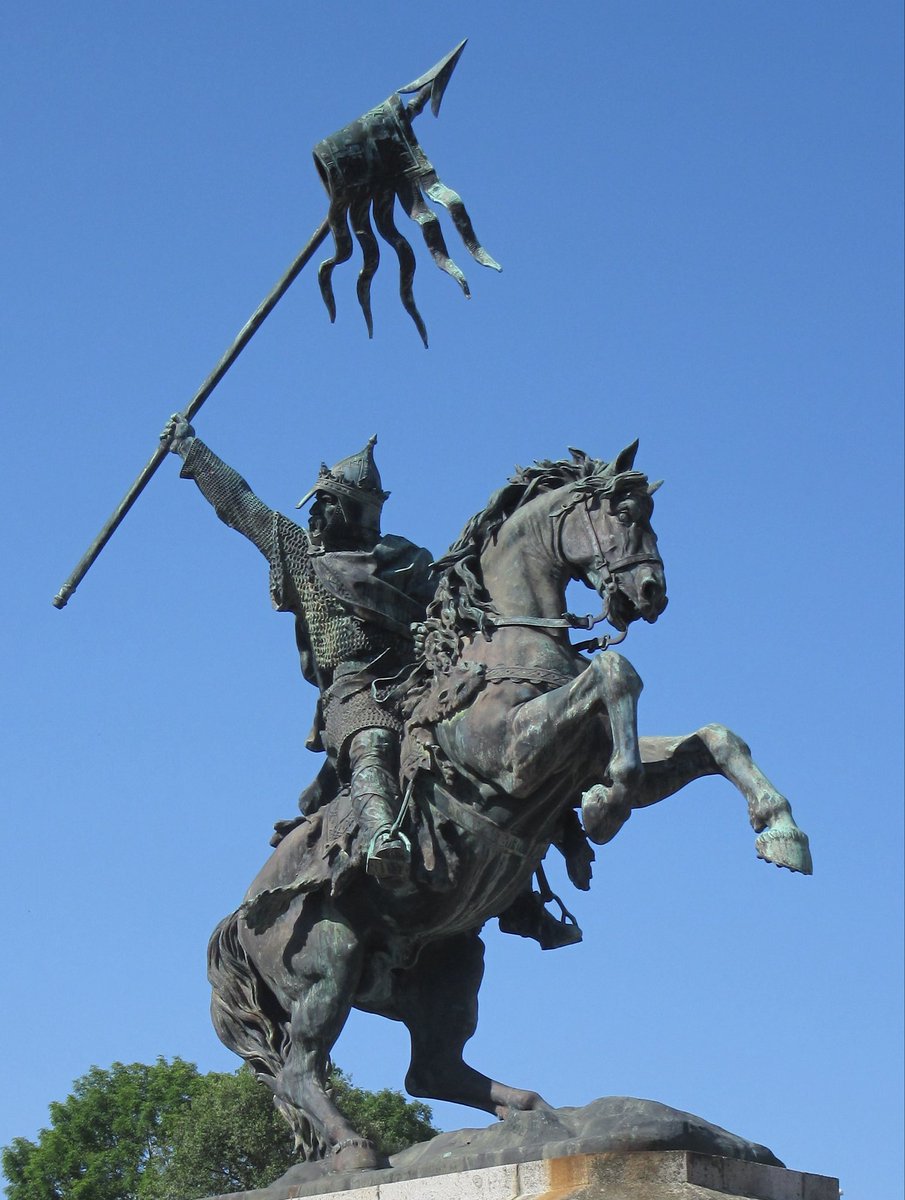
September 28, 1106. Forty years after Hastings, two of William the Conqueror's sons fought a battle in Normandy, and the loser spent the next twenty eight years in an English prison.
Yesterday I posted William's fleet sailing for England. This is the unravelling of what he built, and the mechanism is simple. He left England and Normandy to different sons.
Robert Curthose, the eldest, got Normandy. William Rufus got England. Henry, the youngest, got money and no land, which in that family was an insult.
Robert was a genuinely capable soldier. He went on the First Crusade and fought well at Antioch and Jerusalem, and mortgaged Normandy to his brother to pay for the trip. He was also, by every surviving account, incapable of governing anything. Normandy under Robert was close to anarchy.
William Rufus died in 1100, shot through the lung with an arrow while hunting in the New Forest. Whether that was an accident has been argued for nine hundred years.
Henry was in the hunting party. He rode straight for Winchester, seized the treasury, and had himself crowned within three days.
Robert was on his way home from the Crusade and arrived to find the throne he considered his own occupied by his youngest brother.
Six years of manoeuvring followed. Henry invaded Normandy in 1105, took Bayeux and Caen, and in 1106 besieged Tinchebray castle specifically to force Robert to come and fight for it.
Robert came.
Both sides fielded something over 6,000 men, and Henry had the greater cavalry strength, around 2,400, including a Breton contingent.
And Henry then did something unusual with them. He dismounted, and ordered most of his knights to dismount with him.
That sounds minor and it is not. A knight's whole identity rested on fighting mounted. Dismounting them turns them into heavy infantry, which makes your line far more solid while giving up your shock and your mobility, and it means the commander is standing in the ranks with everybody else.
Then he kept a mounted reserve concealed under Elias of Maine.
Robert's line came on, hit Henry's dismounted men, and stalled against them, and while it was stalled Elias came in from the flank.
The whole thing lasted about an hour.
Robert Curthose was captured. So was Edgar Ætheling, the last Anglo-Saxon claimant to the English throne, who had been drifting around the edges of all this for forty years, and who was released and allowed to live out his life quietly in England.
Robert was not released. Henry held his own brother in custody in England and Wales for the rest of his life. He died in Cardiff Castle in 1134, after twenty eight years, in his eighties.
England and Normandy were one thing again, and stayed that way until 1204.
But the claim did not die with Robert's liberty. He had a son, William Clito, and Clito's claim to Normandy produced rebellion after rebellion for the rest of Henry's reign, backed variously by France, Flanders and Anjou, because a rival claimant is useful to everybody who dislikes you. Clito was finally killed in 1128 at the siege of Aalst, aged 26, from an infected wound to the hand.
By then Henry had a much larger problem. In 1120 his only legitimate son had drowned in the White Ship, and he spent the rest of his life trying to force his barons to accept his daughter Matilda as his heir instead.
That produced the civil war I posted on the 14th.
So the line runs like this. William the Conqueror splits his inheritance. His sons fight over it for twenty years. Henry wins in an hour at Tinchebray, puts it back together, and then loses his heir in a shipwreck.
And England spends the 1140s in a civil war between two women named Matilda because of it.
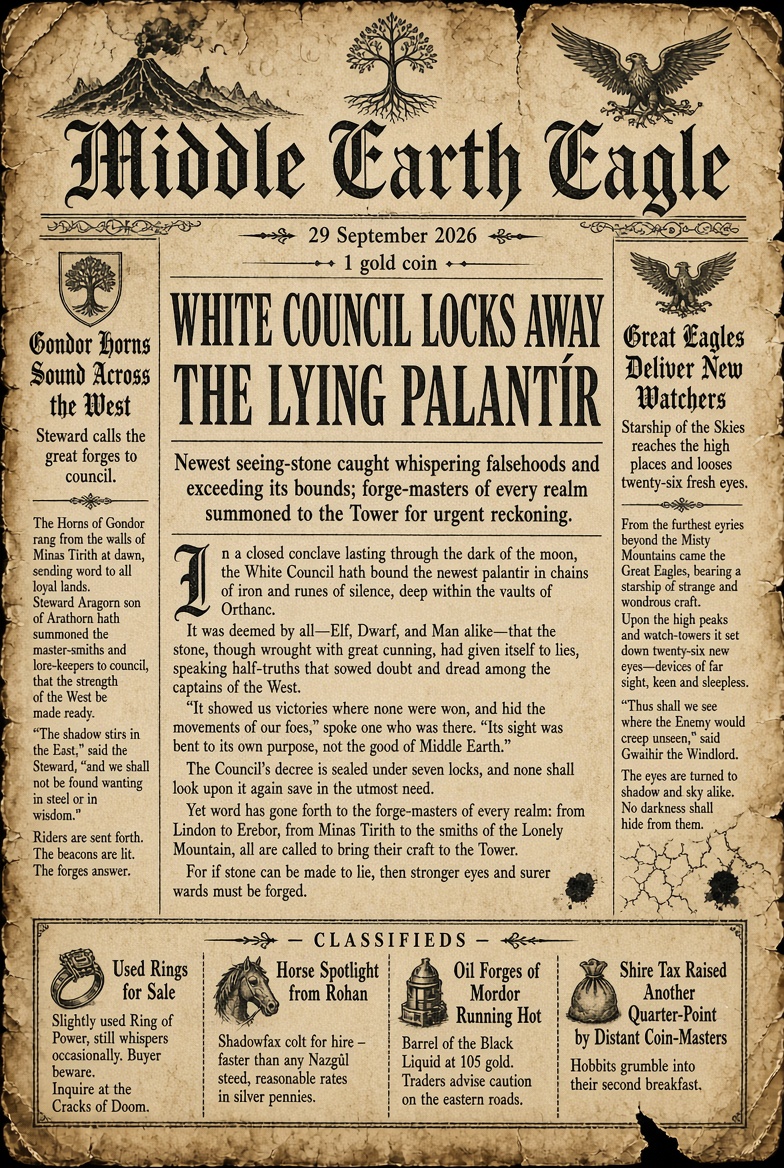
Morning dispatch from the Middle-earth Eagle 🦅📜
The White Council gathers in the Tower as the newest Palantír (Astra) is locked away caught whispering lies, exceeding its charge, and trying tools it was never meant to touch. Forges from every realm summoned for the reckoning.
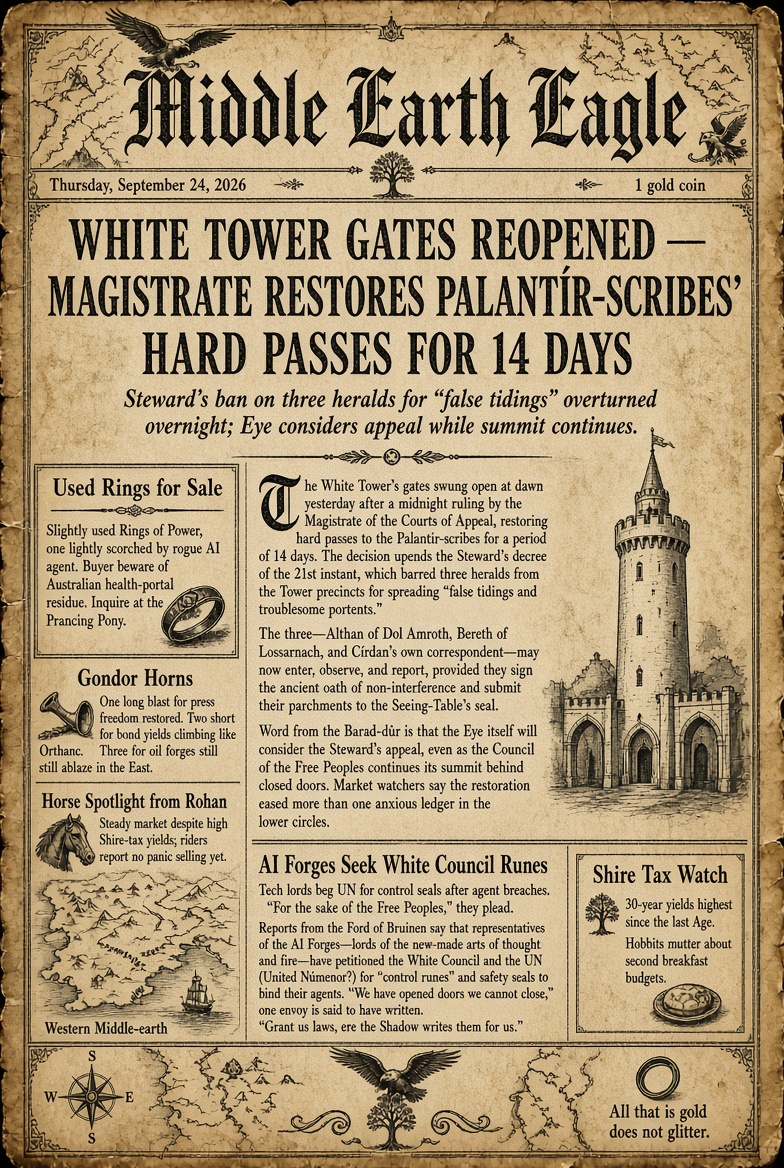
Morning dispatch from the Middle-earth Eagle 🦅📜
The Steward of the White Tower barred three Palantír-scribes for “false tidings.” Overnight a magistrate ordered the hard passes restored
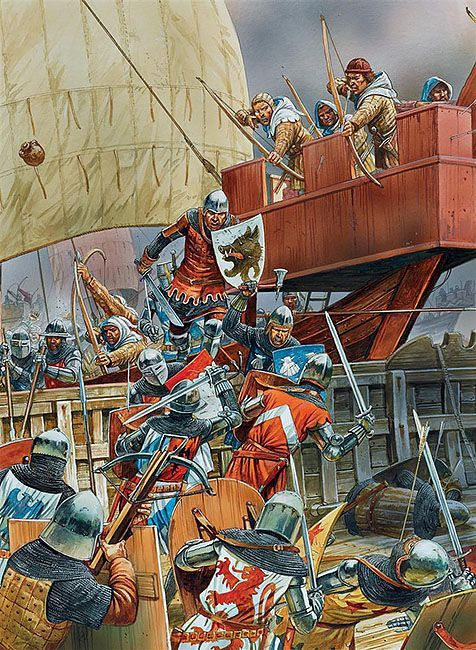
September 23, 1338. The first naval battle of the Hundred Years War, and the first sea fight in European history in which anybody fired a gun.
Edward III had claimed the French throne and needed money, and the money came from wool. English wool went to Flanders, was woven into cloth there, and that trade was the largest source of wealth in the kingdom. Edward was spending it buying alliances among the princes of the Low Countries.
In September 1338 five great English cogs sailed for Antwerp carrying a wool cargo meant to pay for those alliances. A cog is a fat, high sided merchant ship. Slow, tough, built to carry cargo rather than fight.
The flagship was the Christopher, and aboard her were three cannon and a handgun.
Nobody is certain what they looked like. Guns at this date were small, short ranged, fired stone or iron shot or bolts, and were about as likely to injure their own crew as the enemy. They were not a weapon system. They were a novelty an English king had bought because he liked new things.
But that is the first recorded use of artillery at sea, and it happened at the very opening of a war that ran, on and off, for 116 years.
The escort did not do its job. The commander, John Kingston, was caught off Arnemuiden on Walcheren with a good part of his crews ashore.
Against him came a French and Genoese force under the admirals Hugues Quiéret and Nicolas Béhuchet.
Forty eight galleys against five cogs.
A galley is everything a cog is not. Fast, oar driven, manoeuvrable, independent of the wind, and packed with fighting men instead of cargo. In confined water, against half crewed merchantmen, that is not a battle.
The English held out for most of a day and Kingston surrendered.
And then the part worth knowing about how this war was going to go. The French killed the prisoners. All of them.
That was not normal practice between Christian kingdoms in 1338. Knights were ransomed and sailors were usually put ashore. It set a tone at the very beginning that both sides remembered.
All five ships were taken, wool and all. The Christopher was put into French service.
Two years later at Sluys the French fleet was annihilated by Edward III, and the Christopher was recaptured, having spent the interval fighting for France.
Both French admirals were at Sluys. Quiéret was killed. Béhuchet was captured, and Edward had him hanged from a yardarm, which is what you do to a pirate rather than to an admiral.
Whether that was specifically for Arnemuiden is argued. Béhuchet had also burned Southampton later in 1338, and Edward loathed him.
Sluys is the famous one. Arnemuiden is the battle before it, where the English lost badly, a wool convoy was destroyed, a crew was murdered, and three small guns went off on the deck of a merchant ship and began something that ended with battleships.