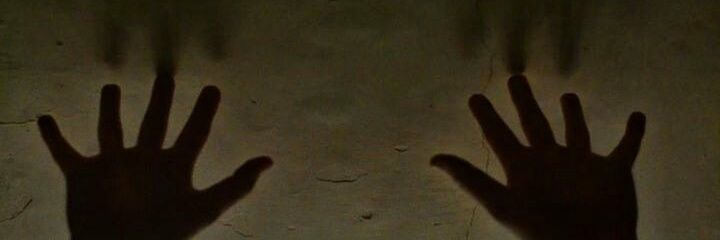
Headphones on. Lights out. Screen up close. Immerse yourself in our feature film thriller, Damaged. https://t.co/IQ6BafmC0R … #indiefilm#filmmakers#filmmaking#film
Sean Baker’s Indie Spirits speech is essential viewing, shedding light on the growing unsustainability of independent filmmaking and the urgent need for industry-wide change.
Matthew McConaughey and Woody Harrelson reunite as their True Detective characters in a new ad promoting more film and TV productions in Texas.
The ad was written and directed by series creator Nic Pizzolatto.
RIP David Lynch (1946-2025)
I am in utter disbelief right now... Can't accept that he is no more... I don't have the words to describe how I feel.
We will never ever see anyone like him ever again..
Here is his advice to youngsters.
"The feel of the experience is the important thing, not the ability to verbalise or analyse it."
- Stanley Kubrick on the movie that changed cinema forever, #2001ASpaceOdyssey.
"The director comes first. Writers should have no illusions about that. But the writer comes second. Directors too, should have no illusions about that."
- Sergio Leone #botd#filmmakers#filmmaking#director#film#cinema
We are making every possible effort to do as much as possible during the final 8 days of the campaign to ensure the survival of Cinephilia & Beyond. An important question for all of you: Can someone help us with sponsored articles on the site? As you are aware, prominent film directors such as @mang0ld, @mattreevesLA, @RealGDT, and @pramsey342 regularly visit our humble site. We are extremely grateful to them for that, but we have always wondered why it is not enough to attract at least one permanent sponsor that would make our life a little easier without the need for these exhaustive fundraisers that will eventually cost us our health. They are already costing us. Not to mention life; we've all already gotten sick because of how exhausting this is. In summary, Cinephilia & Beyond receives visits and praise from the most influential figures in the American and European film industries. Is anyone interested, or can they help us find sponsors for the site?
We are grateful in advance for your answers.
The often recurring motif of (prison) bars in Hitchcock films is used to visually emphasize that a character is trapped, caught, behind bars, physically or psychologically, as if in prison.
This shot is so brilliant!
The Paradine Case (1947)
Michelangelo Antonioni on the Final sequence of 'The Passenger' (1975):
"Interviewer: How long did it take to do the final scene of The Passenger?
Antonioni: 11 days. But that was not because of me but because of the wind. It was very windy weather and so difficult to keep the camera steady.
Interviewer: One critic has said that the final seven-minute sequence is destined to become a classic of film history. Can you explain how you conceived it?
Antonioni: I had the idea for the final sequence as soon as I started shooting. I knew, naturally, that my protagonist must die, but the idea of seeing him die bored me. So I thought of a window and what was outside, the afternoon sun. For a second, just for a fraction-Hemingway crossed my mind: "De@th in the Afternoon." And the arena. We found the arena and immediately realized this was the place.
But I didn't yet know how to realize such a long shot. I had heard about the Canadian camera, but I had no first-hand knowledge of its possibilities. In London, I saw some film tests. I met with the English technicians responsible for the camera and we decided to try. There were many problems to solve. The biggest was that the camera was 16mm and I needed 35mm. To modify it would have involved modifying its whole equilibrium since the camera IS mounted on a series of gyroscopes. However. I succeeded in doing it.
Interviewer: Did you use a zoom lens or a very slow dolly?
Antonioni: A zoom was mounted on the camera. But it was only used when the camera was about to pass through the gate.
Interviewer: It's interesting how the camera moves toward the man in the center against the wall but we never get to see him, the camera never focuses on him.
Antonioni: Well, he is part of the landscape, that's all. And everything is in focus-everything. But not specifically on him. I didn't want to go closer to anybody. The surprise is the use of this long shot. You see the girl out side and you see her movements and you understand very well without going closer to her what she's doing, maybe what her thoughts are. You see, I am using this very long shot like closeups, the shot actually takes the place of closeups.
Interviewer: Did you cover that shot in any other way or was this your sole commitment?
Antonioni: I had this idea of doing it in one take at the beginning of the shooting and I kept working on it all during the shooting."
[Filmmakers Newsletter, I975]