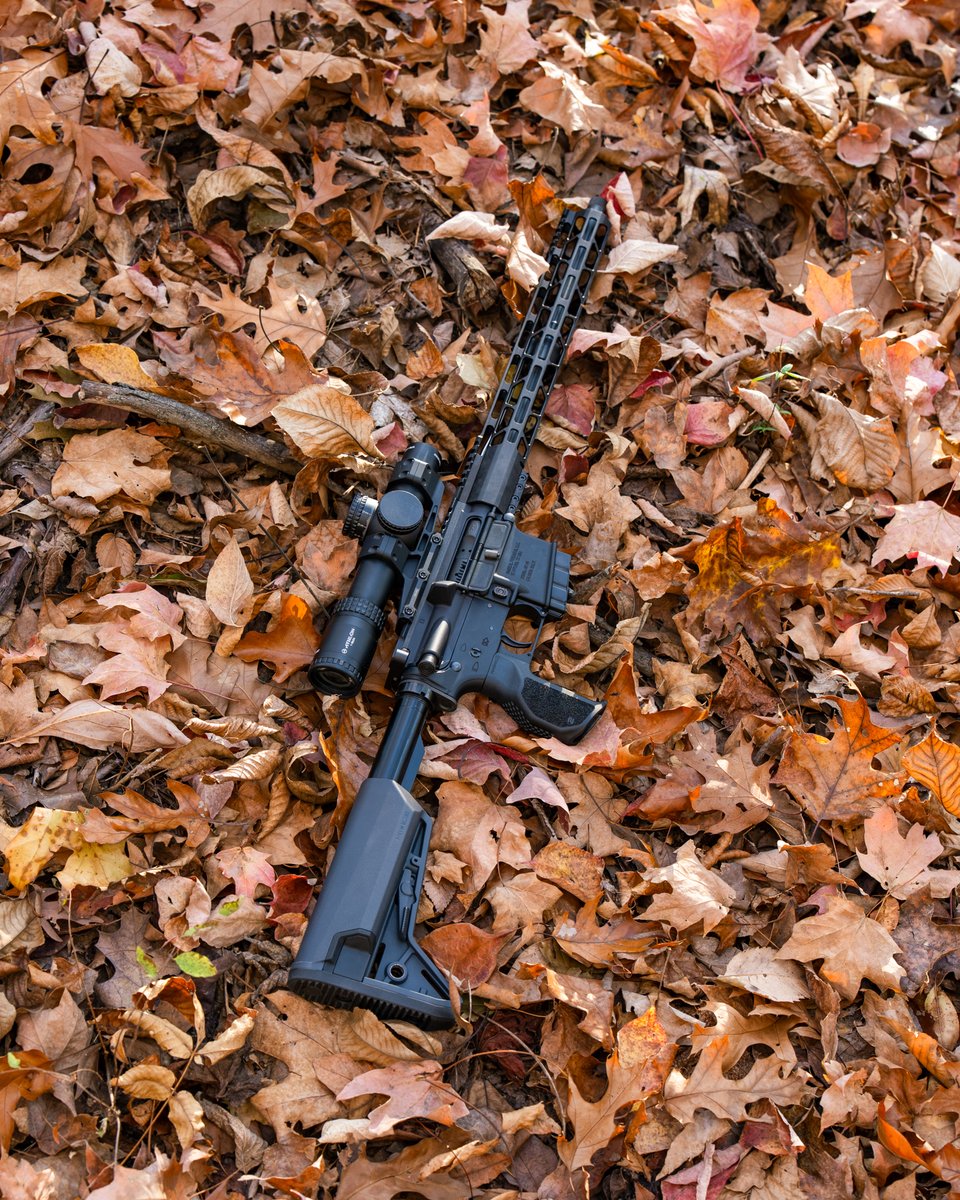
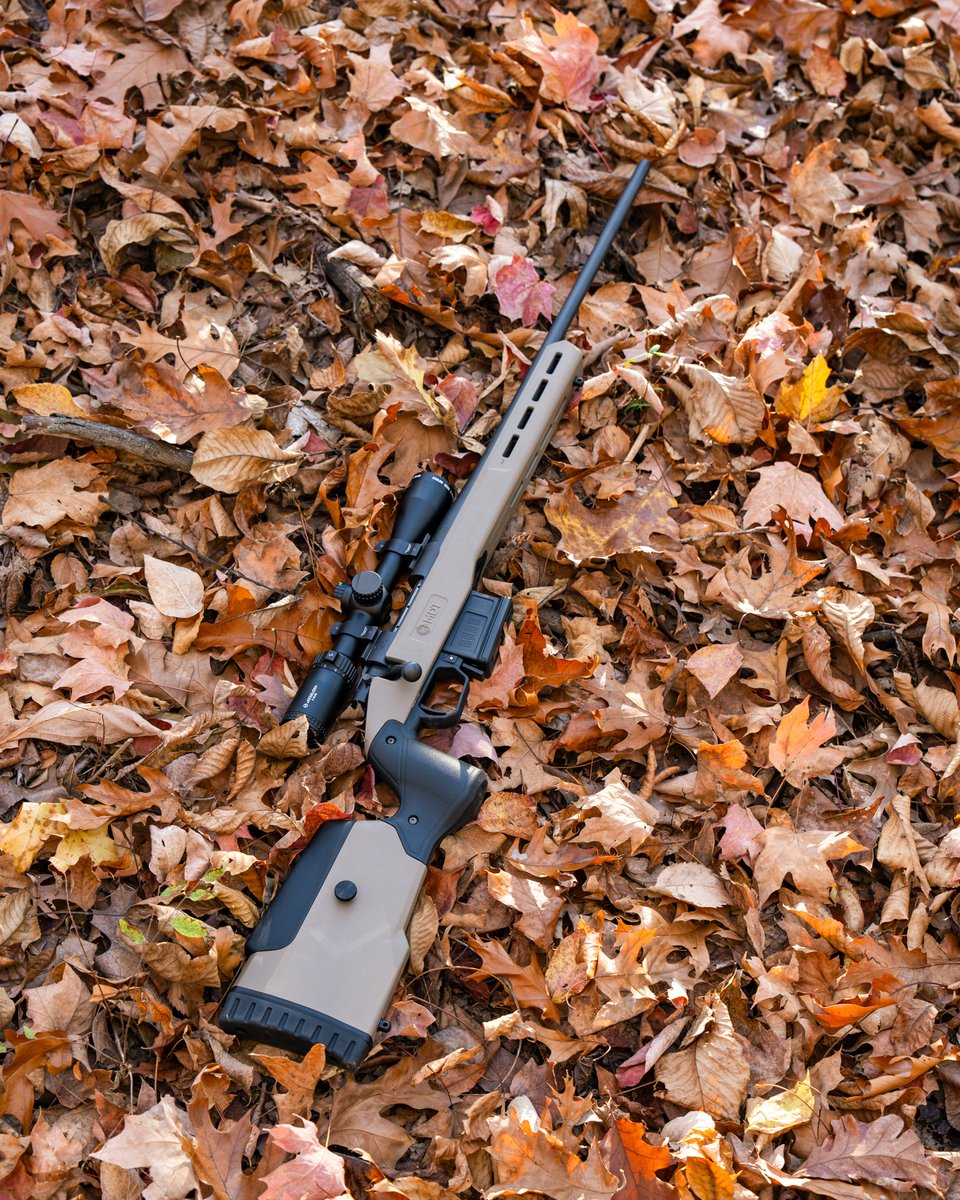
Missouri firearms deer season is here! From all of us at MGW, good luck to everyone heading out for opening day. Stay safe, enjoy the season, and make the most of your time in the field.
We'd love to see how your season is going. Share your harvest photos with us in the comments!
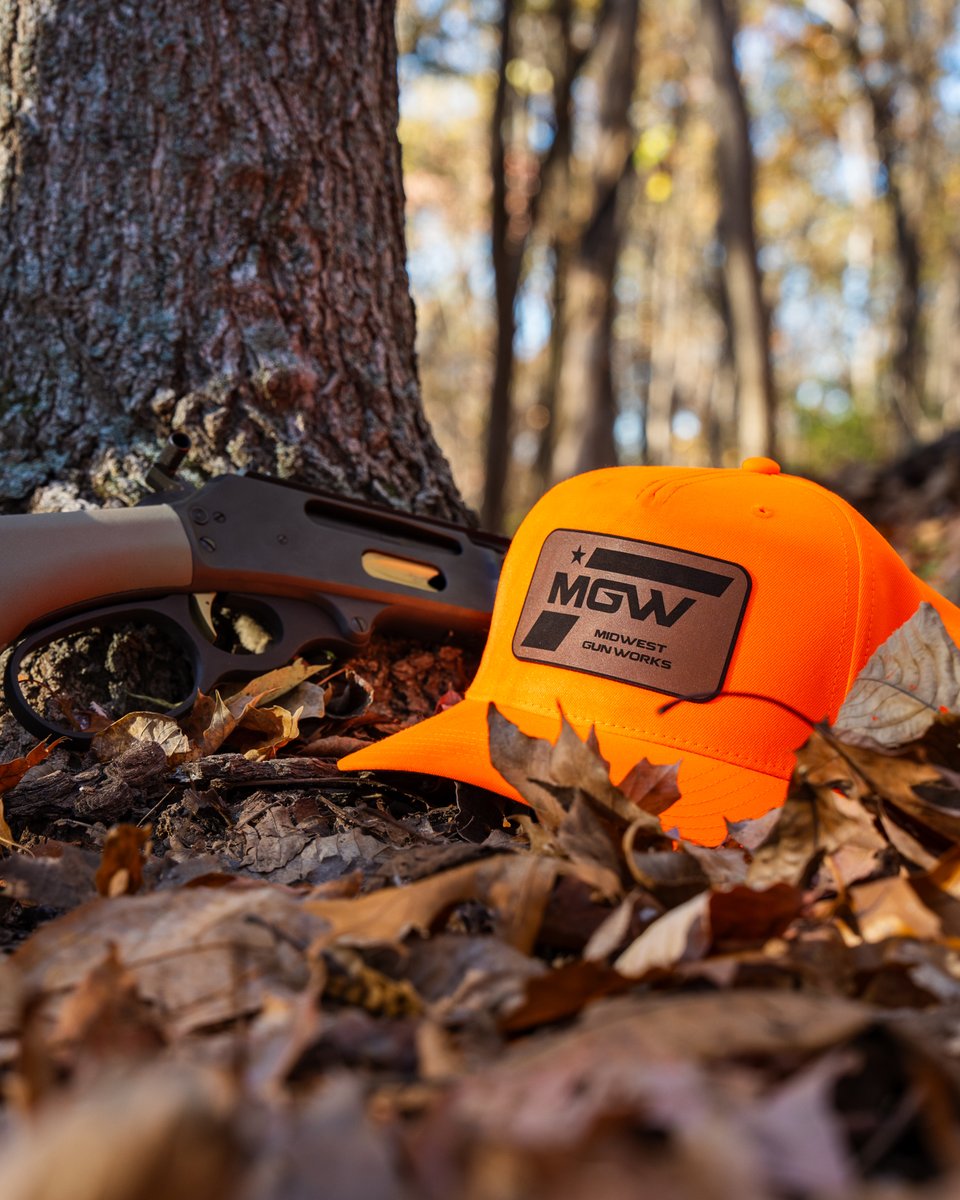
Bolt action, modern sporting rifle, or lever action? We've got three different takes on a deer rifle: the Weatherby Vanguard in .243 Winchester, an AR-15 that we re-barreled in .350 Legend, and a Marlin 336 in .30-30 Winchester. Which rifle would you take hunting this deer season?
Born on November 10, 1919, Mikhail Kalashnikov became one of the most influential firearms designers in history. A former Soviet tank commander, Kalashnikov began developing what would become the AK-47 after hearing fellow soldiers express frustration with their rifles during World War II. His design, officially adopted by the Soviet military in 1949, emphasized simplicity, durability, and reliability.
The AK-47's influence extended far beyond its original design. Kalashnikov went on to develop several other firearms, including the AKM, RPK, and AK-74, while his original platform inspired countless international variants and derivatives. Its straightforward design and ease of production helped make it one of the most widely manufactured and recognizable firearms in the world, shaping military history for generations.
In a memorable moment in firearms history, Kalashnikov met Eugene Stoner, the American designer behind the AR-15 and M16, in 1990. The two legendary designers, whose creations became defining rifles of the Cold War, met in Virginia to discuss their work and compare their respective designs. Today, Kalashnikov's legacy remains inseparable from the rifle that bears his name.
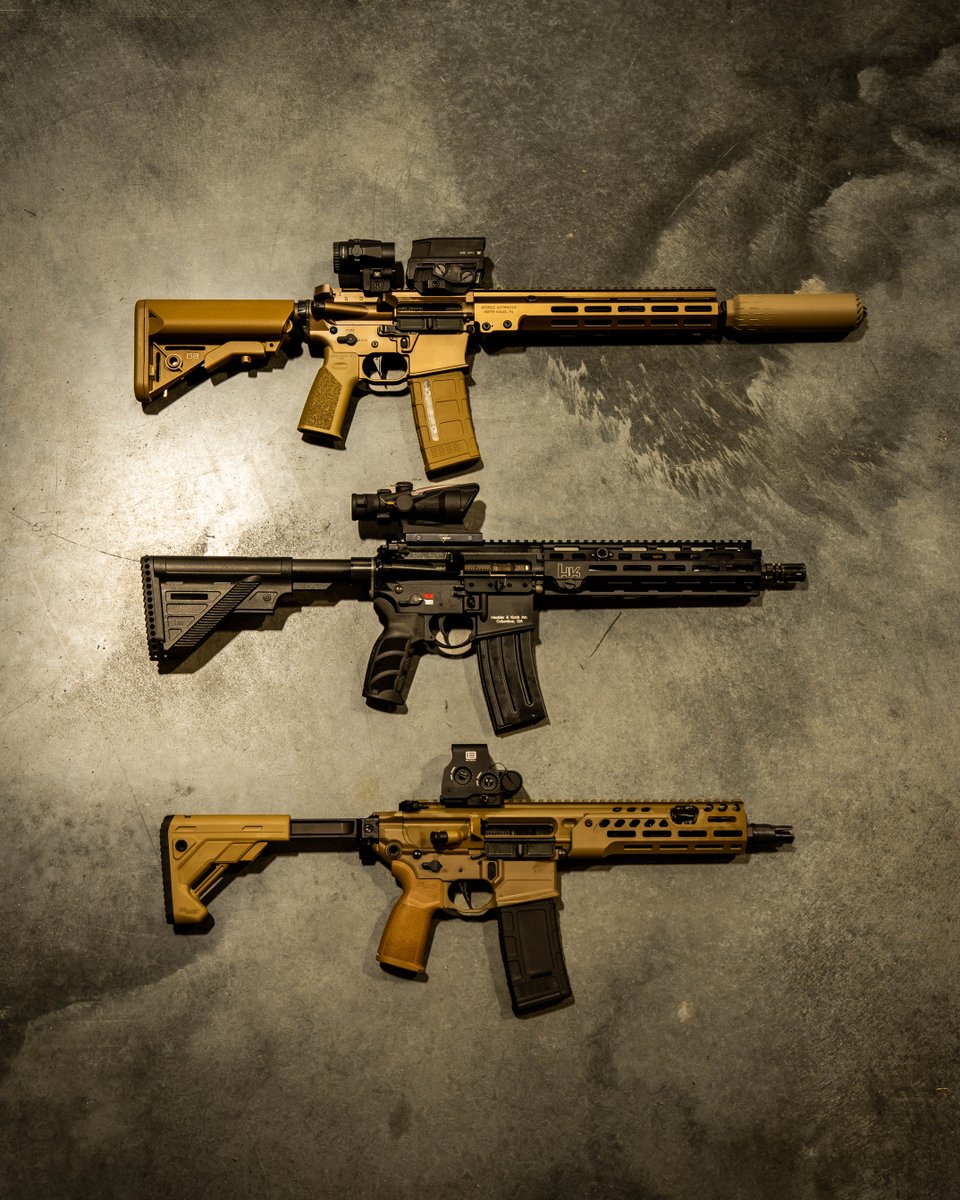
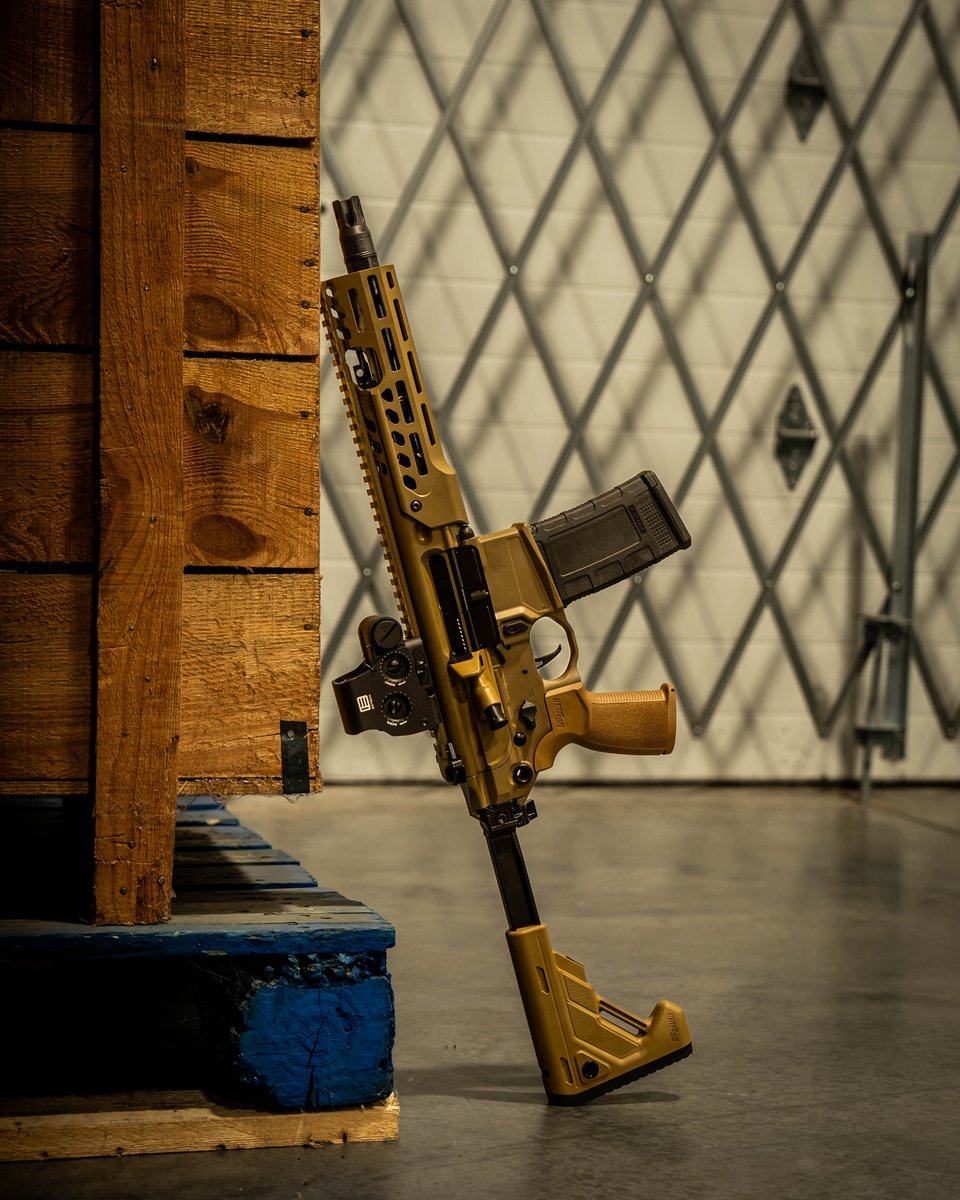
SBR Selection Time - which is it going to be?
🔷Geissele Super Duty 12.5"
🔹Vortex AMG w/ 3x Magnifier
🔹HUXWRX Flow 556 Ti
🔷HK MR556
🔹Trijicon ACOG
🔷Sig MCX Spear LT .300 BO
🔹EOTECH EXPS2
@GSWIndiana Hey GSW,
We can't give you an exact restock date, but if click the "Notify Me" button on the product page we will alert you as soon as Beretta sends us more!
Link:https://t.co/4M6c8Z44WF
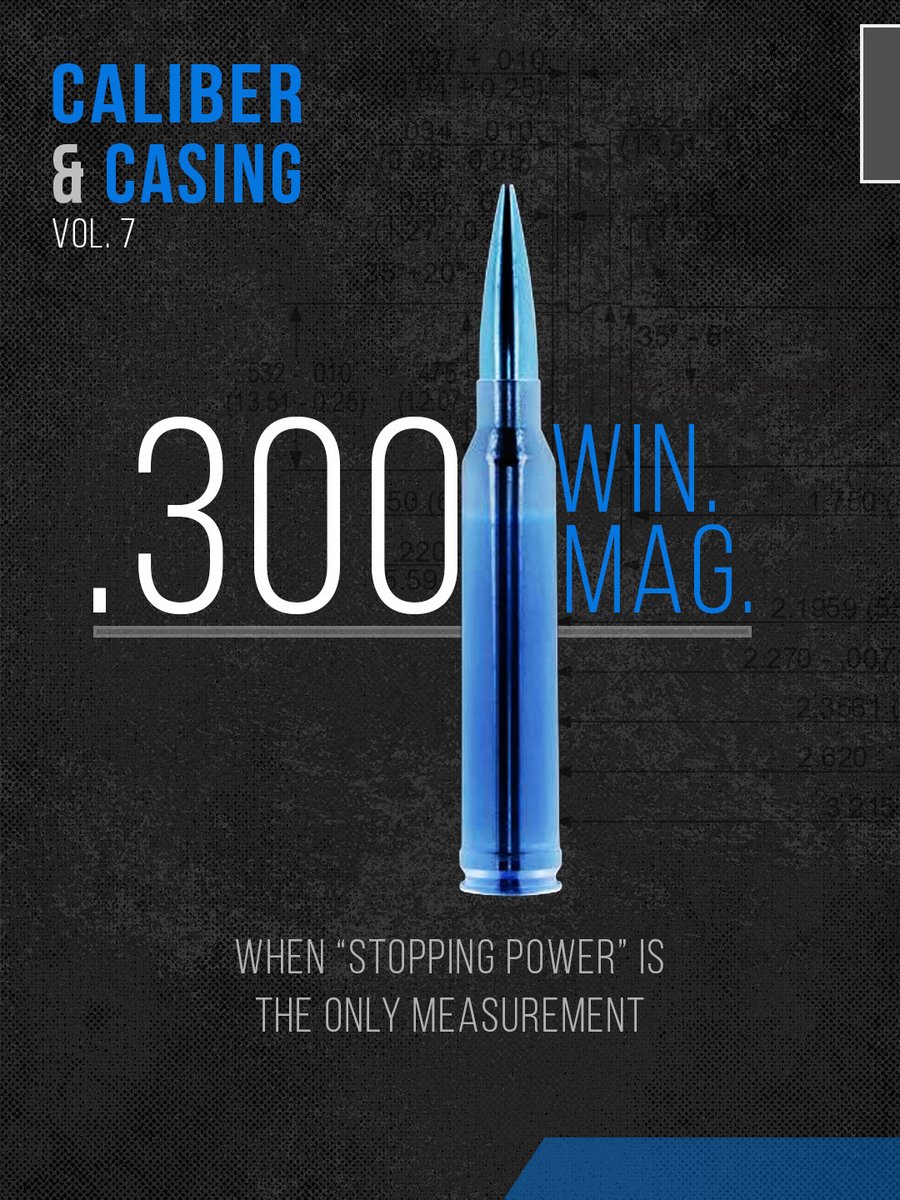
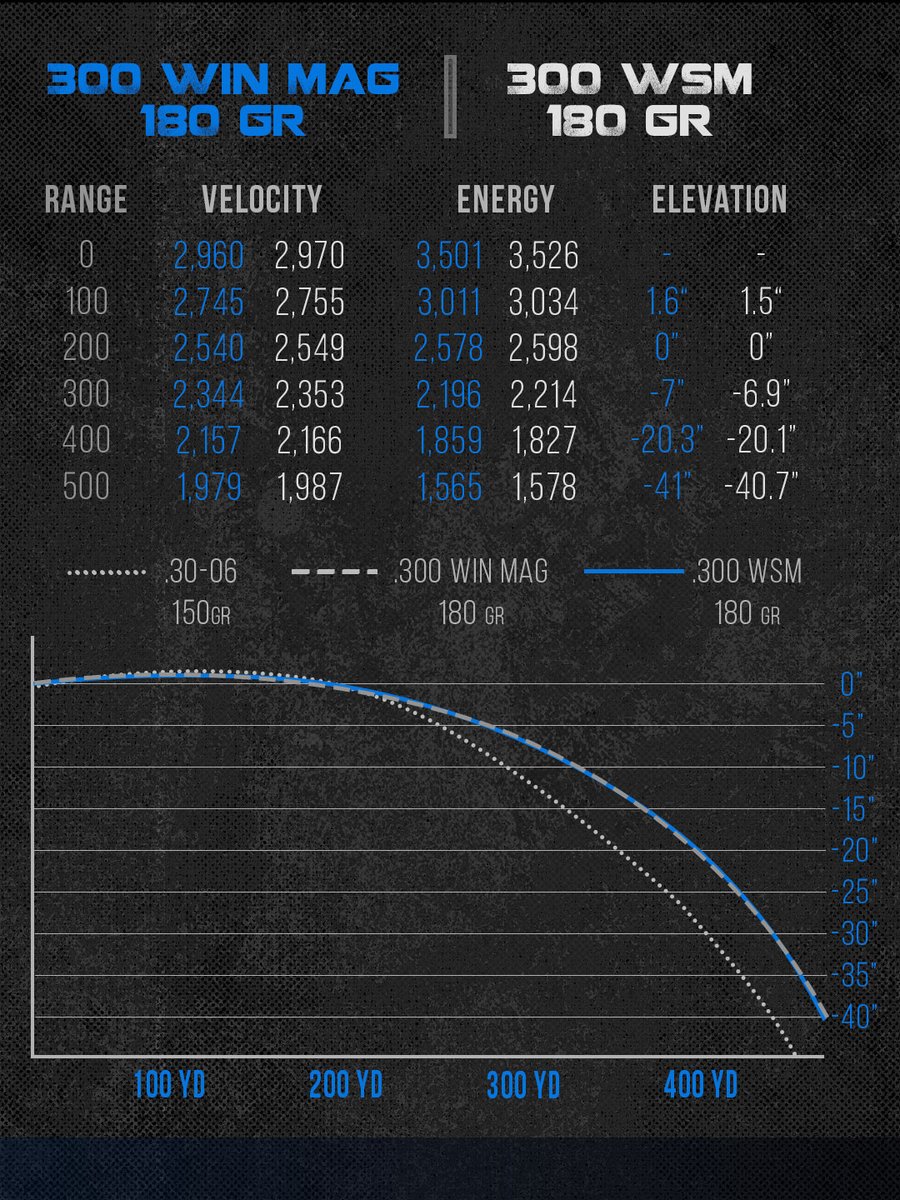
The caliber with almost mythological “Stopping Power”: .300 Winchester Magnum.
If you have been hunting long enough, chances are you know/knew someone who hunts whitetail with a .300 Win Mag. He says he chose a round with enough “stopping power” to lay a trophy buck down flat from hundreds of yards away, but he seems to knock the spots off them at about 50 yds…
In all seriousness, though, it's been a prolific round in the deer hunting community for a long time, and non-hunters alike have revered it for its association with military and police unit marksmen.
Upon release in 1963, it wasn’t so clear that it would go on to live an acclaimed life for over six decades.
.300 Win Mag was a bit of an oddity for the cartridges of that time.
Unlike the .264 and .338 Magnums before it, it had a longer case body and a very short neck, defying the conventional “one caliber length” minimum neck measurement. It was done intentionally to maximize the available powder volume. It was a simple approach: “more powder equals faster velocities,”.
They did accomplish faster velocities, but it came with some concessions.
Because Winchester maxed out the dimensions in the name of powder volume, the COAL was at the limit for a standard long action. Factory ammunition was loaded to a rather short overall length so it was compatible with a variety of rifles and magazines from different manufacturers, and longer (heavier than the standard 150 gr) projectiles had to be recessed further into the case body—reducing the total powder volume.
Nonetheless, hunters of medium to large game over time recognized the benefits of Winchester’s .30 Cal Magnum, including reduced wind drift when compared to other cartridges of the time. It became apparent to them, with the variety of bullet weights available and the thoughtful construction of their handloads, that the .300 Win Mag was well suited to take everything from medium-sized game to big game the world over.
Joining the likes of .30-06 and .30-30, .300 Win Mag found its place as the next chapter in America’s long-standing love affair with .30 cal cartridges.
It remains popular today as a functionally capable, American classic.
Who says a precision rifle can't have a little classic style? This 6.5 CM build pairs a Bergara Premier barreled action with a Sharps Bros. Heatseeker chassis featuring a walnut stock. Add a JARD match-grade trigger and Vortex glass, and you've got a build that blends timeless looks with modern precision. Whether you're gearing up for deer season or building for the competition line, this one's worth a closer look.
✅ Bergara Premier Barreled Action
✅ Sharps Bros. Heatseeker Chassis
✅ JARD B-14 Match Grade Trigger
✅ Warne Mountain Tech Tactical Rail
✅ Vortex Pro Extended Cantilever Mount
✅ Vortex Diamondback Tactical 6-24x50
✅ MDT 5 Round Metal AICS Magazine
Same SA-35, but totally transformed.
What started as a factory-stock pistol is now something entirely different. Our gunsmiths put their skills to work to bring our customer's vision to life, giving the SA-35 a deep, glossy blue finish worthy of its Hi-Power heritage.
The best part? Seeing our customer's idea come together just the way he imagined it. Check out the finished product.
He almost walked away from a brand-new SA-35 over one thing: the finish.
Inspired by the classic Browning Hi-Power, the SA-35 has the looks and heritage to match. But our customer wanted that deep, glossy blue the original was known for. So we’re giving this pistol a makeover. Follow along as our gunsmiths transform this matte-finished SA-35 into something a little more special.
Happy 10/22 Day! Since 1964, the Ruger 10/22 has become a rimfire icon, winning over generations of shooters with its reliable design, classic roots, and nearly endless customization possibilities.
So, for 10/22 Day, we gave this legend a little MGW treatment. From a Timney Calvin Elite trigger to a LUTH-AR chassis and Athlon glass, this classic has a few new tricks up its sleeve.
62 years of 10/22 history, and we're still finding new ways to make it our own. What's your favorite 10/22 build?
Trigger: Timney Calvin Elite
Chassis: LUTH-AR MCA-22
Suppressor: Sonicore Skarv .22
Charging Handle & Scope Base: Tandemkross
Scope: Athlon Neos 3-9x40
Scope Rings: Warne Vapor
How could you want more than the Triple 4?
Ask anyone for a big-bore lever-action cartridge, and they'll most likely say .45-70—and why shouldn’t that be their answer? Between tactical lever guns and hunting communities, that round dominates the discussion. However, that isn’t the cartridge modern big-bore lever guns owe their success to.
We can see the responses now: “How dare they tarnish the good name of the lord’s rifle caliber. The .45-70 Gov’t has been around since the 1800s.”
The .45-70 traces its origins to 1873 as a black powder cartridge. Lever-action rifles were chambered for it, including the Winchester 1886 and Marlin 1895. Rifles of that time were built to withstand the pressures produced by black powder. They could not withstand the pressures produced by an equivalent amount of smokeless powder when it entered production.
Manufacturers had to “download” the commercial ammo to 18-20,000 PSI to be considered safe for older rifles, particularly the 1873 Trapdoor design. To this day, SAAMI specs still list the max pressure of .45-70 at 28,000 because of it.
Hindered by the need to cater to “weaker” black powder era rifles, the .45-70 fell out of vogue with American hunters.
Marlin stopped production of the 1895 in 1917, and Winchester did the same with the 1886 in 1935.
Plenty of lever-action rifle options existed in the .30s range, but the lever-gun market lacked a true big-bore rifle cartridge.
Marlin took their prototype concept for a new .429-caliber round to Remington in 1964, and the following year Marlin introduced the .444 Marlin and a new Model 444 rifle.
Marlin’s own actions ultimately ended the .444 when they brought back the Model 1895. The modern .45-70 could push heavier 300+ gr. bullets, something that the .444 Marlin struggled with due to the 1:38 twist that it had until 1999. After that, the .45-70 had a renaissance and left the .444 Marlin behind.
The .444 Marlin still has factory loads, but like many rounds, it shines with handloads. While you may consider it outclassed by the .45-70’s performance and market support, the .444 Marlin is an option if you enjoy experimenting with handloads or just want to be different.
Engineered for the field, designed to make history. The Beretta A400 Solo 500 Years Special Edition takes the performance of a proven semi-automatic platform and elevates it with remarkable artistry. An intricate hunting scene spans the nickel-finished receiver, complemented by gold inlays, dark accents, and beautifully finished wood. The result is a shotgun that’s as striking on display as it is at home in the field.
With Beretta’s 500-year anniversary emblem proudly featured, this special edition celebrates a legacy built over centuries. It’s a tribute to craftsmanship and tradition, made to be appreciated today and passed down for generations to come.
So, which is it going to be?
Volquartsen Mini Scorpion X
______________________________
• Optic: Swampfox Kraken w/ RMR Adapter
• Can: Angstadt Arms Reticent 22
Ruger/Silencer Shop Mark IV
______________________________
• Optic: Burris Fast Fire 3
• Can: GSL Technologies FLEA
S&W 22 Victory
______________________________
• Barrel: Tandemkross Comet
• Can: Faxon Firearms Twenty-Toucan
Let us know what else you would add to one of the setups!
The Beretta B22 Jaguar is already a fun little .22, but we couldn't leave well enough alone. 😎 We added a bunch of Tandemkross upgrades: the halo Charging Ring, Victory Trigger, fiber-optic front sight, and Game Changer Pro Squared Compensator. Finally, we topped this build off with a Vortex Defender-XL red dot.
And for you detail-oriented folks, yes, the charging ring and trigger are red. A home-run color combo, or did we strike out? You be the judge.
7mm PRC… and the R stands for Repackaged Rem. Mag?
Like many of Hornady’s newer releases, 7 PRC is no exception to the online ridicule of being a revisionist take on a “Tried and True” cartridge design. Some of it is warranted, and some of it is not. Many times the controversy over a cartridge is due to opposing camps approaching the round from different perspectives.
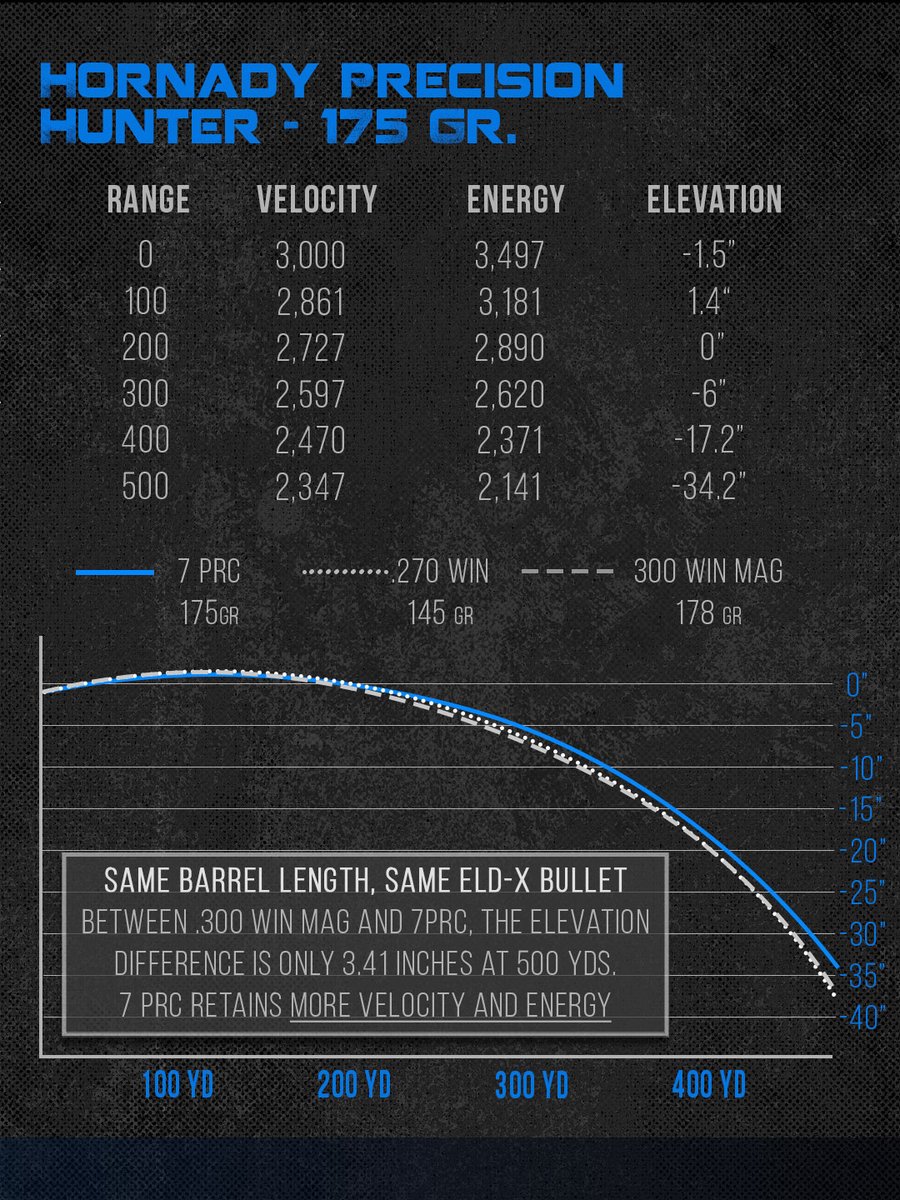
Hornday introduced the 7 PRC, the third PRC after .300 and 6.5, in 2022. It filled the gap between the S/A 6.5 PRC and the magnum-length .300 PRC. Some people touted this round as a big step forward in performance, while others said it did nothing the 7mm Rem. Mag couldn’t do. And both opinions were right, kind of.
It is fair to say the 7 Rem Mag defenders approached the new cartridge from the hunting perspective, out to about 400 yds and in. In this context, the performance differences are marginal: similar velocities, grain weights, bullet drop, etc., and you would be hard-pressed to see a noticeable difference between game harvested with one round vs. the other.
Those accused of joining the “Hornady Hype Train” tended to focus on the performance of the cartridge at extended ranges, 500-1000+ yds, for target shooting. This is where the argument for the 7 PRC is based. High-BC bullets, around which the entire PRC family was designed, result in a flatter trajectory, more velocity, and greater retained energy at distance. Giving the 7 PRC equal, or many times better, performance than some of the iconic magnum cartridges, without the added recoil or complications imposed by the magnum length / belted case design.
Now, is 7 PRC the #1 cartridge in either respect—highly doubtful. But where it stands out is actually in the middle ground between the two. The 7 PRC seems to strike a good balance between the two worlds.
Do you need to go sell the 7mm Rem Mag in your safe and go get a PRC? Or do you need choose the 7 PRC over the 7mm Rem Mag as your 7mm rifle? No, you don’t; that 7mm Rem Mag will do just as good, in the context of hunting.
However, you could argue that if you want a dual-purpose gun as suitable for competition as it is for hunting, the 7PRC is worth considering.
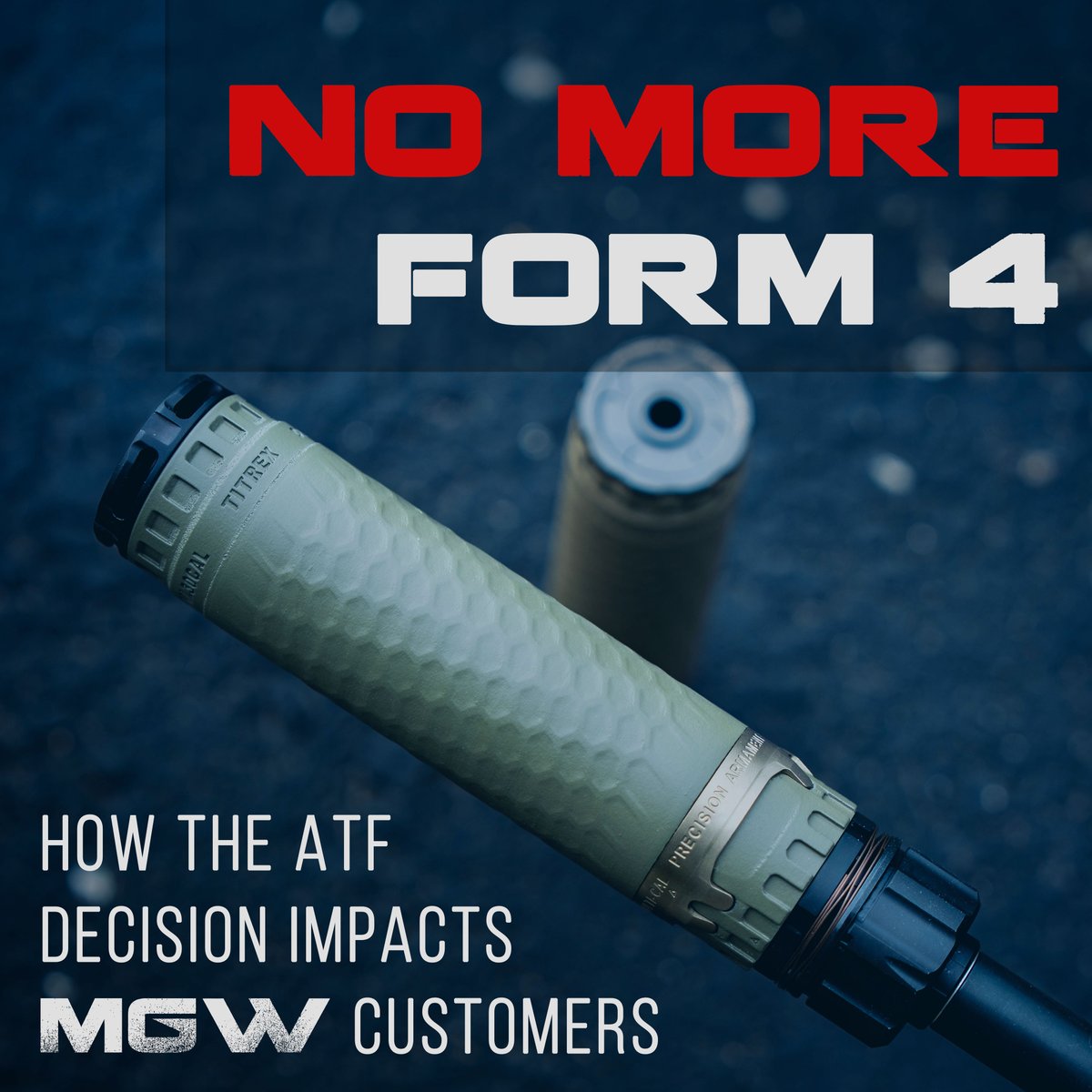
As an MGW Customer, here’s how the recent ATF decision affects you...
Missouri Residents:
You will no longer be required to file an ATF Form 4 for an SBS, SBR, or firearm suppressor. Instead, customers may choose to use a 4473 (the same form as a standard firearm purchase) for the transfer.
You will still have the option to file a Form 4 with the ATF if you would prefer, but it is not required.
Non-Missouri Residents:
All SBS, SBR, and Suppressor purchases made on our website still need to be transferred to your local FFL/SOT. We encourage you to contact your local dealer to see what forms they will require for the transfer of the SBR/SBS/Suppressor to you.
State and local regulations still apply and are not overruled by the recent decisions of the U.S. Federal Courts or the ATF.
Please check them before attempting to purchase a suppressor.
For more info and to read the entire Open Letter from the ATF,
Click Here: https://t.co/S82IPyA7M2