I used to optimize for agent cleverness first. Now I put permissions and hard boundaries first. Same agent. Completely different order of operations. Here’s why this shift matters if you’re shipping agents into the real world 👇
AI ICP targeting needs more than “SaaS companies with 50–500 employees.” Your best buyer may share a trigger: rising workflow volume, costly errors, usable data or a deadline. What turns a fitting account into a buyer who acts now?
AI market category positioning enters the sales call before you do. Your label tells buyers which features seem mandatory, which competitors belong, and what price feels normal. What does your product label make buyers assume?
AI product differentiation is relative. Your model, agent or integration is unique only when the buyer's real alternative cannot offer the same valuable result. What can your customer get only from you?
AI product repositioning starts when customer evidence outgrows the first pitch deck. Products evolve, and buyers may value something different from the original idea. Has your product outgrown its old category?
AI customer research should start with best-fit customers. Study who understood quickly, adopted the workflow, reached value and referred others. Who got your AI product with the least friction?
AI SaaS churn can start before onboarding. If sales promises autonomy but delivery needs clean data and human review, customer success inherits the mismatch. Which promise creates your hardest onboarding?
@benwiresstuff Exactly. Discounting is the shortcut, differentiation is the work.
But once you discount, do buyers ever believe the original price again? I share the build to sales journey here. Lets connect!
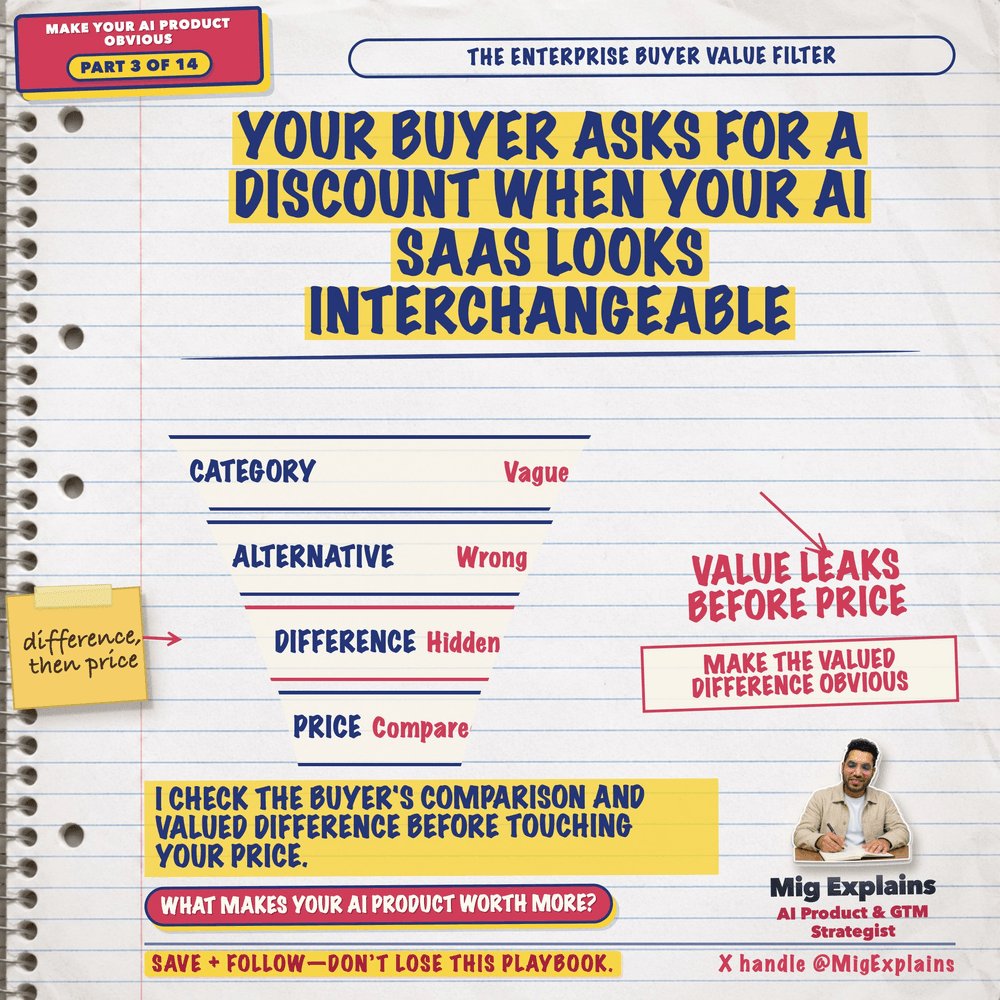
An AI SaaS pricing objection can begin as a positioning failure. If your product looks interchangeable, price becomes the easiest comparison. Before discounting, can the buyer name the difference they are paying for?