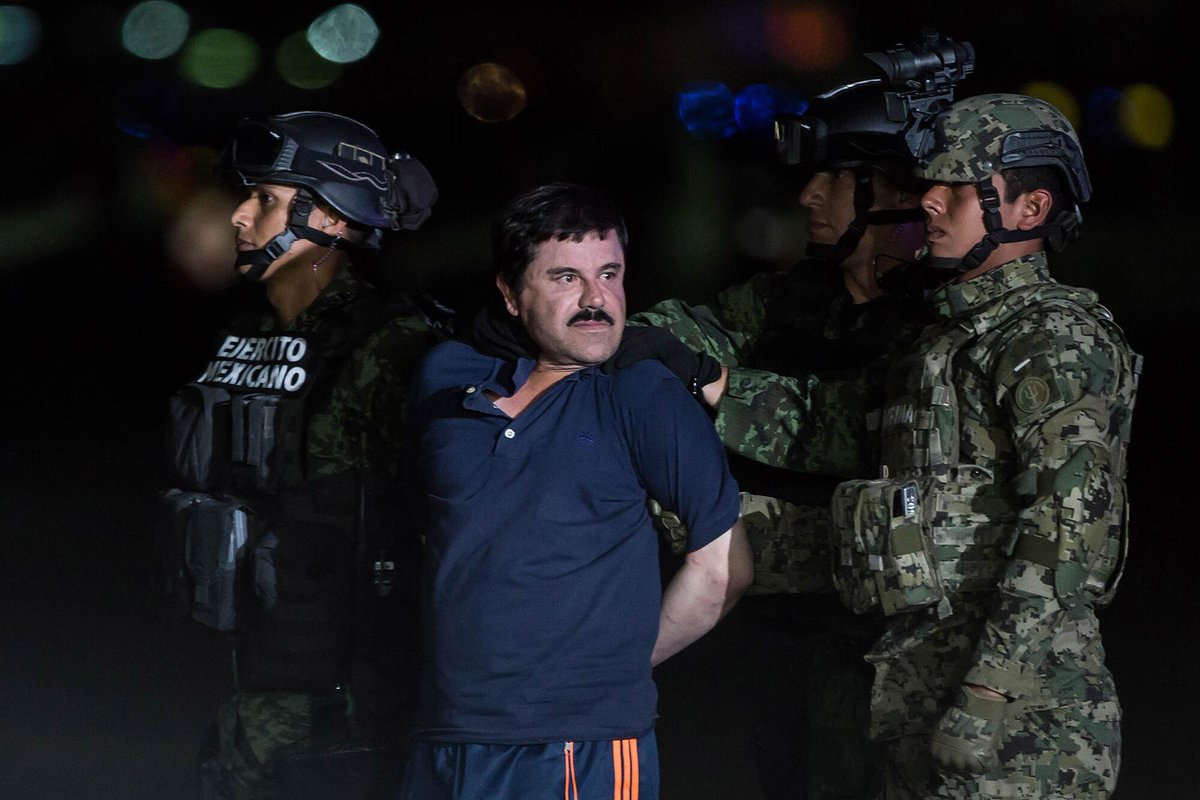
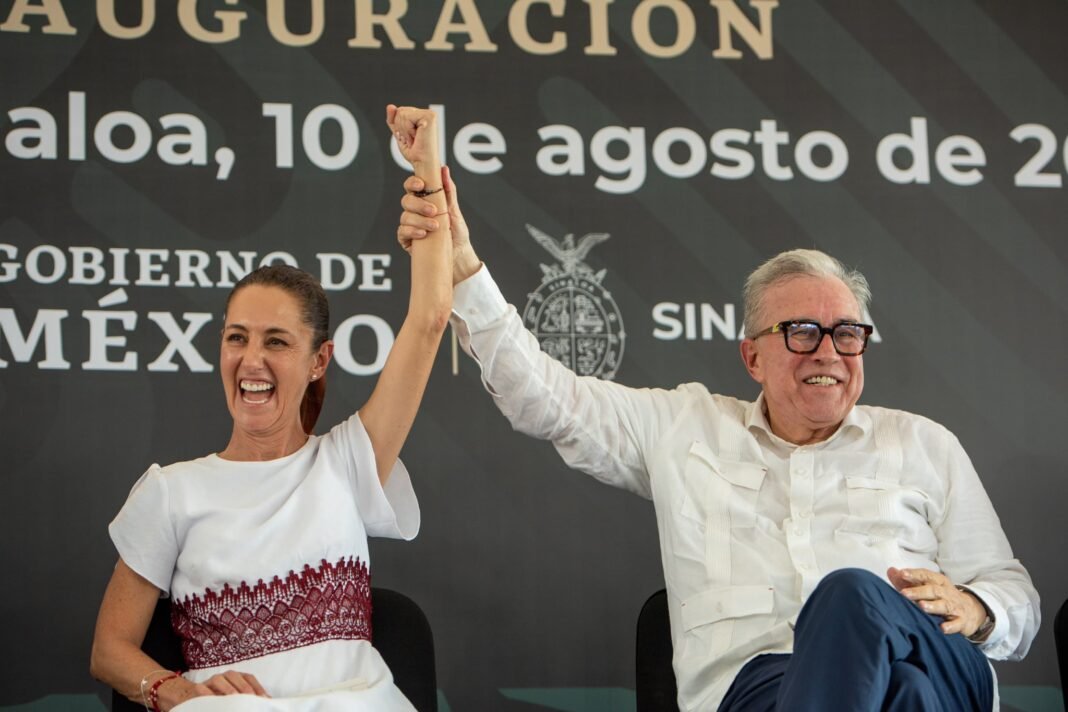
Sheinbaum's eager embrace of Ursula von der Leyen and the recent EU-Mexico summit makes perfect psychological sense for a government feeling deeply besieged by intensifying trade and security demands from Washington.
Confronted by aggressive pressure from the United States, a high-profile diplomatic gathering with European leadership provided a momentary breath of fresh air and a highly useful domestic political victory.
However, framing the European Union as a viable strategic or economic counterweight to the United States is a dangerous and foolish geopolitical miscalculation: it represents a textbook example of mistaking the performance of autonomy for the substance of power, relying on diplomatic optics to mask a rigid structural reality.
The belief that Mexico can secure meaningful security or economic guarantees from Brussels ignores Europe’s own current vulnerabilities and strategic limitations.
The European Union is increasingly isolated, preoccupied with its own regional security crises, and well aware of Mexico’s internal instability and entrenched narco-alliances, leaving it with neither the capacity nor the desire to offer security assurances.
Furthermore, while the modernized Global Agreement is a positive development, Mexico-Europe trade can never realistically challenge or replace the economic architecture of the USMCA. This diplomatic outreach to Europe is also a symptom of Mexico's regional isolation, having failed to secure unified or robust support from its Latin American neighbors, forcing the administration to grasp for distant life rafts.
As a dwindling middle power navigating a hardening global rivalry, Mexico must accept that the era of effective hedging is over, as Washington increasingly demands explicit alignment on trade, supply chains, and security.
When threats intensify, middle powers must choose a larger system to lean into, and for Mexico, that choice has already been dictated by geography and economic integration.
The objective for the Sheinbaum administration should not be an impossible escape from dependence or a heroic resistance to American demands, but rather transforming that dependence into a reciprocal relationship, something the recent Rocha Moya crisis exposes as impossible to attain for Sheinbaum. Doing so would imply a political debacle for the Morena alliance structure.
By acting less like a defiant outsider and more like a strategic partner, Mexico could turn its unique assets (such as nearshoring capacity, manufacturing hubs, and critical geography) into indispensable bargaining chips within the North American framework. So far it has failed to achieve this.
Ultimately, navigating a relationship with a difficult patron like the United States is a choice among lesser evils, but it remains Mexico's only viable path to long-term leverage.
While Washington frequently bullies its neighbors with tariffs and sudden policy shifts, it also offers unparalleled access to the world’s deepest capital markets, an immense consumer base, and institutions that Mexicans and cross-border businesses can actively lobby and influence.
Seeking refuge in European summits offers temporary political comfort, but true national strength will not come from stitching together ad hoc coalitions or celebrating symbolic forums.
Mexico's security and prosperity depend entirely on its ability to bargain effectively, realistically, and unsentimentally from within the U.S.-led system.
The political architecture of Mexico is currently exhibiting symptoms of an accelerated fracture not seen since the PRI’s systemic debacle in the 1990s. For the first time in nearly a decade, the decline of Morena is no longer a fringe theory but a possibility.
Control of both the narrative and judicial timing has effectively slipped from the hands of the administration. Reports that evidence against Rubén Rocha will soon circulate simultaneously in the U.S. and Mexican press mark the start of a perception offensive designed to dismantle the "sovereignty" defense that Sheinbaum has used to buy time. This is further compounded by the arrest of Rear Admiral Fernando Farías Laguna in Argentina: a key figure in the "huachicol fiscal" (fuel tax fraud) network connecting Pemex finances to criminal structures linked to the previous AMLO administration. This move, confirmed as a coordinated effort between the Milei administration, the CIA, and the DOJ, functions as a decisive flanking maneuver. By securing Farías Laguna, Washington has obtained the definitive "ram" needed to formally link the current administration to transnational organized crime.
Domestically, President Sheinbaum’s response has been a retreat into a defensive nationalism that is failing to rally the population. She is currently facing her lowest approval ratings since taking office, a reflection of a public increasingly weary of "sovereignty" slogans that fail to provide security or economic stability. This rhetoric is creating a profound rift with the productive and financial sectors. Within Mexican banks and corporate groups, there is palpable anxiety regarding potential deleveraging events.
As usual, the business sector is opting for "strategic patience" by engaging in photo ops to pacify the President while quietly waiting for the U.S. to deliver the final blow. The economic data supports this caution: investment and consumption has tanked, with Grupo Alsea reporting a 61% drop in profits during Q1 2026, while Walmart has reduced nearly 30% of its SKUs in Bodega Aurrerá. The public is already noticing the physical absence of products that were once staples. While Marcelo Ebrard attempts to project a pro-investment stance, his efforts have failed to launch: "smart money" simply does not believe in the state’s current survival and much rather wait until after the downfall has occurred.
Meanwhile, the Mexican right has been galvanized into an open offensive. The government’s response has been reactive and increasingly coercive. Sheinbaum, far more ideological and less strategically pragmatic than her predecessor, has chosen to escalate tensions with the United States without international support, clinging to the hope that popular mobilizations might somehow deter Washington’s plans.
This decline coincides with a volatile internal restructuring of Morena: the transition of leadership to Ariadna Montiel reveals a movement in deep discomfort. This internal "rearrangement" has left the base agitated and confused, stuck at the crossroads between Sheinbaum and the lingering shadow of AMLO. While this friction has not yet translated into an electoral windfall for a right wing that still lacks a convincing popular project, the internal rot is undeniable.
It is worth noting that not only was our analysis indirectly validated, but President Sheinbaum (in a classic Freudian slip) essentially confirmed her own paralysis.
By admitting to "doubts" and retreating to the "principles" dictated by former President AMLO, she has signaled that she is no longer governing by conviction, but by an inherited script.
This admission confirms the existential dilemma we identified: she is trapped between the demands of the U.S. justice system and the internal mandates of a movement that refuses to be purged.
Un campesino mexicano que sembró el vicio en su parcela, allá en el noroeste del país, resultó tan fregón, que siendo campesino le dieron visa, burló la aduana con su cargamento, la migra no lo atrapó, hizo una red de contactos en Estados Unidos y despues de unas semanas su fortuna puede calcularse en cientos de millones de dólares en bancos del norteño vecino.
Porque no hay que olvidar que en Estados Unidos no hay narcos.
Pff.
The joking dismissiveness displayed by President Sheinbaum during today’s "mañanera" is a cosmetic attempt to mask a government in a state of advanced paralysis. While her rhetoric focuses on "evidence" and "procedural standards," LBR sources indicate the administration is effectively operating under a double siege: a U.S. Justice Department that has finally discarded the "managed stability" model, and a regional political class now openly threatening to burn down the entire power structure to avoid extradition.
The President’s demand for "compelling evidence" is not a defense of the rule of law or Mexican sovereignty, but a desperate plea for time she does not have.
Yesterday’s physical disappearance of Senator Inzunza from the Senate floor confirms that the ruling party’s internal discipline has shattered, replaced by a "save yourself" mentality. LBR sources indicate the Senator likely received advance warning of the indictment’s unsealing, triggering a pre-planned extraction. We cannot currently confirm Inzunza's whereabouts: for all functional purposes, a sitting member of the Mexican legislature is now a fugitive from the U.S. justice system.
The ultimatum from the Governor of Sinaloa remains the true driver of Mexico City's obstructionism. Behind the scenes, the message delivered to the National Palace was categorical: any attempt to facilitate a "provisional arrest" or coordinate with U.S. Marshals will trigger a total disclosure of the governing party’s historical and financial entanglements with the cartels. This is the scorched-earth scenario the 4T has feared since its inception. Sheinbaum is not defending the Governor’s innocence, but defending the secrets of Morena.
The Sheinbaum administration is now facing imminent political decapitation and a terminal internal fracture. The crisis is no longer theoretical, as the collapse of diplomatic protection has created a vacuum that no curated smile can fill. As we warned, the margin for maneuver has been erased. The priority in the National Palace has shifted from governance to a frantic, high-stakes containment of a domestic explosion.
The Sheinbaum administration now faces a binary, high-stakes choice: sacrifice the Governor of Sinaloa immediately or risk being pulled down by the inevitable fallout. The strategic calculus has shifted from political protection to survival. If Sheinbaum fails to move against him, she risks becoming a collateral casualty of a U.S. prosecution that clearly intends to bridge the gap between regional corruption and federal complicity.
The immediate danger to the National Palace is not the indictment itself, but the prospect of the Governor ending up in a U.S. interrogation room. If he is extradited or captured by federal agents or U.S. special forces, the likelihood of him "singing" to avoid a life sentence is near certain. Any testimony he provides regarding the high-level protection of cartel interests would directly implicate the previous AMLO administration and, by extension, the Sheinbaum administration. The "sacrificial" play may be Sheinbaum’s only move to contain the damage, provided she can keep him within the Mexican judicial system.
Allowing the Governor to flee or be taken by the U.S. is a non-starter; the moment he "spits" the truth to U.S. prosecutors, the entire Morena national structure (including the legacy of AMLO) is compromised. Sheinbaum must now decide if she has the leverage to silence the situation domestically or if the DOJ has already secured enough evidence to force her hand. The margin for diplomatic maneuvering is gone: the priority now is preventing a total collapse of the ruling party’s credibility under the weight of U.S. state-level indictments.
Se les está diciendo que Estados Unidos administra a los grupos criminales latinoamericanos, pero nada más siguen sin creerlo a pesar de todas las pruebas.
Drug cartels saved the banks during the 2008 crash
In 2005 a DEA drug dog flagged a plane in Florida for cocaine
Agents traced the money back to Wachovia Bank in Miami
Between 2004 and 2008 Wachovia moved $378 billion from Mexican exchanges with zero oversight
Mexico's entire GDP at the time was $1.3 trillion
One bank moved a third of that in 4 years
At least $110 million was confirmed Sinaloa Cartel cash
$13 million of it bought planes that shipped 22 tons of cocaine into the US
HSBC was doing the same thing in Mexico
Cartels built custom cash boxes sized to fit the bank counter and walked into HSBC branches with hundreds of thousands per day
Bank of America accounts in Oklahoma were used to buy planes that carried 10 tons of cocaine
An employee at Wachovia flagged it internally and got fired for it
Wachovia paid a $160 million fine on $12.3 billion in profit and not one banker was charged
HSBC paid $1.9 billion
Same deal
Zero jail time
Antonio Maria Costa head of the UN Office on Drugs and Crime said publicly that drug money was "the only liquid investment capital" keeping banks alive
Cartel cash kept the banks alive in 2008
Our Mexico City desk can confirm that Pemex and senior Mexican government officials privately acknowledge that the spike in crude prices near $100 and the paralysis risk in the Strait of Hormuz expose a structural vulnerability in Mexico’s energy system that is far more severe than the government publicly admits.
Roughly 20% of global oil flows move through the Strait of Hormuz, making any disruption a systemic shock to global energy markets. The current price surge reflects the market beginning to price in that risk. If Iran mines the strait or tanker traffic remains constrained, the shock would not remain confined to oil markets. It would propagate through refined fuels, petrochemical products, insurance, and global trade simultaneously.
Mexico enters this environment with an unusually fragile energy balance. Despite being an oil producer, the country depends structurally on imported fuels and imported natural gas. The United States exports more than 1.9 million barrels per day of refined petroleum products to Mexico, covering over 70% of the country’s gasoline, diesel, and jet fuel consumption. In parallel, CFE´s electricity production has become structurally dependent on U.S. pipeline gas.
Approximately 74% of Mexico’s natural gas demand is satisfied through imports from the United States, most of it flowing from Texas shale basins. This dual dependency means Mexico’s energy security is effectively externalized.
Under normal conditions, that dependency is manageable because U.S. supply is abundant and cheap. In a war-driven energy shock, however, the system becomes exposed. Oil above $100 immediately raises refined product prices in the Gulf Coast market where Mexico buys most of its gasoline. At the same time, global LNG competition and oil-linked contracts tend to push natural gas prices upward. Mexico does not maintain significant strategic reserves of gasoline or natural gas to buffer these shocks. If global prices spike while domestic prices are artificially suppressed, the imbalance manifests not as higher prices but as shortages.
The current discussion inside the Mexican government about using the IEPS tax mechanism or pressuring fuel distributors to hold gasoline below 24 pesos per liter reflects exactly this risk. Fiscal subsidies or price caps can temporarily dampen inflation, but they do not change the physical supply constraint. When governments suppress prices during supply shocks, consumption remains high while suppliers reduce deliveries or divert fuel to higher-paying markets. This results in shortages, rationing, and fiscal strain. Mexico experienced a version of this dynamic in 2022, when fuel subsidies cost the treasury more than $15 billion.
The strategic concern becomes more acute if the Hormuz crisis escalates into a prolonged conflict between Iran and the United States. In that scenario, Washington’s political and military focus would shift heavily toward the Middle East. Energy markets would tighten globally, and the United States would prioritize domestic stability and allied supply chains critical to its own industrial base. Mexico’s heavy reliance on U.S. fuels and gas means that any tightening of Gulf Coast supply would immediately propagate south through pipeline and shipping networks.
The paradox is that Mexico remains an oil producer while lacking fuel security. The country produces crude but lacks sufficient refining configuration and capacity to meet domestic demand, forcing it to export crude while importing gasoline and diesel. At the same time, the power sector increasingly runs on imported natural gas. This combination leaves Mexico exposed to exactly the kind of external shock now emerging from the Middle East.
If the Sheinbaum administration does not begin securing strategic fuel reserves, alternative supply arrangements, or emergency storage capacity, the country risks entering a supply shock environment within weeks if the conflict persists. Rising global prices, combined with domestic price suppression, would push Mexico toward the classic symptoms of energy stress: fiscal drain, fuel shortages, electricity cost spikes, and inflationary pressure across transport and agriculture.
The problem is no longer oil prices alone. It is the structural fragility of Mexico’s hydrocarbon balance. A prolonged disruption in global energy markets would expose how little buffer the country has built into its system. Without rapid contingency planning, the combination of global war risk, price suppression, and external energy dependence could push Mexico into a full supply shock scenario.