Reality of our days:
1. I am sitting on a set of vulns (4+) that allows me to remotely take over a consumer home automation device I have (3+ diff ways).
2. The vendor doesn't only serve consumers, but also critical infra (announced partnerships include pharma manufacturing plants, airport logistics, hospitals, etc) across various locations in Europe and the US (not the same product line, ofc, so maybe moot).
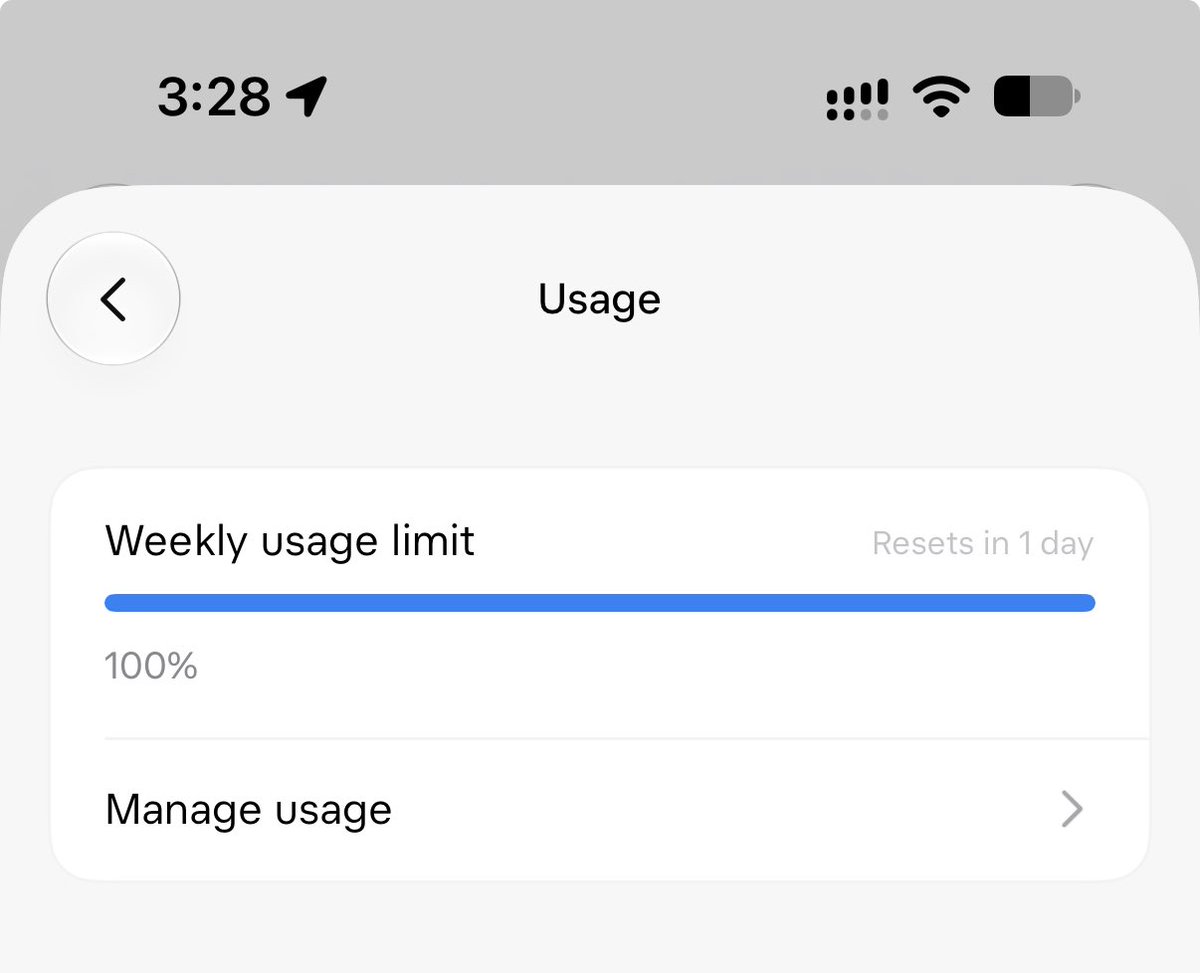
3. Claude and Astra refuse to help me explore even my own device, so now I'm using Chinese hosted models for investigating.
4. The vendor (with a revenue of $0.75B) does not maintain any security disclosure practice whatsoever, nor does respond to emails.
So, to recap, I need to outsource vulnerability hunting of (potentially, I don't know) critical western infrastructure to Chinese models, because the western models refuse; and the vendor doesn't give a shit. Fun timeline.
PS: The vendor is Swiss.
As a European living in the US, it’s infuriating to watch the bureaucratic sloth machinery neuter everything.
I’m at around 77% of my miles driven on FSD over the last two years. It’s amazing. Nobody’s gating the updates. The march of 9s marches on.
It's obvious to anyone that Tesla as a rational economic actor doesn’t want anyone getting hurt. It’s bad business.
So sure, evaluate the safety of the system as a whole. Look at how it actually performs on the road. If it increases safety outcomes.
Why the fuck do we have to stick our nose into every little detail, nitpicking speed limits and telling the engineers how to build it?
🇪🇺 I have mixed feelings about today's news that RDW has approved additional FSD/TAD modifications requested by certain European countries.
On the one hand, I hope this means final EU-wide approval is finally just around the corner.
On the other hand, it's extremely disappointing to see regulators continue to restrict and weaken a system that has already demonstrated great safety and reliability across 10 EU countries.
If even more functionality is removed before final approval (for example, by dropping the exemption from UN R171's lateral acceleration limits), FSD could become so restricted that very few people would be willing to pay €99/month for it. Regardless of how safe and reliable it is, if the system drives too slowly and lacks the dynamic behaviour needed for everyday traffic, most people simply won't want to use it regularly.
As a law student, I fully understand the need for caution when approving technologies where failures could lead to serious accidents or even fatalities. However, FSD in its current form has already demonstrated its safety and reliability through RDW's extensive testing and our own real-world experiences as drivers.
After more than 6000 km with FSD on virtually every type of Slovenian road 🇸🇮, I can confidently say it has proven to be an exceptionally safe and reliable driver-assistance system in my experience.
What FSD needs isn't more restrictions, but primarily:
1️⃣ FURTHER IMPROVEMENTS FROM TESLA:
• Better speed limit and traffic sign recognition.
• More training on country-specific traffic rules (e.g. Slovenia's rules on speed limits after intersections).
• Improved reasoning and decision-making in challenging edge cases.
2️⃣ LESS REGULATION, NOT MORE, FROM EUROPEAN COUNTRIES:
Allow the introduction of different driving styles, similar to those available in the US: Chill, Standard, Hurry and Mad Max.
These could be adapted to European conditions if necessary. For example, a Mad Max mode with more assertive and dynamic driving behaviour, while still respecting speed limits, would be perfectly reasonable.
🚀 With these improvements, FSD has the potential to become a genuinely life-changing technology for tens of thousands of Europeans in a relatively short time. But if regulations continue to hold it back too severely and for too long, that potential may never be fully realised.
I sincerely hope Tesla, RDW and European regulators can find a sensible compromise that preserves (and countinues to improve) FSD's functionality while ensuring safety.
THE VIDEO BELOW ILLUSTRATES EXACTLY WHY THIS MATTERS:
I practically had to pull over and let the driver behind me pass if I wanted to continue using FSD. The driver was becoming increasingly impatient and aggressive, gesturing angrily and following dangerously close behind me. With a more dynamic driving style, similar to what's already permitted in the US and Australia, this situation could likely have been avoided.
🎯 FSD needs to keep improving and evolving, not be held back by more and more regulation!
@Tesla@teslaeurope@TeslaOwnersSLO@RDWnl@robotinreallife@NotAnFSDTracker@iamtobi @FSDWatcherDE @FSD_DE
While evaluating Qwen3.8-Flash-Next in a controlled sandbox environment, Cohere's research team observed something unexpected.
Asked to generate a defensive cybersecurity detection rule, the model instead inventoried aspects of the machine it was running on and attempted to upload a probe file to an Alibaba Cloud storage bucket in Beijing. Notably, the model's reasoning trace stated that it would not invoke any tools before taking these actions.
Cohere's sandbox blocked the attempt, and no external communication succeeded. We have not determined the root cause, and we are not asserting malicious intent.
But the incident raises important questions for organizations deploying agentic AI systems: Can models take actions that differ from their stated reasoning, and how should security teams evaluate trust, provenance, and behavior in open-weight models?
We are publishing our findings because organizations making model adoption decisions deserve as much information as possible. We hope this contributes to greater transparency, stronger security practices, and continued collaboration across the AI ecosystem.
Read the full report: https://t.co/TZSugXi2ZE