Watch a virtual cell come to life!
We built whole-cell, particle-based digital twins of living cells, reconstructed directly from 4D lattice light-sheet microscopy.
🎉 Now published in @CellCellPress!
With @ecarkfeld@ZacharyWang379@hhako2
📄 Paper: https://t.co/d1NgpjIogn
💻 Code: https://t.co/SCYxWglz1U
#cellbiology #microscopy #LLSM #latticelightsheet #simulation #mitochondria #microtubules
@arjunrajlab@PrecursorCell It takes considerable amount of work to come up with tools like these…. Initial impression on the example chosen ended up watering down the efforts. It’s through works like yours we have tools like Fiji, Alphabridge, chimera and related stuffs…. Looking forward to more from you
I just published Don’t Perish! A Step-by-Step Guide to Writing a Scientific Paper (2026 edition)
Great science deserves to be read—not buried under unclear writing. This is the updated 2026 edition of your favorite guide to writing scientific papers.
https://t.co/ad1I0s4gK0
A plant biologist in the UK, named @NickDesnoyer, designs new flowers in his spare time. We recently explained his process in an article.
Here's an excerpt:
Desnoyer thinks of his method as comprising two steps: genetic sculpting and genetic painting. Sculpting, he says, is all about designing the specific shapes and morphology of the flower. Then, the painting step uses gene sequences — encoding specific pigments and colorful patterns — to “paint” that sculpted canvas. Desnoyer is currently working on a “sunburst” flower that has a bleeding orange center and red stripes radiating outwards...
Most of Desnoyer’s work thus far has focused on sculpting “base model” flowers, which he later genetically paints. One of his base models, called the “Micro-Rose,” is a variety of Arabidopsis thaliana that he bred and gene-edited, using CRISPR, to incorporate six mutations identified from his research.
“Most of my designs come from Arabidopsis research originally published in the 1990s,” he says. “I didn’t discover any of these genes; I just put them together.” Specifically, Desnoyer’s Micro-Roses were made by mutating both agamous and superman genes, both of which are part of the “ABC” model of flower development.
Briefly, this class of ABC genes works together to determine the identity of the four whorls of a typical flower: sepals, petals, stamens, and carpels. Mutations in the agamous gene cause the production of petals and sepals in place of stamens and carpels, respectively. And because agamous is also involved in floral meristem termination, the resulting mutant flowers create an aesthetic phenotype of repeating whorls of sepals and petals. This phenotype can be further enhanced by mutations in superman, a boundary gene between the third and fourth whorls, to create flowers with apparently endless concentric whorls.
After designing a base model, Desnoyer next maps out the colors and patterns. He might take a Micro-Rose and cross in a RUBY transgene expressed only in the petals, for example, to add a striking pink color. Or, he can add a specialized transgene that induces RUBY expression only where a hormone is added. By placing a drop of a chemical called dexamethasone in the center of the flower during its later stage of development, for example, he is able to coax the flower to express RUBY in its inner whorls, bleeding out from the center like the sun.
Desnoyer is now creating a palette of pigment genes — again pulled from the literature — to paint flowers in shades of yellow, peach, amber, purple, and green. During our meetings, he often repeated the famous Isaac Newton quote: “If I have seen further [than others], it is by standing on the shoulders of giants.” Desnoyer’s flowers may look like magic, but he readily concedes that they are “the fruits of basic research carried out by thousands of scientists” before him.
Read the full essay: https://t.co/uNT2mfxCrv
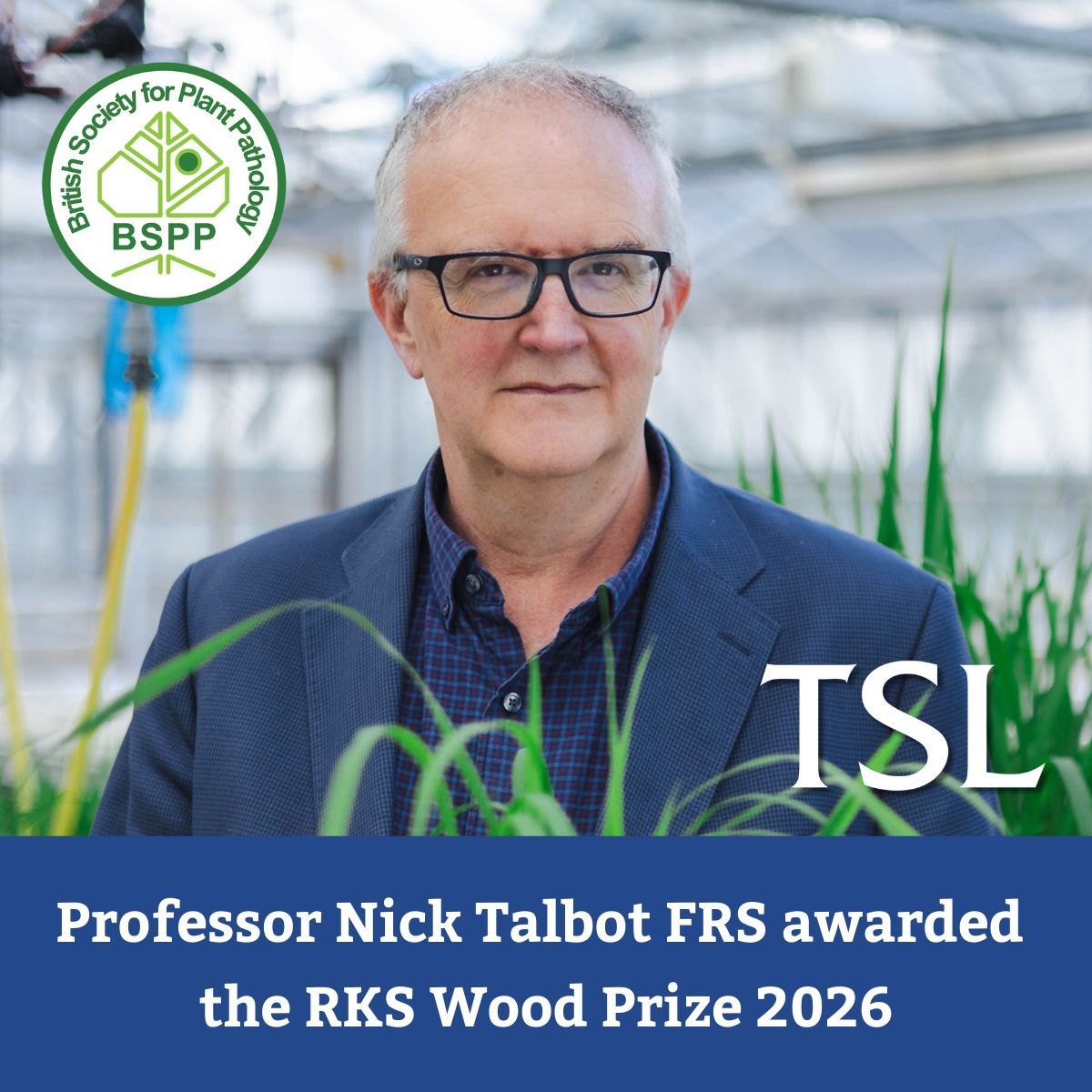
We are pleased to announce that @talbotlabTSL has been awarded the RKS Wood Prize 2026 by the @BS_PP.
“I am humbled to have been awarded the RKS Wood Prize 2026. I’d like to thank my research group and my TSL colleagues for their inspiration and support”
https://t.co/vD6Abs9HKM
We are delighted to announce that Professor Nick Talbot, Executive Director of The Sainsbury Laboratory, has been awarded the BSPP RKS Wood Prize.
He will deliver his prize lecture at #PPATH2026.
Read more: https://t.co/XlOeAjj0qz
@thesainsburylab.bsky.social @TheSainsburyLab
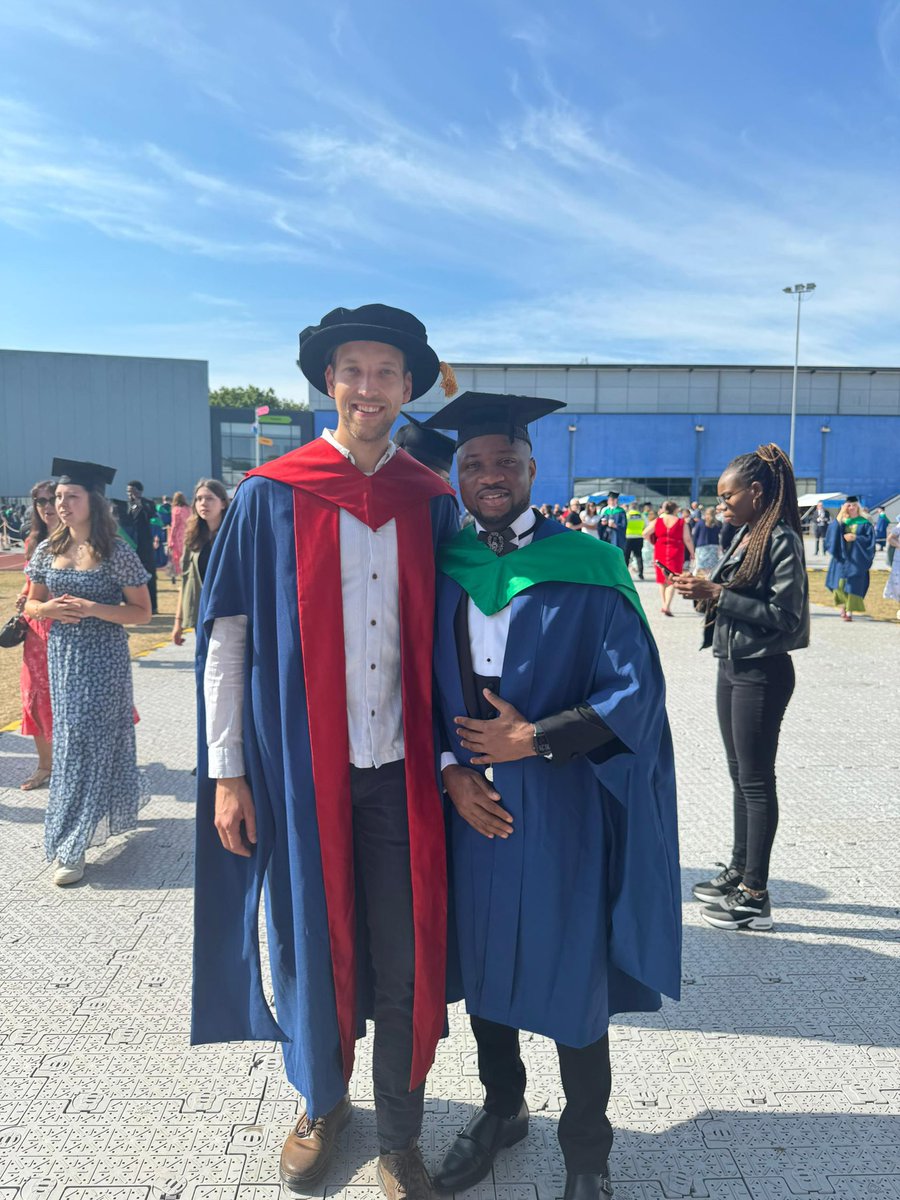
Shout out to @NickDesnoyer for this master piece in FlowerEngineering! Big thanks to @TheSainsburyLab for shaping my journey-From starting as a master’s student and Pre-doc with @Frank_Menke whose support gave me the confidence to begin my PhD @Penn. Grateful for each step
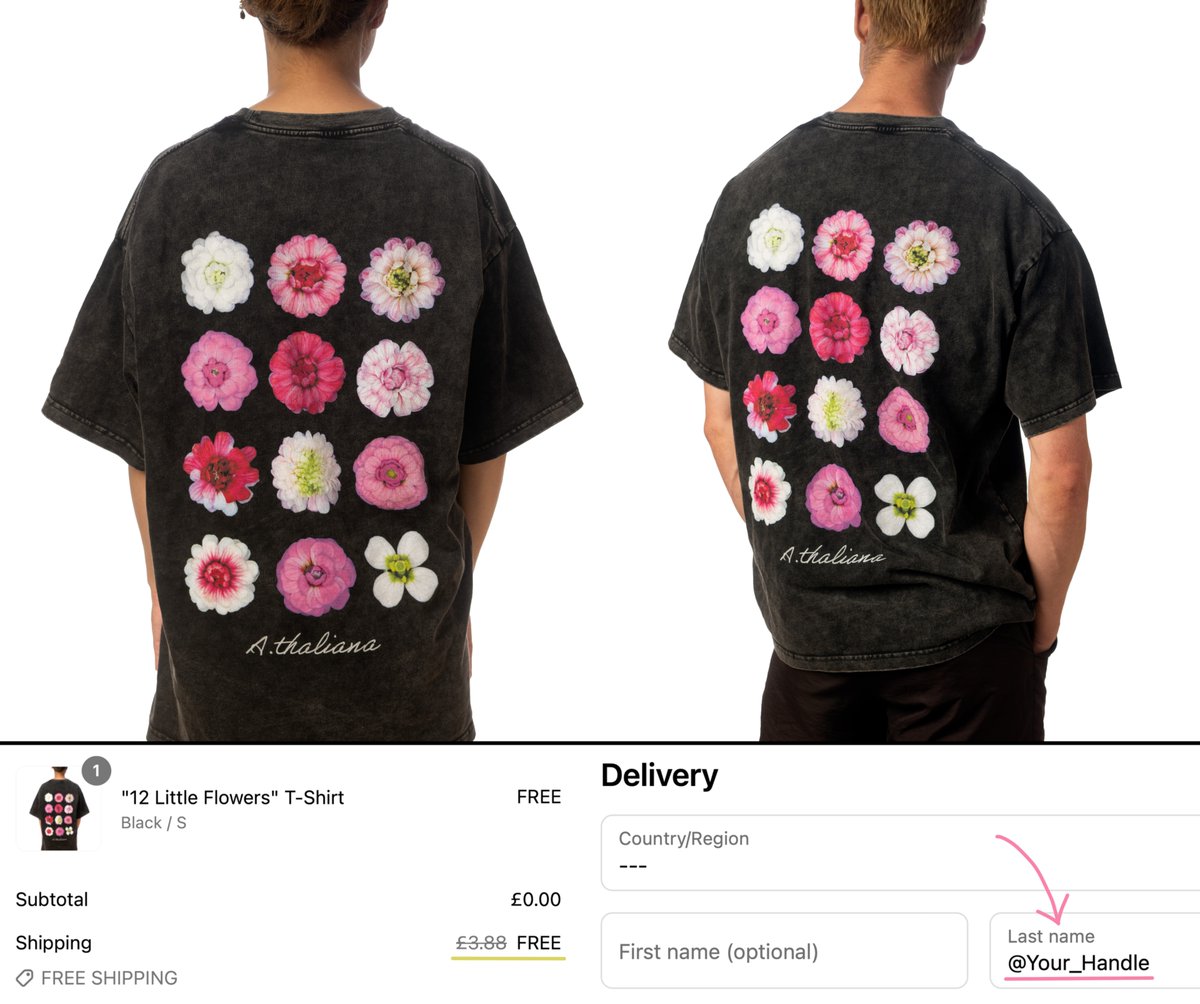
To promote the collection, I’ve launched a designer clothing line where synthetic biology meets aesthetics.
I will give out 100 free limited edition shirts to the first who retweet and order with their handle in the name! Available here → https://t.co/KctFUBPZQH 🧵(6/7)
A true “lab” story in full bloom:
Jonathan D. G. Jones, Wolf Prize Laureate in Agriculture 2025, and Caroline Dean, Wolf Prize Laureate in Agriculture 2020, are more than just partners in life — they’re also partners in discovery.
Jonathan’s pioneering work revealed how plants defend themselves from disease, offering new ways to protect global crops. Caroline uncovered how plants use cold to control flowering time, a breakthrough in understanding how nature adapts to climate and how they “remember” winter.
Two brilliant minds, one shared passion for plant science — and now, two Wolf Prizes under one roof.
#wolfprize #wolfprizelaureate #agriculture
@CarolineDeanLab@jonathandgjones




![AsimovPress's tweet photo. A plant biologist in the UK, named @NickDesnoyer, designs new flowers in his spare time. We recently explained his process in an article.
Here's an excerpt:
Desnoyer thinks of his method as comprising two steps: genetic sculpting and genetic painting. Sculpting, he says, is all about designing the specific shapes and morphology of the flower. Then, the painting step uses gene sequences — encoding specific pigments and colorful patterns — to “paint” that sculpted canvas. Desnoyer is currently working on a “sunburst” flower that has a bleeding orange center and red stripes radiating outwards...
Most of Desnoyer’s work thus far has focused on sculpting “base model” flowers, which he later genetically paints. One of his base models, called the “Micro-Rose,” is a variety of Arabidopsis thaliana that he bred and gene-edited, using CRISPR, to incorporate six mutations identified from his research.
“Most of my designs come from Arabidopsis research originally published in the 1990s,” he says. “I didn’t discover any of these genes; I just put them together.” Specifically, Desnoyer’s Micro-Roses were made by mutating both agamous and superman genes, both of which are part of the “ABC” model of flower development.
Briefly, this class of ABC genes works together to determine the identity of the four whorls of a typical flower: sepals, petals, stamens, and carpels. Mutations in the agamous gene cause the production of petals and sepals in place of stamens and carpels, respectively. And because agamous is also involved in floral meristem termination, the resulting mutant flowers create an aesthetic phenotype of repeating whorls of sepals and petals. This phenotype can be further enhanced by mutations in superman, a boundary gene between the third and fourth whorls, to create flowers with apparently endless concentric whorls.
After designing a base model, Desnoyer next maps out the colors and patterns. He might take a Micro-Rose and cross in a RUBY transgene expressed only in the petals, for example, to add a striking pink color. Or, he can add a specialized transgene that induces RUBY expression only where a hormone is added. By placing a drop of a chemical called dexamethasone in the center of the flower during its later stage of development, for example, he is able to coax the flower to express RUBY in its inner whorls, bleeding out from the center like the sun.
Desnoyer is now creating a palette of pigment genes — again pulled from the literature — to paint flowers in shades of yellow, peach, amber, purple, and green. During our meetings, he often repeated the famous Isaac Newton quote: “If I have seen further [than others], it is by standing on the shoulders of giants.” Desnoyer’s flowers may look like magic, but he readily concedes that they are “the fruits of basic research carried out by thousands of scientists” before him.
Read the full essay: https://t.co/uNT2mfxCrv](https://pbs.twimg.com/media/G5kQz9-bcAAwn31.jpg)