Human trials are underway for a drug that regrows human teeth naturally.
Rather than creating artificial teeth, this innovative approach aims to awaken dormant potential already present in the human body. During embryonic development, most individuals form rudimentary tooth buds beyond the usual two sets (baby and permanent teeth), but these typically regress and never develop fully—largely due to suppression by a protein known as USAG-1.
Researchers in Japan found that inhibiting USAG-1 can reignite tooth growth. In preclinical studies, mice and ferrets treated with a USAG-1-neutralizing antibody sprouted new, fully functional teeth with proper structure, roots, and integration into surrounding tissues.
This breakthrough is advancing through Toregem BioPharma, a Kyoto University spin-off company. Their drug candidate, TRG035 (an anti-USAG-1 monoclonal antibody), entered Phase I human clinical trials in late 2024 at Kyoto University Hospital. The ongoing trial, involving healthy adults missing at least one tooth, is assessing safety and dosage, with results expected in 2025. Future phases plan to target children with congenital tooth agenesis—a genetic condition causing missing permanent teeth—where dormant buds are present but inactive.
The treatment is often described as potentially unlocking a "third dentition," building on evidence that humans retain suppressed successors to permanent teeth. However, it won't trigger uncontrolled growth: success depends on factors like age, timing of administration, location, and the presence of viable tooth germs.
If safety and efficacy are confirmed in trials, this could transform dentistry, offering a biological alternative to implants or dentures for tooth loss—starting with congenital cases and potentially expanding to acquired loss.
[Murashima-Suginami, A., Kiso, H., Tokita, Y., Mihara, E., Nambu, Y., Uozumi, R., Tabata, Y., Bessho, K., Takagi, J., Sugai, M., & Takahashi, K. (2021). "Anti–USAG-1 therapy for tooth regeneration through enhanced BMP signaling." Science Advances, 7(7), eabf1798. DOI: 10.1126/sciadv.abf1798]
1 van de conclusies van de parlementaire enquetecommissie naar aanleiding van de toeslagenaffaire:
“Het parlement heeft in meerderheid gefaald in haar wetgevende en controlerende taak en is hiermee medeverantwoordelijk voor de basis van de ellende voor mensen. Kamerleden hebben een zware verantwoordelijkheid als het gaat om het goedkeuren van wetten. Wetgeving in Nederland kan niet ontstaan zonder instemming van een meerderheid in het parlement.
De Tweede Kamer heeft ingestemd met kwalitatief slechte wetten en vervolgens verzaakt ontwerpfouten in de wetten te herstellen.
De conclusies van de commissie bieden verklaringen voor wat er is gebeurd. De patronen die hieraan ten grondslag liggen, zijn nog steeds aanwezig.
Het kan morgen weer gebeuren.”
https://t.co/G39XhlKHFt
This is Jeff Bezos’s favorite book.
He’s been rereading it for 25 years straight, and it inspired his most famous decision-making model.
Here are the 7 lessons from "The Remains of the Day" that helped him build his $200B+ Amazon empire: 🧵
For those who've missed it, @PrivateEyeNews have unpaywalled part 1 of @drphilhammond's special investigation into the Lucy Letby case.
Everyone can now read the full piece here: https://t.co/xV1SgBrJoH
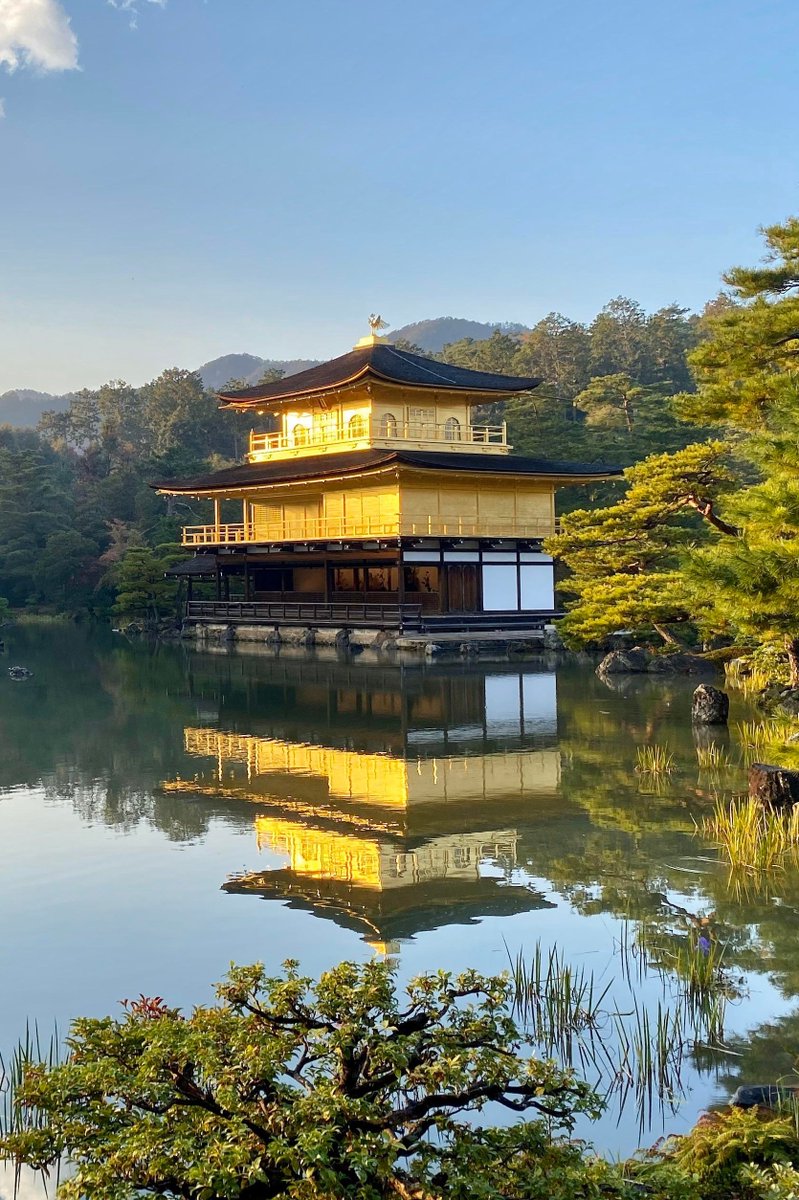
The Temple of the Golden Pavilion in Kyoto, Japan, was originally built 600 years ago. But it has been burned down and rebuilt twice.
So how old is it? And is it still the same building?
Here's what Douglas Adams, author of The Hitchhiker's Guide to the Galaxy, said about it:
'I remembered once, in Japan, having been to see the Gold Pavilion Temple in Kyoto and being mildly surprised at quite how well it had weathered the passage of time since it was first built in the fourteenth century. I was told it hadn’t weathered well at all, and had in fact been burnt to the ground twice in this century. “So it isn’t the original building?” I had asked my Japanese guide.
“But yes, of course it is,” he insisted, rather surprised at my question.
“But it’s burnt down?”
“Yes.”
“Twice.”
“Many times.”
“And rebuilt.”
“Of course. It is an important and historic building.”
“With completely new materials.”
“But of course. It was burnt down.”
“So how can it be the same building?”
“It is always the same building.”
I had to admit to myself that this was in fact a perfectly rational point of view, it merely started from an unexpected premise. The idea of the building, the intention of it, its design, are all immutable and are the essence of the building. The intention of the original builders is what survives. The wood of which the design is constructed decays and is replaced when necessary. To be overly concerned with the original materials, which are merely sentimental souvenirs of the past, is to fail to see the living building itself.'
So that was Douglas Adams' view — that whether a building is "original" really has nothing to do with the actual age of its materials and when they were put together, but is defined by the form they take and when it was decided to arrange them in that way, regardless of how recently they have been made and installed.
So even if we reconstruct an old building with new materials — as happened at the Temple of the Golden Pavilion after it was burned down in the 1950s — it is still an authentically old building.
It is surprising to learn how many "old" buildings have, indeed, been rebuilt in this way. Some examples include the Frauenkirche in Dresden, St Mark's Campanile in Venice, the old towns of Warsaw and Frankfurt, the Yellow Crane Tower in Wuhan, and even the Great Ziggurat of Ur in Iraq.
This is essentially an architectural version of the Ancient Greek conundrum of the Ship of Theseus. Imagine an old ship in a harbour. If all its separate parts were replaced, one by one, over the course of one hundred years, would it still be the same ship? If not, when did it become a different ship? And, in either case, how old would the ship be after one hundred years had passed?
We generally think that an old building, once destroyed, is surely lost forever — and that to rebuild it would be somehow inauthentic or artificial. Perhaps this isn't the case. Perhaps we can rebuild, brick for beam and gable for window, any old and important structure which has been lost to war and catastrophe without losing its age or authenticity.
So, was the Temple of the Golden Pavilion built in 1397 or 1955... or both?
Kappersafspraak door gedaagde niet nagekomen, waarvoor eiseres kosten in rekening brengt. Eiseres baseert zich op de geldende huisregels. Online overeenkomst. Huisregels aan te merken als algemene voorwaarden. Maken geen deel uit van de overeenkomst.
https://t.co/hlClFHmvnJ
Met het huidige #Zorgstelsel krijgen burgers niet de zorg en ondersteuning die ze nodig hebben. De Raad constateert in het advies 'Met de stroom mee' dat het huidige zorgstelsel zelf in belangrijke mate bijdraagt aan dit probleem. Lees het advies via: https://t.co/tL0q7FB5NF
bekrachtiging nihilstelling kinderalimentatie gedurende een MSNP-traject. Jurisprudentie HR WSNP-traject analoog toegepast op MSNP-traject.
https://t.co/nqeEppRpCu
Dat was een uitspraak die mij was ontgaan. Extra stimulering van het minnelijk traject...






![Rainmaker1973's tweet photo. Human trials are underway for a drug that regrows human teeth naturally.
Rather than creating artificial teeth, this innovative approach aims to awaken dormant potential already present in the human body. During embryonic development, most individuals form rudimentary tooth buds beyond the usual two sets (baby and permanent teeth), but these typically regress and never develop fully—largely due to suppression by a protein known as USAG-1.
Researchers in Japan found that inhibiting USAG-1 can reignite tooth growth. In preclinical studies, mice and ferrets treated with a USAG-1-neutralizing antibody sprouted new, fully functional teeth with proper structure, roots, and integration into surrounding tissues.
This breakthrough is advancing through Toregem BioPharma, a Kyoto University spin-off company. Their drug candidate, TRG035 (an anti-USAG-1 monoclonal antibody), entered Phase I human clinical trials in late 2024 at Kyoto University Hospital. The ongoing trial, involving healthy adults missing at least one tooth, is assessing safety and dosage, with results expected in 2025. Future phases plan to target children with congenital tooth agenesis—a genetic condition causing missing permanent teeth—where dormant buds are present but inactive.
The treatment is often described as potentially unlocking a "third dentition," building on evidence that humans retain suppressed successors to permanent teeth. However, it won't trigger uncontrolled growth: success depends on factors like age, timing of administration, location, and the presence of viable tooth germs.
If safety and efficacy are confirmed in trials, this could transform dentistry, offering a biological alternative to implants or dentures for tooth loss—starting with congenital cases and potentially expanding to acquired loss.
[Murashima-Suginami, A., Kiso, H., Tokita, Y., Mihara, E., Nambu, Y., Uozumi, R., Tabata, Y., Bessho, K., Takagi, J., Sugai, M., & Takahashi, K. (2021). "Anti–USAG-1 therapy for tooth regeneration through enhanced BMP signaling." Science Advances, 7(7), eabf1798. DOI: 10.1126/sciadv.abf1798]](https://pbs.twimg.com/media/G9WM15qXkAAAC3X.png)