Professional interest in Emergency Medicine & nuclear power. Hobbyist interest in economics, retail stock investing, astronomy, geopolitics & nuclear weapons.
Below is the text of the 14-point draft memorandum, as seen by Bloomberg News.
1. The Islamic Republic of Iran and the United States, together with their allies in the current war, declare upon the signing of this Memorandum of Understanding an immediate and permanent end to the war on all fronts, including Lebanon, and undertake that from now on they will not launch any hostile action against each other, and will refrain from the threat or use of force against each other. The final agreement will confirm the provisions of this Article and the remaining Articles.
2. The Islamic Republic of Iran and the United States undertake to respect each other’s sovereignty and territorial integrity, and to refrain from interfering in each other’s internal affairs.
3. The Islamic Republic of Iran and the United States undertake to negotiate and reach a final agreement within a maximum period of 60 days, extendable by mutual consent.
4. Immediately upon the signing of this Memorandum of Understanding, the United States Lift the naval blockade and prevent any interference or obstruction against the Islamic Republic of Iran, and restore traffic within a maximum of 30 days to its full capacity; the traffic of ships shall be proportional to the pre-war volume of traffic on the part of the Islamic Republic of Iran. The United States also undertakes to withdraw its forces from the surrounding areas within 30 days after the final agreement.
5. Upon signing this Memorandum of Understanding, the Islamic Republic of Iran will immediately take steps to ensure that the movement of merchant ships from the Persian Gulf to the Sea of Oman and vice versa is resumed within 30 days to the pre-war volume, taking into account the need for the removal of technical obstacles and the neutralization of mines by Iran.
6. The United States undertakes, together with its regional partners, to create a comprehensive plan agreed upon by both parties for the rehabilitation and economic development of the Islamic Republic of Iran, While ensuring financing of at least $300 billion. The implementation mechanism of this plan, as part of the final agreement, will be formulated within 60 days.
7. The United States commits to ending, on a schedule to be agreed upon as part of the final agreement, all types of sanctions currently facing the Islamic Republic of Iran, including resolutions of the United Nations Security Council and the Board of Governors of the International Atomic Energy Agency (IAEA), and all unilateral U.S. sanctions, both primary and secondary.
8. The Islamic Republic of Iran reiterates that it will never produce nuclear weapons. The Islamic Republic of Iran and the United States have agreed that the fate of enriched material and the fate of all other mutually agreed nuclear-related issues, including Iran’s nuclear needs, will be adequately addressed in a final agreement; the final agreement will confirm the provisions of this Article.
9. The Islamic Republic of Iran and the United States agree that, pending a final agreement, they will maintain the status quo: Iran will maintain the status quo on its nuclear program, and the United States will not impose new sanctions on Iran or strengthen its forces in the region.
10. The United States undertakes that immediately after the signing of this Memorandum of Understanding, and until the date of the lifting of sanctions, the United States Treasury Department will issue waivers for exports of Iranian crude oil, petrochemical products and their derivatives, and all related services, including banking, insurance, transportation, and the like.
11. The United States undertakes that, in light of the progress of negotiations towards a final agreement, frozen or restricted funds and assets of the Islamic Republic of Iran will be released and made fully available. These funds, whether held in the master account or transferred, will be used for any final beneficiary payment determined by the Central Bank of the Islamic Republic of Iran and will be fully available for use. The United States undertakes to issue all necessary permits and licenses on this basis.
12. The Islamic Republic of Iran and the United States agree that an implementation mechanism will be established to oversee the successful implementation of and future commitment to the Final Agreement.
13. Following the signing of this Memorandum of Understanding, and upon receipt of assurances regarding the commencement of implementation of Articles 4, 5, 10, and 11 of this Memorandum of Understanding, and the continued implementation of these steps, the Islamic Republic of Iran and the United States will enter into negotiations for a Final Agreement solely with respect to the remaining Articles.
14. The final agreement will be approved through a binding resolution of the UN Security Council.
2026, day 167
Good morning from Asia.
‘US-Iran deal to be signed at Switzerland’s Burgenstock resort on Friday’ (AFP);
‘Iran has fired multiple drones toward commercial ships in the Strait of Hormuz nightly since the U.S. and Iran agreed to a MoU Sunday, with US forces shooting them down’ (NBC);
‘U.S. Military Guidance Reveals High-Risk Reality of Hormuz’s ‘Southern Highway’’ (GCaptain);
‘The Trump-Iran Deal Allows Tehran to Immediately Sell Oil’ (WSJ) - “The agreement also waives banking and transport sanctions to facilitate transactions, an early financial benefit��;
‘Iran deal includes $300 billion fund, more than half of which already committed, source says’ (Reuters);
‘Trump Is Losing the Hawks Who Once Defended the Iran War’ (WSJ);
‘Saudi Cabinet, chaired by MBS, welcomes US-Iran agreement’ (Al Arabiya);
‘China warns next phase of US-Iran talks will be ‘more difficult’’ (AFP);
‘From allies to adversaries? The escalating Netanyahu-Trump clash over Iran’ (Ynet);
‘Israel went to war with Iran, but Netanyahu may be the loser’ (AJ);
‘Hezbollah believes Iran will not sign final nuclear deal if Israel stays in Lebanon’ (Reuters);
‘Iran’s military command threatens retaliation if Israel keeps up southern Lebanon offensive’ (ToI);
‘Trump on Lebanon: 'If Israel can't do the job without killing everyone, Syria should do it'’ (JPost);
‘US weighs boosting ties with PA as it seeks to advance Gaza plan and Abraham Accords’ (ToI);
‘US President Donald Trump invokes Defense Production Act, citing ‘fragile supply chains’’ (Al Arabiya);
‘‘Russian warship fires warning shots towards yacht in English Channel’ (FT);
‘G7 promises to support Ukraine and sanction Russia in joint declaration’ (Politico);
‘Trump offers Ukraine olive branch at G7 — with a price tag’ (Politico) - “The contours of a deal in which Trump backs Europe on Ukraine in exchange for European help securing the Strait of Hormuz appear to be taking shape”;
‘Europeans Wary of Committing Naval Power to Hormuz Quickly’ (BBG);
‘EU governments secure powers to block payouts to democratic backsliders’ (Politico);
‘Can a Trump-Modi Meeting Reset Strained Relations?’ (NYT);
‘Gulf gamble: will South Korea step up for Strait of Hormuz security?’ (SCMP);
‘Japan steps on the gas in unprecedented regional defense export push’ (Japan Times);
In geoeconomics, ‘The U.S. is using an Iranian smuggling tactic to sneak oil out of the Gulf’ (Reuters);
‘Latin America and Europe are bystanders in the US-China AI race, says Lula’s top adviser’ (SCMP);
‘US and Europe discuss access to AI models after Anthropic dispute’ (FT) - “‘Trusted partner’ scheme would allow US allies to test cutting-edge models”;
‘European Parliament clears way for EU-US trade pact’ (Euractiv);
‘Europe is gearing up for a trade fight with China. But will it change anything?’ (SCMP);
‘DFC Looks to Strengthen Telecommunication Infrastructure in Kazakhstan’ (DFC);
‘US, Mexican officials to discuss agriculture, energy as Trump casts doubt on trade deal’ (Reuters);
In politics, ‘FBI arrests 5 in alleged plot to attack White House UFC event with explosives-laden drones and guns’ (NBC):
‘A $40 Million Gold Heist Risks Exposing CIA’s Top-Secret Spy Programs’ (WSJ) - “Veterans of the agency worry the case will compromise legitimate, highly classified operations against American adversaries”;
In markets, ‘Central banks repatriate gold as global insecurity rises’ (FT) - “Conflict, sanctions and decline in trust have made the institutions more cautious about storing bullion in other countries”;
‘Central banks expect their gold reserves to rise as de-dollarization continues’ (Nikkei Asia) - “84% of survey respondents see such holdings increasing in next five years”;
‘The world is more dangerous. Why is risk cheaper?’ (FT) - “Capital is pouring into insurance because of high returns and low volatility. But some professionals are worried about mispricing”
China's National Bureau of Statistics in today's data release: "the domestic imbalance between strong supply and weak demand is acute."
It's hard to argue with that, but Beijing won't do anything about it this year. The GDP growth target makes that impossible.
https://t.co/Ti2cCjsVKz
$SOC Update on California v. DOE / Sable:
• June 29, 2026 – DOE, Sable, and Pacific Pipeline file motions to dismiss
• July 13, 2026 – California opposition due
• July 20, 2026 – Reply briefs due
• September 14, 2026 – Hearing before Judge Wilson
WSJ: “The U.S. will allow Iran to immediately begin selling oil and fuel under the deal to end the war, offering Tehran an early financial incentive to wind down the conflict, people familiar with the agreement said.
The provision for waivers of sanctions on oil sales takes effect immediately upon the signing of the agreement this week and also covers necessary services including banking, transportation and insurance to facilitate the sales, the people said.”
@GavinSBaker Three big reasons:
1) China willingness to reduce imports (ie draw inventories)
2) China ability to flex down demand (EV + mass transit)
3) Dark transits were larger than expected
That’s my postmortem
WSJ: "America’s trade deficit was close to unchanged in April, adding to evidence that the Trump administration’s tariffs have done little to rebalance the U.S.’s trade position with the rest of the world."
https://t.co/0iEVMAi5wo via @WSJ
There is a bit of payback for the incentives that raised household appliance/ car purchases last year. At the same time the underlying trend is clear, and unambiguously a concern ...
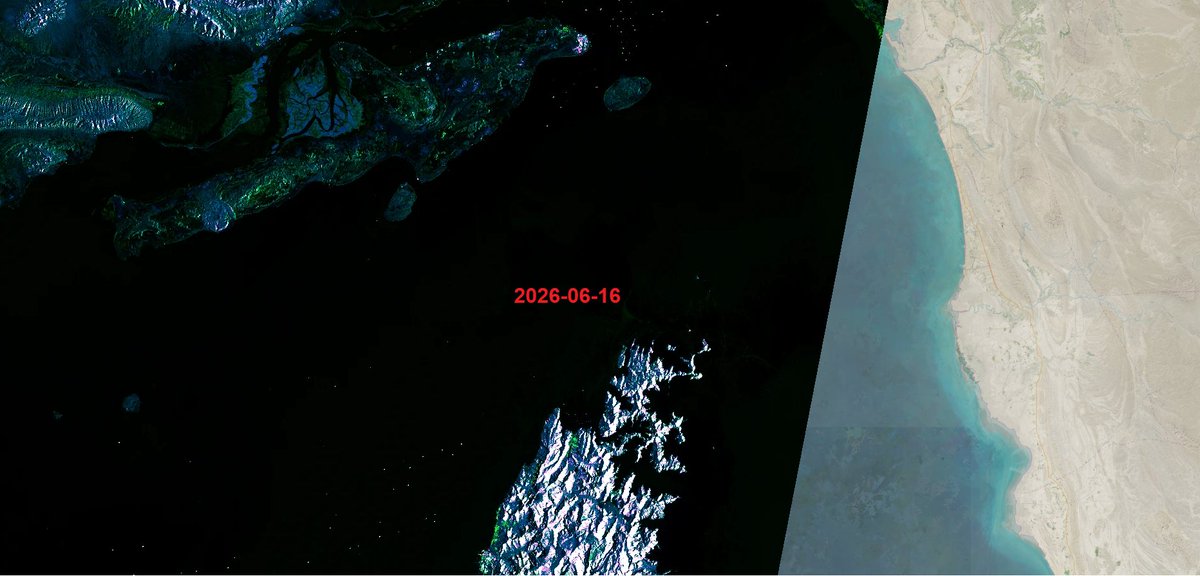
Based on the SAR radar feed, flows through the SoH are still pinned at low. Let's see how many barrels actually clear the strait and start printing on the water post-Friday.
#oott#iran
Help me understand how Morgan Stanley cuts its oil price target by 15% because they think production is restored "1 to 2 weeks" earlier
So now 10 days of production matters?
We've lost 100 days
MS own forecasts say production is still down 50% till September
"Cette puissance productive s’accompagne d’un envers de plus en plus préoccupant: surcapacités, marges comprimées, productivité en ralentissement, endettement massif, crise immobilière et une consommation intérieure insuffisante qui s’installe dans la durée."
For French speakers, this is very good piece from Le Grand Continent on the vulnerabilities underlying what seems like rapid growth in the Chinese economy. The authors wonder whether China can survive the Chinese century and how much damage it can do to Europe before it succumbs.
Their conclusion is what many in the EU have also concluded: "L’Europe ne peut pas fonder sa stratégie industrielle sur l’hypothèse d’un ajustement rapide du modèle chinois. Elle doit au contraire se préparer à un scénario dans lequel l’involution perdure, les surcapacités continuent de s’accumuler et la pression concurrentielle chinoise s’exerce durablement sur une part croissante de son appareil productif. La question n’est donc plus seulement de savoir combien de temps le modèle chinois peut durer, mais combien de temps l’Europe peut se permettre d’attendre."
@Grand_Continent
https://t.co/B4b1j70cr9
More Central Banks Than Ever Say They Will Buy Gold This Year
More central banks than ever expect to increase their gold reserves, a sign one of the key forces behind bullion’s record-breaking rally remains intact despite this year’s pullback.
In a survey of 74 central banks, 45% said they plan to buy in the coming year, the biggest-ever share in data collected by the World Gold Council and YouGov Plc since 2018. Just one said it planned to cut holdings, the WGC said in a report Tuesday.
In the coming year, emerging-market and developing-economy central banks make up most of the prospective buyers, according to the WGC’s survey. About 53% of those respondents said they expect their holdings to increase, compared with 18% of advanced-economy central banks. (Bloomberg)
Yunnan #tin consolidates Chinese tin production. Strengthens its grip on supply chains … the rest of the world now more exposed to centralized Chinese tin supply.
Caixin: "A rush of new entrants into China’s humanoid robotics industry is stirring concern among founders and investors that the sector could become overcrowded and face the same self-destructive competition, or “involution,” plaguing the country’s EV market."
This was always quite predictable. Since last year I've argued that for all the talk of fighting involution, China's growth model requires the spread of involution into more and more sectors as long as the political need to achieve excessively high GDP growth targets is met by pouring capital into manufacturing, with the most likely industries that will suffer from involution being those in politically preferred areas.
https://t.co/yC2QG8Vj6P
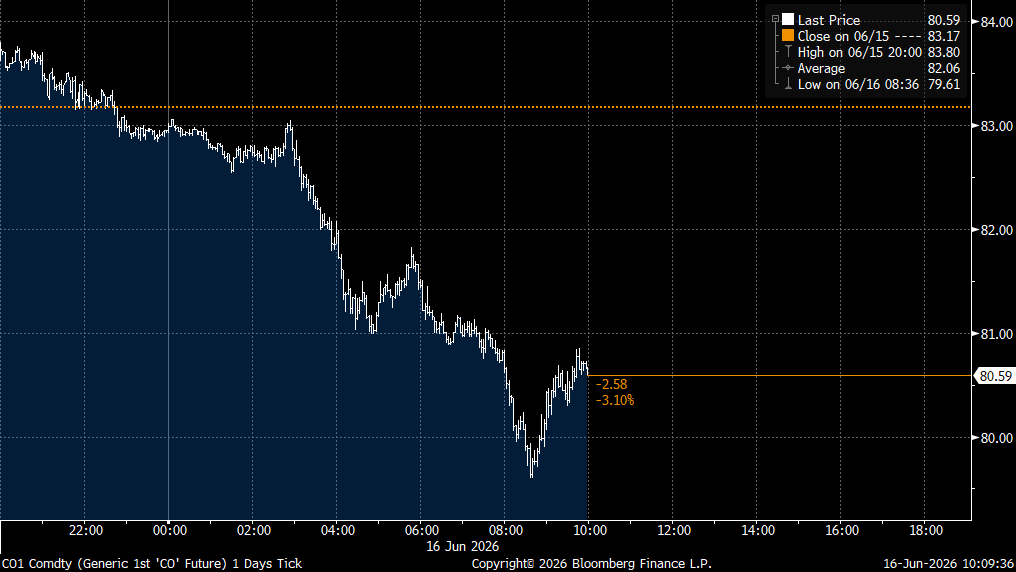
Crude complex getting further battered today.
Brent briefly dipped below $80/bbl, has now at least temporarily recovered above
More concerning is the ongoing rout in prompt timespreads, with prompt timespreads of all major benchmarks now <$1/bbl and Dubai flipping into contango
Sable just filed an 8-K on a proposed $1.0B senior secured term loan, with JPMorgan as administrative agent to refinance the Exxon facility. This is what de-risking looks like: a real refinancing path, led by a top bank. Bullish!!! $SOC
It is harder than ever to find good news in China's data release today. The economy continues to be structurally locked into increasing production at the expense of consumption, even though China suffers from many years of growing excess capacity.
China's industrial output, for example, increased by 5.4% year on year in the first five months of 2026, with a 4.5% year on year increase in the month of May. This was a little higher than April’s 4.1% increase, although lower than the 5.7% increase in March.
The uglier numbers were (as always) on the consumption side. For the first five months of 2026, total retail sales grew 2.8%, just over half the pace of industrial output. Although they were barely expected to grow in May, in fact they actually fell by 0.6%, well below the disappointing 0.2% increase in April and the first decline since the end of the Covid lockdown in 2022.
For all the excited claims about consumption spending during the important May holiday, in other words, it was more than offset by the decline in spending over the rest of the month, proving, once again, that what limits household consumption is the household budget, not spending opportunities.
Meanwhile China's fixed-asset investment declined 4.1% year on year in the first five months of 2026.
Last week's trade and debt numbers reinforce the claim that China is finding it harder than ever to restructure its economy. It is expending huge resources in growing output, especially manufacturing output, but Chinese producers rely more than ever on soaring exports to offset weak domestic demand.
So far this year's numbers show that China's economy has further increased its already-excessive dependence on surging debt and soaring trade surpluses to keep GDP growth from slowing. It is not clear how much longer this growth model can be sustained before China is forced into a very difficult economic adjustment, but it is almost impossible for China to exit this model without a sharp slowdown in near-term growth, which is why, for all its promises, Beijing has been unable to adjust.
The problem, of course, is that as long as this process continues, it will increase the final adjustment costs for the Chinese economy and will further undermine manufacturing in the rest of the world.
https://t.co/N6uiKiTPUy
Ho hum - dozens of overextension flags today - including this one - among the motherlode we've seen in the past 5 weeks.
Without implying that speculators can't do whatever speculators choose to do, their focus rarely gets this narrow except at extremes when they're all in.
2026, day 166
Good morning from Asia.
‘US-Iran deal to end war signed, US official says; Lebanon remains sticking point’ (Reuters);
‘A fragile Iran peace follows a war without victors’ (FT);
‘Trump's Iran Truce Has the Hallmarks of Defeat’ (BBG);
‘Trump Says Strait of Hormuz Will Be Fully Open by Friday Under Iran Deal’ (WSJ);
‘US at Odds With Allies Over How Easy It Is to Reopen Hormuz’ (BBG);
‘Scouring the Strait of Hormuz for mines could take weeks’ (Reuters);
‘40-50 Days Delay? Maritime security officials say it may take 40-50 days to secure the Strait of Hormuz after the US-Iran deal, as concerns over naval mines persist’ (NDTV);
‘Japan weighs minesweeping, escort operations in Strait of Hormuz’ (Nikkei Asia);
‘France, Britain push Hormuz mission as truce nears, but Iran’s stance key’ (Reuters);
‘Trump claims victory over Iran, but deal is silent on nuclear weapons’ (WaPo);
‘Trump administration considers $300bn fund for Iran if deal is upheld’ (FT) - “Incentives would be tied to Tehran’s ‘performance’ including over opening of the Strait of Hormuz and nuclear talks”;
‘CIA director doubts Iran's intentions on deal, sources say’ (Axios);
‘Iran-U.S. deal may have the two countries back to where they started’ (Globe and Mail);
‘Israel Is Alarmed by Trump’s Deal With Iran’ (WSJ) - “Critics say the deal eases pressure on Tehran too soon, while others say it shows the war was a mistake”;
‘Netanyahu avoids criticizing US-Iran deal, claims war’s main goals have been achieved’ (ToI);
‘Netanyahu: Israel does not know terms of US-Iran nuclear deal’ (JPost);
‘Ministers say Israel won’t be bound by Iran deal, as opposition castigates Netanyahu’s ‘absolute failure��’ (ToI);
‘Iran deal leaves northern Israelis feeling security was traded for US interests: ‘Betrayal’’ (Ynet);
‘Netanyahu Says Israel Will Keep Forces in Lebanon, Despite U.S.-Iran Deal’ (NYT) - “”The struggle has not ended,” a defiant Prime Minister Benjamin Netanyahu told Israelis”;
‘Bennett: 'Clock for Iran regime change to start as soon as government in Israel changes'’ (JPost);
‘Netanyahu and Trump on collision course as US, Iran agree to halt war’ (Reuters);
‘Eight Crew Members Believed Dead in B-52 Bomber Crash at California Air Base’ (WSJ);
‘Arson attacks targeting Keir Starmer properties originated in Russia’ (FT);
‘Switzerland-France feud erupts over G7 security costs’ (Politico);
‘UK hits Russia with fresh energy sanctions at G7’ (Politico);
‘EU officially launches Ukraine and Moldova accession process’ (AJ);
‘Kyiv begins EU accession talks as Putin escalates war’ (Euractiv);
‘EU says China trained Russian troops as bloc weighs tougher stance on Beijing’ (SCMP) - “Kallas cites verified reports of Chinese training for Russian forces as Brussels weighs sanctions and new trade measures”;
In geoeconomics, ‘Britain’s return to the EU is only a matter of time’ (FT);
‘After Iran Tensions, Europe Is Just Trying to Avoid a Fight at G-7’ (WSJ);
‘Trump's critical minerals pricing plan faces skeptical G7, divided industry’ (Reuters);
‘EU carbon tariff sows havoc in China as steel firms grapple with ‘absurd’ rules’ (SCMP);
‘Is Beijing planning to make more drones overseas for Middle Eastern buyers?’ (SCMP);
‘How Millions of Digital Home Devices Are Secretly Powering Cyberattacks’ (WSJ);
In politics, ‘Gavin Newsom says Donald Trump has ordered justice department to investigate him’ (FT);
‘Hungary parliament passes two-term limit blocking Orbán comeback’ (Euractiv);
‘Social media firms hit back as Starmer announces ban for under-16s in U.K.’ (Guardian);
In markets, ‘Oil falls 5% to 3-month low as US, Iran reach deal to reopen Strait of Hormuz’ (Korea Times);
‘European defence stock rally goes into reverse on funding concerns’ (FT);
‘South Korea, Indonesia rein in derivatives trading to defend currencies’ (Nikkei Asia);
‘GLOBAL INSIGHT: Barbarians at the Rates — Central Bank Politics’ (BBG)