💡NEW POST 💡
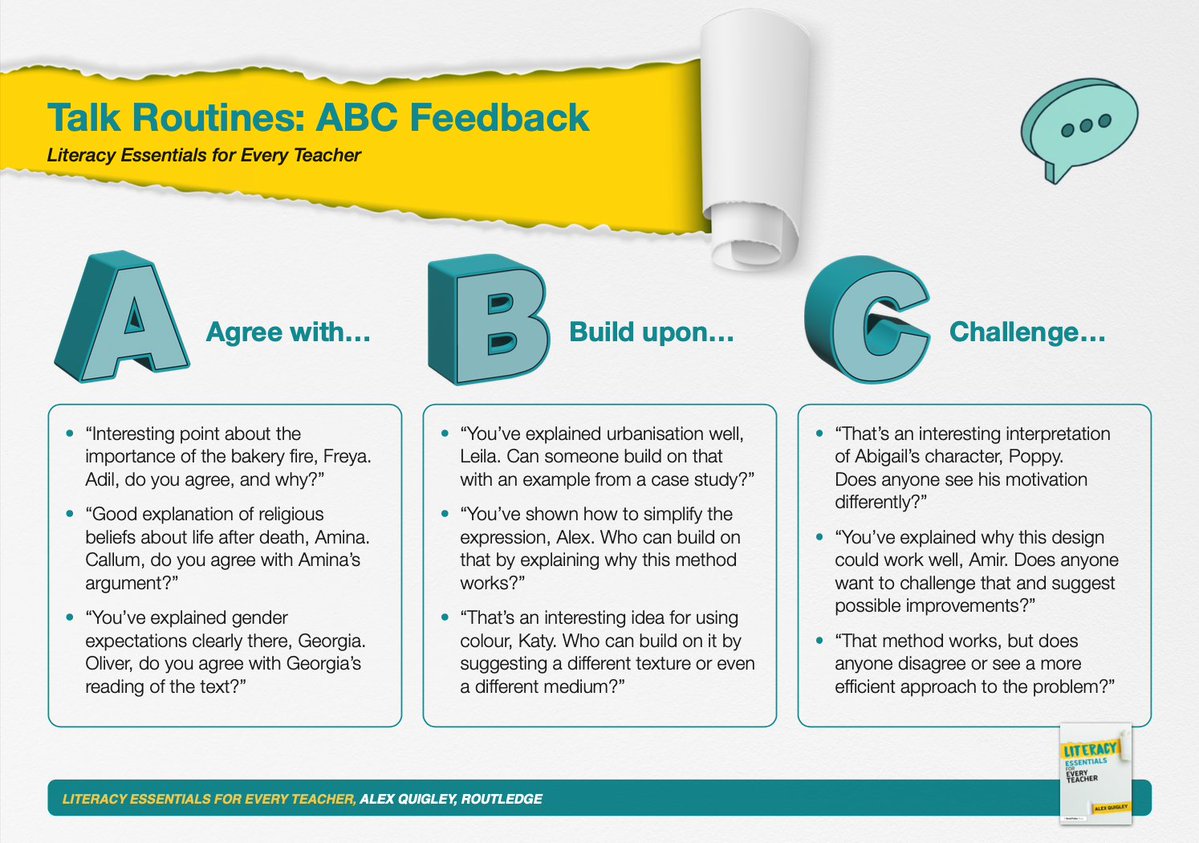
'Talk routines: ABC Feedback'
"Done well, this approach promotes more active listening, more focus and attention on task, and therefore more learning."
https://t.co/ojt0x0OVTp
The choreography of teaching 30 children at the same time > quite a long read but dare I say I think it's worth it. Nail this, you've nailed it! https://t.co/R9fxgXRcgK via @teacherhead
Super excited to announce that I am now a company! My days teaching in a school are at an end.
My new venture is tutoring + providing professional development + outreach in physics and cogsci.
Here's the site - if you find anything amiss let me know! 😊
https://t.co/3J8IhyTLCV
It's that time of year again where I start to see people's school improvement plans for next year. If you are looking looking at metacognition, oracy, turn and talk, literacy, trauma informed practice or bits of individual theory from cognitive science, I'm not saying these things are a waste of time, but there's a need to prioritise.
Whatever it is you are spending your summer planning, I'd consider checking the list below first, if all those things are sorted in your school then go for it, but if they aren't I'd suggest they are prioritised.
Calm, orderly, predictable classrooms across the school.
Calling out does not occur.
Teachers are consistently putting students' names at the end of questions.
Teachers have "rules of thumb" for which students they ask questions to and when.
There are always checks for understanding in-between explanation and practice.
Checks for understanding in the majority of subject are delivered using miniwhiteboards.
Miniwhiteboards are used with "hover and show" routines.
Students are in the room and learning (i.e. actually doing something academically meaningful) extremely quickly at the start of lessons.
Departments have long-term memory strategies that map out how teachers give students the retrieval practice they need.
As above, once that stuff is in play, go to town. But if it isn't, it's probably where you should focus.