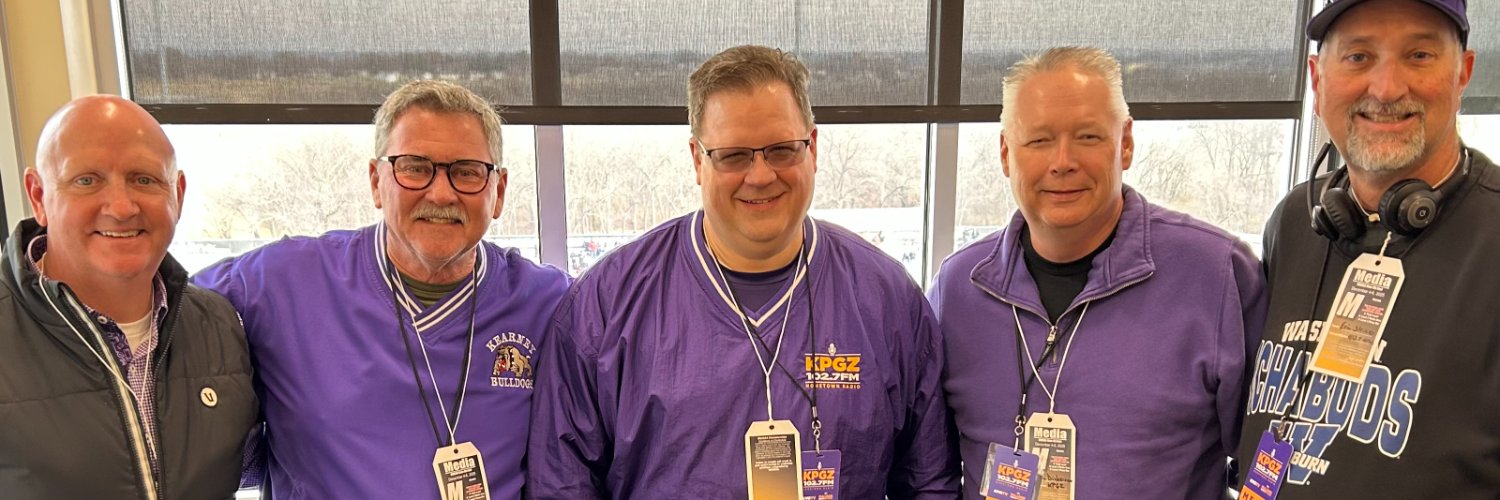
Mostly retired advertising creative guy, love being a football broadcaster-analyst, writer and reporter for KPGZ, KMO-TV covering the Kearney Bulldogs.
At 17, Dawn Loggins came home from a summer program and discovered her family was gone.
No note.
No warning.
No home.
Months later, she received an acceptance letter from Harvard.
This is her story.
Dawn grew up in rural North Carolina in a house without electricity or running water.
When the family needed water, she and her brother walked to a public park and filled jugs from the bathroom faucets.
Showers were rare.
Classmates called her dirty.
She kept showing up to school.
Her parents moved constantly.
Eviction after eviction.
New town.
New school.
By age 17, Dawn had attended four different high schools and missed nearly an entire year of education.
Most students would have fallen behind.
Dawn excelled.
When she arrived at Burns High School in 2010, guidance counselor Robyn Putnam immediately saw something special.
Dawn enrolled in makeup courses.
Studied before sunset because there were no lights at home.
Took AP classes.
Earned straight A's.
Joined clubs.
Then led them.
Photography Club.
Rock Climbing Club.
Spanish Club.
President of all three.
That summer she earned a place at the prestigious Governor's School of North Carolina.
Teachers helped buy her clothes.
Putnam drove her 200 miles to the program.
Nobody knew where Dawn would be living when it ended.
The concern turned out to be justified.
Near the end of the program, Dawn tried calling home.
The number was disconnected.
When she returned, the house was empty.
Her parents had moved away.
She was 17 years old.
Homeless.
Alone.
Most people would have stopped there.
Dawn didn't.
She couch-surfed.
Carried toiletries in her backpack because she never knew where her next shower would come from.
And every morning at 6 a.m., she went to work.
As a school custodian.
She swept hallways.
Cleaned classrooms.
Scrubbed desks.
Then sat down and earned straight A's.
By graduation year, she had:
• Straight A grades
• AP courses
• Leadership roles in three clubs
• A part-time job before school every morning
Then a teacher made one suggestion:
Apply to Harvard.
Dawn laughed.
Then thought:
"Why not?"
She became the first student in Burns High School history to apply.
Months later, an envelope arrived.
Harvard College.
Accepted.
Full tuition.
Full room and board.
Everything covered.
On graduation day in 2012, when her name was announced, the entire gymnasium stood and applauded.
Teachers cried.
Students cheered.
The girl who cleaned their hallways before sunrise was heading to Harvard.
When asked about her parents, Dawn didn't speak with anger.
She simply said:
"I love my parents. I disagree with the choices they've made."
Then she added something even more powerful:
"If I had not had those experiences, I wouldn't be such a strong-willed or determined person."
Burns High School had over 1,000 students.
Dawn Loggins became the first ever accepted to Harvard.
Proof that the circumstances you're born into are not the same thing as the future you're capable of building.
Elon just created 4,400 millionaires in a single day.
400 of them are now worth over $100 million.
These aren't VCs. They're SpaceX employees, and the list includes welders, technicians, and cafeteria staff, because for two decades the company paid every level of the workforce in stock instead of higher salaries.
Juan Hernandez immigrated from Mexico and took a $28 an hour contractor welding job in 2015. He says he didn't even know what SpaceX was. The company gave him a $10,000 equity grant and let him buy more shares through payroll deductions. That stake is now worth $880,000.
Trevor Hise's parents wanted him to take a stable job at General Electric. He picked SpaceX instead, stayed 12 years, and accumulated over 100,000 shares. At the $135 listing price that's $13.5 million. He's 37 and semiretired. His words: "The magnitude of this has been ridiculous."
The most telling detail came before the listing. Over 100 employees quietly banded together and negotiated a group wealth management deal covering up to $5 billion, because none of them had ever needed a wealth manager before.
Software IPOs have minted millionaires for 30 years. This is the first one where the money went to the factory floor.
Feel-Good Story: If you put your mind to it, you can do it.
Chris Nikic is the first person with Down syndrome to complete a full Ironman triathlon. On November 7, 2020, at age 21, he finished the Ironman Florida course, completing a 2.4-mile swim, a 112-mile bike ride, and a 26.2-mile marathon in 16 hours, 46 minutes, and 9 seconds.
His incredible achievement was driven by his "1% Better" philosophy, in which he focused on improving his skills and endurance by just 1% each day. He later completed all six prestigious World Marathon Majors and became a global ambassador for the Special Olympics.
I teach auto shop at a small high school. We work on students cars, teachers cars, students parents cars and some community people cars. We only charge for parts and not labor, so we saved some people a lot of money last school year. This last school year we did 126 oil changes, 68 brake jobs, 85 alignments, 4 steering racks, 22 tune ups, 32 struts, 20 shock absorbers, 4 transfer cases, mounted and balanced 82 new tires, 4 timing chains, 15 valve cover gaskets, 14 thermostats, 4 radiators, 12 in tank fuel pumps, 8 EVAP canisters, 6 exhaust manifolds, 4 mufflers, 15 AC repairs including evacuate and recharge, 8 alternators, 22 batteries, 9 starters and so much more! Proud of those students I am!
“History in St. Louis! Not one, not two, but three high school boys broke the four-minute mile barrier Thursday evening at the HOKA Festival of Miles”
BYU commit Jackson Spencer set a new meet record with a blazing 3:57.24, while Oklahoma State commit Carter Smith (3:59.00) and UNC commit Brian Burns (3:59.70) joined him under the magic mark. An unforgettable night for American high school distance running!
Spencer was hoping to break Alan Webb’s 25-year-old national high school mile record of 3:53.43, and plans to take another crack at it this summer.
“I’m proud of the effort, and I’m glad I was able to go all-out in a race… I just wish the time was faster,” Spencer said after the race. “I think [the record is] still within reach. I just need to get fully back into the swing of things.
Photo was changed to video using Grok
#TrackAndField #HighSchoolTrack #FourMinuteMile #HOKAFestivalOfMiles #MileRecord #JacksonSpencer #CarterSmith #BrianBurns #RunningHistory #YouthAthletes
This morning at the World War II Memorial, we pause to honor the courage and sacrifice of those who stormed the beaches of Normandy 82 years ago today. 🇺🇸
Photo by Chris Johnson
When Secretariat died in 1989, the legend seemed complete, until the necropsy revealed the secret behind his impossible power.
Inside his chest was a heart that stunned veterinarians: an estimated 22 pounds, nearly two and a half times the size of a normal Thoroughbred’s.
It wasn’t diseased.
It wasn’t abnormal.
It was perfect.
Every chamber balanced, every wall strong, the anatomical masterpiece of nature’s own design.
That massive heart pumped oxygen-rich blood with unmatched efficiency, feeding muscles that never seemed to tire.
It was, quite literally, the tremendous machine that carried him beyond limits.
When he ran, his stride measured at nearly 25 feet, became an extension of that engine.
At full speed, his heart could circulate his entire blood volume twice in a single minute.
It’s why he didn’t just win, he expanded, accelerating when others faltered, as if time itself bent to his rhythm.
But what makes the discovery so moving isn’t the science, it’s the poetry.
That colossal heart wasn’t just muscle.
It was metaphor.
It explained what fans had always felt watching him: that there was something greater inside him, something immeasurable.
As one vet whispered after the necropsy:
“We finally know what powered him, but we’ll never understand how much heart he truly had.”
In life, Secretariat’s heart carried him 31 lengths past history.
In death, it reminded the world that greatness isn’t always about what’s seen
but about the size of the heart that beats behind it.
One of the biggest misconceptions in high school sports is that coaching is primarily about practices, games, and wins.
The reality is that coaching has become one of the most challenging roles in education because coaches are expected to wear dozens of hats while being evaluated from every direction.
Every parent, player, administrator, and community member often has a different expectation of success.
One family wants college recruiting to be the priority.
Another wants playing time.
Another wants winning.
Another wants player development.
Another wants discipline.
Another simply wants their child to enjoy the experience.
The challenge is that those goals frequently conflict, and coaches are often expected to satisfy all of them simultaneously.
Most coaches are balancing far more than what happens between the lines. They manage team culture, player conflicts, parent concerns, academics, transportation, fundraising, budgets, equipment, scheduling, eligibility, social media issues, and the emotional needs of teenagers.
At the same time, every roster includes athletes with different abilities, goals, motivations, and commitment levels. Some dream of college athletics. Some are trying to make varsity. Some simply want to belong. Building one program that serves all of them is incredibly difficult.
Perhaps the greatest challenge is decision-making.
Who starts?
Who plays?
Who sits?
Who travels?
Who gets moved up?
Who gets cut?
Every decision creates opportunity for one athlete and disappointment for another. Even well-intentioned decisions can be viewed as favoritism or politics when seen through the lens of an individual family.
Recruiting adds another layer of complexity. Coaches are expected to help athletes pursue college opportunities while also managing the needs of an entire team. Supporting one athlete can sometimes raise questions from another family about their child’s opportunities.
Social media has amplified many of these challenges. One lineup decision, one difficult conversation, or one emotional moment can quickly become public discussion, often without the full context.
There are also pressures many people never see.
Pressure from administrators to represent the school well.
Pressure from parents to provide opportunities.
Pressure from athletes to help them achieve their goals.
Pressure from communities that often measure success by wins and losses.
Pressure to retain athletes in an era of increasing transfers and movement.
And all of this occurs while coaches are trying to develop young people, not just athletes.
What makes coaching difficult is not that people don’t care.
It’s that everyone cares deeply, but often about different things.
Parents focus on their child.
Players focus on their opportunities.
Administrators focus on the school.
Communities focus on results.
Coaches must somehow balance all of those interests while making decisions they believe are best for the team.
As a former college coach, athletic director, and high school administrator, I’ve learned that most coaches are not trying to hold athletes back, play favorites, or make life difficult for families. Most are simply navigating competing priorities, limited resources, and difficult decisions while trying to do what’s best for kids.
Because at its core, coaching has never really been about managing games.
It’s about managing people.
And that’s what makes it both incredibly challenging and incredibly important
.@SecScottBessent: "A nation that cannot manufacture, mine, ship, or refine its needs gradually cedes its strength and sovereignty to others. That is a dangerous dependency for any country; it is an unacceptable one for the United States of America."
🚨 HOLY CRAP! VP JD Vance just UNLEASHED on Democrats for their violent rhetoric against ICE and law enforcement, calls out Gavin Newsom BY NAME.
"YOU CAN GO STRAIGHT TO HELL, and you have NO PLACE in the political conversation in the United States!"
"Because HERE'S WHAT HAPPENS! When Democrats like Gavin Newsom say these people are 'part of an authoritarian government.' When they lie about who they're arresting...what they're doing is encouraging crazy people to go and commit VIOLENCE."
"You don't have to agree with our policies. But if your political rhetoric encourages violence against our law enforcement, you can go STRAIGHT TO HELL!"
WOW!