@AlexNevard Well, if they did not withheld contrast in the first instance, they don't have to do it again. To send a patient with high bmi, complex comorbidities, deteriorating, septic agitated patient to ct scan and lay flat sedated could have been avoided.
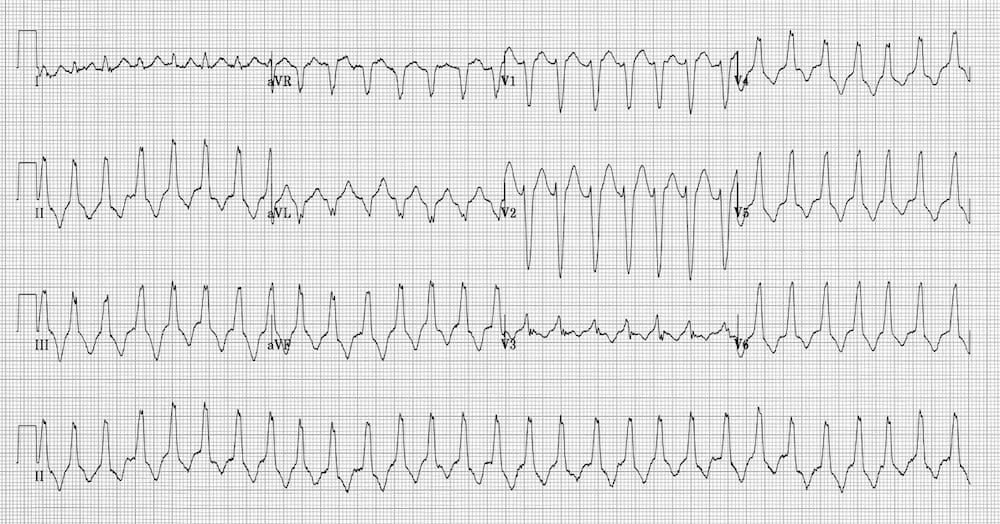
From the soccer field to the ER: A young player's syncope reveals a shocking ECG. How did a game of soccer end in a fight for life?? https://t.co/I5ukZJJ44T
#FOAMed#MedTwitter#CardioTwitter#MedEd
Studying for my exam. And came across nice guidelines on the management of tension pneumothorax .
Is this right? Imaging before decompression for a tension pneumothorax.
@karimbrohi
@zackferguson I also enjoy working with PAs.
But they are doing the job of doctors without the training nor the responsibility of a doctor.
It is not fair for PA's, not fair for patients.
Forget what's fair for doctors, they can survive whatever.
UK & Ireland Major Trauma Haemorrhage:
What Now? What Next?
12th & 13th March, Wellcome Trust, London & online
Register for free here:
https://t.co/ofoiCSMv5L
Critical bleeding is still the leading cause of potentially preventable deaths in major trauma patients. Despite huge improvements in overall outcomes over the past 10 years, mortality from torso haemorrhage remains very high, and over 50% in some series.
This is a national (UK & Ireland) meeting to bring together all MTCs, Air ambulances and anyone interested to discuss future management, pathways and prrotocols for bleeding management. (Worldwide attendees online are very welcome)
The past year has seen two major clinical trials completed across the national trauma system – UK-REBOA and CRYOSTAT2. What does data from these trials tell us about our current pathways and practices for major haemorrhage. What should happen now? What are the implications of these studies? How should we change our practice? And can we look to the future to improve our decisions, practices and outcomes?
The aim of the event is to use results from the trials and other contemporaneous data to facilitate a national discussion regarding how they should be incorporated into practice in the UK. We will cover the bleeding pathway from prehospital care through to operative or interventional haemorrhage control. The event will be fully interactive, and we would really like to bring out the views and experiences of front-line clinicians and transfusion practitioners.
Day 1 - “What Now?” will focus on results and additional data from the trials, to discuss the place of REBOA and cryoprecipitate in future pathways, and also how we can improve our practices for non-compressible haemorrhage, critical bleeding, resuscitation and coagulopathy management in general.
Day 2 - “What next?” focuses on challenges in decision-making, and introduces the COMBAT-AID programmes work to bring AI decision support to these patients. Draft programme is available on the registration pagee.
The event is funded by the NIHR HTA and the US DoD COMBAT AID programmes. , and will be intentionally interactive – we would really like to hear everyone's views, thoughts and ideas.
In-person attendance is limited to just over 150 attendees, and we have reserved spaces for representatives from UK & Ireland MTCs and air ambulance services. Some 40 or so additional places are available.
If you would like to join us in person then please indicate whether you would like to be present in person for one or both days. We will inform you by Tuesday 27th February if we have secured space for you.
The meeting will also be livestreamed so you can also register for online access.
We look forward to seeing you, in person or online, and look forward to two days of intense discussion that will translate into new approaches and guidance for our patients.
Please spread the word!
@MStott88 With your attitude you showed, I really struggle to see how you would lead at anything. I don't think anyone would even want to work with you lol
Absolutely gutted I didn’t write this article.
Well done to the authors - this has needed to be said for some time.
The question now is will organisations invested in ensuring no harm accept that reducing harm also occurs by doing less…
@benjaminbutter Healthcare system with two different route for those who can afford vs who can not afford would mean further steep decline/collapse of the NHS, because policy makers usually can afford their healthcare needs.
@EMPharmavich I see this management style in private healthcare. Wether in developed or developing countries.
You will never see this in socialized healthcare set up like the NHS. . . Not yet
@MedCrisis These images are being interpreted by a licensed radiologist. If this is predatory nonsense, is it a reportable to the GMC? These predatory nonsense is not without any damage to the patient and to the NHS.
Or are they reported by non doctor specialists lol