In other words, the kind of consumer the West wanted to create—someone who owns nothing but a pile of subscriptions and bills for all the things and services they use.
When Chinese university student Yanli Wang needed a $420 DJI Pocket 3 camera for a weekend trip, she spent less than $10 to rent it for three days and sent it right back. She is part of a massive movement, as over 82 percent of young consumers born after 2000 in China are now choosing to rent everything from drones to designer handbags instead of buying them.
China's massive 4.2 trillion yuan ($585 billion) rental economy is exposing a major structural flaw in Beijing's economic plans. Young citizens are quietly turning to "yi zu dai mai" or "rent instead of buy," renting ski gear, cameras, and luxury clothes just long enough to take photos for social media.
Searches for camera rentals on the super-app Meituan surged 67 percent year-over-year, while drone rental searches skyrocketed over tenfold. This frugal shift comes at the worst possible time for the Chinese Communist Party, which is desperately trying to force households to spend money to rescue a stagnant economy.
With domestic retail sales growth collapsing to just 0.6 percent in July 2026, years of crashing property values and economic uncertainty have left families wary of making big purchases. As Zhu Di, a researcher at the Chinese Academy of Social Sciences, noted, young consumers are simply being pragmatic. They still want access to high-quality goods, but they refuse to take on personal debt or spend their savings just to help the state hit its GDP targets.
By renting instead of buying, young Chinese consumers are enjoying life on their own terms while completely undercutting the ownership-driven growth model that officials in Beijing rely on.
Chinese robotics firm Unitree sold over 18,000 quadruped robot dogs last year for just $1,600 each, but the technical blueprint behind their global market dominance was funded by American taxpayers.
How did Beijing access the design? Through open academic publishing. Between 2010 and 2020, the U.S. Army funded foundational quadruped research at MIT and UPenn, culminating in MIT's famous "Mini Cheetah." Because U.S. defense labs openly publish research to foster global innovation, Unitree founder Wang Xingxing accessed the public papers and master's theses, copying MIT's physical dimensions down to the millimeter before re-engineering them for factory production.
Leveraging China's dense manufacturing supply chains and state subsidies, Unitree rapidly flooded global markets with cheap commercial quadrupeds. Meanwhile, American defense contractors like Ghost Robotics manufacture specialized military models priced well over $100,000, leaving Western firms heavily outpaced on production volume.
The national security implications are unfolding in real time. Although Unitree markets its quadrupeds for civilian use, Chinese state media recently broadcast footage of armed Unitree robots conducting live combat drills alongside the People's Liberation Army.
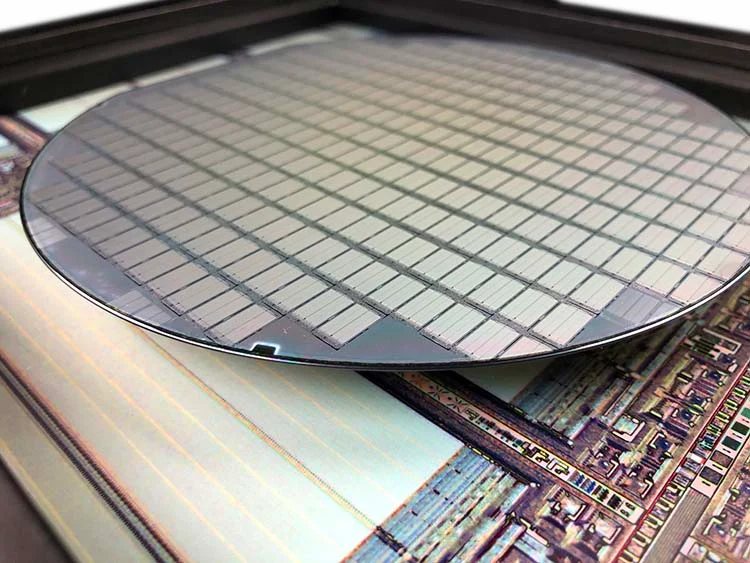
Former 28-year Samsung engineer Jeon was sentenced to seven years in prison after testifying that Chinese memory maker CXMT was founded in 2016 with an explicit plan to steal Samsung's $1.2 billion DRAM technology.
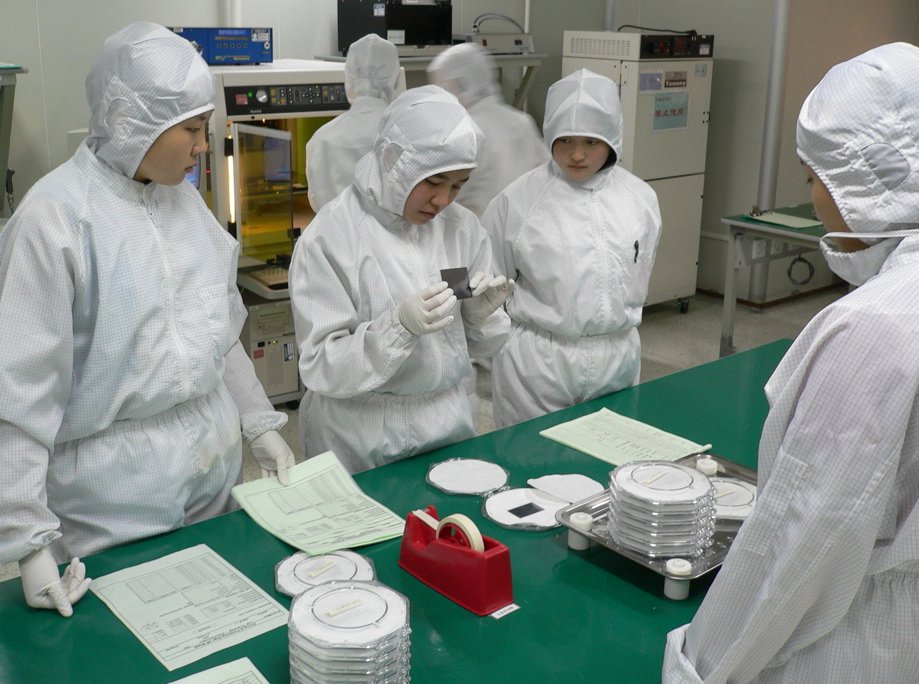
In sworn court testimony in Seoul, Jeon admitted that CXMT leadership had no interest in building proprietary research facilities from scratch. Instead, the firm lured South Korean engineers with massive pay raises to siphon out Samsung's confidential Process Recipe Plan, a master blueprint detailing roughly 600 precise semiconductor manufacturing steps.
Samsung spent five years and nearly 1.6 trillion KRW developing the advanced 18nm-class process. By converting handwritten notes stolen from Samsung into local factory settings, CXMT skipped years of costly trial and error, rapidly scaling production to become the world’s fourth-largest DRAM supplier.
South Korean prosecutors emphasized that the breach inflicted trillions of won in economic damage on the country's flagship industry. Under Beijing's aggressive drive for technological self-reliance, state-backed talent poaching and trade secret theft remain central tools to bypass foreign technological lead.
Eighteen years and nine months ago, in November 2007, the last U.S. carrier strike group transit through the Taiwan Strait took place. Nearly a decade earlier, during the Third Taiwan Strait Crisis in March 1996, U.S. Secretary of Defense William Perry confidently stated: “Beijing should know, and this [deployment] will remind them, that while they are a great military power in the region, the premier military power in the Western Pacific is the United States... and we can do anything we want.” Since then, China has consistently pushed the United States out of the littoral seas around Asia and farther into the Pacific.
A US Navy P-8A Poseidon aircraft transited the Taiwan Strait in international airspace on Aug 21, in a move the US 7th Fleet said “demonstrates the United States’ commitment to a free and open Indo-Pacific”.
https://t.co/oRvuZKJJiq
Chinese industrial giants have poured over $200 billion into overseas factories over the past three years to bypass Western trade barriers. According to a report from The Economist, Beijing is not backing down under global tariffs, but is instead quietly wrapping its state-guided supply chains around the entire planet.
Instead of shipping finished products directly from mainland ports, state-supported Chinese companies are building massive manufacturing hubs across Egypt, Morocco, Hungary, and South-East Asia.
In places like Egypt's Suez Canal Economic Zone, Chinese firms are setting up complete industrial ecosystems. They produce everything from fiberglass to fiber-optic cables, allowing them to label goods under local origin and sidestep heavy tariffs on exports bound for Western markets.
Data from Rhodium Group, an independent economic research firm, shows Chinese greenfield investments in European manufacturing jumped to a record $10.1 billion in 2025 alone. Most of that capital flowed directly into electric vehicle battery gigafactories and solar energy infrastructure.
This global expansion creates a clever illusion of supply chain diversification. While final assembly moves overseas, Chinese exports of factory equipment jumped 14% and intermediate components spiked 27% in early 2026. The finished products may say "Made in Morocco" or "Made in Hungary," but the underlying technology and supply networks remain deeply dependent on Beijing.
Trying to run NATO like a protection racket--with echoes of how the Soviets ran the Warsaw Pact--a terrible idea. If you wanted to weaken deterrence in Europe and give allies an incentive not to procure more U.S. weapons you'd be hard pressed to find better approach than this.
“Let me get this straight, you’re lending billions with cheese as collateral?”
“Not cheese. Parmesan. Parmigiano-Reggiano to be precise.“
“So, you finance this by packaging the Parmesan loans into Parmesan CDO A, which has part of Parmesan CDO B and both get put into Parmesan CDO C?”
“Yeah. The original loans are backed by wheels of Parmesan. Minimum age of 12 months. Some are 24 months. 36 months. 48 month. Hell, up to 120 months. Delicious. Millions of wheels. But Parmesan CDO C is a synthetic Parmesan CDO. A CDO of Parmesan CDOs. Parmesan Squared if you will.”
“What if it gets too hot in the summer and the wheels of Parmesan melt?”
“We’ll sell Parmesan credit default swaps.”
“C’mon! How much bigger is the market for Parmesan-backed sythentic loan and CDS products than actual edible real-life Parmesan that I can grate on top of my homemade spaghetti bolognese tonight?”
“At least 10,000x.”
“Ok, let’s say we have an underlying pool of $10 million in Parmesan wheels. How much money could be out there betting on your synthetic Parmesan financial products?”
“Probably $100 billion.”
“That is fucking crazy.”
“No, it’s awesome.”
The U.S. tariff policy has not improved the situation. Instead, it has merely redirected some products to the United States through intermediaries, reducing neither dependence on China nor supply chain vulnerabilities. It has only increased costs for Americans themselves. The other G7 countries have also failed to reduce their dependence, but by taking no action, they have at least avoided increasing their own costs, as they continue to import directly from China.
Only a coordinated approach focused on eliminating supply chain bottlenecks and strategic dependencies can bring meaningful improvement.
US tariffs between 2017 & 2024 failed to achieve significant US decoupling from China during this period, leaving America vulnerable to interruptions of key supplies originating in China. https://t.co/wQbroZJDC9
What a charade! VW all of a sudden calling for the application of EU trade defense instruments after lobbying against a realistic China policy of Germany and the EU for decades! They even forced the GER government to oppose the very EV tariffs which they now applaud. Hypocrits!
Russian pro-war Telegram author Kalashnikov reacts to Putin’s claim that Russia now ranks #1 in Europe by PPP GDP (only behind US, China & India):
“So we outproduce Brazil, South Korea, Germany, Canada, Spain and Italy? We make industrial robots like the Germans and Koreans? World-class cars by the millions? Hundreds of passenger jets a year like Embraer or Bombardier? Hundreds of ships like the Koreans? Our own machine tools cheaper than American ones at PPP rates?
In reality Russia’s economy is Italy spread across 1/7 of the Earth’s landmass — roughly $2.5 trillion. Spreading these PPP fairy tales only destroys the authority of the top leadership. If his inner circle actually believes this stuff, we’re in trouble.”
Tokaev, presidente del Kazakistan, ha tirato una sberla a Putin che definire rara è dir poco.
Un ulteriore indizio, se mai ce ne fosse stato bisogno, della pessima situazione in cui versa Mosca nel conflitto russo-ucraino.
Kazakhstan's president urged Russian to consider freezing the war in Ukraine in a rare public nudge from one of Moscow’s closest partners https://t.co/yGURcIyToi
I did. But where were you 15 years ago, when Germany was running a trade surplus of around 6% of GDP and lecturing other euro area countries—hamstrung by Germany-invented austerity doctrine—that it was not Germany's fault if its manufacturing sector was simply far more competitive?
What is different today—apart from the fact that China is incomparably larger?
How are tariffs supposed to solve this problem?
Western countries can stop importing Chinese products altogether and impose a complete trade embargo, but this would not halt China’s growth or their exports, at least not to any significant extent. Chinese producers compete in new product varieties that they can sell across the world, and they do so at a substantially higher level of competitiveness.
How are Western producers supposed to survive if they shut themselves off, fail to adapt to the new competitive landscape, and trade only with one another? Are we really going to invoke the infant-industry argument—again?
After this absolutely meaningless war, longer than was WW2 for the Soviet Union, launched light-heartedly by Putin, but with unnecessary tensions and unfriendly moves leading to the war made by both sides, Russia and Ukraine will (if the war ends w/o the use of nuclear weapons) boast at the end of the war the following results.
About 2 million killed and disabled citizens in total, mostly males which will additionally destabilize gender balance that was already bad.
Destroyed large parts of infrastructure (heating plants, refineries, warehouses, roads, bridges), and also hospitals and schools, Most of it inherited from socialism which did build things that current regimes have a pleasure to destroy.
Openly crazy nationalist regimes whose main educational task is to twist history in a pro-fascist direction--while, unlike socialist education, not providing any uplifting and positive message re. the future: ideologies of gloom and hopelessness, of soil and blood.
In addition to military losses, both countries will lose millions of citizens who will emigrate for good.
They would lose best actors, physicists, writers, AI specialists, doctors.
In many areas the damage will take two or three decades of peace just to be fixed.
Ukraine will remain an armed camp, with half of its pre-war population only, and with most of its valuable assets owned by foreigners. It will be part of the EU with constant fights there arguing that no economic aid will ever be a sufficient compensation for Ukraine's human sacrifice.
Its ideology & art will be extremely nationalistic, with probably being the only country in Europe officially celebrating Nazi fighters.
Russia will remain for a long time totally cut off (economically, politically and culturally) from Europe which is its natural cultural milieu. It would produce art of ersatz nationalist quality compared to which socialist realism could be considered a top artistic creation.
Its proponents will mouth-off nonsensical things about Christian values while murder rates, domestic violence, abortion and alcoholism will be at all-time European and Asian peaks.
So both countries will decline demographically, economically, politically and culturally. And given low population growth rates, it does not seem that they would recover any time soon (I am speaking of half-a-century or more and assuming no new wars).
So enjoy the continued war!
🇩🇪Merz just named all 3 threats in 1 sentence.
"Russia threatens our security. The People's Republic of China challenges our economy. The transatlantic partnership can no longer be taken for granted."
That is the same chancellor who already said the decades of Pax Americana are over.
Germany is no longer assuming Washington, Beijing, or Moscow are reliable, all in the same breath.
https://t.co/xGGtjqIzUA