Doctrine of Christ 🧵
Mat 7:28-29 And it came to pass, when Jesus had ended these sayings, the people were astonished at his doctrine:(In a general sense, whatever is taught. Hence, a principle or position in any science; whatever is laid down as true by an instructor or master. The doctrines of the gospel are the principles or truths taught by Christ and his apostles.) For he taught them as one having authority, (1. Legal power, or a right to command or to act; as the authority of a prince over subjects, and of parents over children. Power; rule; sway.) and not as the scribes.
What authority?
Deu 18:18-19 I will raise them up a Prophet from among their brethren, like unto thee, and will put my words in his mouth; and he shall speak unto them all that I shall command him. And it shall come to pass, that whosoever will not hearken unto my words which he shall speak in my name, I will 👉require👈it of him.
2Pet 1:16-17 For we have not followed cunningly devised fables, when we made known unto you the power and coming of our Lord Jesus Christ, but were eyewitnesses of his majesty. For he received from God the Father honour and glory, when there came such a voice to him from the excellent glory, This is my beloved Son, in whom I am well pleased.
Godhead
Jn14:10 Believest thou not that I am in the Father, and the Father in me? the words that I speak unto you I speak not of myself: but the Father that dwelleth in me, he doeth the works.
Jn 14:26 But the Comforter, which is the Holy Ghost, whom the Father will send in my name, he shall teach you all things, and bring all things to your remembrance, whatsoever I have 👉said👈unto you.
1Jn:1-3 That which was from the beginning, which we have heard, which we have seen with our eyes, which we have looked upon, and our hands have handled, of the Word of life; (For the life was manifested, and we have seen it, and bear witness, and shew unto you that eternal life, which was with the Father, and was manifested unto us;) That which we have seen and heard declare we unto you, that ye also may have fellowship with us: and truly our fellowship is with the Father, and with his Son Jesus Christ.
Parables too, some claim His parables aren’t for doctrine. This is false
Mar 4:2 And he taught them many things by parables, and said unto them in his doctrine,
His example
1Pet 2:21 For even hereunto were ye called: because Christ also suffered for us, leaving us an example, that ye should follow his steps:
Jn 15:13-14 Greater love hath no man than this, that a man lay down his life for his friends. Ye are my friends, if ye do whatsoever I command you.
The Doctrine of Christ is the only way to get understanding of truth. He is truth! This is how to interpret all scripture with the mind of Christ.
Mat 18:3 And said, Verily I say unto you, Except ye be converted, and become as little children, ye shall not enter into the kingdom of heaven.
Mat 13:52 Then said he unto them, Therefore every scribe which is instructed unto the kingdom of heaven is like unto a man that is an householder, which bringeth forth out of his treasure things new and old.
2Pet 1:19-20 We have also a more sure word of prophecy; whereunto ye do well that ye take heed, as unto a light that shineth in a dark place, until the day dawn, and the day star arise in your hearts: Knowing this first, that 👉no👈prophecy of the scripture is of any private interpretation.
1Pet 1:10-12 Of which salvation the prophets have enquired and searched diligently, who prophesied of the grace that should come unto you: Searching what, or what manner of time the Spirit of Christ which was in them did signify, when it testified beforehand the sufferings of Christ, and the glory that should follow. Unto whom it was revealed, that not unto themselves, but unto us they did minister the things, which are now reported unto you by them that have preached the gospel unto you with the Holy Ghost sent down from heaven; …
Going through some great tribulation.
You know, the kind no one would believe if it were told…,(?)
(Some of you know.)
Endure.
Would appreciate your prayers.
Thank you.
@Nazir_backup Yeah, perhaps you’re right. I’ll listen again. The reason I brought it up in the first place was it seemed out of character for him. The reality is that none of us totally understand how all the end times stuff will go down.
@Nazir_backup Monte says something interesting in this. That those who hold a different eschatology view than him concerning the idea of a physical temple being built in Jerusalem that the will be destroyed by angels. I love Monte, but that’s over the line for me. 🤔
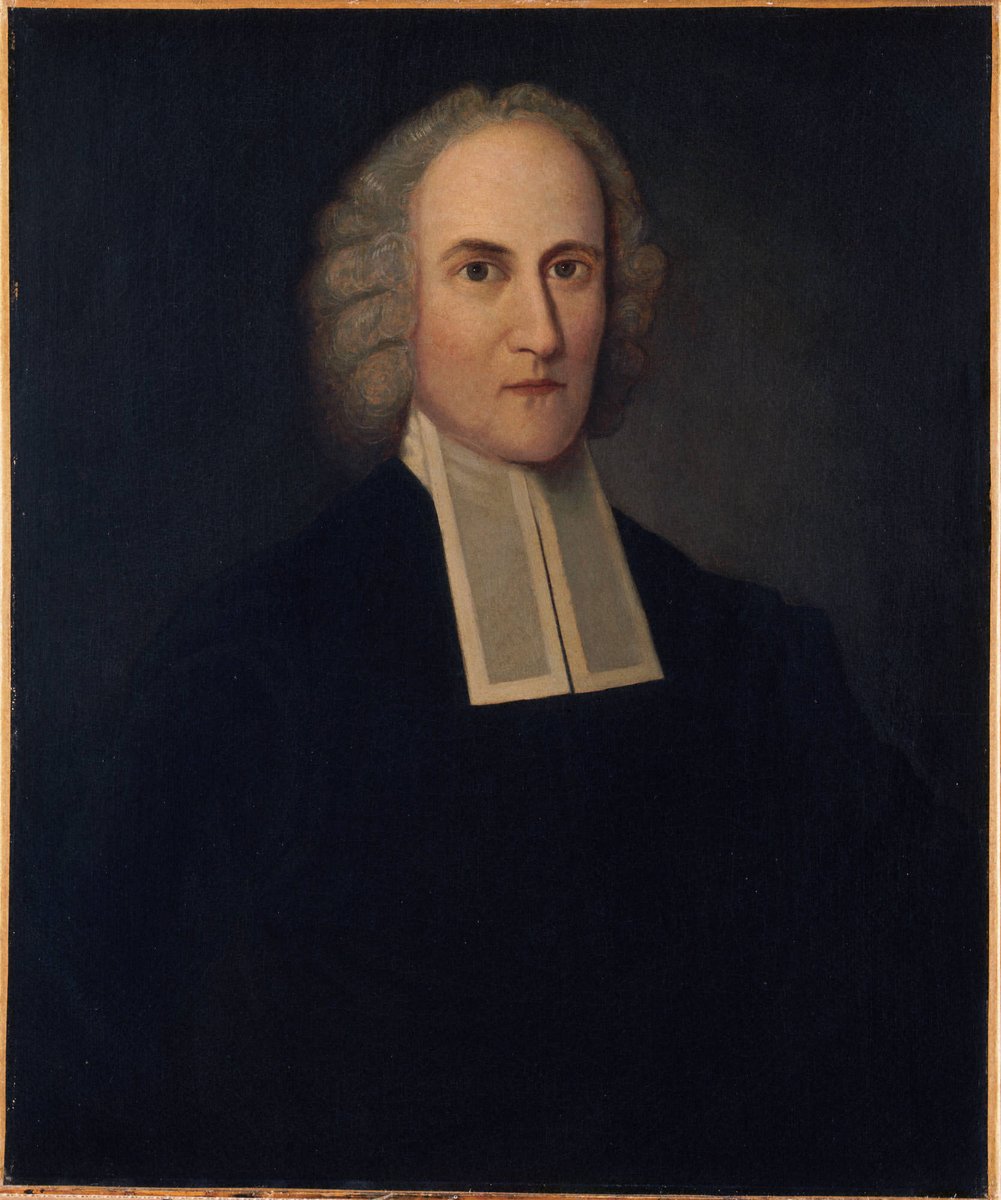
False zeal is against the sins of others; while he that has true zeal, exercises it chiefly against his own sins.
—Jonathan Edwards, Religious Affections (III.X)
Under the Law
In the last study we learned what Paul was talking about in using the term “works of the law” which is the religious laws of the Pharisees and not the Law of God given by Moses. Next I think we should also look at the term used “under the law” and what that means. This just simply means under the old covenant. There is much confusion on this in Gods people. Many will reject this because they don’t believe that we are even in the new covenant yet. Paul often used in conjunction with “works of law& deeds of law” which are exactly the same in the original Greek. Also know
1Jn 3-4 Whosoever committeth sin transgresseth also the law: for sin is the transgression of the law.
Rom 3:19-20 Now we know that what things soever the law saith, it saith to them who are under the law(the old covenant) that every mouth may be stopped, and all the world may become guilty before God. Therefore by the deeds of the law(man’s law) there shall no flesh be justified in his sight: for by the law is the knowledge of sin.
Also when we see the term under grace used, Paul is referred to under the new covenant. When a believer becomes born again he enters into the new covenant. The covenant of grace. Let’s look at that.
The word grace in the New Testament in the Greek is
G5485 Greek: χάρις
Transliteration: charis
Pronunciation: khar'-ece
Definition: From G5463; graciousness (as gratifying) of manner or act (abstract or concrete; literal figurative or spiritual; especially the divine influence upon the heart and its reflection in the life;
So it means Gods influence on our hearts and its reflection in our lives. Let’s compare this to what scripture says about the new covenant.
Jer 31:33 But this shall be the covenant that I will make with the house of Israel;
After those days, saith the LORD,
I will put my law in their inward parts,
and write it in their hearts;
and will be their God,
and they shall be my people.
Sounds like Devine influence on your heart to me. Let’s get another witness.
Ezk 11:19-20 And I will give them one heart, and I will put a new spirit within you; and I will take the stony heart out of their flesh, and will give them an heart of flesh: That they may walk in my statutes, and keep mine ordinances, and do them: and they shall be my people, and I will be their God.
Devine influence on the heart?
Under grace.
Rom 6:14-17 For sin (transgressing the law) shall not have dominion over you: for ye are not under the law(old covenant)but under grace(new covenant)
What then? shall we sin, because we are not under the law,(old covenant)but under grace?(new covenant)God forbid. Know ye not, that to whom ye yield yourselves servants to obey, his servants ye are to whom ye obey; whether of sin unto death, or of obedience unto righteousness? But God be thanked, that ye were the servants of sin, but ye have obeyed from the 👉heart 👈that form of doctrine which was delivered you.
Do you see it yet? Is it making sensee?
1 Co 9:20-21 And unto the Jews I became as a Jew, that I might gain the Jews; to them that are under the law, (old covenant)as under the law, (old covenant)that I might gain them that are under the law;(old covenant)To them that are without law, as without law, (being not without law to God, but under the law to Christ,) that I might gain them that are without law.
👆notice how he distinguished the difference between the Jews and the Gentiles. Gentiles weren’t part of the old covenant unless they joined themselves to Israel and entered covenant.
👇👇
Gal 5:19-21 Now the works of the flesh are manifest, which are these; Adultery, fornication, uncleanness, lasciviousness, Idolatry, witchcraft, hatred, variance, emulations, wrath, strife, seditions, heresies, Envyings, murders, drunkenness, revellings, and such like: of the which I tell you before, as I have also told you in time past, that they which do such things shall not inherit the kingdom of God.
Heb 10:24-29 And let us consider one another to provoke unto love and to good works: Not forsaking the assembling of ourselves together, as the manner of some is; but exhorting one another: and so much the more, as ye see the day approaching.
For if we sin wilfully after that we have received the knowledge of the truth, there remaineth no more sacrifice for sins, But a certain fearful looking for of judgment and fiery indignation, which shall devour the adversaries. He that despised Moses' law died without mercy under two or three witnesses: Of how much sorer punishment, suppose ye, shall he be thought worthy, who hath trodden under foot the Son of God, and hath counted the blood of the covenant, wherewith he was sanctified, an unholy thing, and hath done despite unto the Spirit of grace?
Under the Law
In the last study we learned what Paul was talking about in using the term “works of the law” which is the religious laws of the Pharisees and not the Law of God given by Moses. Next I think we should also look at the term used “under the law” and what that means. This just simply means under the old covenant. There is much confusion on this in Gods people. Many will reject this because they don’t believe that we are even in the new covenant yet. Paul often used in conjunction with “works of law& deeds of law” which are exactly the same in the original Greek. Also know
1Jn 3-4 Whosoever committeth sin transgresseth also the law: for sin is the transgression of the law.
Rom 3:19-20 Now we know that what things soever the law saith, it saith to them who are under the law(the old covenant) that every mouth may be stopped, and all the world may become guilty before God. Therefore by the deeds of the law(man’s law) there shall no flesh be justified in his sight: for by the law is the knowledge of sin.
Also when we see the term under grace used, Paul is referred to under the new covenant. When a believer becomes born again he enters into the new covenant. The covenant of grace. Let’s look at that.
The word grace in the New Testament in the Greek is
G5485 Greek: χάρις
Transliteration: charis
Pronunciation: khar'-ece
Definition: From G5463; graciousness (as gratifying) of manner or act (abstract or concrete; literal figurative or spiritual; especially the divine influence upon the heart and its reflection in the life;
So it means Gods influence on our hearts and its reflection in our lives. Let’s compare this to what scripture says about the new covenant.
Jer 31:33 But this shall be the covenant that I will make with the house of Israel;
After those days, saith the LORD,
I will put my law in their inward parts,
and write it in their hearts;
and will be their God,
and they shall be my people.
Sounds like Devine influence on your heart to me. Let’s get another witness.
Ezk 11:19-20 And I will give them one heart, and I will put a new spirit within you; and I will take the stony heart out of their flesh, and will give them an heart of flesh: That they may walk in my statutes, and keep mine ordinances, and do them: and they shall be my people, and I will be their God.
Devine influence on the heart?
Under grace.
Rom 6:14-17 For sin (transgressing the law) shall not have dominion over you: for ye are not under the law(old covenant)but under grace(new covenant)
What then? shall we sin, because we are not under the law,(old covenant)but under grace?(new covenant)God forbid. Know ye not, that to whom ye yield yourselves servants to obey, his servants ye are to whom ye obey; whether of sin unto death, or of obedience unto righteousness? But God be thanked, that ye were the servants of sin, but ye have obeyed from the 👉heart 👈that form of doctrine which was delivered you.
Do you see it yet? Is it making sensee?
1 Co 9:20-21 And unto the Jews I became as a Jew, that I might gain the Jews; to them that are under the law, (old covenant)as under the law, (old covenant)that I might gain them that are under the law;(old covenant)To them that are without law, as without law, (being not without law to God, but under the law to Christ,) that I might gain them that are without law.
👆notice how he distinguished the difference between the Jews and the Gentiles. Gentiles weren’t part of the old covenant unless they joined themselves to Israel and entered covenant.
👇👇
I used to think the being under the law just simply meant you were under the law because you broke it. I was wrong. While that makes sense on the surface. Example if I’m not speeding I’m not under the traffic law but as soon I’m speeding I’m under the penalty of the law. Which makes complete sense but if we are going be honest about the scripture that definition cannot be true. Jesus never sinned.(transgressed the law)
Gal 4:4-5 But when the fulness of the time was come, God sent forth his Son, made of a woman, made under the law,(old covenant)To redeem them that were under the law,(old covenant)that we might receive the 👉adoption of sons.(being born again into the new covenant where by Gods influence on our hearts we obey)
I’ve heard many arguments saying we are not in the new covenant because of how Jeremiah describes it which seems like a good argument until you look at it from the prospective of being born again.
Jer 31:34 And they shall teach no more every man his neighbour, and every man his brother, saying,
Know the LORD: for they shall all know me,
from the least of them unto the greatest of them, saith the LORD:
for I will forgive their iniquity,
and I will remember their sin no more.
Everyone who is genuinely born again knows the Lord. The all there is those who are born again into the new covenant. And the least of them and the greatest…. Well I’ll let Jesus explain.
Mat 5:19 Whosoever therefore shall break one of these least commandments, and shall teach men so, he shall be called the least in the kingdom of heaven: but whosoever shall do and teach them, the same shall be called great in the kingdom of heaven.
Let’s read the whole prophecy all together concerning the new covenant. Notice the order. He starts with both Houses then it goes to the house of Israel. The two become one house under the new covenant.
Jer 31:31-34 Behold, the days come, saith the LORD,
that I will make a new covenant
with the house of Israel, and with the house of Judah:
Not according to the covenant that I made with their fathers
in the day that I took them by the hand
to bring them out of the land of Egypt;
which my covenant they brake,
although I was an husband unto them, saith the LORD:
But this shall be the covenant that I will make with the house of Israel;
After those days, saith the LORD,
I will put my law in their inward parts,
and write it in their hearts;
and will be their God,
and they shall be my people.
And they shall teach no more every man his neighbour, and every man his brother, saying,
Know the LORD: for they shall all know me,
from the least of them unto the greatest of them, saith the LORD:
for I will forgive their iniquity,
and I will remember their sin no more.
Eph 4:4 There is one body, and one Spirit, even as ye are called in one hope of your calling; One Lord, one faith, one baptism, One God and Father of all, who is above all, and through all, and in you all.
So being under grace or the new covenant does not mean the law is done away. It just means that God himself will change our hearts and make us want to obey His Word. It should be a tell of them who refuse.
Mat 7:19-20 Every tree that bringeth not forth good fruit is hewn down, and cast into the fire. Wherefore by their fruits ye shall know them.
What fruit?
Gal 5:22-23 But the fruit of the Spirit is love, joy, peace, longsuffering, gentleness, goodness, faith, Meekness, temperance: against such there is no law.
And those without fruit are not in the new covenant are not born again but break the Law of God. All these are written in the law.
👇👇
How Doctrinal Error Multiplies and Reinforces Itself Around Gabriel’s Prophecy
The Fragility of Doctrines Built on Assumptions
Gabriel’s prophecy in Daniel 9 is one of the most precise, tightly structured revelations in Scripture.
It is mathematical.
It is covenantal.
It is linear.
It is complete.
Seventy weeks are determined. Six purposes are named. One Anointed Prince is identified. One covenant is confirmed. One cutting off is appointed. One desolation follows.
Nothing in the angel’s speech requires a parenthesis, a postponement, or a second cast of characters.
Yet the doctrines built around that speech in the last two hundred years are among the most fragile constructions in the entire prophetic landscape. They do not stand because the text is obscure. They stand because the text was first fractured, and then the fracture was defended.
Fragile belief always begins with one small assumption. In the case of Daniel 9, the assumption was this:
The seventieth week must be separated from the first sixty-nine.
Everything else grew from that single cut. This is the root of prophetic fragmentation. Once the week was lifted out of its sequence, the prophecy ceased to be a finished sentence and became an empty room. The room then had to be furnished. The furniture was not taken from Gabriel. It was manufactured to keep the room from collapsing.
How One Assumption Became an Entire System
Once the seventieth week was detached, the system needed supporting doctrines to keep the separation intact. Fragile belief began to multiply—not because the text demanded more structure, but because the fracture demanded more props.
So the architecture appeared:
• A future antichrist must confirm the covenant.
• The covenant must be political rather than redemptive.
• Sacrifices must be restored so they can be stopped.
• A temple must be rebuilt so it can be defiled.
• The week must be postponed until a later generation.
• A gap of unknown length must be justified.
• The prophetic clock must restart under new conditions.
• The Church must be removed so Israel can resume as timepiece.
• The prophecy must be reapplied to the end rather than read as already spoken over Messiah.
None of these ideas came from Gabriel. They came from the need to protect the original assumption. Remove the assumption and the supporting doctrines have nothing to lean on. Keep the assumption and every new contradiction requires another beam.
This is the architecture of self-reinforcing prophetic error: not revelation layered upon revelation, but scaffolding layered upon a crack.
The Closed Interpretive Loop Around Daniel 9
Once the system formed, it became self-protecting. Every challenge was reinterpreted as confirmation. The text was no longer allowed to correct the system; the system was allowed to correct the text.
The loop is simple and devastating:
• If the text contradicts the system, reinterpret the text.
• If history contradicts the system, adjust the timeline.
• If Scripture contradicts the system, insert a gap.
• If logic contradicts the system, spiritualize the details that are inconvenient and literalize the ones that are useful.
• If someone questions the system, accuse them of denying prophecy, of replacement theology, or of hatred for Israel.
This is not exegesis. This is doctrinal insulation. The believer is trained to treat the system as the meaning of the passage, and then to treat any reading that returns to Gabriel’s actual grammar as an attack on faith. The loop closes.
Correction becomes impossible from inside. The prophecy is no longer heard. It is administered.
This is the dynamic of closed-loop prophetic belief.
The Multiplication of Errors: How Fragile Belief Spread
Detachment is expensive. Once the seventieth week was lifted from the sixty-nine, the system required more and more doctrines to keep the detachment alive.
Each new doctrine generated charts. Each chart generated roles.
Each role generated expectations.
Each expectation generated fear.
The harvest of that labor is familiar:
• New timelines that must be redrawn with every failed date.
• New charts that grow more intricate as the simple sentence of Daniel 9:24–27 is abandoned.
• New interpretations of “he,” “covenant,” “midst of the week,” and “desolation.”
• New prophetic roles assigned to figures Gabriel never named.
• New end-time characters required to occupy a week that had already been occupied by the Prince who was cut off.
• New theological categories—parenthesis, postponement, dual fulfillment—invented to explain why the math no longer adds.
• New expectations that train the Church to watch for a treaty instead of to endure in the covenant already confirmed.
• New fears that make escape, the gospel, and suffering, the sign that something has gone wrong.
The fragile doctrine became a network—a web of interconnected ideas that all depended on the original separation. Pull one thread and the web trembles, so the web is never pulled. This is the multiplication effect of prophetic scaffolding. Error does not remain a single mistake. Error recruits.
The Emotional Engine Behind the Misinterpretation
Fragile belief around Daniel 9 is not driven first by the text. It is driven by emotion. The text is used. The emotion is served.
The engines are recognizable because they live in all of us:
• Fear of suffering, and the hope that a secret departure will spare the last generation what every other generation of saints has known.
• Desire for escape, dressed as blessed hope, while the blessed hope of Scripture remains the appearing of the Lord and the resurrection of the dead.
• Longing for clarity that prefers a chart to a cross.
• Fascination with timelines that treats prophecy as a puzzle to be solved rather than a covenant to be kept.
• Cultural anxiety that reads newspapers into Gabriel and then calls the reading “watchfulness.”
• Identity tied to a system, so that leaving the system feels like leaving the faith.
• Resistance to correction, because correction threatens not only a view but a community, a library, a lifetime of sermons.
These emotions created a prophetic ecosystem in which the system felt comforting even when it contradicted the text. Comfort is not the same as truth. A doctrine can soothe and still be false. A chart can calm and still be a lie about the angel’s sentence. This is the psychology of prophetic attachment: the heart binds itself to the furniture of the empty room, and then calls the furniture holy.
How Tradition Became Stronger Than the Text
Over time the system became tradition.
Tradition became identity.
Identity became certainty.
Certainty became resistance.
People no longer defended Gabriel’s words. They defended their charts, their teachers, their denominational heritage, their prophetic expectations, and their emotional investment.
The angel who was sent “to give thee skill and understanding” was displaced by the school that claimed to own his meaning.
This is how fragile belief becomes institutionalized. A reading that began as an assumption in a particular century is taught as if it were apostolic.
Children inherit it with the hymns.
Seminaries grade it.
Conferences brand it.
To question it is to risk the table. The sociology of tradition-reinforced prophecy is not mysterious. It is the ordinary way communities protect what they have loved too long to examine.
Gabriel does not need that protection. The text does not need that insulation. What needs protection is the fracture. And the fracture is not Scripture.
The Cost: What Fragile Belief Has Done to Gabriel’s Prophecy
The cost has been enormous, and it is not academic. Fragile belief has obscured Gabriel’s clarity.
It has replaced covenant with speculation.
It has replaced Messiah with antichrist as the “he” who confirms. It has replaced fulfillment with postponement.
It has replaced precision with imagination.
It has replaced Scripture with charts.
It has replaced Gabriel’s voice with tradition.
The result is a generation that knows the system better than the text. Many can recite the seven-year treaty, the rebuilt temple, the restored sacrifices, and the pre-week departure.
But who cannot recite, without a study Bible’s notes, what Gabriel actually said: that seventy weeks were determined upon Daniel’s people and holy city to finish transgression, to make an end of sins, to make reconciliation for iniquity, to bring in everlasting righteousness, to seal up the vision and prophecy, and to anoint the most Holy—and that after sixty-two weeks Messiah would be cut off, and that He would confirm the covenant with many for one week, and in the midst of the week He would cause the sacrifice and the oblation to cease.
When Messiah is displaced from the center of the week, the cross is displaced from the center of the prophecy. That is not a small error. That is a different gospel of time. This is the tragedy of prophetic distortion: the most Christ-centered timetable in the prophets is taught as if its climax were a coming man of sin rather than the already-cut-off Prince.
The Way Out: Returning to Gabriel’s Actual Words
The restoration of Daniel 9 begins with one simple act: reading Gabriel’s prophecy without the system. Not through tradition. Not through charts. Not through inherited assumptions. Not through emotional expectations. Just the text.
Read it as a completed determination, not an unfinished reservation. Read the six purposes as the work of the Anointed One, not as a postponed national program awaiting a third temple. Read “after threescore and two weeks shall Messiah be cut off” as the mid-week cross, not as a footnote before a gap. Read “he shall confirm the covenant with many for one week” as the covenant of life confirmed by the Prince who was named two verses earlier, not as a future treaty signed by His opposite. Read the causing of sacrifice to cease as the once-for-all offering that ended the shadow, not as a future desecration that requires the shadow to return.
When the system is removed, Gabriel’s prophecy becomes again what it always was: linear, covenantal, complete, fulfilled in its messianic core, unbroken, unfragmented, and Christ-centered. The last half of the week remains what Isaiah 61 already split in the synagogue at Nazareth: the acceptable year has been proclaimed; the day of vengeance is still the Lord’s. Nothing in that reading requires a gap. Nothing in it requires the Church’s removal in order for God to keep His word. Nothing in it makes antichrist the confirmer of the covenant.
This is the path of prophetic restoration: not a new system, but the old sentence, heard again.
The Hope: God Is Calling Many Out of the Fragile System
Across the world—Australia, the United States, Europe, Africa—people are awakening at the same hour. Not to a new doctrine. Not to a new system. Not to a new teacher. To the text itself.
God is calling the wise, the remnant, the firstfruits, the awakened, out of fragile ecosystems and back into the clarity of Gabriel’s words.
They are discovering that the seventy weeks were never a puzzle designed to hide an escape. They were a decree designed to identify the Messiah and to measure the covenant He confirmed.
They are discovering that endurance is not a failure of hope. It is the meat that follows milk.
They are discovering that the watch is not a fascination with treaties and heifers, but a fidelity to the Prince who was cut off and who will appear.
Fragile belief has built an entire ecosystem around Gabriel’s prophecy—a self-reinforcing network of assumptions, traditions, and emotional expectations. That ecosystem is loud. It is illustrated. It is loved. It is not therefore true.
The restoration of Daniel 9 begins when the system is removed and the text is allowed to speak for itself. The angel was sent to give skill and understanding. He did not fail. But doing so in its appointed time, the time of qêts, the end of the end, the final generation. And not anytime sooner.
The fracture is not in his speech. The fracture is in what was built around it. Tear down the scaffolding and the sentence still stands—mathematical, covenantal, linear, complete, and centered on the One who confirmed the covenant with many and, in the midst of the week, brought the sacrifice to its end.
Let Gabriel speak. Let the system fall silent.
Rom 11:25 For I would not, brethren, that ye should be ignorant of this mystery, lest ye should be wise in your own conceits; that blindness in part is happened to Israel, until the fulness of the Gentiles be come in.
Gen 48:19 And his father refused, and said, I know it, my son, I know it: he also shall become a people, and he also shall be great: but truly his younger brother shall be greater than he, and his seed shall become a multitude of nations.
Multitude =fullness
Nations=gentiles