You have ETH on Ethereum. You need USDT on TRON at the best rate.
Simple transaction, right?
Wrong.
First you need a bridge. Then you realise the bridge doesn't support that pair directly. So you swap first, bridge next, swap again on the other side.
But you realize a different bridge could have cost you less gas. And a different one could have executed faster.
10 browser tabs and many “what ifs” later, you realize crypto is still as fragmented as ever.
Crypto aggregators were supposed to solve this, bring everything together. But they didn't. Instead they specialized in multiple directions.
All but one
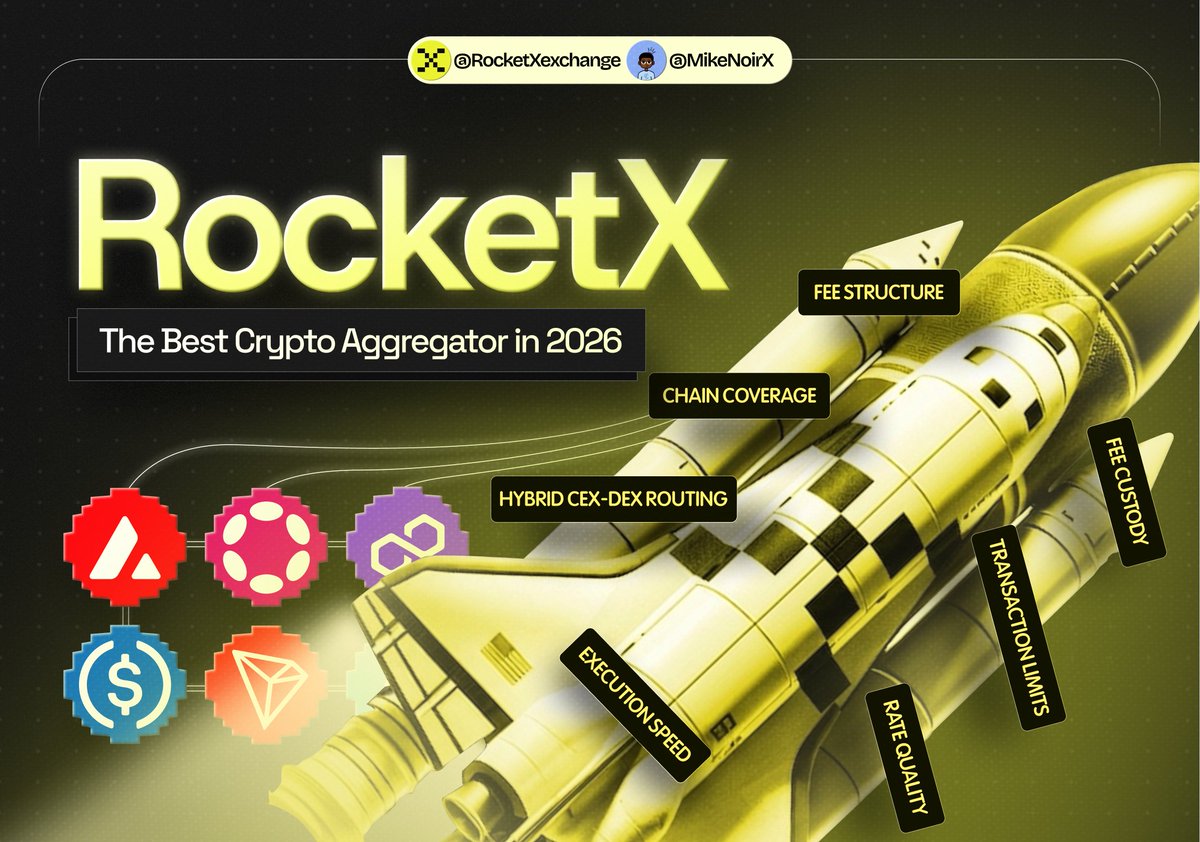
I compared leading crypto aggregators on 7 relevant user metrics, and @RocketXexchange came out on top.
Here’s the full story🧵
“Someone” is too vague.
20-30 years old: Find a very good job in a place where you can get leverage to buy assets. Get married, save together. The other option is to start a business early but know that 99% of the time, it will die but the experience will be valuable.
30-40: Start thinking of starting a business from what you have learned. Find partners, mentors, funders.
40+ Enter politics.
Seriously, after 40 wealth is more about connections than effort. This is the time you cash in on relationships built over time.
Wealth is about relationships and compounding the benefits of those relationships. No matter how brilliant you are, nothing will bring you wealth if you don’t build relationships.
Friends have always opened the doors for me and recommended me to rooms where I made money from.
You have ETH on Ethereum. You need USDT on TRON at the best rate.
Simple transaction, right?
Wrong.
First you need a bridge. Then you realise the bridge doesn't support that pair directly. So you swap first, bridge next, swap again on the other side.
But you realize a different bridge could have cost you less gas. And a different one could have executed faster.
10 browser tabs and many “what ifs” later, you realize crypto is still as fragmented as ever.
Crypto aggregators were supposed to solve this, bring everything together. But they didn't. Instead they specialized in multiple directions.
All but one
I compared leading crypto aggregators on 7 relevant user metrics, and @RocketXexchange came out on top.
Here’s the full story🧵
If you want to try it:
① Visit RocketX and connect your wallet [https://t.co/HPhH77Nfk7]. Or use walletless if you'd rather skip that step
② Select source chain + token, destination chain + token. It shows you all quotes and estimated times.
③ Pick best rate or fastest execution. Confirm through your wallet.
④ Hold $RVF to drop platform fees to zero.
Read my full article on RocketX here [https://t.co/HZM9h3WlsI]
Category 3: Chain-specific DEX aggregators (1inch, Jupiter)
1inch on Ethereum = excellent aggregator. Same for Jupiter on Solana. Best in class.
But cross-chain? That's where both hit their ceiling.
Moving ETH to Solana through 1inch means you bridge separately, swap separately, pay three times.
Let me be honest about what RocketX doesn't win.
Privacy depth: if you need your on-chain trail to be completely untraceable, @HoudiniSwap's dual-exchange routing is purpose-built for that. RocketX's walletless option improves privacy but doesn't match that level.
Mobile app is on the roadmap but not live yet. To become the go-to crypto aggregator for the average user, RocketX needs to go mobile-first.
However for everything else, @RocketXexchange wins the evaluation.
The aggregator market in 2026 produced excellent specialists.
And failed to produce a great generalist.
Until now.
200+ chains. 450+ sources. $2B+ processed. Non-custodial. No KYC. Walletless option. Fee-free for $RVF holders.
The best cross-chain swap infrastructure is already live.
Category 2: Developer infrastructure (Li(.)Fi, Rango)
Li(.)Fi powers cross-chain transactions in many DeFi apps. It's got excellent API for devs but terrible consumer UI.
Rango covers 70+ chains but no CEX liquidity access. Its rate ceiling is real.
Neither is designed for the end user. They're the infrastructure other apps are built on.
You have ETH on Ethereum. You need USDT on TRON at the best rate.
Simple transaction, right?
Wrong.
First you need a bridge. Then you realise the bridge doesn't support that pair directly. So you swap first, bridge next, swap again on the other side.
But you realize a different bridge could have cost you less gas. And a different one could have executed faster.
10 browser tabs and many “what ifs” later, you realize crypto is still as fragmented as ever.
Crypto aggregators were supposed to solve this, bring everything together. But they didn't. Instead they specialized in multiple directions.
All but one
I compared leading crypto aggregators on 7 relevant user metrics, and @RocketXexchange came out on top.
Here’s the full story🧵
Transaction limit on Houdini = $100,000 while RocketX = $500,000
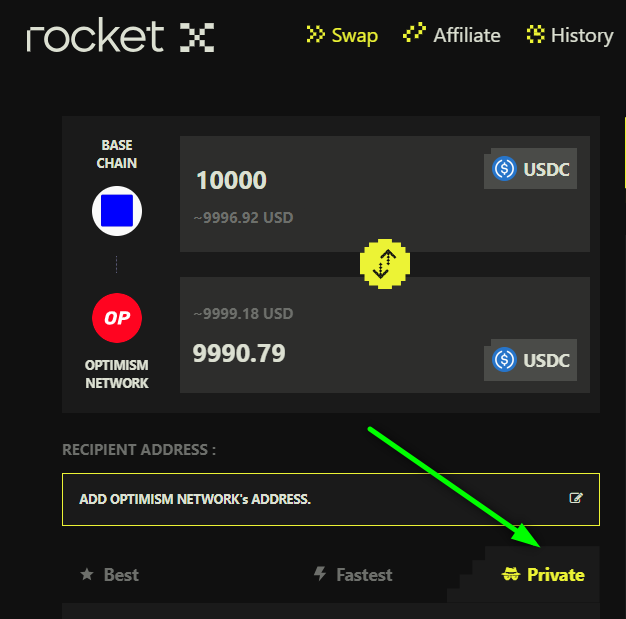
For rates on a 10,000 USDC Base → Optimism swap:
Houdini returns: 9,869.37 USDC while RocketX returns: 9,990.79 USDC
That's $121.42 difference on ONE swap. Scale to $100K and that's $1,214 left on the table. Per transaction.
Let me break down each aggregator category honestly.
Category 1: Privacy-first (Houdini Swap)
Houdini routes swaps across 2 off-chain CEX partners + 3 separate blockchains to make transactions untraceable.
Genuinely impressive architecture. But the trade-offs are real.
On the same USDT → TRX swap:
Houdini takes 20-40 minutes while RocketX takes 2-5 minutes
On any volatile asset, that's a serious price risk.