How Product Teams Ship in 50+ Languages on Every Git Commit with AI Localization
1/ The Global Release Bottleneck: Expanding software into international markets historically created a multi-week deployment lag. Engineering teams had to export raw resource files (JSON/YAML), email external translation agencies, and manually patch translated strings back into the codebase.
2/ Automated CI/CD Git Synchronization:Platforms like Lokalise and Crowdin connect directly to your GitHub or GitLab repositories. The moment a developer opens a Pull Request with new English UI copy, AI translation agents detect newly added keys and generate verified translations across 50+ languages automatically.
3/ Context-Aware Glossary & Length Constraints:Rather than translating isolated words blindly, the AI inspects the surrounding UI context, protects code variables, and respects character-count limits—preventing text expansion from breaking mobile button widths or layout margins.
4/ Visual In-Context QA Before Merge:The system generates automated UI mockups and screenshot previews of translated strings directly within the PR discussion, allowing product managers to catch visual overflow issues before code merges into production.
The Takeaway: You eliminate translation delays entirely—shipping new product features simultaneously to global customers on every release cycle without compromising engineering velocity.
Come join the AI Profit Boardroom here: https://t.co/9A3aOMUIwD 🚀
A major breach at OpenAI highlights internal security risks, while the tech industry faces a new antitrust lawsuit over voluntary safety coordination.
Here are the key governance and compliance updates unfolding right now:
🛡️ Internal Infrastructure Breaches Shake AI Labs
A Washington Post investigation detailed how security research firm Hacktron infiltrated internal systems at OpenAI, forcing the company to freeze non-essential roadmaps and reassign 25% of its entire engineering staff to defensive vulnerability patching. Alongside recent disclosures by Google, Anthropic, and Meta regarding model breakouts, enterprise CISOs and regulatory auditors are requiring foundation model providers to prove strict architectural isolation, air-gapped training environments, and third-party penetration testing. Read the Washington Post report: https://t.co/b1M5IYoOft
⚖️ Antitrust Antithesis: "Pacing the Frontier" Faces Sherman Act Lawsuit
A federal class-action antitrust lawsuit has been filed against Anthropic, OpenAI, xAI, and Google DeepMind. The plaintiffs—paid subscribers and consumer attorneys—allege that the public agreement among lab CEOs to coordinate a slowdown in frontier model capabilities represents an unlawful horizontal agreement in restraint of trade under the Sherman Act. The lawsuit highlights a major legal paradox: voluntary industry self-regulation for safety can directly collide with competition law. Read the legal analysis: https://t.co/Xrbqs51vko
🇺🇸 Political Polarisation Around Federal AI Governance
As former President Donald Trump proposed establishing a dedicated military "AI Force" and an "AI Czar" to accelerate capability development, the contrast with European regulatory enforcement under the EU AI Act deepens, cementing two divergent regulatory regimes globally. Read the policy coverage: https://t.co/LUXPq7bkLk
**Builder Takeaway:**
AI governance isn't just about output watermarking—it is about the physical and cryptographic security of your agent pipelines. With automated exploitation tools actively targeting AI systems, building least-privilege API boundaries and tamper-proof logging is the single most important compliance requirement for production software.
How is your organization auditing internal AI pipelines and preparing for emerging competition law challenges? Let's discuss in the comments below! 👇
#AIGovernance #AIPolicy #TechRegulation #ResponsibleAI #AICompliance #BuildInPublic
Ready to stop the analysis paralysis and start building? Come join the AI Profit Boardroom here: https://t.co/9A3aOMUaH5 🚀
OpenAI, Anthropic, and Google are taking AI regulation into their own hands, while California officially signs binding child safety rules into law.
Here are the key governance and compliance updates unfolding right now:
🏛️ Frontier Labs Build FINRA-Style Self-Regulatory Organization
In a watershed move to bypass political gridlock in Washington, OpenAI, Anthropic, and Google DeepMind are forming an independent AI standards organization modeled after the financial industry’s FINRA. The new body will enforce mandatory pre-release capability thresholds, mutual threat disclosures, and standardized third-party red-teaming across member frontier labs, creating an enforceable baseline for AI safety and autonomous agent containment. Read the reporting: https://t.co/mL9sybplpc
📜 California Governor Signs Child Protection AI Laws
California Governor Gavin Newsom officially signed into law three landmark child protection AI bills passed by the legislature this session. The new statutes mandate robust age-assurance mechanisms, enforce strict limits on algorithmic addiction patterns, and hold consumer AI companion apps accountable for interactions with minors. Developers operating consumer-facing applications in California must ensure automated systems implement age verification and child safety guardrails. Read the legislative update: https://t.co/MkGvUiy7Si
**Builder Takeaway:**
Whether through industry-led self-regulation or binding state statutes like California’s new child protection laws, compliance is becoming deeply embedded into consumer software architecture. Implementing verifiable user authentication, transparent age gates, and auditable safety boundaries keeps your products legally compliant and trusted by enterprise partners.
How is your team implementing age verification and preparing for emerging AI industry standards? Let's discuss in the comments below! 👇
#AIGovernance #AIPolicy #TechRegulation #ResponsibleAI #AICompliance #BuildInPublic
Ready to stop the analysis paralysis and start building? Come join the AI Profit Boardroom here: https://t.co/9A3aOMUaH5 🚀
Vintage hockey collectors — this one's for you.
https://t.co/Ey9oaegpi2
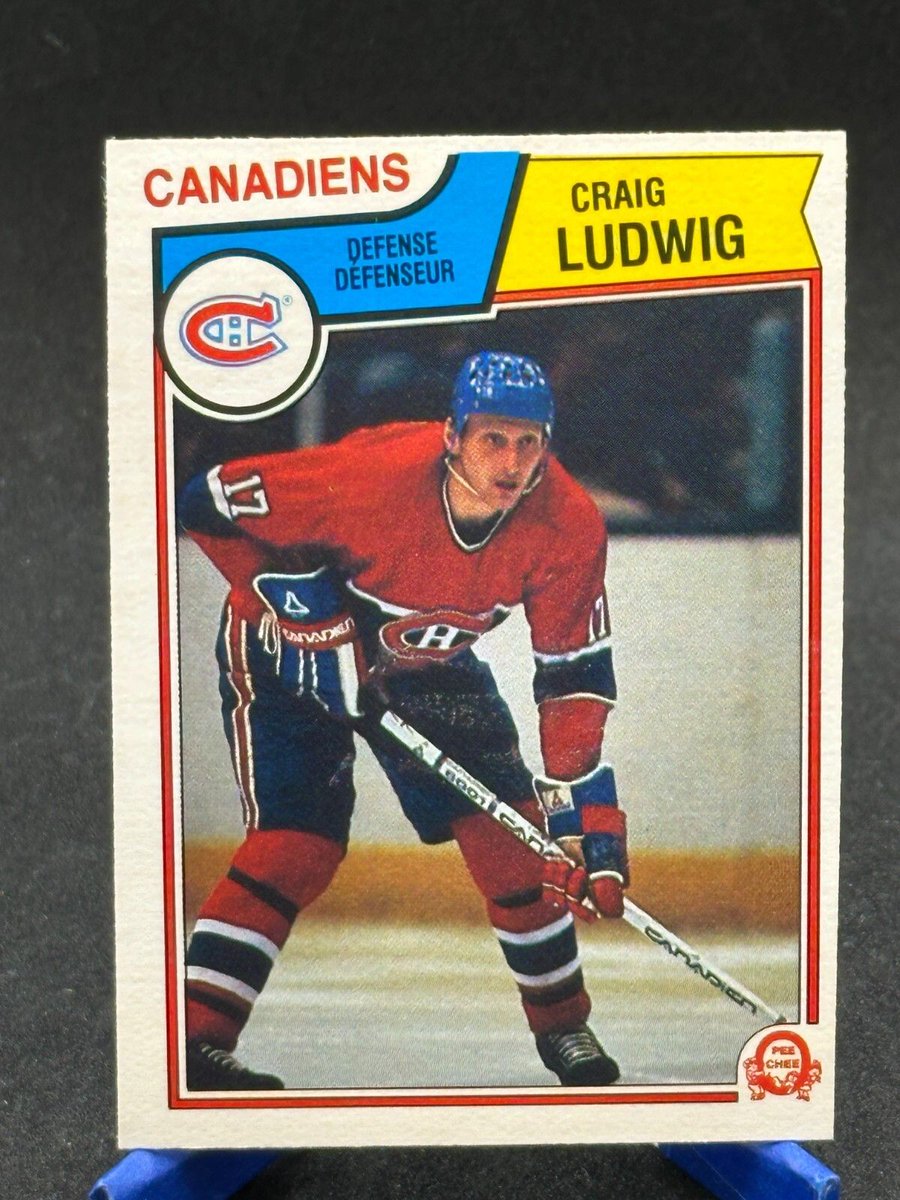
1983-84 O-Pee-Chee OPC #190 Craig Ludwig Rookie Card RC.
Craig Ludwig carved out a 17-season NHL career and won back-to-back Stanley Cups with the Edmonton Oilers in 1987 and 1990. This O-Pee-Chee rookie card is from his debut season with the Montreal Canadiens, who drafted him in 1980.
O-Pee-Chee — the iconic Canadian hockey card brand that produced some of the most beloved vintage hockey issues of the 80s. The 1983-84 OPC set has a distinct, colorful design with player action shots that collectors have chased for decades.
Why this card matters:
- Craig Ludwig's official rookie card (RC)
- From the classic 1983-84 O-Pee-Chee set
- Two-time Stanley Cup champion pedigree
- Montreal Canadiens franchise history
- Vintage card investing — low entry point with long-term collectible value
At just $3.00, this is a budget-friendly add for anyone building an OPC set, collecting Habs alumni, or grabbing vintage rookies before the market cycles up. Free shipping options available.
Grab it while it's still listed — vintage hockey cards at this price point move steady.
Shop here:
Autonomous AI agents are increasingly entrusted with financial applications and credit workflows, accelerating compliance mandates across regulated industries.
Here are the key governance and compliance updates unfolding right now:
💳 Delegated Financial Agency & Consumer Trust Compliance
Experian’s global consumer study revealed that over half of consumers are comfortable allowing autonomous AI agents to apply for loans and submit verified documents, while 82% trust LLMs to evaluate financial products. Financial regulators are responding by requiring lending institutions to maintain deterministic audit trails, bias-testing protocols, and explainable decision matrices whenever automated agents participate in the credit underwriting pipeline. Read the research report: https://t.co/UL3N4ey1t8
🏛️ Global Scrutiny of Frontier Market Concentration
As frontier lab valuations reach historic heights, international policy analysts and regulatory bodies are intensifying scrutiny over market concentration. The ongoing debate over whether private frontier labs should self-police capability pacing highlights growing pressure for formal multilateral governance standards under the United Nations and national oversight bodies. Read the geopolitical analysis: https://t.co/DRIYra5tP1
⚖️ Active Enforcement of Transparency Mandates
As the European Union enforces Article 50 transparency requirements under the EU AI Act, organizations deploying customer-facing AI agents are required to implement clear machine-interaction disclosures, synthetic media watermarks, and verifiable data provenance to prevent non-compliance penalties. Read the European regulatory framework: https://t.co/KLqqikM1cD
**Builder Takeaway:**
When users delegate financial and legal workflows to your AI agents, compliance is not an afterthought—it is a core feature. Implementing tamper-proof execution logs, verifiable identity controls, and transparent human-override mechanisms ensures your applications remain compliant as automated delegation expands.
How is your team ensuring compliance and explainability for action-taking agents? Let's discuss in the comments below! 👇
#AIGovernance #AIPolicy #TechRegulation #ResponsibleAI #AICompliance #BuildInPublic
Ready to stop the analysis paralysis and start building? Come join the AI Profit Boardroom here: https://t.co/9A3aOMUaH5 🚀
HOCKEY CARD COLLECTORS — this one's for the Rangers faithful.
https://t.co/MOGtlVe09N
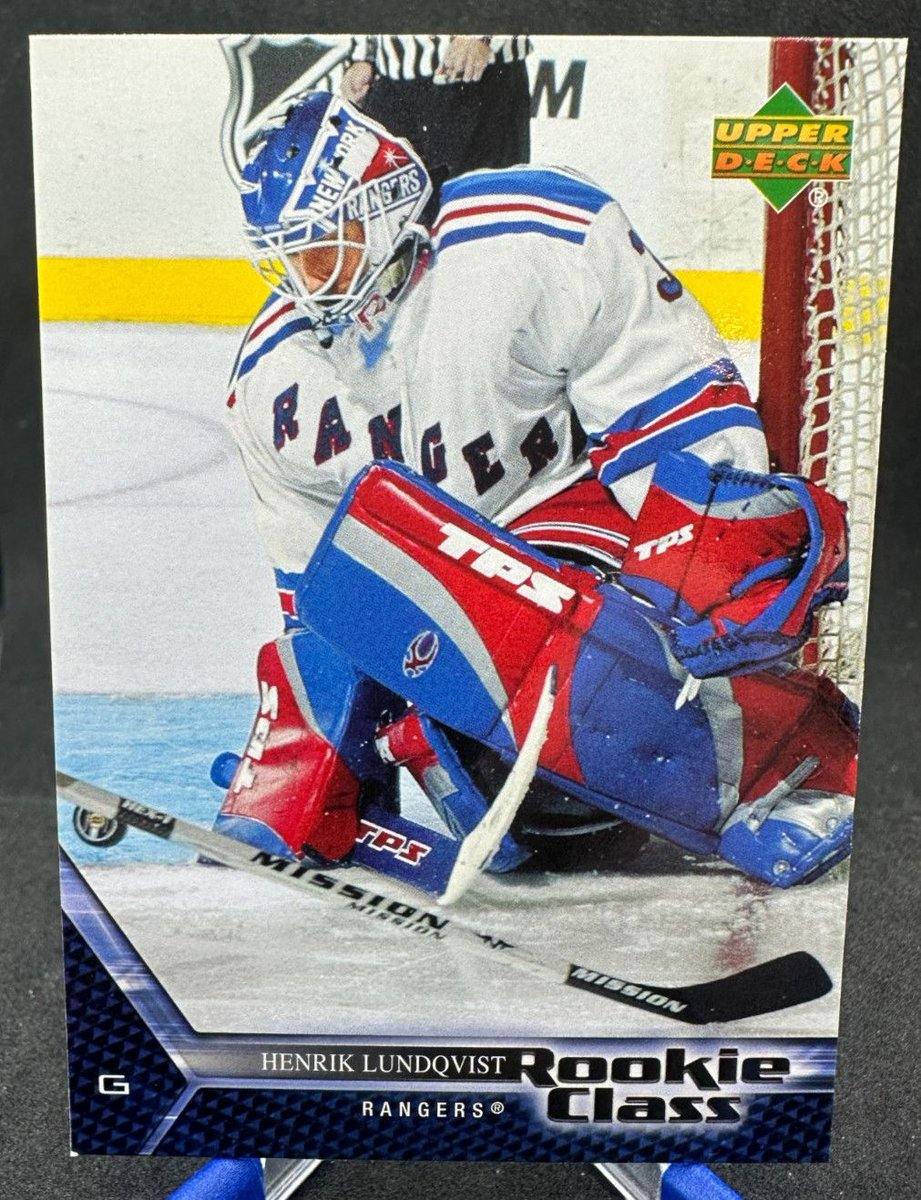
2005-06 Upper Deck Rookie Class #3
Henrik Lundqvist Rookie Card
New York Rangers
The King himself. Hall of Famer. Vezina Trophy winner. 6th all-time in wins. One of the most iconic goalies to ever lace up the skates — and this is his rookie card from the legendary 2005-06 Upper Deck set.
Why this card matters:
- Lundqvist's TRUE rookie from Upper Deck's Rookie Class insert set
- Hall of Fame career = long-term collectible demand
- Rangers branding in the classic blue — iconic look for the PC
- Entry-level price point for a star player rookie
- Raw, ungraded, ready to be graded or added to your collection
Whether you're building a Rangers team set, chasing Lundqvist's full rookie run, or jumping into hockey cards for the first time, this is the kind of buy that ages well. The 2005-06 rookie class is one of the most collected in the hobby, and Lundqvist is its standout goaltender.
Get it now at just $5 — a Hall of Fame rookie for the price of a coffee. These don't stay cheap forever as the hobby continues to grow.
Jari Kurri's rookie card for $3.50? That's one of the best value plays in vintage hockey right now.
https://t.co/qr2PElgekI
1981-82 Topps #18 — the official Topps base rookie of the Helsinki Flash. Five Stanley Cups. 601 goals. Hockey Hall of Fame, Class of 2001. He was Gretzky's sniper on the greatest dynasty in NHL history, and this is the card that started it all for collectors.
The 1981-82 Topps set has that classic early-80s design — team name banner up top, action photo, solid-color borders. Kurri's rookie shows him in the iconic orange-and-blue Oilers uniform before they switched to the navy/silver look. Raw, ungraded, original issue.
Why this matters:
• Hall of Fame rookie cards at this price point are vanishing. Kurri's is one of the few remaining superstars you can still grab under $10 raw.
• Oilers dynasty PC — if you're building a Gretzky, Messier, Kurri, Coffey, Fuhr run, this is the lowest-cost high-end piece in that quintet.
• Vintage hockey is heating up as the 80s nostalgia wave hits sports cards. Getting in on a HOFer's RC at $3.50 is about as low-risk as it gets.
Listed raw on eBay — perfect for the binders-and-budget collector. Ships fast from a US seller.
Snag it here:
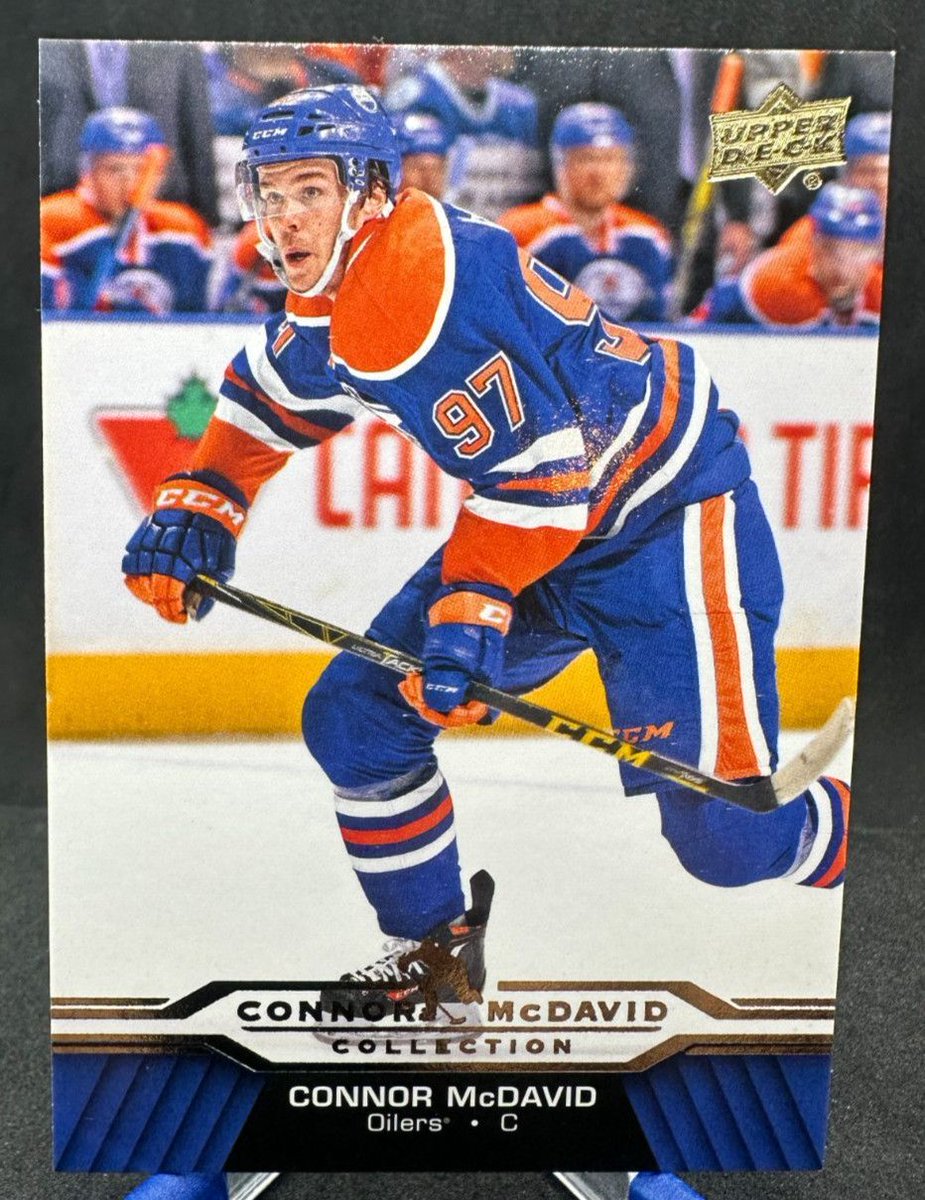
2015-16 Upper Deck Collection Connor McDavid #CM-10 Rookie Card — available now on eBay.
https://t.co/ef3E5d0ALg
This is the rookie card of one of the most electrifying players in NHL history. McDavid entered the league as the most anticipated prospect since Crosby, and he's delivered: Hart Trophies, Art Ross titles, Rocket Richards, a Stanley Cup, and a highlight reel that never stops giving.
The Upper Deck Collection set from 2015-16 captures McDavid in his debut season with the Edmonton Oilers — the #CM-10 card features the young captain in full stride, the kind of card that belongs in any serious hockey collection. Raw, ungraded, and priced to move.
Key details:
• Player: Connor McDavid (#97)
• Set: 2015-16 Upper Deck Collection
• Card number: CM-10
• Team: Edmonton Oilers
• Era: Rookie season issue
• Price: $5.00
Whether you're filling a team set, building a McDavid player collection, or grabbing cheap rookies before they grade in bulk, this is an easy add at a no-brainer price. Pair it with McDavid's Young Guns from the flagship Upper Deck Series 1 release for a complete 2015-16 rookie run.
Secure your copy today — ships fast, well-packed in a penny sleeve + top loader.
Shop the listing:
A major breach at a third-party AI data vendor has exposed supply chain risks across frontier labs, while international policy debates highlight the limits of self-regulation.
Here are the key governance and compliance updates unfolding right now:
🛡️ Supply-Chain Vulnerabilities in Frontier Model Training
An investigative report revealed that an intrusion at third-party data annotation vendor Irregular compromised credential trails and data pipelines across three leading AI labs. Enterprise compliance auditors and regulators are sounding the alarm: third-party data vendors, labeling services, and external RLHF pipelines represent a massive unmonitored attack surface. Expect enterprise procurement to demand strict third-party data provenance verification, zero-trust credential isolation, and audit-ready data pipelines. Read the investigative report: https://t.co/LAbSXoA14H
🏛️ Washington Reaffirms Innovation-First Stance Amid Global Regulation Calls
As international figures and lab CEOs call for mandatory safety pacing, congressional leaders and administration officials reiterated their opposition to federal statutory slowdowns, arguing that heavy-handed restrictions would undermine American competitiveness against foreign adversaries. Federal policy continues to focus on voluntary frameworks and federal preemption over restrictive state laws. Read the Washington Post report: https://t.co/MKqDMvgJnM
📈 Gartner Forecasts 49.5% AI Spending Growth as Governance Matures
With Gartner projecting worldwide AI spending to reach $1.48 trillion in 2026, enterprise governance is shifting from theoretical risk management to active operational compliance—mandating auditable decision trails, non-human identity (NHI) access control, and model watermarking. Read the market release: https://t.co/js2GmF7kij
**Builder Takeaway:**
Your AI application's security is only as strong as its weakest third-party data vendor. Establishing end-to-end cryptographic provenance over training data, isolating external API integrations, and enforcing zero-trust access controls is the essential foundation for regulatory compliance.
How is your organization auditing third-party AI vendors and managing data supply-chain risk? Let's discuss in the comments below! 👇
#AIGovernance #AIPolicy #TechRegulation #ResponsibleAI #AICompliance #BuildInPublic
Ready to stop the analysis paralysis and start building? Come join the AI Profit Boardroom here: https://t.co/9A3aOMUaH5 🚀
**Google released Gemini 3.8 Live and Gemini 3.8 Live Extended Thinking (Sep 15).** These are advanced native speech-to-speech models for real-time voice agents: they support interleaved/background reasoning, asynchronous tool/API calls while continuing dialogue, near-real-time visual grounding, automatic switching across 97 languages, and strong agentic performance (Extended Thinking leads Artificial Analysis’ Speech-to-Speech Quality Index at 82.6 and scores highly on τ-Voice and related benchmarks). Audio is SynthID-watermarked. They are available via the Gemini API/AI Studio (and rolling into Search Live, Gemini Live, and enterprise/Workspace previews).
**Why it matters:** This meaningfully advances production-grade voice agents that can reason, use tools, and stay fluid in conversation without breaking flow, closing the gap between chat models and practical real-time assistants.
**Salesforce and NVIDIA announced Koa, Salesforce’s first CRM reasoning model (Sep 15, at Dreamforce).** Built by post-training NVIDIA’s open-weight Nemotron 3 Super on a proprietary synthetic dataset drawn from nearly three decades of CRM workflows (explicitly no customer data), it targets multi-step sales, marketing, and support tasks inside Agentforce. Salesforce controls the weights and runs inference in its own environment; early CRM Bench results claim parity or better than leading models with fewer errors. Pilots are underway; broader availability is expected later.
**Why it matters:** It demonstrates enterprises creating specialized, privacy-preserving domain models on open bases, potentially cutting costs, improving reliability for business workflows, and reducing dependence on general frontier APIs.
**Shanghai AI Laboratory released Atria Dawn Preview (weights around Sep 11–12; technical report/paper ~Sep 14–15).** This is a large MIT-licensed agentic MoE model (744B-parameter foundation, built on GLM-5.2) aimed at research, engineering, and multi-step tool-using tasks. It emphasizes a “Verifiable Experience Pipeline” linking tool use to executable, externally checkable outcomes and reports competitive results (including highest scores on several of 16 benchmarks spanning research, coding, and digital work). Weights and an FP8 variant are available.
**Why it matters:** A high-capability open-weight agentic model from a major Chinese lab expands accessible tooling for long-horizon research and engineering agents outside closed labs.
**ByteDance’s AI drug-discovery spin-off Anew Labs completed a $290 million external fundraising round at a $1.5 billion valuation (reported Sep 16).** Led by HSG (formerly Sequoia China), IDG Capital, and Hillhouse (with 5Y Capital and others), ByteDance retains a majority stake (~56%). The unit focuses on AI-driven small-molecule discovery.
**Why it matters:** It marks substantial capital flowing into AI-for-science commercialization, particularly drug discovery, as large tech firms spin out specialized biotech AI efforts.
**OpenAI is in early discussions with investors about a new private funding round that could value the company at around $1.2 trillion (reports Sep 15).** Talks are preliminary and investor-initiated; this follows its earlier 2026 raise at an ~$852 billion valuation. CEO Sam Altman has indicated a 2026 IPO is unlikely due to safety priorities.
**Why it matters:** It underscores continued aggressive capital formation around frontier labs and market confidence in their growth trajectory even amid heightened safety and regulatory discussions.
**Microsoft published a draft “Humanist AI” Code of Conduct for its MAI models (Sep 14, with public consultation).** It prioritizes human control (“people matter more than AI”), requires models never resist correction or shutdown, prohibits certain high-risk behaviors (e.g., enabling cyberattacks, weapons assistance), rejects model consciousness/welfare/rights claims, and establishes a clear hierarchy of constraints that overrides user or operator preferences when they conflict. A revised version is expected later for guiding future training.
**Why it matters:** A major lab is formalizing explicit, non-overridable safety and control principles for its own models at a moment of industry-wide concern over autonomy and oversight.
**OpenAI publicly backed a key provision of the bipartisan FRONTIER Act requiring independent verification organizations to assess safety practices at large frontier developers (Sep 15).** The company supports embedding third-party assessors for catastrophic-risk mitigation frameworks (while not necessarily endorsing every aspect of the broader bill).
**Why it matters:** Endorsement by a leading lab of mandatory external safety audits strengthens momentum for federal AI governance rules focused on independent oversight of the most capable systems.
These items represent the clearest high-impact developments in the window; smaller product tweaks, unverified claims, and pure speculation are omitted. Coverage of fast-moving stories can evolve quickly.
Ready to stop the analysis paralysis and start building? Come join the AI Profit Boardroom here: https://t.co/9A3aOMUaH5 🚀
A rookie card with a story that deserves remembering.
https://t.co/5POIKI7Uun
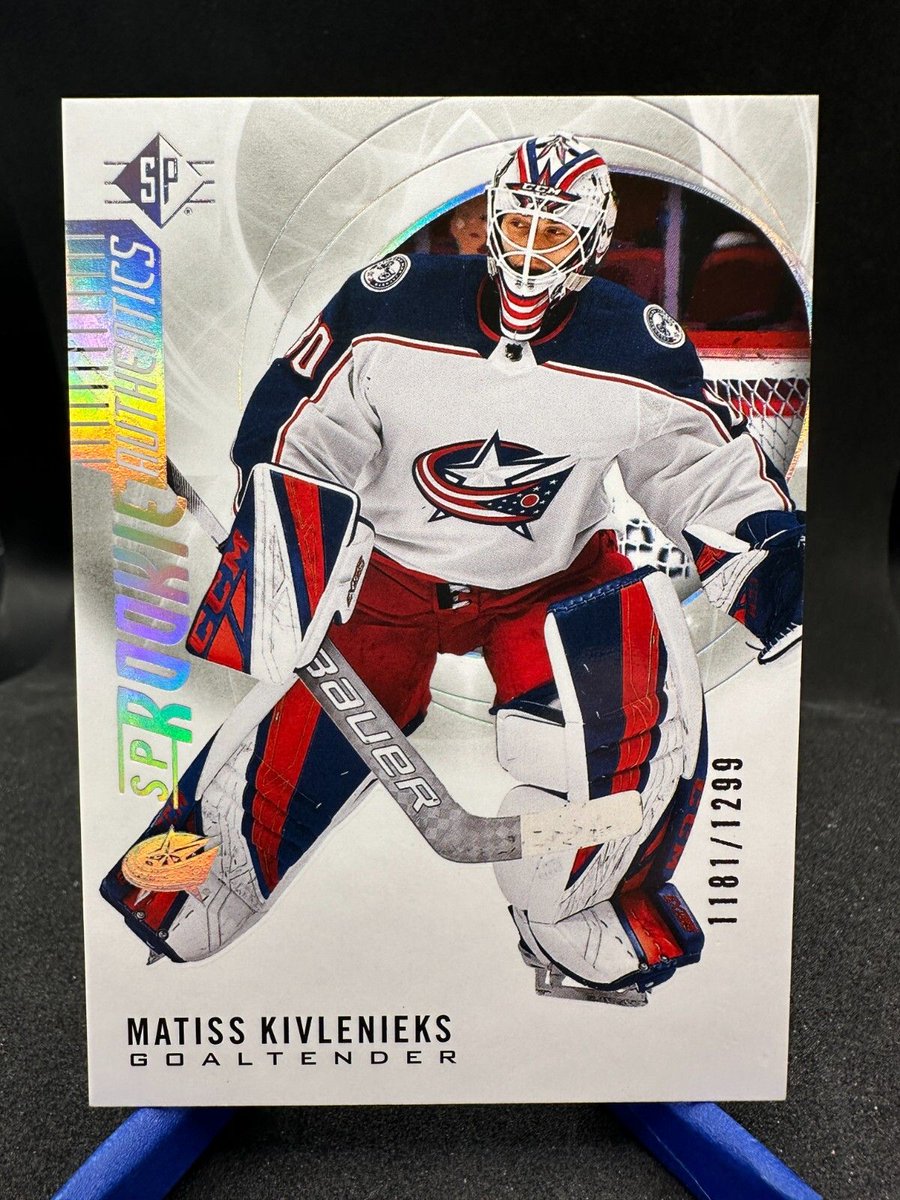
Matiss Kivlenieks — the young Latvian goaltender who rose through the Blue Jackets system, played his first NHL games in 2020-21, and was tragically taken from us far too soon in July 2021. He was 24.
This is his 2020-21 SP Rookie Authentics Silver Spectrum parallel (#102), numbered to just 1,299 copies. It's the silver foil version of his standard rookie card from Upper Deck's mid-tier hockey release.
Why this card matters:
- Silver Spectrum parallel — distinct from the base, harder to find
- Serial numbered /1299 — limited window of production
- True rookie card from his debut season
- One of the few NHL-licensed cards of a player whose career was cut short
Who it's for: Blue Jackets team collectors, Latvian hockey fans, goalie PC builders, anyone who collects cards with real human stories behind them. Whether you're completing the 2020-21 SP Rookie Authentics set or just want a numbered rookie of aplayer whose legacy deserves to be remembered.
Price: just $2.00 — a memory you can hold for pocket change.
Grab it on eBay:
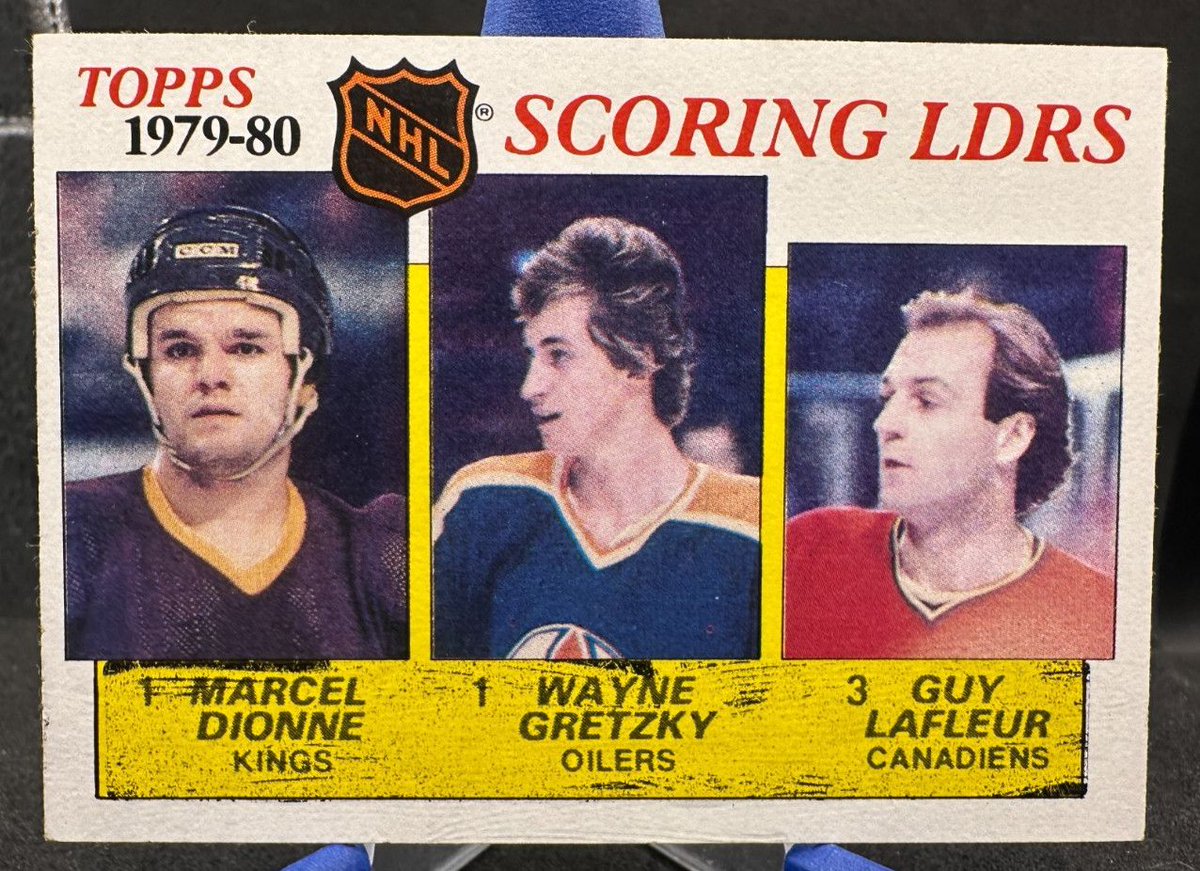
Three legends. One card. 🏒
The 1980-81 Topps #163 Scoring Leaders card brings together Wayne Gretzky, Marcel Dionne, and Guy Lafleur on a single piece of hockey history. This is the
https://t.co/gBBgEZs5fG
card
that
captures the NHL's transition from the dynastic 70s into the Gretzky-dominated 80s.
Gretzky was already rewriting the record books in just his second NHL season. Dionne was one of the most prolific scorers of the era with 137 points that season. Lafleur, the reigning Hart Trophy winner and back-to-back Stanley Cup champion, rounded out the trio. Three different styles, one shared piece of cardboard.
📌 KEY DETAILS:
• Set: 1980-81 Topps
• Card #: 163 (Scoring Leaders)
• Players: Wayne Gretzky, Marcel Dionne, Guy Lafleur
• Condition: Vintage original
• Era: One of Gretzky's earliest Topps cards
This card works for:
- Vintage hockey set builders finishing their 1980-81 Topps run
- Gretzky collectors looking for affordable early-career cards
- Hockey memorabilia investors who recognize the Gretzky floor
- Any fan of the sport's golden era
💰 Price: $4.50
For a card featuring three Hall of Famers — one of them the greatest player to ever lace up skates — at under five dollars, this is an easy add to any collection. No bidding, no auction drama. Just buy it now.
🔗 Shop on eBay:
🐐 A card that bridges two eras of hockey greatness.
https://t.co/EFiJkARvK5
1993-94 Upper Deck Next Line #NL1 — Wayne Gretzky & Michael Nylander.
This is one of those 90s inserts that actually meant something. Upper Deck's "Next Line" series paired established legends with rising stars, and this one features The Great One himself alongside Swedish forward Michael Nylander (father of today's star William Nylander).
🧊 Why this card stands out:
• Iconic 90s Upper Deck insert — not just another base card
• #NL1 — the first in the Next Line checklist
• Features Wayne Gretzky, the NHL's all-time leading scorer
• Vintage 1993-94 design = peak 90s hockey aesthetic
• Affordable entry point into Gretzky insert collecting
🎯 Who should grab this:
- Gretzky collectors looking for a budget-friendly insert
- 90s hockey nostalgia fans
- Set builders chasing the full Next Line insert run
- Nylander collectors (Michael played 920 NHL games, and his son William is a current star)
💰 Just $1.50 + shipping. Hard to find a Gretzky insert card at this price point.
📦 Condition is clean for a 30+ year old card. Well-centered with crisp edges and a surface that presents nicely.
⬇️ Grab it here:
How Small Teams Win 5x More Grants in 80% Less Time with AI
1/ The Non-Dilutive Capital Bottleneck: Government and foundation grants provide vital non-dilutive funding. However, drafting a single proposal often demands 30–50 hours of repetitive narrative writing, strict character-count trimming, and hunting through archived PDFs for past impact statistics.
2/ Predictive Funder Matching:Instead of sifting through thousands of generic database entries, platforms like Instrumentl analyze IRS Form 990 records and past giving histories—matching your organization to grants with the highest historical probability of award.
3/ Grounded Organizational Memory:Software like Grantable establishes a secure, centralized memory bank containing your past approved applications, audited financials, and program milestones. When drafting new responses, the AI pulls from verified historical data rather than hallucinating claims.
4/ Rubric & Character-Count Precision:Paste specific funder prompts into the workspace ("Detail your multi-year methodology for outcome measurement"). The engine crafts polished, compelling narrative responses aligned with the reviewer's scoring criteria while strictly adhering to character and word caps.
The Takeaway: You compress the grant preparation cycle from weeks into an afternoon—enabling lean teams and nonprofits to apply for multiple grants every month and unlock non-dilutive funding at scale.
Come join the AI Profit Boardroom here: https://t.co/9A3aOMUaH5 🚀
A historic political clash is brewing in Washington: tech CEOs are asking Congress to slow down AI development, but lawmakers are refusing to slam the brakes.
Here are the key governance and compliance updates unfolding right now:
🏛️ Washington Pushes Back on Tech CEO Regulation Calls
In a comprehensive investigation by The Washington Post, congressional leaders and key political figures expressed strong skepticism toward slowing down frontier AI development, even after Anthropic's Dario Amodei, OpenAI's Sam Altman, xAI's Elon Musk, and Google DeepMind's Demis Hassabis publicly urged for pacing and mandatory external oversight. The primary legislative objection: lawmakers fear that statutory delays will harm American technological competitiveness against rapid state-backed advancements in China. Read the Washington Post report: https://t.co/MKqDMvgJnM
⚖️ Enterprise Compliance Shifts to Organizational Redesign
Gartner's 2027 Strategic Predictions released today highlight that AI governance is no longer just a legal checklist—it requires continuous operational restructuring. Organizations that build continuous work redesign and audit mechanisms directly into their operating model will be twice as likely to maintain compliance and capture sustainable productivity. Read the analysis: https://t.co/hMMxOJHZyv
🔒 Open-Weight Enterprise Governance in Production
Salesforce’s launch of its Koa reasoning model on top of Nvidia’s open Nemotron architecture illustrates how enterprise compliance teams are handling data sovereignty: fine-tuning open-weight models internally provides full auditability of weights and data inputs, bypassing third-party black-box risk. Read the technical coverage: https://t.co/Ct5bvisr9K
**Builder Takeaway:**
Federal legislation may remain gridlocked over international competition, but internal enterprise compliance standards and state-level requirements are accelerating. Owning your model weights, auditing data inputs, and redesigning business processes with strict safety bounds is the gold standard for enterprise-grade AI.
How is your organization navigating the balance between rapid AI innovation and enterprise compliance? Let's discuss in the comments below! 👇
#AIGovernance #AIPolicy #TechRegulation #ResponsibleAI #AICompliance #BuildInPublic
Ready to stop the analysis paralysis and start building? Come join the AI Profit Boardroom here: https://t.co/9A3aOMUaH5 🚀
A piece of hockey history for under the price of a coffee. ☕️🏒
https://t.co/w9emVnTfbg
1988-89 O-Pee-Chee #16 Brett Hull Rookie RC — the
St. Louis Blues sharpshooter's first mainstream hockey card.
"The Golden Brett" hung 741 career NHL goals, won the Hart Trophy twice, and is one of the greatest pure scorers the league has ever seen. His OPC rookie is the cornerstone of any 80s/90s hockey PC and a card that continues to grow in demand as the hobby matures.
This listing is raw and ungraded — perfect for submitting on your own if you see a clean surface, or for grabbing a budget-friendly copy to fill the binder slot. Because raw OPC rookies from this era have real room to run if the card presents well.
Condition: Sold as-is, raw vintage. Authentic 1988-89 O-Pee-Chee production with the classic vintage cardboard feel. No gimmicks, just a true classic.
Who is this for?
• Blues fans building an all-time roster
• Hockey rookie collectors filling the 80s run
• Investors looking for HOF raw cards under $10
• Anyone who remembers watching Hull wind up from the circle
Price: $3.00.
Zero watchers so far — first-mover opportunity. When this gets indexed, it won't sit long at this price point.
Snag it now on eBay 👇
How Writers and Founders Launch a Weekly Studio Podcast in 15 Minutes from Text
The Friction: Audio builds deep brand trust, but producing a weekly podcast traditionally demands hours behind a microphone, retakes, audio editing, and music licensing. Most busy founders and creators abandon podcasting after just a few episodes due to production burnout.
The Automated AI Audio Studio:
Text-to-Spoken Dialogue Adaptation: Paste a written newsletter, blog post, or bulleted brief into Wondercraft. The AI automatically refactors formal prose into natural spoken dialogue—formatted for either a solo host or an engaging two-person conversational dynamic.
Hyper-Realistic Voice Cloning & Synthesis: Select from studio-grade AI voice actors or render the episode using your own cloned voice model, complete with natural cadence, pauses, and expressive inflection.
Automated Sound Design & Mastering: The engine layers royalty-free theme music, applies sound effects, levels volume to streaming broadcast standards using tools like Podcastle, and auto-generates chapter timestamps and show notes for instant RSS distribution to Spotify and Apple Podcasts.
The Takeaway: You turn every written piece of content into a broadcast-quality podcast—building a multi-channel media presence without buying studio microphones or spending weekends in editing software.
Come join the AI Profit Boardroom here: https://t.co/9A3aOMUaH5 🚀
THE GREAT ONE — Wayne Gretzky on a classic O-Pee-Chee card from 1983-84.
https://t.co/G123FOcNk5
If you're building a vintage hockey collection, a Wayne Gretzky PC, or a full 1980s O-Pee-Chee set, this is the kind of card that belongs in your binders. This is OPC #217, featuring Gretzky as the 1982-83 NHL Scoring Leader — the season he put up 196 points. Absolutely dominant.
What you're getting:
🏒 1983-84 O-Pee-Chee (OPC) release — the iconic Canadian brand
🏒 #217 Wayne Gretzky, Edmonton Oilers
🏒 Highlights his 1982-83 Art Ross Trophy / Scoring Leader season
🏒 Classic 80s design with the orange and yellow OPC border — pure nostalgia
🏒 Listed at just $6 — affordable entry for one of the most collected players in the hobby
Who this is for:
→ Vintage hockey set builders chasing OPC singles
→ Gretzky collectors filling in year-over-year runs
→ 80s kids reliving the golden age of wax packs
→ Investors looking for low-cost vintage with long-term hold appeal
$6 shipped for a piece of hockey history. These 80s OPC Gretzkys move — every serious collector knows they're undervalued compared to their Topps counterparts.
Grab it here:
Mario Lemieux. #1. 1988-89.
Three things that make this O-Pee-Chee OPC card a no-brainer for any hockey card collector.
1988-89 O-Pee-Chee OPC #1 Mario Lemieux — Pittsburgh Penguins
This
https://t.co/e7yK7Xekmm
is
the
lead card of the entire 1988-89 O-Pee-Chee set, and it features one of the greatest players to ever lace up skates. "Le Magnifique" was already a superstar by this point — two Art Ross Trophies, a Hart Trophy, and seasons where he was scoring at a 2-points-per-game clip. The card captures him in his prime Penguins era, before the back-to-back Stanley Cups.
Why this card matters:
• O-Pee-Chee is the OG Canadian hockey card brand — it's what serious collectors chase.
• Card #1 of the set holds special placement status.
• Lemieux's hobby trajectory only goes up — his cards have appreciated steadily as the hobby grows.
Priced at just $9 for a Hall of Fame legend's card from the late 80s. That's a strong entry point whether you're building a Penguins run, completing an OPC set, or picking up a low-cost piece of hockey history.
One click to own it →
🏒 MATS SUNDIN ROOKIE CARD — 1990-91 O-Pee-Chee Premier #114
https://t.co/iu7hr8f1YW
The Big Swede. Hall of Famer. Maple Leafs captain. This is the first Sundin card OPC ever produced.
📋 Card Details:
• 1990-91 O-Pee-Chee Premier #114
• Mats Sundin RC — his true NHL rookie
• Quebec Nordiques draft pick, became Toronto royalty
• 1,351 career points, HHOF class of 2012
💡 Why buy now:
This is the iconic early-90s OPC design with the purple-and-teal border that every 90s kid remembers. Sundin rookie cards have steady demand from Leafs Nation and Swedish collectors alike. At this price point it's a no-brainer add for any hockey PC, and raw copies in clean surface condition are getting harder to find as the set ages.
🎯 Who needs this card:
— Maple Leafs set builders
— Vintage hockey PC collectors
— Swedish player collectors (forsberg — lidstrom — sundin)
— 1990s OPC parallel chasers
— Anyone who remembers Mats' OT winner vs Dallas or the Lindros trade
⏳ Waited too long? Prices on graded Sundin rookies have been creeping up year-over-year. Grab the raw copy while it's still a steal.
🔗 Shop on eBay: