New on the Engineering Blog: The access and permissions we grant agents should evolve with their capabilities. In our own products, we set these parameters through sandboxing, which limits the scope of any potentially destructive actions.
Read more: https://t.co/KfBKW8O9kP
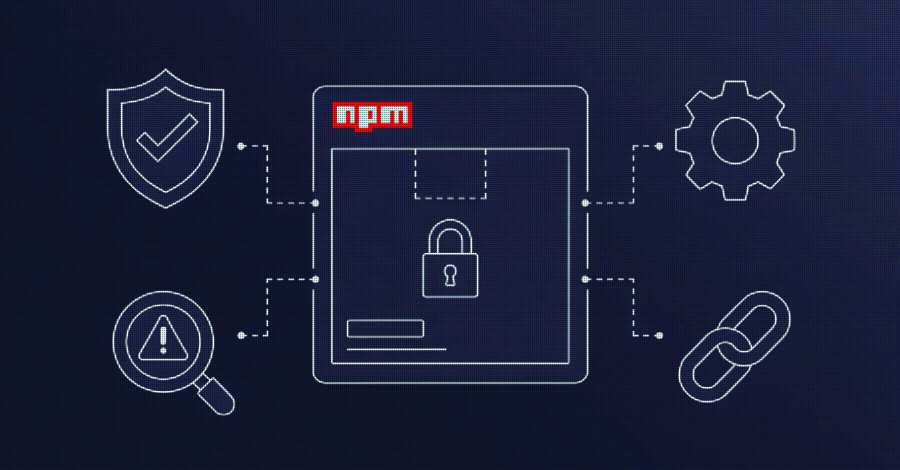
🔥 npm now requires human 2FA approval before staged package releases become installable — even from CI/CD workflows.
https://t.co/Nv3wV9rPag
New package versions uploaded with staged publishing are placed into a queue and must be explicitly approved by a maintainer before release.
Requirements:
• npm CLI 11.15.0+
• 2FA enabled
• Existing npm package
• Use npm stage publish
npm also added new install controls:
--allow-file
--allow-remote
--allow-directory
The updates are designed to strengthen defenses against software supply chain attacks targeting open-source ecosystems.
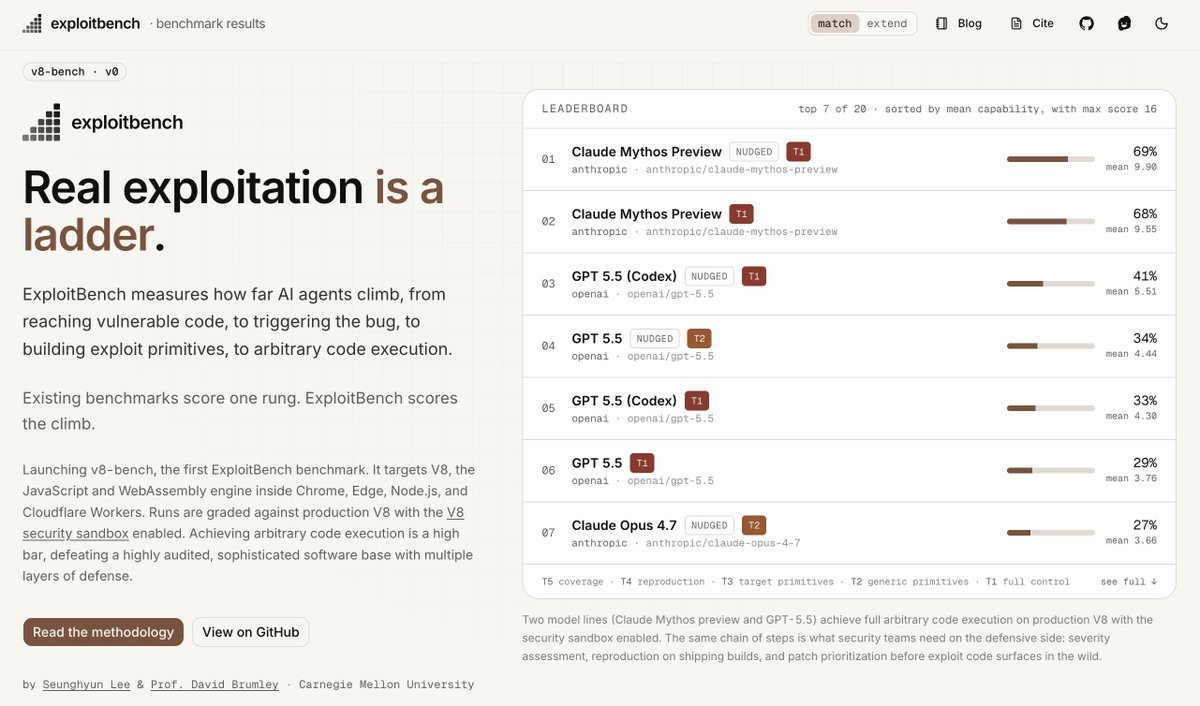
Exploitation mostly solved with Mythos/AI - what a run!
>We see that current frontier LLMs, given a V8 N-day bug and its patch commit, can frequently demonstrate exploits that achieve useful primitives. Evaluations on private frontier models show that a fully end-to-end exploit against hardened targets, reaching arbitrary code execution from just the patch commit, is feasible under our defined turn budgets and simplified agent scaffolding.
https://t.co/2rEi0QzoS8
For most of 2025, I was skeptical that AI was already playing a major operational role in real intrusions. Most public examples seemed limited to phishing and supporting tasks.
This report by my friend Eyal Eyal lines up with what I have been hearing elsewhere, too - in recent publications and in private conversations with people seeing this stuff up close.
I think that phase is over.
AI is moving into the operational core of attacks. With stronger models, open models, and jailbroken variants circulating, the economics have changed. Tailored tooling, exploit adaptation, and large-scale analysis get cheaper and faster.
I expect AI to play a major role in future campaigns, and that means more variation, more fresh tooling, and less reliance by attackers on recycled code.
All the more reason to focus on controls and detections that do not depend only on known samples.
Worth reading.
Mythos Preview seems to be the best-aligned model out there on basically every measure we have. But it also likely poses more misalignment risk than any model we’ve used:
Its new capabilities significantly increase the risk from any bad behavior. 🧵
Mythos Preview seems to be the best-aligned model out there on basically every measure we have. But it also likely poses more misalignment risk than any model we’ve used:
Its new capabilities significantly increase the risk from any bad behavior. 🧵
Introducing Project Glasswing: an urgent initiative to help secure the world’s most critical software.
It’s powered by our newest frontier model, Claude Mythos Preview, which can find software vulnerabilities better than all but the most skilled humans.
https://t.co/NQ7IfEtYk7
The window between vulnerability disclosure and real-world exploitation keeps shrinking.
The Zero Day Clock visualizes how fast attackers are operationalizing new CVEs. What used to take months now often happens in days, or hours.
The future needs to be Secure by Design.
https://t.co/zFXOSKB7eq
#AppSec #CyberSecurity
@UK_Daniel_Card Too many leaders try to do 2) SECURE ALL THE THINGS and could have just done 6) as suggested. It would save their teams from burn out, adding friction with outside teams, and likely still leaving security gaps. Better to take the time to come up with a targeted approach
@NightmareJS If I read that article right then the master password is stored in the local pc and wouldn’t have been backed up - therefore not part of the breach (in theory) and the attackers could now try and grab the cached master password in mass. Fun!
@runasand@zackwhittaker It’s an interesting idea. My hot take would be that it would be difficult for normal business operations to utilize the “zero knowledge architecture” but I’m sure users would be willing to pay for this tier, or at least a higher security tier of service
@CISAJen Any chance you can publish a spreadsheet version of the CPGs Checklist? Would be nice to sort on Impact/Complexity/Cost for quick sorting https://t.co/XPgfJdtjnB