I have several affiliations and represent several organizations. My tweets are a reflection of my personal interests. Those other institutions have their own Twitter accounts.
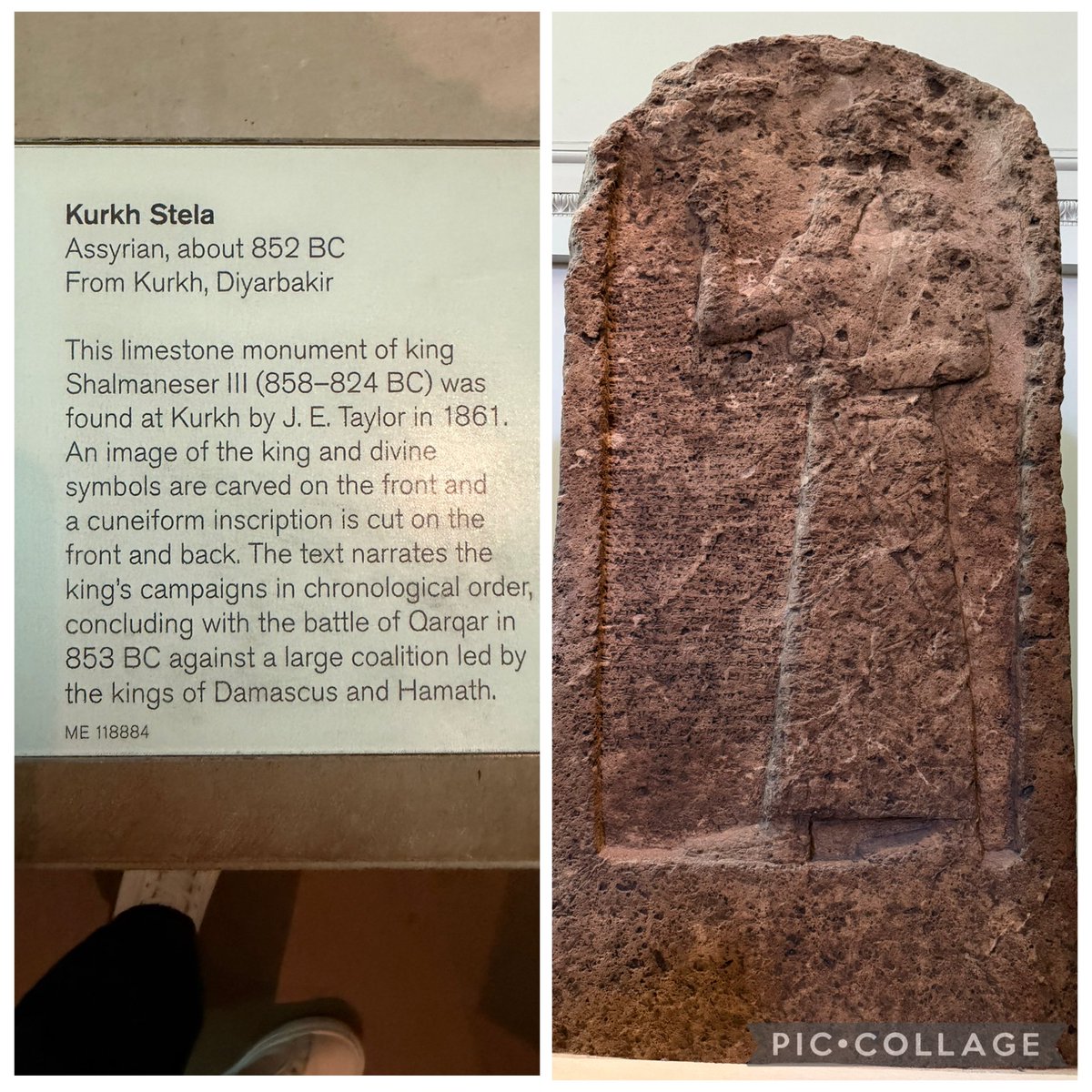
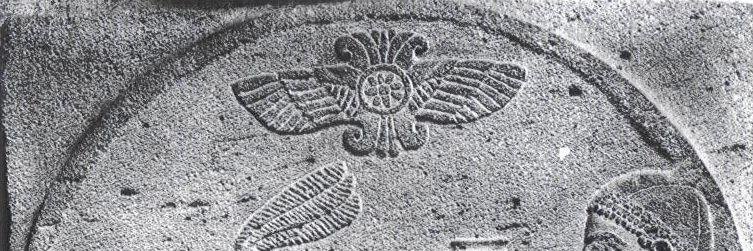
Amid (modern-day Diyarbakır) was an Assyrian city. These 2 Assyrian monuments discovered in Amid are now displayed in the British Museum. Amid was also an important center of the Church of the East and I believe served as the patriarchal seat during certain periods of its history
The Classical Syriac word for “pen” is qanyā (ܩܢܝܐ), a direct descendant of the Akkadian qanû (“reed”). However, in modern Assyrian, the more common word is qalama, which is cognate with Arabic qalam. Both ultimately derive from the Greek kalamos, meaning “reed” or “reed pen.”
The #Syriac (#Aramaic) word of the day is ܟܘܡܪܐ (kumrā), "priest," Pronounced "kumro." A traditional word and used more in the sense of one who mourns or is sad on behalf of the community. Used for the Patriarch and Catholicos. #Assyrian#Aramaic#Languages#WOTD
The #Syriac (#Aramaic) word of the day is ܛܘܒܐ (ṭūḇā), "blessedness." Pronounced "ṭuḇo." This is what we find in the Hebrew אַשְׁרֵי (ʾashrē) or Greek μακάριος; the Beatitudes that open the Sermon on the Mount or the beginning of Psalm 1 #Assyrian#Aramaic#Languages#WOTD
The #Syriac (#Aramaic) word of the day is ܡܦܩܢܐ (mapqānā), "exit/redemption." Pronounced "mapqono." The exodus motif fulfilled in Christ’s passage from death to life. #Assyrian#Aramaic#Languages#WOTD
Can you guess the root?
The #Syriac (#Aramaic) word of the day is ܣܦܪܐ (seprā), "book/document/scroll." Pronounced "sefro." Cognate with Hebrew סֵפֶר (sefer); the sacred writings handed down through the generations. #Assyrian#Aramaic#Languages#WOTD
@habahurhahu@Elie42450128 Okay, now you're making it fun with those screen grabs! It's in Akkadian and Old Aramaic for "street" so it looks pretty old.
The #Syriac (#Aramaic) word of the day is ܫܘܩܐ (šūqā), "market/street." Pronounced "shuqo." Cognate with Arabic سُوق (sūq); the public squares where the Gospel was proclaimed by the apostles. #Assyrian#Aramaic#Languages#WOTD
Anna Faris learned the hard way 😏
This is a repost from years ago. Oldie but still one of my favorites for the ladies 🤪
Come see me on tour to hear the full joke uncensored!
🎟️
Come see me on tour! 👇
• 3/20-3/21– Point Pleasant, NJ - Uncle Vinnie...
@awmanspider@subdeacondaniel I don't know bro. I'm more scandalized by the fact that there are Copts in that video calling it "Rah-kōt" and not Rakotee/Rakoty. It's almost as bad as when the Arabs came to Alexandria and thought the first two letters were "the" al-eskandaria.
our knee can heal itself. It just needed Germany to hand it the blueprint.
Doctors in Stuttgart did something quietly radical. They built a gel that lets damaged joint cartilage rebuild itself, no implants, no metal, no major reconstruction.
It's called ChondroFiller liquid.
Here's how it works.
A surgeon injects the liquid into the damaged spot during a single minimally invasive arthroscopic procedure. Within 3 to 5 minutes, it hardens into a stable matrix, molding perfectly to the exact shape of the lesion.
Then the real magic starts.
That matrix becomes a scaffold. Your own repair cells migrate in from the surrounding tissue, multiply, and slowly transform into chondrocytes, the cells that actually build cartilage. Over the following months, your body replaces the gel with brand-new tissue grown from you.
No fibrin glue. No drilling into the bone.
This isn't a fringe experiment, either.
The device is made by Meidrix Biomedicals, developed alongside scientists at the Fraunhofer Institute for Interfacial Engineering and Biotechnology in Stuttgart. It's been CE-certified since its market launch in 2013 and has already been implanted in more than 20,000 patients worldwide.
The numbers back it up.
In one study of 26 patients with hip cartilage defects larger than 2 cm², 81% achieved good or excellent results. MRI scans confirmed significant healing in over 90% of cases.
One important caveat: it's built for small, focal cartilage defects, not advanced arthritis. Patients with severe osteoarthritis saw weaker results.
But for the right injury, this flips the script entirely.
Instead of replacing the joint, you give it the tools to repair itself.
Source: Meidrix Biomedicals / Fraunhofer Institute IGB, Stuttgart; clinical data via Kazinform News Agency