So, after meeting with Putin and Xi, Trump makes a surprise call to European leaders to pressure them to stop all aid to Ukraine.
Now do you get it. Trump was with Putin all along--from the start. And he will be with Putin to the end.
https://t.co/tSRmjGhB2N
On this day in 1943, U.S. Marines assault Tarawa Atoll. More than 3,000 Americans will become casualties in the three-day fight to secure this tiny foothold in the Gilbert Islands. Of the nearly 4,000 Japanese defending Tarawa, all but 17 perished.
Today in 1983, 100 million Americans watch 'The Day After' on prime-time TV. President Reagan, who screened an advanced copy, is reportedly so rattled by its depiction of nuclear war, it fuels his growing interest in arms control.
See https://t.co/MEHvdIc51a
Today in 1917, British tanks punch though the German lines at Cambrai, France. Although more than a third of the 476 hulks taking part in the offensive break down, get stuck or are damaged by artillery, they help pull off history's first successful large-scale armour attack.
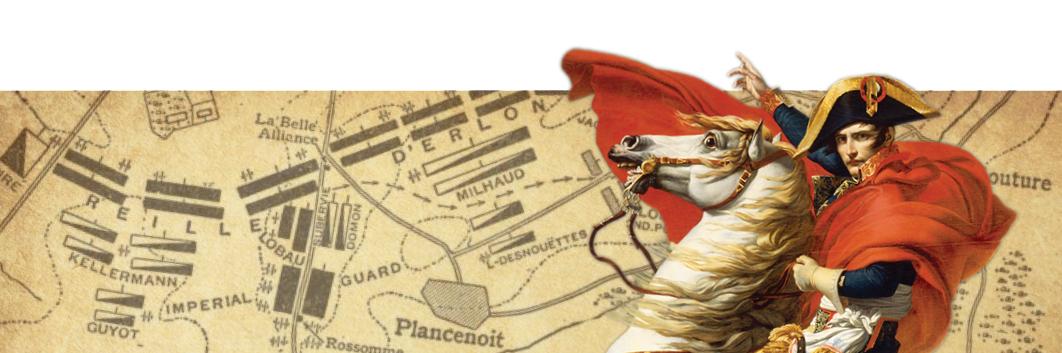
On this day in 1806, Napoleon Bonaparte sets out to bankrupt Great Britain with his "Continental System." The massive trade embargo seeks to ban all European commerce with the United Kingdom, a country many at the time consider to be "a nation of shopkeepers."
On this day in 1863, Abraham Lincoln delivers his famous Gettysburg Address. The president's critics initially dismiss the 90-second speech as "ludicrous" and "silly." It will later be held up as the most brilliant piece of oratory in U.S. history.
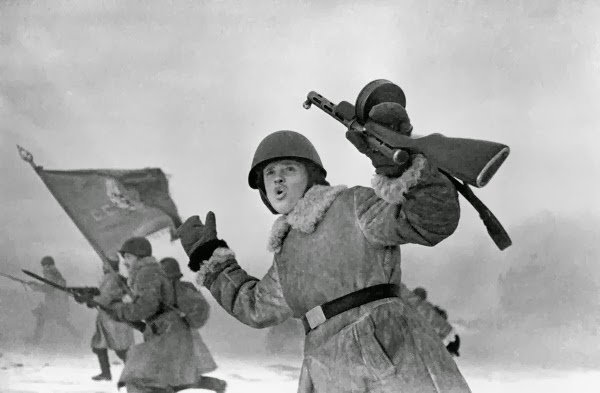
Today in 1942, the Soviets launch an offensive against the German army in Stalingrad. Operation Uranus, which involves a million troops, 800 tanks and 13,000 guns, results in the encirclement of all Axis forces inside the city. Within three months the Red Army retakes Stalingrad.
Today in 1812, Napoleon's retreating army is mauled by the Russians at Krasnoi. Amid the fighting, Marshal Ney famously grabs a musket and helps cover the French withdrawal. The action makes him a legend among the rank-and-file and earns him the nickname "Bravest of the Brave."
Today in 1916, the Allies abandon the five-month old Somme offensive. The British suffer 420,000 killed, wounded or captured in the 140-day battle while pushing the Germans back just six miles. French losses are 200,000. The Kaiser's forces suffer 440,000 casualties.
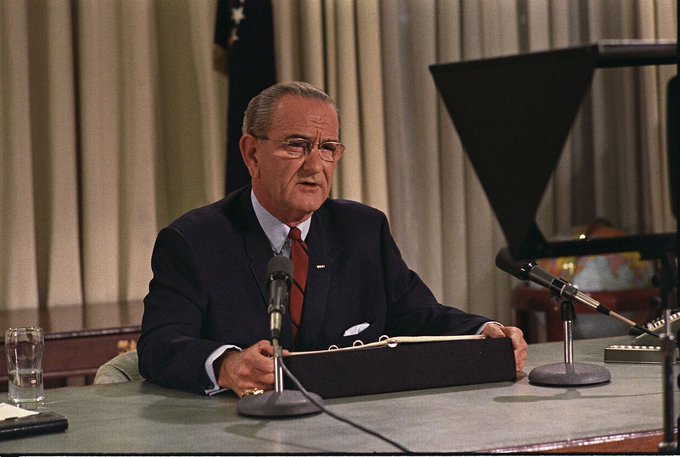
On this day in 1967, President Lyndon B. Johnson tells the American public that victory in the Vietnam War is in sight. "We are inflicting greater losses than we're taking," he proclaims in a televised address to the nation. "We are making progress."
Today in 1796, a 27-year-old Napoleon Bonaparte leads France's Army of Italy to victory against the Austrians at Arcole. In the three-day battle's most celebrated moment, the future French emperor reportedly grabs a flag and waves his troops on before aides pull him to safety.
On this day in 1939, the Nazis shut down all universities in Czechoslovakia. 1,200 students are rounded up and sent to concentration camps for protesting the German occupation. #InternationalStudentsDay will be later established to commemorate these events.
Today in 1810, Sweden declares war on Great Britain. Reluctantly forced into it by Napoleon, Stockholm will take absolutely no military action against the United Kingdom. To mark the anniversary of this event, here's a pic from the era of Swedes not fighting anyone.
Today in 1532, Francisco Pizarro and 168 Spanish soldiers defeat 80,000 Incan warriors encamped at Cajamarca, Peru. The massive army breaks and flees after the conquistadores take Emperor Atahualpa by surprise during a peaceful parlay and clap him in irons. See: https://t.co/umVlVL9qZj
On this day in 1940, the Nazis wall off the Warsaw Ghetto. As many as 400,000 Jews will be confined to the 1.3 square mile district where they will be systematically brutalized, starved and rounded up for deportation to death camps.
Today in 1864, William Tecumseh Sherman begins his famous March to the Sea. For 35 days, Union troops cut a 250-mile path of scorched earth through the heart of the Confederacy from Atlanta to Savannah. According to some estimates, it takes Georgia until 1920 to fully recover.
Today in 1956, the first contingent of UN peacekeepers arrive in Egypt following the Suez Crisis. United Nations Emergency Force I (UNEF I) is made up of troops from 11 countries including Brazil, Canada, Denmark and India. It will remain in place until the Six Day War in 1967.
On this day in 1910, Eugene Burton Ely launches his Curtiss pusher bi-plane from the deck of the USS Birmingham in Hampton Roads, Virginia and becomes the first pilot in history to takeoff from a ship.
More here: https://t.co/a4bwi0kWtL
On this day in 1965, 1,000 American troops are in action in Vietnam's Ia Drang Valley. It's the first major battle between the U.S. Army and the communist NVA. Over five days of intense fighting, American forces suffer 50 per cent casualties.