The 318th Cyberspace Operations Group brings together highly specialized Airmen responsible for developing, integrating, and delivering cyberspace capabilities in support of the Air Force and Joint Force.
Assigned to the 67th Cyberspace Wing, the group leads organizations focused on cyber operations, capability development, and mission integration—helping turn advanced technology and technical expertise into operational effects across the cyber domain.
Its Airmen work at the intersection of innovation and combat capability, where software, networks, access, intelligence, and mission systems all play a role in creating decision advantage and strengthening the force against increasingly sophisticated threats.
The 318th COG helps ensure cyberspace capabilities are not only developed, but operationally relevant, resilient, and ready to support warfighters around the world.
Military Metal Art is honored to bring the emblem of the 318th Cyberspace Operations Group to life.
Honoring Sacrifices. Forging Patriotism.
The 354th Operations Group brings together the flying, training, range, and operational support capabilities that make Eielson Air Force Base a critical hub for combat airpower in Alaska and the Indo-Pacific.
Assigned to the 354th Fighter Wing, the group oversees a diverse mission set that includes F-35A Lightning II operations, F-16 homeland defense, large-force combat training, range operations, and the support functions required to keep those missions integrated and ready.
Its squadrons and detachments help prepare Airmen and allied partners for high-end conflict through realistic training, advanced tactics, and operations conducted across the vast Joint Pacific Alaska Range Complex.
From generating fighter sorties to supporting RED FLAG-Alaska and maintaining the airspace and infrastructure required for complex exercises, the 354th OG helps turn Alaska’s unique geography into a strategic advantage.
The group’s mission reflects the importance of readiness in a region where the Arctic and Indo-Pacific increasingly intersect.
By combining combat capability, training, and operational expertise under one organization, the 354th Operations Group helps ensure forces are prepared to respond quickly and fight effectively when called upon.
Military Metal Art is honored to bring the emblem of the 354th Operations Group to life.
Honoring Sacrifices. Forging Patriotism.
The 354th Operations Group, Detachment 1 helps bring some of the Air Force’s most demanding large-force combat training to life from Joint Base Elmendorf-Richardson, Alaska.
As part of the 354th Operations Group, Det 1 supports the planning and execution of RED FLAG-Alaska, bringing together U.S., joint, and allied forces in realistic combat scenarios across the vast Joint Pacific Alaska Range Complex.
Operating from JBER, the team helps connect aircraft, airspace, ranges, and partner nations into a unified exercise designed to sharpen interoperability and improve combat readiness throughout the Indo-Pacific.
Military Metal Art is honored to bring the emblem of the 354th Operations Group, Detachment 1 to life.
Honoring Sacrifices. Forging Patriotism.
The 18th Fighter Interceptor Squadron stands ready to defend the skies over Alaska and protect the approaches to North America.
Based at Eielson Air Force Base and assigned to the 354th Operations Group, the squadron flies the F-16 Fighting Falcon in support of aerospace control and homeland defense across the Alaska Theater of Operations.
In 2024, the unit returned to its historic Fighter Interceptor designation, shifting from its aggressor mission back toward the air defense role that has defined much of its legacy.
That legacy stretches back to World War II, when the squadron fought in the Northern Pacific and helped defend Alaska during the Aleutian Campaign. Decades later, the mission has come full circle—once again placing the 18th on the front line of protecting American airspace.
Today, its Airmen maintain the readiness, discipline, and rapid-response capability required to identify, intercept, and respond to potential airborne threats in one of the nation’s most strategically important regions.
Military Metal Art is honored to bring the emblem of the 18th Fighter Interceptor Squadron to life.
Defending Alaska. Defending the Homeland.
Honoring Sacrifices. Forging Patriotism.
The 354th Range Squadron provides the battlespace where Airmen can train against realistic threats before they ever face them in combat.
Assigned to the 354th Operations Group at Eielson Air Force Base, the squadron manages the Air Force portion of the Joint Pacific Alaska Range Complex, the largest over-land training range in the Department of Defense.
Its vast airspace and instrumented ranges give U.S., joint, and allied forces the room and capability to execute large-scale, high-end combat training.
The squadron brings together airspace management, scheduling, engineering, maintenance, threat systems, and range support to create training environments that replicate the challenges aircrews could encounter in a real fight.
From electronic threat emitters and tactical targets to the enormous airspace needed for complex maneuvering, the 354th RANS helps make exercises such as RED FLAG-Alaska as realistic and demanding as possible.
In the skies over Alaska, the men and women of the 354th Range Squadron help ensure combat crews can test their skills, sharpen their tactics, and learn difficult lessons in training rather than in combat.
Military Metal Art is honored to bring the emblem of the 354th Range Squadron to life.
Honoring Sacrifices. Forging Patriotism.
The 355th Fighter Squadron brings combat-ready fifth-generation airpower to the skies over Alaska and the Indo-Pacific.
Assigned to the 354th Operations Group at Eielson Air Force Base, the squadron operates the F-35A Lightning II, combining stealth, advanced sensors, precision weapons, and networked capabilities to help establish air superiority in some of the world’s most demanding operating environments.
From Arctic training ranges to large-force exercises with joint and allied partners, the Airmen of the 355th sharpen the tactics, coordination, and readiness required to respond quickly and operate effectively across vast distances.
Their mission reflects the strategic importance of Alaska—positioning advanced fighter capability at the crossroads of the Arctic and Indo-Pacific while strengthening the United States’ ability to deter aggression and, when necessary, fight and win.
Military Metal Art is honored to bring the emblem of the 355th Fighter Squadron to life.
Honoring Sacrifices. Forging Patriotism.
The 353rd Combat Training Squadron helps create the realistic, large-scale training environments that prepare U.S., joint, and allied aircrews for the demands of modern combat.
Assigned to the 354th Operations Group at Eielson Air Force Base, Alaska, the squadron plays a central role in RED FLAG-Alaska—a series of Pacific Air Forces commander-directed exercises designed to provide realistic combat training across missions including offensive counter-air, interdiction, close air support, and large-force employment.
Working across the vast Joint Pacific Alaska Range Complex, the men and women of the 353rd CTS help bring together aircraft, aircrews, planners, support teams, and international partners in demanding scenarios that replicate the complexity and pressure of real-world operations.
The squadron also carries a distinguished heritage reaching back to World War II, connecting today’s advanced combat training mission with generations of Airmen who helped build its legacy.
Military Metal Art is honored to bring the emblem of the 353rd Combat Training Squadron to life.
Honoring Sacrifices. Forging Patriotism.
The 354th Operations Support Squadron provides the planning, coordination, intelligence, airfield support, and operational expertise that help keep Eielson Air Force Base’s flying mission ready for action.
Assigned to the 354th Operations Group, the squadron supports the wing’s F-35A Lightning II operations and the broader training mission that makes Eielson one of the Air Force’s most important locations for preparing combat airpower in the Indo-Pacific.
From mission planning and current operations to weather, intelligence, airfield management, and aircrew support, the 354th OSS helps create the conditions that allow flying squadrons to train effectively, deploy rapidly, and operate safely in one of the world’s most demanding environments.
Military Metal Art is honored to bring the emblem of the 354th Operations Support Squadron to life.
Honoring Sacrifices. Forging Patriotism.
The 356th Fighter Squadron brings fifth-generation combat airpower to one of the most strategically important regions in the world.
Assigned to the 354th Operations Group at Eielson Air Force Base, Alaska, the squadron operates the F-35A Lightning II and is tasked with offensive counter-air missions in support of U.S. Indo-Pacific Command.
Operating from the Arctic, the 356th FS provides combatant commanders with a forward-positioned, combat-ready force capable of rapidly deploying throughout the Indo-Pacific.
The squadron’s location at Eielson also places it alongside some of the Air Force’s premier large-force training opportunities, sharpening its ability to integrate with joint and allied partners.
From the frozen flight lines of Alaska to missions across the Pacific, the men and women of the 356th Fighter Squadron help ensure American airpower remains ready, resilient, and lethal when called upon.
Military Metal Art is honored to bring the emblem of the 356th Fighter Squadron to life.
Honoring Sacrifices. Forging Patriotism.
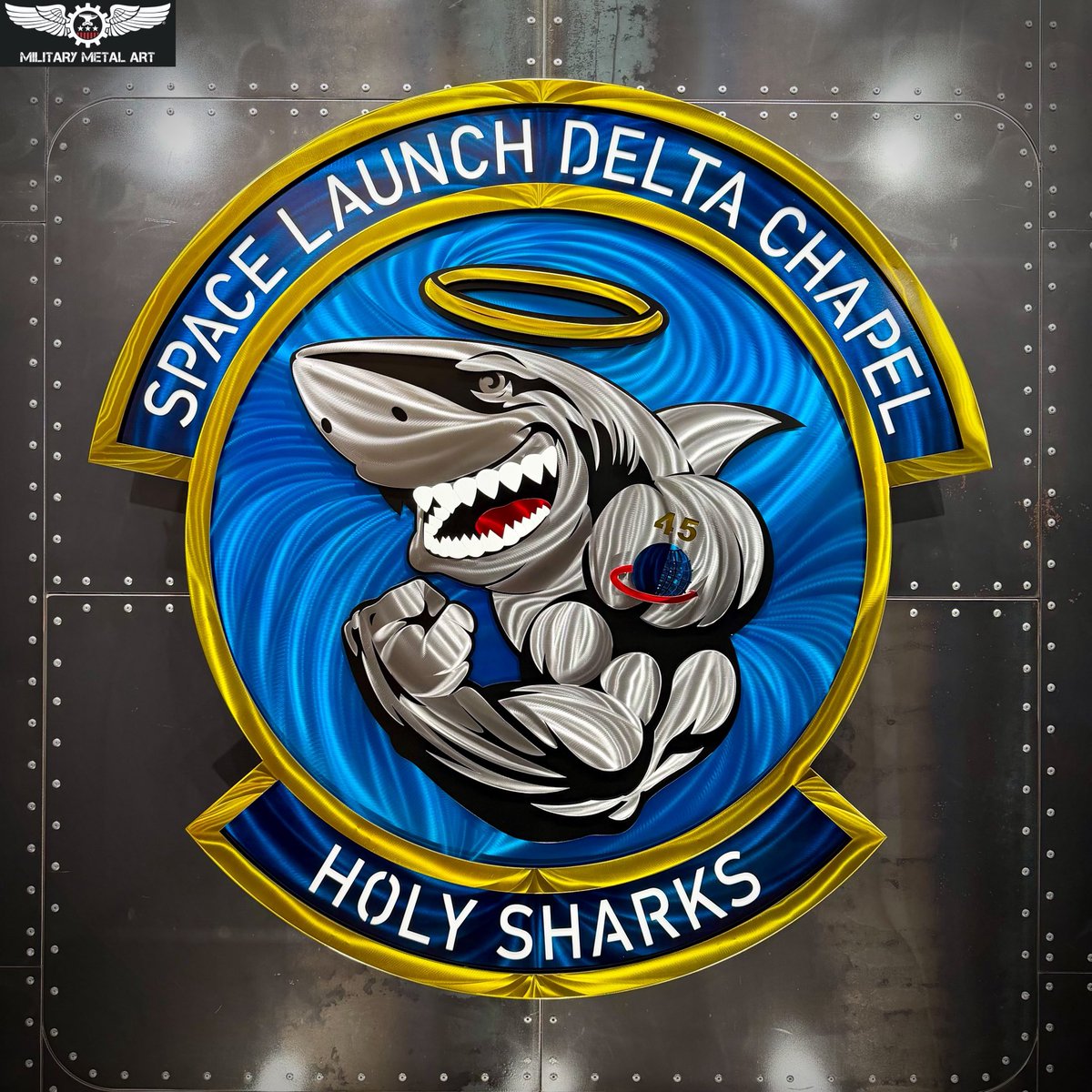
The Space Launch Delta 45 Chapel “Holy Sharks” serves the Guardians, Airmen, families, civilians, and mission partners who make up the Patrick Space Force Base and Cape Canaveral Space Force Station community.
Supporting one of the nation’s busiest and most consequential space launch enterprises, the Chapel team provides spiritual care, counseling, religious support, and a trusted place to turn through the unique demands of military service.
From worship services and religious education to confidential counseling and community programs, their mission is centered on caring for people so they can remain resilient and ready to accomplish theirs.
At a location where launch operations, national security, and military readiness rarely slow down, the Holy Sharks provide something equally important: connection, encouragement, and support for the people behind the mission.
Their work reaches far beyond the walls of the chapel, strengthening individuals, families, and the broader Space Coast military community through every season of service.
Military Metal Art is honored to bring the identity of the Space Launch Delta 45 Chapel — Holy Sharks to life.
Honoring Sacrifices. Forging Patriotism.
The Woodland Police Department serves the City of Woodland, California, with a mission centered on preserving the peace, protecting the public, and building strong partnerships throughout the community.
From 24/7 patrol and criminal investigations to traffic safety, school resource officers, homeless outreach, crime prevention, and community engagement, the men and women of Woodland Police work across a broad range of responsibilities designed to keep their city safe and strengthen the trust between officers and the people they serve.
Their approach reflects the department’s core values of Integrity, Compassionate Service, Community Relations, and Professionalism—principles that guide how they respond to emergencies, address quality-of-life concerns, and serve a growing and diverse community.
Military Metal Art is honored to bring the emblem of the Woodland Police Department to life.
Honoring Sacrifices. Forging Patriotism.
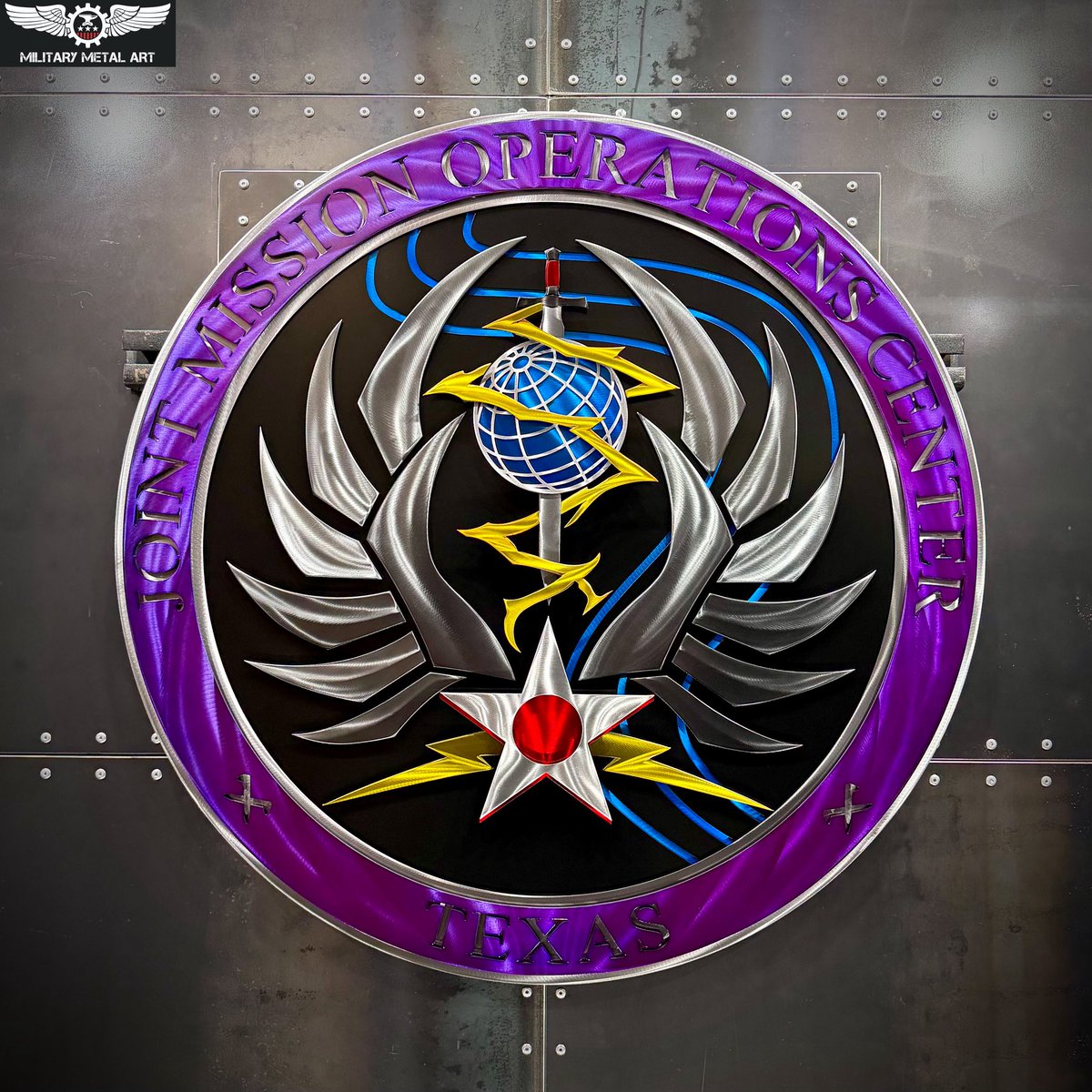
The Joint Mission Operations Center ��� Texas (JMOC-T) helps provide the resilient infrastructure and operational environment required for some of the nation’s most demanding cyberspace missions.
Located at Joint Base San Antonio-Lackland, JMOC-T supports U.S. Cyber Command operations by bringing together the networks, systems, mission platforms, and technical expertise needed to sustain continuous cyber operations.
As part of a broader network of Joint Mission Operations Centers, JMOC-T contributes to an enterprise designed for interoperability, secure coordination, and uninterrupted access to the capabilities cyber forces depend upon around the world.
Much of what happens inside the JMOC appropriately remains outside public view, but its purpose is clear: provide a reliable, resilient foundation that allows cyber operators to remain connected, coordinated, and ready to execute the mission whenever called.
Military Metal Art is honored to bring the identity of the Joint Mission Operations Center – Texas to life.
Honoring Sacrifices. Forging Patriotism.
The 22nd Space Operations Squadron, Detachment 3 provides a critical link in the global network that keeps U.S. and allied spacecraft connected, commanded, and mission-ready.
Operating from Naval Support Facility Diego Garcia in the Indian Ocean, Det 3 supports the Satellite Control Network through telemetry, tracking, and commanding operations that connect ground operators with satellites traveling thousands of miles above the Earth.
The broader 22nd SOPS mission coordinates launch and on-orbit support for more than 190 Department of War, intelligence, civil, and allied spacecraft.
Its remote location gives the detachment an important role within a worldwide architecture designed to maintain continuous access to space-based capabilities.
In 2026, Det 3 also supported NASA’s Artemis II mission, demonstrating how its reach extends beyond traditional military operations into some of the nation’s most significant space endeavors.
From an isolated island in the Indian Ocean, the Guardians and mission partners of Det 3 help ensure vital spacecraft remain connected to the people and missions depending on them around the globe.
Military Metal Art is honored to bring the emblem of the 22nd Space Operations Squadron, Det 3 to life.
Honoring Sacrifices. Forging Patriotism.
The 22nd Space Operations Squadron, Detachment 1 provides secure communications capabilities that help connect missions, organizations, and warfighters across the globe.
Located at Malmstrom Air Force Base, Montana, Det 1 is responsible for two specialized communication networks: the Secure Global Network and the Air Force Special Enclave Video Enterprise Network.
These systems provide protected connectivity for national security missions and organizations requiring reliable worldwide secure communications.
As part of the broader 22nd Space Operations Squadron mission, Det 1 supports the infrastructure behind a force that depends on constant access to information, coordination, and command and control. While much of its work happens far from public view, its impact reaches mission partners around the world.
The Guardians and Airmen of Detachment 1 help ensure the right information can reach the right people when it matters most.
Military Metal Art is honored to bring the emblem of the 22nd Space Operations Squadron, Det 1 to life.
Honoring Sacrifices. Forging Patriotism.
The 359th Training Squadron, Detachment 1 “Hammerheads” helps build the technical foundation behind Air Force readiness.
Through specialized instruction and hands-on training, the men and women of Detachment 1 prepare Airmen with the knowledge, discipline, and technical proficiency required to succeed in demanding operational environments.
Their mission is focused on developing capable professionals who can step from the training environment into the field ready to contribute from day one.
The Hammerheads carry that responsibility with a commitment to precision, accountability, and mission excellence—sharpening the skills that ultimately support aircraft, equipment, and warfighters across the force.
Every graduate reflects the work of the instructors and support personnel who invest their experience into the next generation of Airmen.
Military Metal Art is honored to bring the emblem of the 359th Training Squadron, Detachment 1 Hammerheads to life.
Honoring Sacrifices. Forging Patriotism.
USMC Recruiting Station New Jersey carries the responsibility of finding, mentoring, and preparing the next generation of Marines throughout communities across the Garden State.
As part of the 1st Marine Corps District, its recruiters represent the Marine Corps far beyond its bases and battlefields. They seek individuals with the character, discipline, and determination required to pursue the title of United States Marine while preparing them for the physical, mental, and moral demands of recruit training.
Through leadership, mentorship, and continuous preparation, the Marines of Recruiting Station New Jersey help future Marines understand the standards, responsibilities, and commitment that come with earning the Eagle, Globe, and Anchor.
Every Marine begins somewhere—and for many across New Jersey, that journey begins with the recruiters who challenge them to take the first step.
Military Metal Art is honored to bring the emblem of USMC Recruiting Station New Jersey to life.
Semper Fidelis.
Honoring Sacrifices. Forging Patriotism.
The 6th Space Warning Squadron stands watch from Cape Cod Space Force Station, providing some of the nation’s earliest warning of threats approaching North America.
Known as “Team 6,” the squadron operates and maintains the AN/FPS-132 Upgraded Early Warning Radar, a powerful phased-array system capable of detecting, tracking, and reporting ballistic missile launches while also supporting space domain awareness.
Assigned to Mission Delta 4 – Missile Warning & Tracking, the 6th SWS contributes to a global network of space and ground-based sensors providing strategic missile warning to national leaders, combatant commanders, the Joint Force, and international partners.
Their mission is one where seconds matter. The Guardians, Airmen, Royal Canadian Air Force personnel, civilians, and mission partners of Team 6 maintain a constant watch—turning radar detections into the warning and decision advantage needed to protect the United States and its allies.
This red-bordered edition recognizes the squadron’s connection to the operational space warfighting enterprise and the combat-ready forces supporting joint space operations.
Military Metal Art is honored to bring the emblem of the 6th Space Warning Squadron to life.
Team 6. Always Watching.
Honoring Sacrifices. Forging Patriotism.
The Joint Overhead Persistent-Infrared Center brings together military and intelligence professionals to help transform space-based infrared data into timely warning and operational advantage for the nation and the Joint Force.
Located at Buckley Space Force Base, Colorado, the JOPC is a joint organization comprising the U.S. Space Force, U.S. Space Command, and the National Geospatial-Intelligence Agency.
Its mission helps integrate Overhead Persistent Infrared capabilities across organizations that depend on those sensors for missile warning, tracking, battlespace awareness, and other critical national security missions.
Working within a global network of space command-and-control centers, the JOPC helps synchronize the employment of OPIR capabilities and ensures vital information reaches decision-makers, combatant commanders, allies, and partners when time matters most.
Its strength comes from integration—bringing together expertise that crosses service, command, and intelligence-community boundaries to create a more unified picture of threats developing around the world.
Military Metal Art is honored to bring the emblem of the JOPC to life.
Honoring Sacrifices. Forging Patriotism.
The 505th Command and Control Wing Advanced Programs team operates at the leading edge of command-and-control innovation, helping prepare the force for missions and capabilities that demand the highest levels of integration, security, and operational expertise.
As part of the Air Force’s only wing dedicated to operational-level command and control, Advanced Programs supports specialized efforts that help bridge emerging capabilities with the warfighters who will ultimately employ them.
The organization contributes to the 505th CCW’s broader mission of advancing C2 through testing, training, tactics development, and direct support to operational commanders.
In a battlespace where technological advantage and decision superiority are increasingly intertwined, the professionals of 505th CCW Advanced Programs help ensure tomorrow’s capabilities are prepared to meet tomorrow’s fight.
Military Metal Art is honored to bring the identity of the 505th Command and Control Wing Advanced Programs team to life.
Honoring Sacrifices. Forging Patriotism.
Behind every safe, standardized, and mission-ready flying operation across Air Force Materiel Command is a network of professionals ensuring the details are right long before an aircraft leaves the ground.
AFMC/A3V provides command-level expertise and oversight across the aviation programs that support AFMC’s unique flying mission.
Its responsibilities span Training, Standardization and Evaluation, Operations, Aircrew Flight Equipment, and Aviation Resource Management—five disciplines that work together to maintain readiness, consistency, accountability, and safety across the command.
From developing and overseeing aircrew training requirements and maintaining operational standards to ensuring flight equipment is ready and aviation records accurately reflect qualifications and experience, A3V helps provide the framework that allows AFMC aircrews to safely execute test, evaluation, sustainment, and support missions around the world.
Their work connects policy with the flight line, ensuring the people, programs, equipment, and standards behind every mission remain aligned and ready.
Military Metal Art is honored to bring the identity of AFMC/A3V to life.
Honoring Sacrifices. Forging Patriotism.