Mill Street Research strategist Sam Burns, CFA, provides proprietary institutional research & tools on asset allocation, stock selection and the economy.
What does Mill Street Research do? A short thread.
Mill Street Research is an independent boutique investment research firm, founded near Boston in 2016 by Chief Strategist Sam Burns, CFA. The research covers asset allocation and global quantitative stock selection. 1/7
The mix of a short-term rally without analyst support and higher valuations has pushed AMAT into the bottom quintile of our proprietary MAER ranking for S&P 500 stocks.
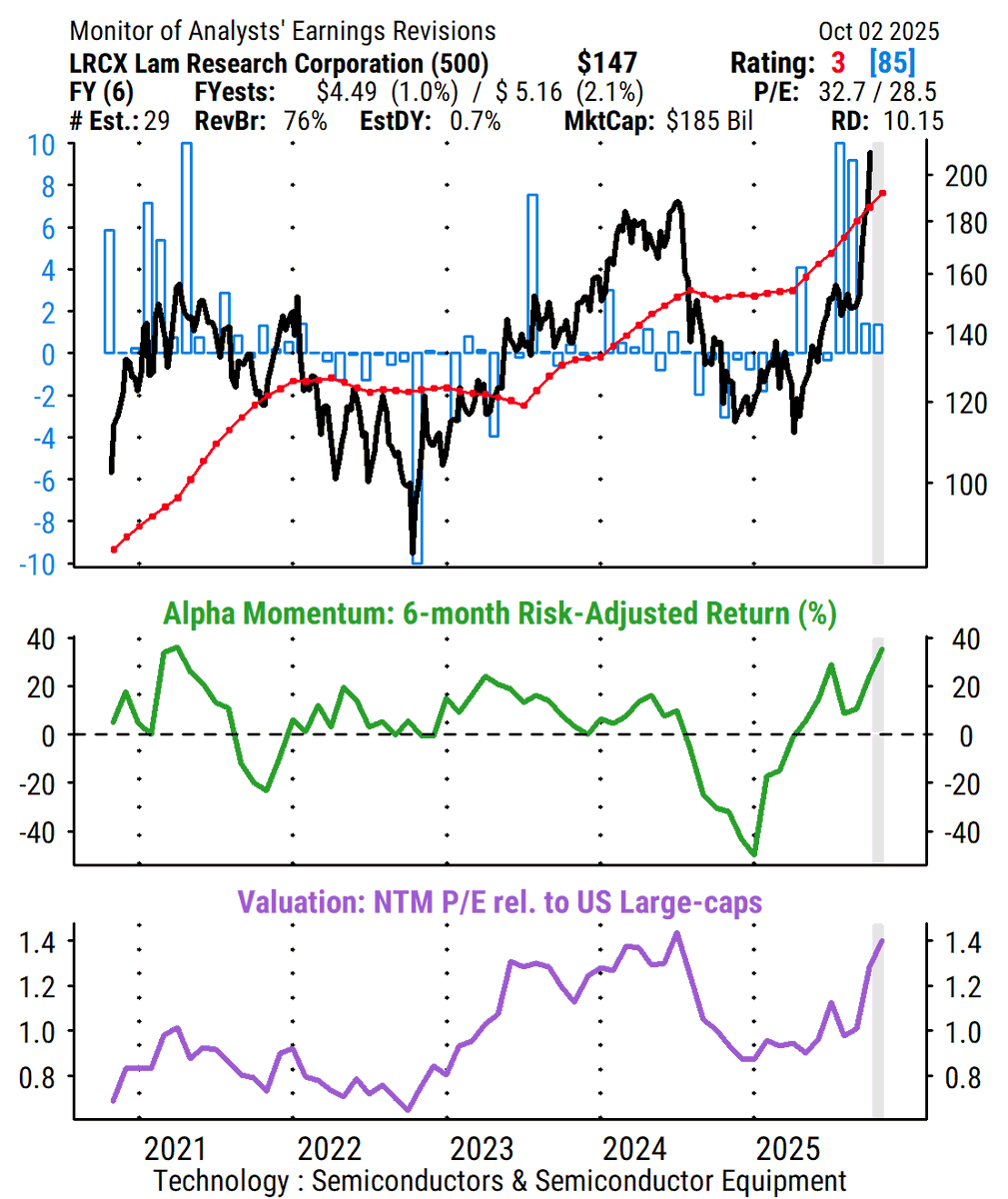
A much higher-ranked stock in that space would be Lam Research (LRCX), where estimates are rising broadly.
Applied Materials in the news saying that US limits on exports of its semiconductor manufacturing equipment to China will hurt revenue more than previously thought.
After a massive 43% rally in just the last month, the stock having one of its first down days, off -2.6%.
Our work shows that the big rally has occurred despite analysts remaining net negative on their earnings estimate revisions: of the 31 analysts, 44% net are lowering EPS forecasts.
So the rally has mostly just pushed the P/E up sharply after a year of multiple contraction.
TSLA stock price reaction yesterday to seemingly "good" news of better-than-expected vehicle deliveries is notable.
It highlights the impact of "pull-forward" buying ahead of policy changes (EV tax credits going away) and how true consensus expectations are hard to measure.
Lots of sad economists as there is no jobs report this morning due to the shutdown, leaving everyone hanging about the state of the labor market.
This is particularly important since it was cited as the key reason why the Fed cut last month and might do so again this year.
Otherwise we are back to being driven by AI-related news and random policy news, like the recent arrangements made for big Pharma to avoid the worst-case tariff/regulatory outcomes.
With the S&P 500 Equal-weight index (ETF ticker RSP) down somewhat today and unchanged on the month, a reminder that it closed at $187.62 on December 2nd (post election bounce) and is currently trading at $188.47 about 10 months later.
Markets mildly lower today, with a split in the mega-caps again.
Indices weighed down by AMZN, META, GOOGL, JPM, and TSLA, and helped by NVDA and big Pharma.
Watching the UBS "Profitless Tech" index for fun. Very weak (-2.8%) today, and down about -8% from the September peak.
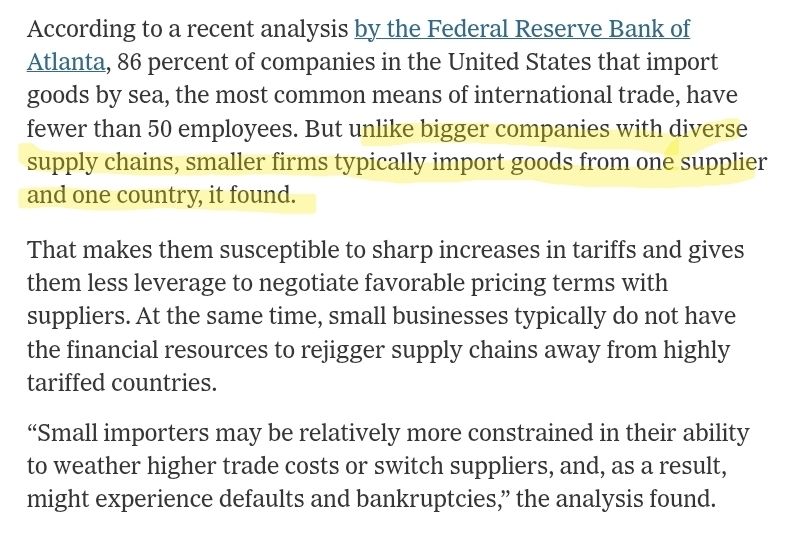
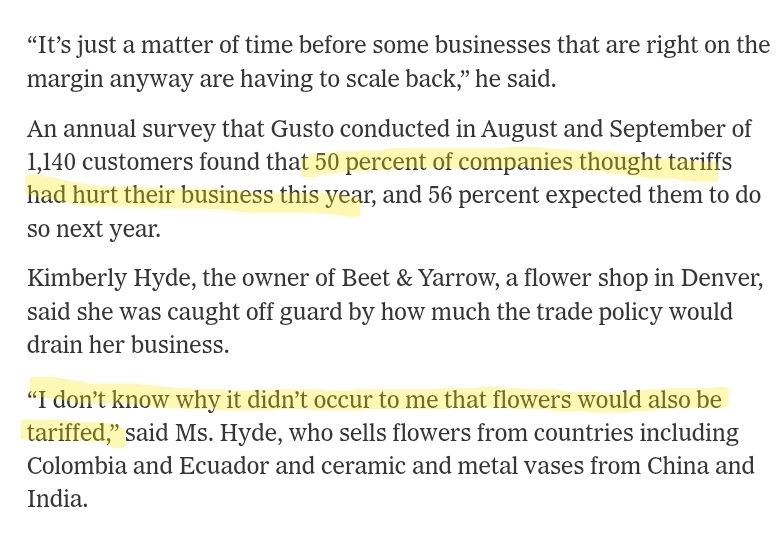
Tariffs etc. are hurting the economy from the bottom up.
Small businesses and lower-income households are feeling it most, while big businesses and high-income households can either afford it or can find ways around the tariffs.
Hence the lack of concern in stock indices.
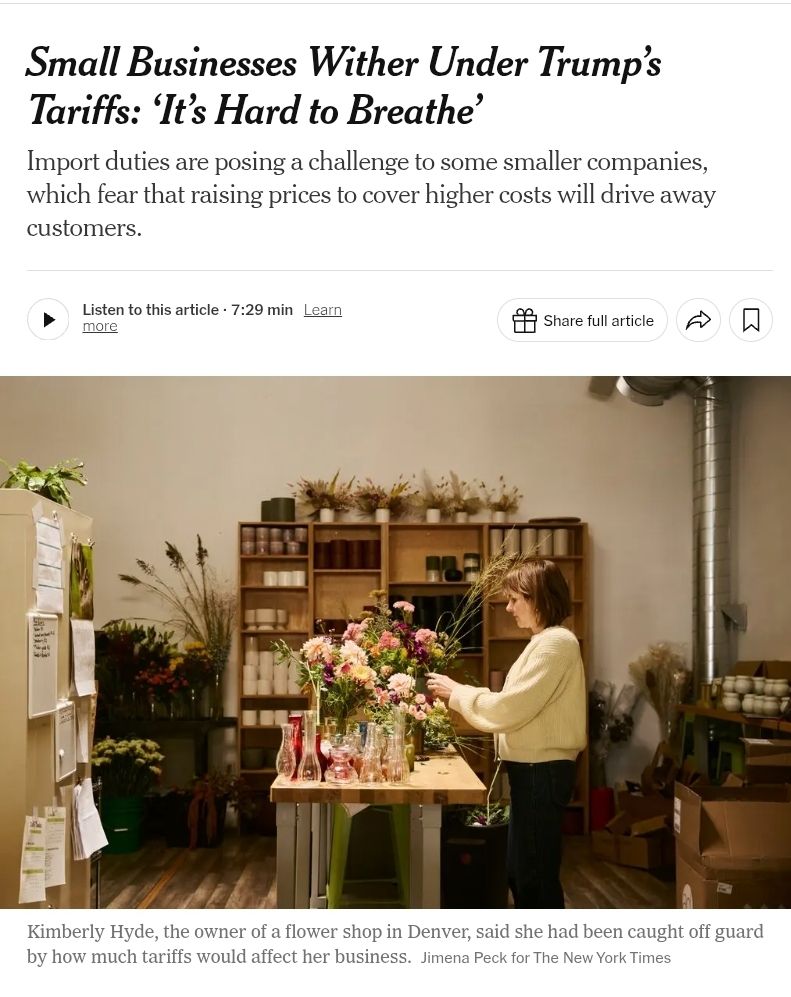
"Small Businesses Wither Under Trump’s Tariffs: ‘It’s Hard to Breathe’" https://t.co/1BSEuLwnHF
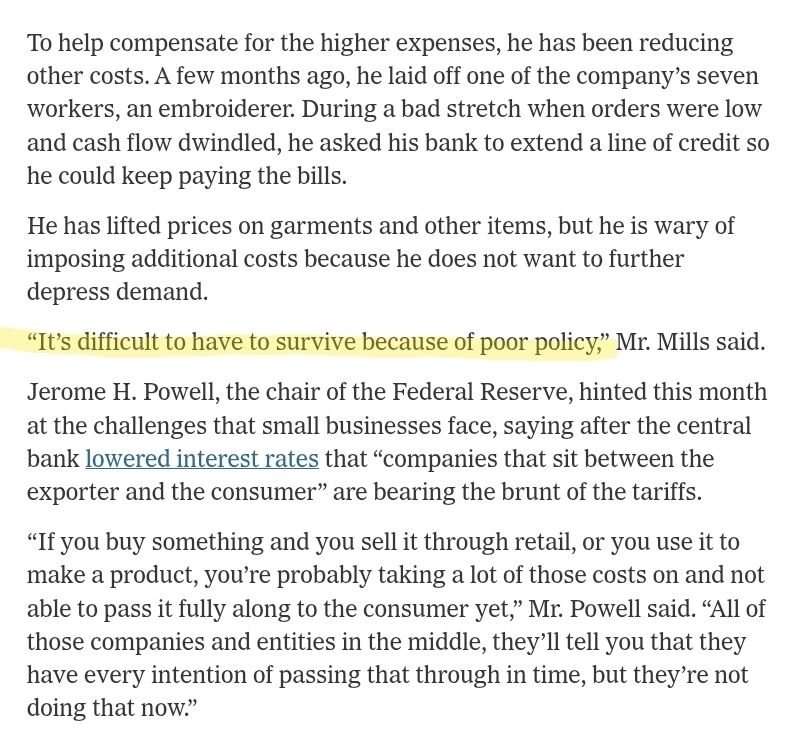
"It’s difficult to have to survive because of poor policy,”
Rate cuts that are seen as excessive and politically driven could push long-term yields higher and raise concerns for equity investors.
This is less of a concern at the moment since Tech/AI enthusiasm is the main driver of US stocks, and Big Tech is mostly insensitive to rates.
New Blog Post: The Fed's dilemma (or trilemma?)
I highlight the data driving the Fed's unusual struggle to navigate higher inflation and weaker labor data, now combined with a third problem of political interference and potential loss of independence.
https://t.co/i1w30PNtrd
Investors face greater monetary policy risks now (alongside fiscal policy risks):
The Fed sees the trends but acts too slowly
It misinterprets the volatile economic data caused by tariffs, etc. and has to reverse policy when the data shift
It is taken over by political hacks
With the NASDAQ-100 only down a bit over 2% from its latest all-time high, still a long way to go before calling more than a brief respite from relentless "risk on" behavior, particularly in late September.
Might worry more if ARKK (now 81.30) closes below its 50-day at 77.
Stocks remain weak this afternoon, hampered by higher bond yields and strength in the US dollar.
High-risk stocks and funds like ARKK and the Goldman Sachs Profitless Tech index are down 2-3%, alongside declining crypto (Bitcoin) prices.
The data is pushing bond yields and the US dollar higher this morning, with the 10-year Treasury yield back up to 4.19%. It was as low as 4.03% last week.
Stock futures were lower overnight and still are after the data, possibly pointing to a 3rd down day.
The third estimate of Q2 GDP was released and showed upward revisions to growth, particularly consumer spending.
While this is of course backward-looking data, it suggests Q2 was stronger than previously assumed, and helps explain the better-than-expected Q2 earnings results.
The latest revisions show 3.8% annualized GDP growth in Q2, up from 3.3% in the prior estimate.
Consumption was revised to 2.5% from 1.6%.
Other data today showed an uptick in durable goods orders, and a dip in initial unemployment claims. Continuing claims were little changed.
There seems to be growing worry about some private equity firms and funds, with an article yesterday on Bloomberg highlighting the issues some of them are facing now.
They include high prices for potential targets, high financing costs, and difficulty selling existing holdings.
Stocks are down moderately today, adding to yesterday's decline.
Tech stocks are mostly down along with several other sectors, while Energy is the big gainer today as oil prices are higher again on hopes for Russian sanctions and a report showing crude inventories falling.
The biggest drags on the S&P 500 today are NVIDIA, Apple, and Oracle. The biggest help is coming from Tesla, along with Big Oil.
While not a big part of the indices, private equity companies are down sharply today, including KKR, Apollo Global, and Blackstone.