a figure skater will do the most graceful gorgeous breathtaking move on the ice and the commentator will come in and say “that was so sloppy and horrible the competitor should be put in jail for making us all witness that”
the way i'm sooo obsessed with these twizzles they're in perfect unison! their lines their arms and legs extension matchingg all the way! the knee bend? the hand details to the fingers? the jump and the speed while they're close!! the body posture! this is ice dance BABYYYY
the reason i like staying up late so much is because between the hours of 1am-5am, the world is quiet and no one expects anything from me. i could stare at my wall for 4 hours and there would be no consequences. it's so silent and calm. i love it
The current "why do straight women engage with m/m relationships in media if not for fetishism?" conversation is so interesting to me because unless you have no reference to standard heterosexual relationships, at least one potential answer should be obvious.
Sociological and psychological research, medical studies, relationship satisfaction stats, and even antcedotal reports and narratives, show that the emotional burden of heterosexual relationships is largely put on the woman.
There is a gendered entitlement to care - men should receive it, women should provide it, with far less expectation of reciprocity.
Having a relationship between two people of the same gender removes this specific issue.
Why fictional m/m media, opposed to sapphic media, that could be argued to remove the same inherent gender imbalance?
Straight women, by definition, are attracted to men.
When a straight woman consumes heterosexual media the implicit expectation and interpretation is that she is attracted to the male protagonist, and is meant to live vicariously through the female protagonist. No one questions this. No one calls this 'fetishism'. No one suggests this is a moral failing. In fact, the underlying implication of this entire discussion rests on straight women being expected to only consume heterosexual media, not that they shouldn't consume any.
Fictional m/m narratives, such as the ones this conversation has been largely centred on, offer love interests of the gender that straight women are attracted to, without the burden of societal expectations and power dynamics that come with a heterosexual relationship. They want to consume romance without the burden of expected subordination due to their gender.
Of course there are many reasons women engage with m/m media, however from conversations I've had with straight women, this seems to be one of the most prevalent reasons.
I do also think it is a conversation that should remain open. There are circumstances where gay relationships are fetishised.
We, as an audience, shouldn't flatten gay mens voices or experiences.
However, I'd argue rather than only asking, "why are women obsessed with m/m relationships in media?" we should start with, "why are women disengaging with heterosexual relationships and what does that say about society?"
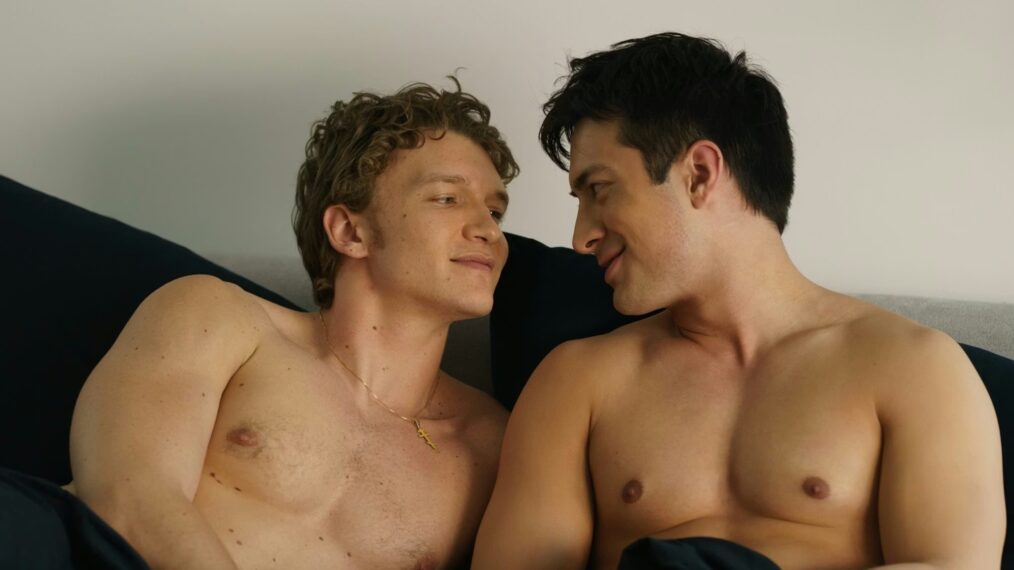
#HeatedRivalry creator Jacob Tierney on why women love the show:
"Women love these books. These are books written by a woman. These are books largely consumed by women. So I wouldn’t want to speak on behalf of a female audience, but I think that what women are presented in romance is not always something that interests them in that way. I think that women are also, in real life and in culture, endlessly exposed to sexual violence. Seeing things like this, that are depictions ultimately of male vulnerability, can be very refreshing. From what I’ve heard, from the women who have written to me and Rachel and the boys, there’s a safety in seeing a woman being removed from the conversation. So you’re watching something happen between two men, and there is no fear of violence. There is no fear of things turning into stuff that women have to deal with too much in real life, and don’t want to deal with in their fantasies, and ultimately, this is a romantic fantasy. I think it’s also that maybe romance — which is a genre that women love and write and read and are the primary consumers of — just doesn’t get treated with a lot of respect. Nor do the people that make it, or those that adapt it either. So I think that they are responding to, at least I hope, the fact that we came to it pretty fullhearted, and as fans and as people who want to honor this material and want to honor the genre and make it as romantic as we can. That’s certainly what I wanted to do."
https://t.co/bgM12PVVnA
One thing nobody gives pigeons enough credit for is their ability to get out of the way in the sidewalk. A lot of you could learn a thing or two from them!!!