Managing Director @ Polemos Advisors | Distinguished Research Fellow at YCAPS | Expertise in Naval & Air Warfare, Defense Industry/Tech, Naval Shipbuilding
A former South Korean official recently compared his country's nuclear attack submarine (SSN) program to choosing between "10 Hyundai Sonatas or one Mercedes-Maybach" for patrolling Seoul's streets.
It's a catchy analogy. It's also dangerously wrong.
Here's why diesel boats simply cannot perform the Republic of Korea Navy SSN's most critical mission of continuously tracking North Korean SSBN's:
✅ Endurance: Diesel boats stay submerged 3-4 weeks. SSBN's stay under for months. The SSBN simply outlasts them
✅ Speed: Diesel boats are slow. SSBN's sustain 30+ knots. Once an SSBN sprints, contact is lost
✅ Detection: Diesel boats must snorkel, creating acoustic signatures. SSBN's remain submerged indefinitely
✅ Precedent: No navy has ever successfully used diesel boats to shadow SSBN's for prolonged durations on a regular basis.
Some suggest relying on the US Navy. However, the USN faces resource constraints in the midst of prioritizing China's growing submarine force across the Indo-Pacific. For South Korea, outsourcing SSBN tracking to another country — even a close ally — raises sovereignty concerns when nuclear weapons can strike Seoul.
North Korea's SSBN program has elevated South Korean SSN acquisition from option to requirement. When diesel boats physically cannot continuously track SSBN's, SSN's become an operational necessity.
South Korea is one of the world's wealthiest nations with the world's most advanced shipbuilders. The country can afford this capability, especially when considering the fact that this is about national survival.
Read more here: https://t.co/VhdU4czZlF
This article is part of an ongoing series examining South Korea's nuclear submarine program, a once-controversial initiative that has evolved into one of East Asia's most consequential naval procurement decisions.
Each installment explores different dimensions of this strategic shift, from legal frameworks and political dynamics to regional implications and technological challenges.
Read the complete series here: https://t.co/pcPVddLBT9
🇧🇷🇰🇷Brazil launched its Nuclear Marine Program in 1979, partnered with France's Naval Group for conventional submarine expertise while developing indigenous LEU-powered reactors, and is negotiating IAEA safeguards as a non-nuclear weapon state.
Sound familiar? Seoul is following the same playbook.
In this article, I explore why both countries chose proliferation-resistant LEU over weapons-grade HEU, how both leveraged foreign partnerships while maintaining indigenous reactor development, and what this parallel reveals about nuclear propulsion normalizing beyond the permanent five members of the UN Security Council and India.
Read the full analysis: https://t.co/9oIEFR1awV
This article is part of an ongoing series examining South Korea's nuclear submarine program, a once-controversial initiative that has evolved into one of East Asia's most consequential naval procurement decisions.
Each installment explores different dimensions of this strategic shift, from legal frameworks and political dynamics to regional implications and technological challenges.
Read the complete series here: https://t.co/pcPVddM9IH
While the debate continues on where to build these submarines, South Korea has quietly moved years ahead in submarine design work.
A recent South Korean media report revealed that the basic design is expected to be completed in H1 2026. However, Hanwha Philly Shipyard lacks the nuclear-qualified facilities, workforce, and security infrastructure needed for submarine construction.
My analysis explores the timeline paradox between South Korea's advanced design progress and Philly Shipyard’s unpreparedness, alternatives shipbuilding arrangements that have been proposed, and why North Korea's Russian-assisted nuclear submarine development makes Seoul's timeline requirements measured in years, not decades.
Read the full analysis: https://t.co/uH3678A1JW
This article is part of an ongoing series examining South Korea's nuclear submarine program, a once-controversial initiative that has evolved into one of East Asia's most consequential naval procurement decisions.
Each installment explores different dimensions of this strategic shift, from legal frameworks and political dynamics to regional implications and technological challenges.
Read the complete series here: https://t.co/pcPVddLBT9
Is South Korea's nuclear submarine program a proliferation risk or responsible defense policy?
Critics miss two fundamental realities: the NPT explicitly permits nuclear propulsion for non-weapons purposes, and Seoul faces nuclear-armed neighbors whose behavior necessitates robust deterrence. South Korea isn't breaking rules — it's following the legal precedent Canada established in 1987 and one that Brazil has been following.
In this article, I examine why Seoul's choice of low enriched uranium (LEU) mirrors France's proliferation-resistant approach, how commercial shipping's move toward nuclear propulsion is normalizing this technology, and why China and North Korea’s behavior — not South Korea's response — destabilized East Asia.
Read the full analysis: https://t.co/38jPxXAjq7
This article is part of an ongoing series examining South Korea's nuclear submarine program, a once-controversial initiative that has evolved into one of East Asia's most consequential naval procurement decisions.
Each installment explores different dimensions of this strategic shift, from legal frameworks and political dynamics to regional implications and technological challenges.
Read the complete series here: https://t.co/pcPVddM9IH
Why did Washington finally say yes to South Korean nuclear submarines after decades of rejections?
🇺🇸🇰🇷The answer reveals a fundamental shift in how America views Indo-Pacific alliances. @POTUS' October 29 announcement wasn't charity. It was recognition that Seoul's geographic position, industrial capacity, and naval power make it indispensable for regional maritime security.
In my first Substack article, I examine three critical factors:
✅ Decades of South Korean preparation on reactor technology and submarine design
✅ Washington's submarine industrial base crisis requiring South Korean shipbuilding prowess
✅ The strategic value of ROK Navy bases at Jeju and Jinhae as chokepoints monitoring Chinese submarine movements.
Read the full analysis: https://t.co/oP3YCYWigX
Since 2023, South Korea's Hanwha has been trying to acquire Austal and its shipyard in Mobile, Alabama. If Hanwha succeeds in doing so, Alabama may present a far more pragmatic solution that could address the Philly Shipyard predicament.
While President Trump designated Philly Shipyard for construction, the facility has never built any naval combat vessels, let alone nuclear submarines. Meanwhile, Austal's Alabama facility has been preparing to supply modules to Virginia- and Columbia-class submarines and has been building the necessary infrastructure to support its budding submarine business.
In this article, I examine why acquiring Austal could compress timelines compared to transforming Philly Shipyard from scratch, how CFIUS approval signals Washington's support for South Korean investment in the US naval industrial base, and whether Austal's AUKUS participation creates conflicts or opportunities for South Korean involvement.
Read the full analysis: https://t.co/sZcRuik8EI
I’m excited to introduce 'POLEMOS Insights', a new platform dedicated to exploring the dynamic intersection of defense innovation and geopolitics. Subscribe now to receive the latest insights and analysis directly in your inbox!
https://t.co/f3WQYKD4q2
In great-power rivalries, it matters who’s on your side. For years, Washington has been either indifferent or inconsistent in its dealings with swaths of the globe. China, meanwhile, has been building influence.
@thecourier
https://t.co/lo8RNPyQbf
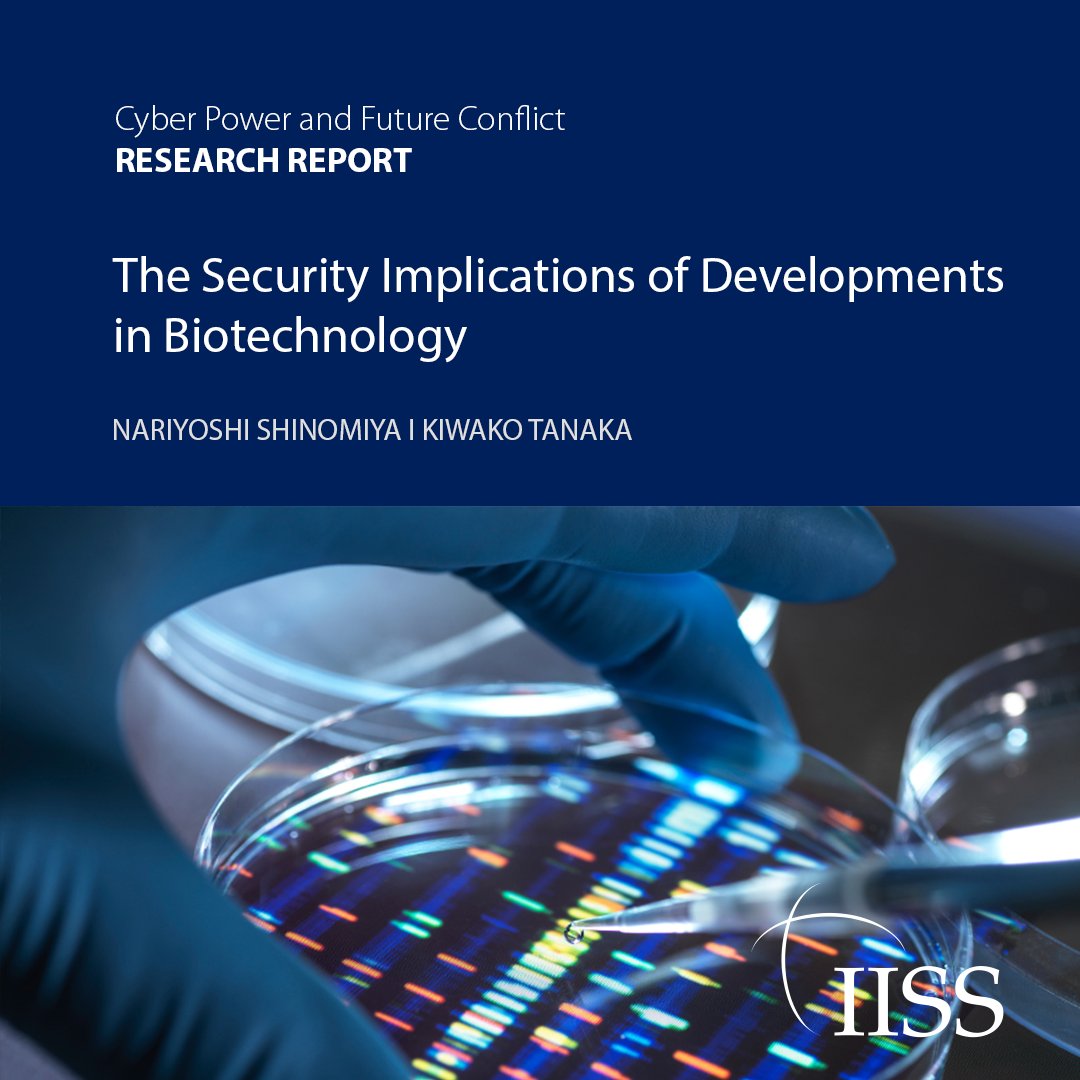
Developments in biotechnology are progressing rapidly, and there is growing interest in their geopolitical impact.
Read the latest IISS research report here. https://t.co/i9sIt9VWJE
Defense & Aerospace Report Podcast [Washington Roundtable Feb 21, ’25] by Defense & Aerospace Report via #soundcloud https://t.co/T5jXfAtNh6 @PMCroninHudson@jteurope@MichaelHerson1 #Dov_Zakheim & @defa@defaeroreport Washington Roundtable Host @vagomuradian focus on a tumultuous week of budgets, politics, & diplomacy...with my thoughts on China, Taiwan, & Asia from ~ 43:30-55:30 #Defense #Russia #Ukraine #Europe #China #Taiwan #Israel
China’s Sudden Live Fire Naval Drills Off Australia Rattle Canberra
A rare drill in between New Zealand and Australia sent a message and is a sign of China's growing ability to protect naval power far from its shores.
Story: https://t.co/TeZpmioHBc