In the 21st century, uncertainty—unknown possibilities—is not a bug, but a feature.
Designing industrial policy under such conditions requires more than pivoting away from neoliberalism.
It means not simply picking winners but discovering them. And once they are discovered, it is essential to tailor support beyond the usual toolkit of tariffs and subsidies.
https://t.co/p2ebmGydh4
Researchers at the University of Bergen ran a study comparing 213 Sudanese men. Half brushed their teeth with a chewed tree root. Half used a regular plastic toothbrush. The tree root group came out with healthier gums and less plaque.
That stick is called a miswak. The WHO has been quietly recommending it since 1986. In 2011, scientists at Sweden’s Karolinska Institute finally cracked the chemistry.
The active ingredient is benzyl isothiocyanate, a natural plant defense compound from the same family of sulfur molecules that give cabbage and mustard their sharp bite. The compound punches through the outer wall of bacteria that cause gum disease. From there, it dismantles the chemistry that keeps the bacteria alive. The Karolinska team isolated it by running root extracts through a chemical analyzer that identifies individual molecules.
The stick comes from the Salvadora persica tree, which grows in dry parts of Africa, the Middle East, and India. Inside the wood you also find natural fluoride, a gentle abrasive called silica that polishes off plaque, sulfur compounds, and tannins that tighten gum tissue. A separate team at Sweden’s University of Gothenburg ran another trial. They soaked the sticks in a fluoride solution. The fluoride left in the test group’s saliva came out higher than what people got from regular fluoride toothpaste.
A more recent systematic review pulled together a stack of randomized trials. Miswak on its own controlled plaque about as well as a regular toothbrush. Used alongside the toothbrush, it actually beat brushing alone on both plaque and gum inflammation scores. The Princess Nourah University trial from 2024 complicates that. Over two weeks, the miswak group’s plaque held steady while the toothbrush group’s dropped further. And gums in the miswak group got noticeably worse for people who sawed at their teeth too hard. Aggressive horizontal scrubbing tears at the soft tissue along the gum line.
One stick costs under 10 cents in the regions where the tree grows, and a single twig lasts for weeks. In sub-Saharan Africa, herbal toothpastes built around miswak and neem (another bitter chewing-stick tree) made up over a quarter of toothpaste sales in 2023.
The honest caveat is that Western dental literature treats the miswak as an add-on rather than a replacement, mostly because reaching the back molars with a stick is awkward. Used correctly, with soft perpendicular brushing along the gum line and no aggressive sawing, it does what a toothbrush does and adds a low-grade antibiotic on top. For most of human dental history, this is what cleaning your teeth looked like.
In a new major report, the World Bank conceded that its decades-long war on industrial policy was wrong, saying its old advice “has not aged well — it has the practical value of a floppy disk today.”
But this is not an intellectual awakening.
The World Bank's doctrine shifted because the means through which Western nations can maintain their dominance shifted — not because economists suddenly discovered new evidence.
The world’s wealthiest nations are now pursuing industrial policy so openly that it can no longer be denied to the rest of the world.
When the geopolitical winds shift, so does the ideology of institutions where wealthy nations' interests are deeply entrenched.
When simulation becomes the norm, it weakens the human capacity for discernment. As a result, our social bonds close in upon themselves, forming self-referential circuits that no longer expose us to reality. We thus come to live within bubbles, impermeable to one another. Feeling threatened by anyone who is different, we grow unaccustomed to encounter and dialogue. In this way, polarization, conflict, fear and violence spread. What is at stake is not merely the risk of error, but a transformation in our very relationship with truth.
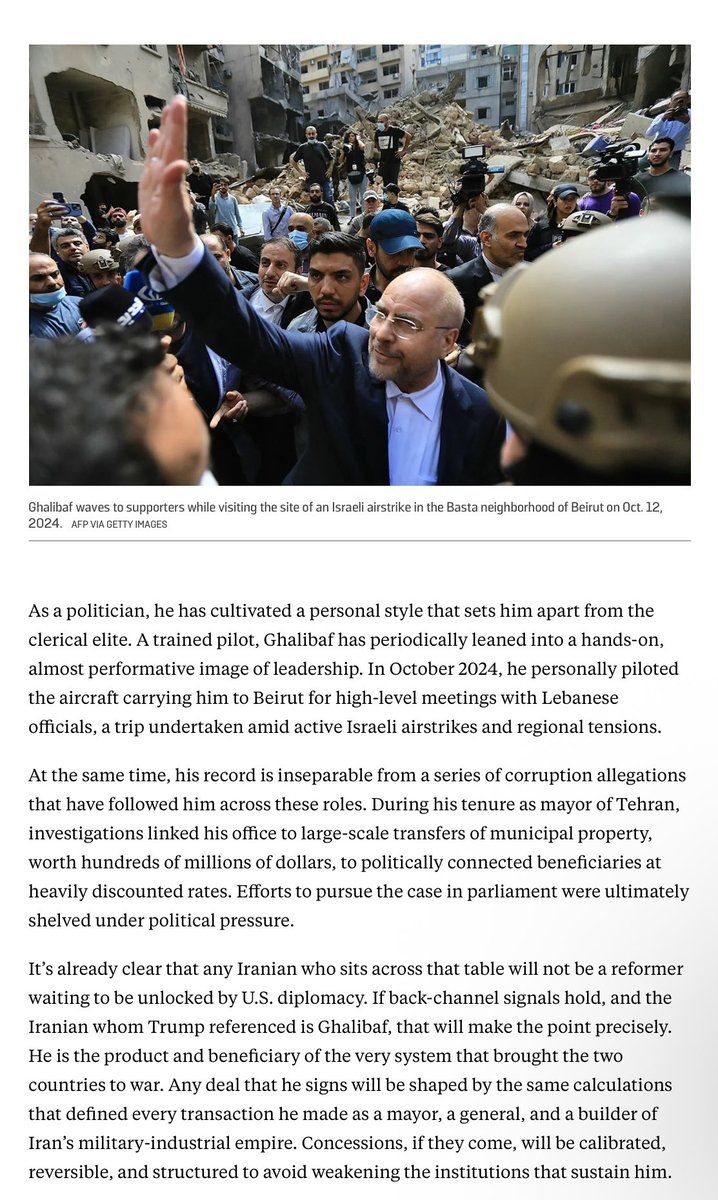
Resharing my piece in @ForeignPolicy on Ghalibaf— the man who appears to be leading the talks for the Iranians and who multiple officials have lent their support to tonight
From Bookworm to Browser: The Decline of Books in Political Science Scholarship | PS: Political Science & Politics | Cambridge Core - https://t.co/90L3GUh8W7
1) The bar here is lower than it looks. As someone who also did fieldwork in FCDO high-risk zone, this is about the lowest-yield form of it imaginable. Citrini risked a human life to confirm what Lloyd’s List, Windward, and satellite AIS analysts had already documented.
This was absolute 🔥!
Mad respect to @citrini and the entire team.
Meanwhile, the collective profession of journalism should now light itself on fire. How is it that NOBODY else tried to do this!?
2) And the dig at journalism is frankly insulting. War correspondents have been reporting from that strait for months at far greater personal risk — without a Pelican case, $15k in cash, or a paywall at the end of it.
But I’ve been reliably informed it’s impossible for busy professionals to learn French. Or that it’s a waste of time. Or that it eliminates the best people. Or that it’s just silly.
Heads-up: Pre-market so-called “news” or “Truth” is often just a setup for profit-taking. Basically, it’s a reverse indicator.
Do the opposite: If they pump it, short it. If they dump it, go long.
See something tomorrow? You know the drill.
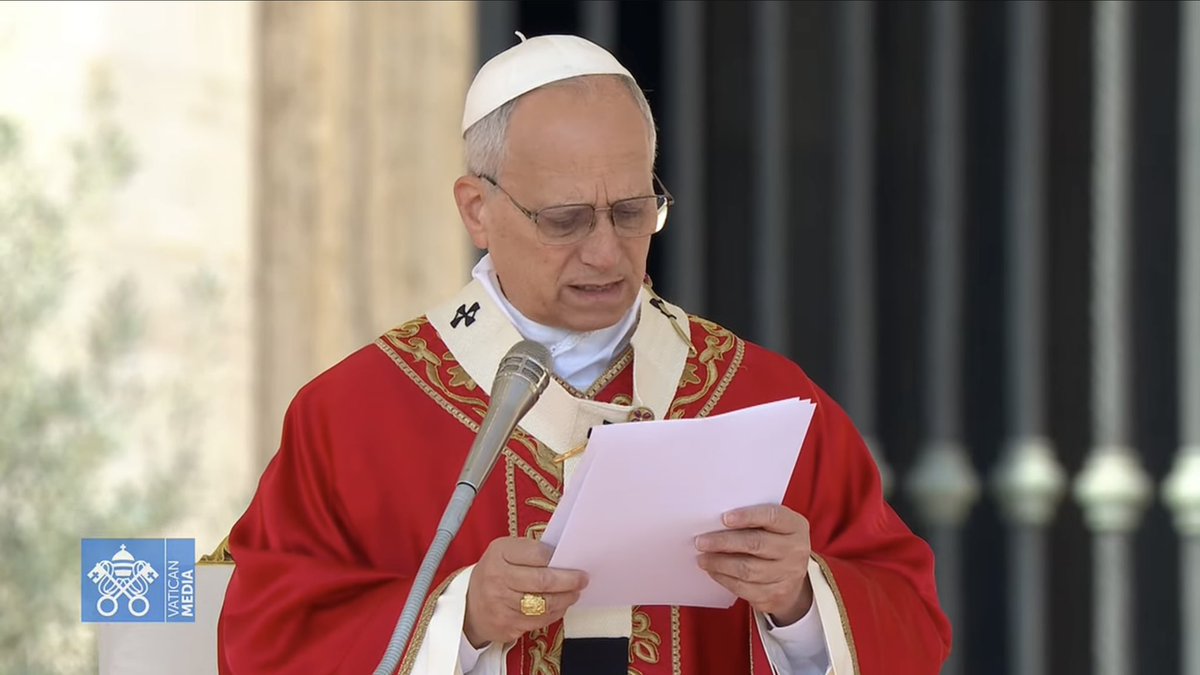
Pope Leo XIV on Palm Sunday, forcefully denounces those who use God to justify war: “Brothers and sisters, this is our God, Jesus, King of Peace, who rejects war, whom no one can use to justify war. He does not listen to the prayers of those who wage war, but rejects them saying “Though you make many prayers, I will not listen. Your hands are full of blood.”
This is our God: Jesus, King of Peace, who rejects war, whom no one can use to justify war. He does not listen to the prayers of those who wage war, but rejects them, saying: “Even though you make many prayers, I will not listen: your hands are full of blood” (Is 1:15).