Bitcoin hashrate: +17% in 7 days.
Last difficulty move: −0.03%.
Not broken. Difficulty follows the previous 2,016 blocks, so the reaction comes later.
Next adjustment: ~+5.67% expected. ⛏️
#BitcoinMiningforBeginners
Your miner can earn less BTC even when nothing changes on your end.
Why? Difficulty.
Blocks are coming in faster than the 10-minute target, and the next adjustment is currently estimated around +5.8%.
Same machine. Same hashrate. Tougher competition. ⛏️⚡
#BitcoinMining
How much does one Bitcoin miner earn? ⛏️
Three things matter:
• Your share of a ~1.06 ZH/s network
• 3.125 BTC per block + fees
• Mining difficulty, which changes your share over time
The biggest input you can actually control: your power cost. ⚡
#BitcoinMining
@kristoffer78089 Right?! haha you got what I am saying, since people love talking about raw terahashes, but keeping power consumption and noise under control is where hosting value shines.
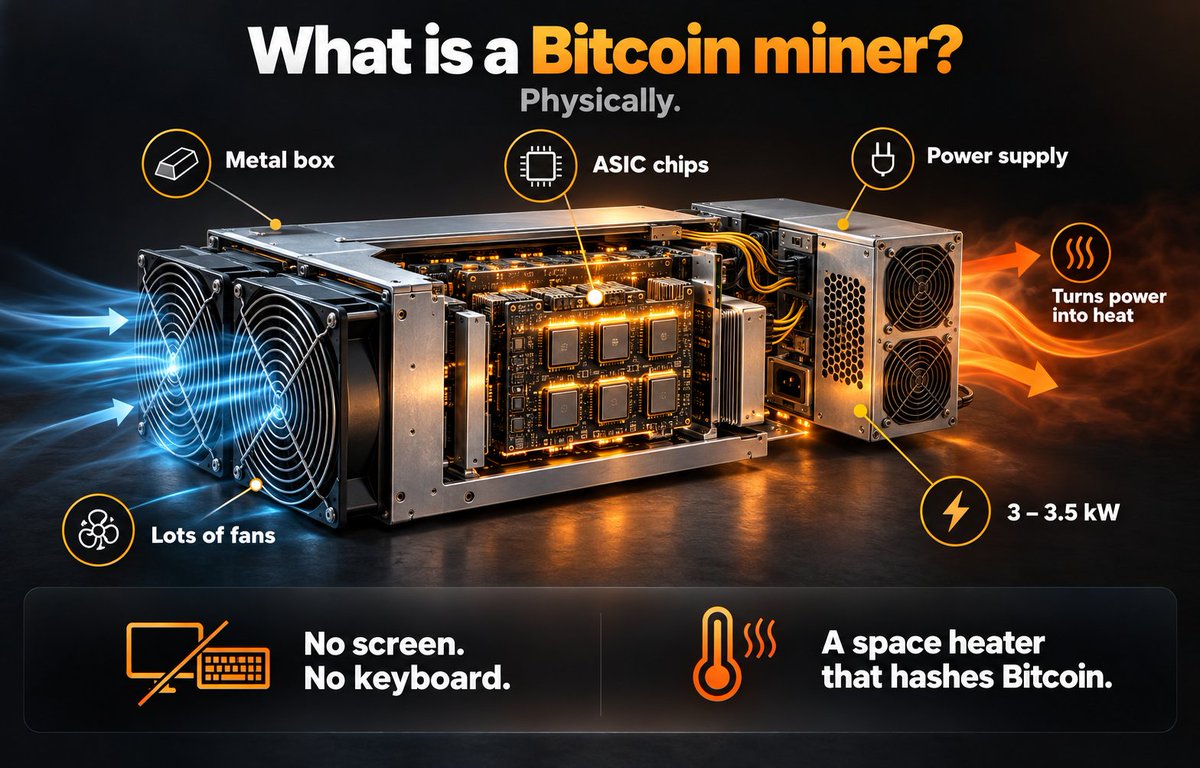
What is a Bitcoin miner, physically?
Basically a metal box packed with chips, a power supply, and a lot of fans. ⛏️⚡
A typical ASIC can pull around 3–3.5 kW, with nearly all that energy ending up as heat.
No screen. No keyboard.
Basically a space heater that hashes Bitcoin.
An ASIC showing a “12-month ROI” at today’s BTC price and difficulty is not a 12-month forecast.
Difficulty moves. BTC moves. Halvings happen. Uptime drops. Pool fees exist.
Better test: what’s your $/kWh, and does the miner still work after the next halving? ⛏️
#BitcoinMining
Bitcoin’s block subsidy is 3.125 BTC per block today. ⛏️
It halves about every 4 years:
50 → 25 → 12.5 → 6.25 → 3.125 → 1.5625 next
Miners know it’s coming, so the setup has to survive it.
#BitcoinMining
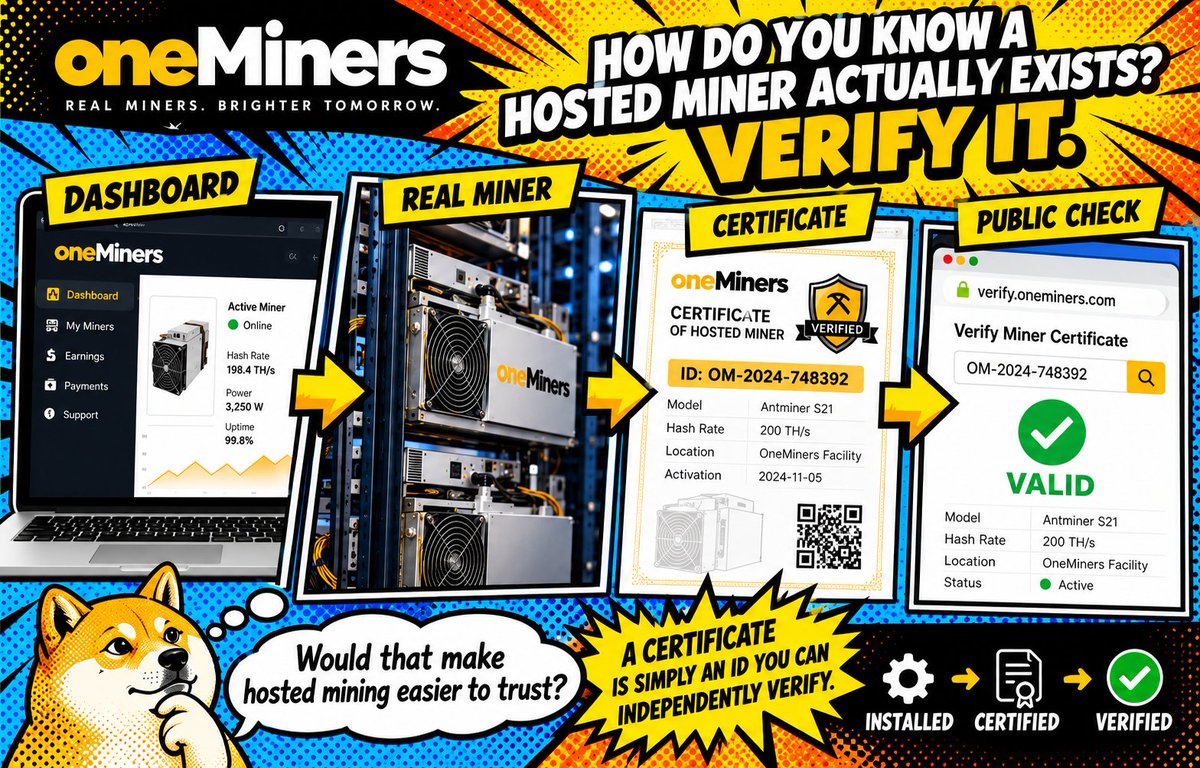
How do you know a hosted miner actually exists?
OneMiners now sends a certificate when the machine is installed, and its ID can be checked on a public verification page.
A certificate here is simply an ID you can independently verify.
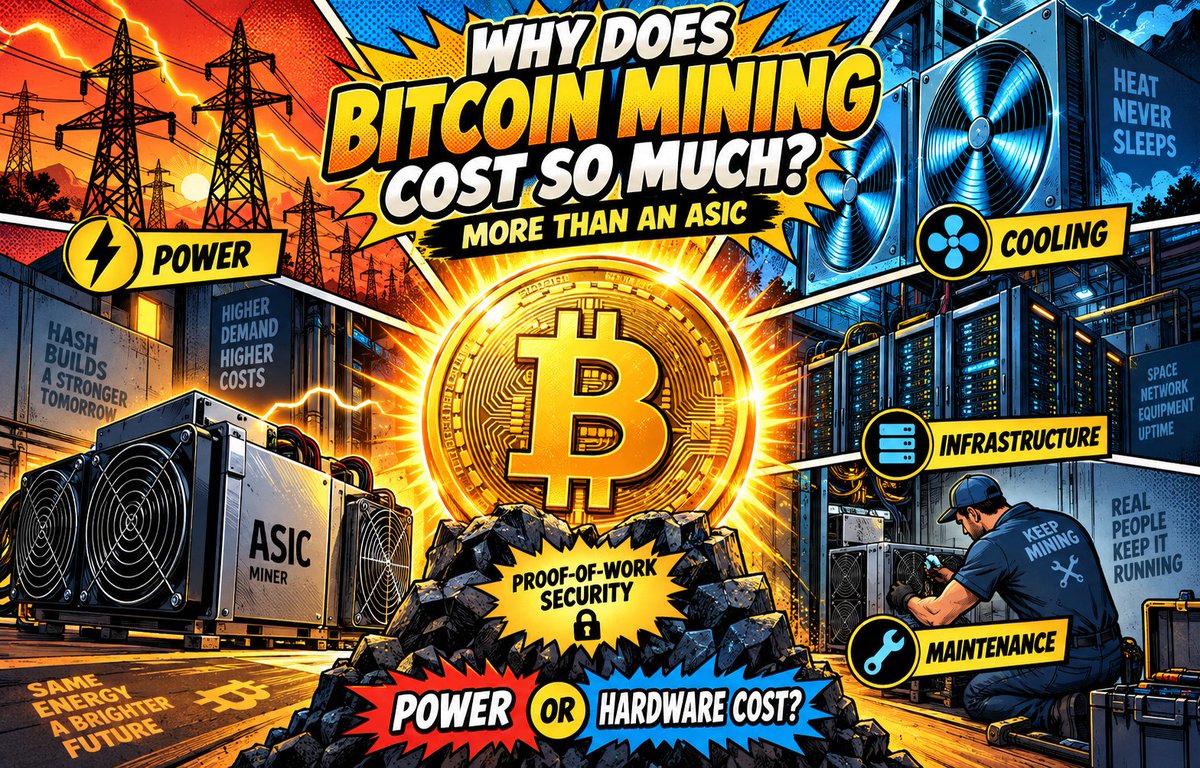
Why does Bitcoin mining cost so much?
You’re paying for more than an ASIC: electricity, cooling, infrastructure and maintenance all matter.
That real-world cost is part of Bitcoin’s proof-of-work security.
What hits miners harder in your experience: power or hardware cost?
Where your miner runs can make a real difference. ⚡⛏️
Across the OneMiners locations in this comparison, power rates vary by a few cents per kWh. A kWh is simply one unit of electricity.
Would you choose the lowest power rate, or consider the location too?
Bitcoin hashrate is nearing 1 zettahash, currently around 922 EH/s. 📈⛏️
Hashrate = the total computing power mining Bitcoin.
More hashrate can mean more competition for miners.
If you’re new to mining, what do you check first: daily earnings or network hashrate?🤔