Friday Flashback 📸
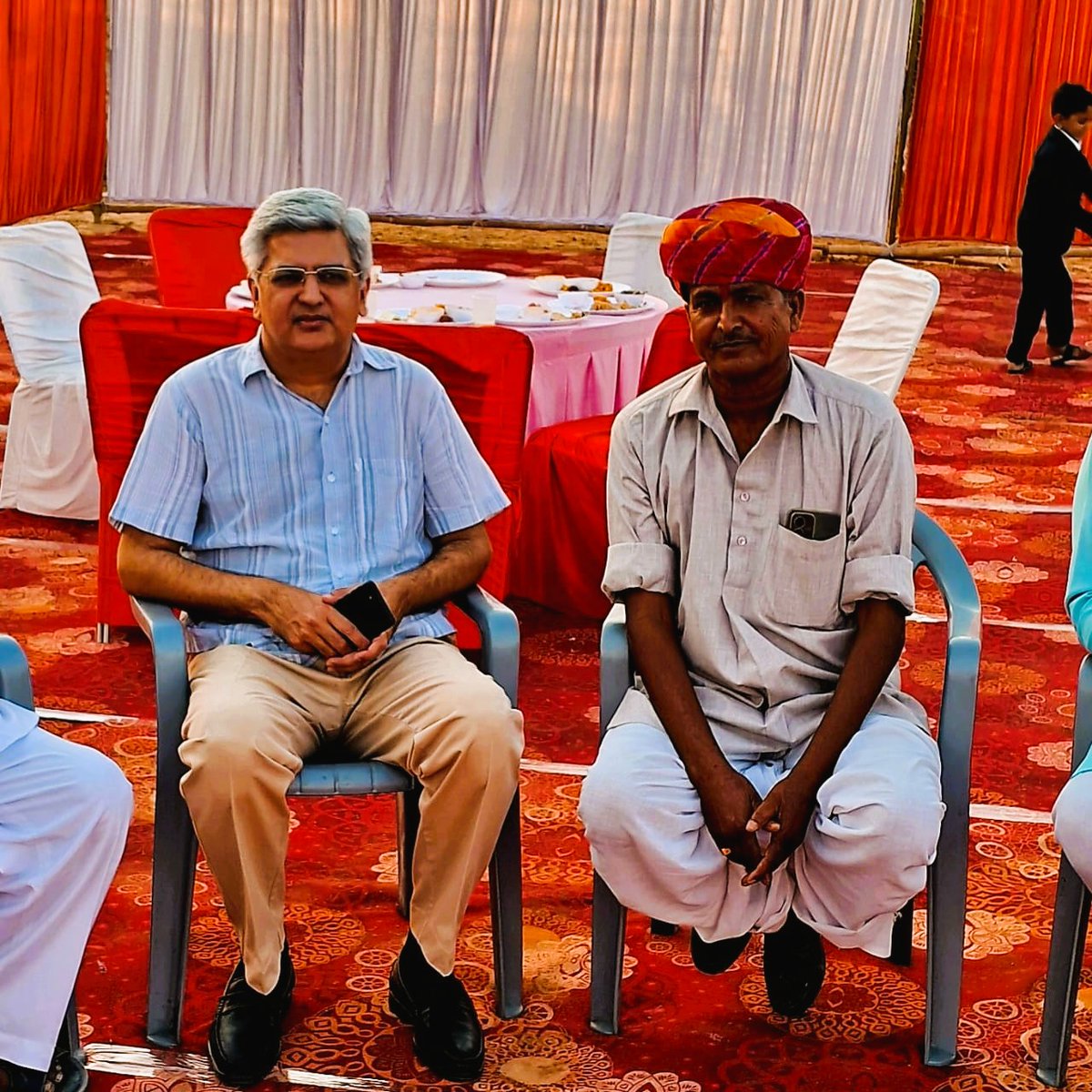
A photo from March 2024 with Vishnu Lamba and the team of Shree Kalpataru Sansthan.
On World Environment Day, I recall being deeply impressed by their dedication and commitment to creating a greener future. 🌱
#WorldEnvironmentDay#FridayFlashback
An enumerator from Rajasthan told The Hindu on condition of anonymity, “In the mobile app, if we enter that a household has a tin roof, we are asked by our superiors to change it to concrete. Are we supposed to lie? Similarly, if the house does not have a toilet and occupants are defecating in the open, we are told to check if there is a toilet nearby, even that of a neighbour or a relative, which they may be using occasionally or even a public urinal. Then the entry can be changed from ‘open defecation’ to having access to a toilet.”
Should a state government announce a farm loan waiver - it should not be a blanket waiver of loans. For eg. in many states like Punjab - all farm loans up-to 2 Lakh were waived. This was wrong.
Farm loan waiver should be selectively designed. Many conditional variables could be considered:
1. Beneficiaries identified by Gram Sabha.
2. Limited to co-op banks & primary agricultural societies.
3. Limited to beneficiaries applicable for PM Kisan.
The savings should be ploughed to benefit landless labour. Are farm loan waivers a solution - NO, it is not. It like wrapping a cloth around a festering diabetic foot.
हमारे नागौर ग्रामीण ब्लॉक कांग्रेस के अध्यक्ष श्री पुनाराम जी मेघवाल जी को जन्मदिन की हार्दिक शुभकामनाएँ।
आपकी सादगी, ईमानदारी और जनसेवा के प्रति समर्पण हमेशा प्रेरणादायक रहा है। ईश्वर आपको उत्तम स्वास्थ्य, दीर्घायु और निरंतर सफलता प्रदान करें।
#Nagaur
National Family Health Survey–6 paints a worrying picture for Nagaur district.
Malnutrition, Anaemia and poor child health show that our politics/administration has focused more on power and headlines than nutrition, healthcare and women’s dignity.
#NFHS6#Nagaur
Fury of nature . . . . we must always respect and remain careful of Nature, especially as we continue destroying habitats and fragile ecosystems across Western Rajasthan.
#Bikaner#Rajasthan
Why much of the rightwing hand-wringing over the Mohenjo Daro seal stems from under-appreciation of the historical process and context:
The Vedic period begins AFTER the Harappan Civilization started declining and after the arrival of the Indo-European language-speaking pastoral tribes from the Eurasian Steppe. Therefore, any Harappan deity identified IS a pre-Vedic one. In the centuries that followed, as the incoming culture mixed with the existing culture, there were adaptations and borrowings. Some Harappan customs and practices continued as folk traditions and found their way into later Sanskrit texts. The sacredness of the peepul tree, or designs and motifs in jewellery and pottery, games of dice... This is to expected and is the natural result of mass migrations.
Excerpt from Early Indians paperback edition, Pages 203 to 205:
"Remnants of a civilization
The Vedic corpus was composed over many centuries, and it is important to remember that the discrepancy between it and the Harappan Civilization reduces over time. The later the Vedic text, the more the likelihood of finding connections to the Harappan cultural heritage. If the Rigveda was antagonistic to, and disdainful of, ‘shishna-deva’, by the time of the Upanishads, composed between 500 BCE and 100 BCE, this was no longer the case. The number of borrowed words from Dravidian languages is also higher in the later Vedic texts than in the earlier ones. There are many Harappan seals, sealings and terracotta figurines that remind one of yoga, but there are no clear references to yoga in the Rigveda. But by the time of the Katha Upanishad, there are explicit references to it. A Harappan seal shows a figure wearing a horned headdress sitting in a yoga-like posture surrounded by animals, and it has been interpreted by some as an early depiction of Siva. Many historians and archaeologists reject this interpretation on the grounds that this is projecting later-day concepts into the distant past. While that may be so, it still leaves open the possibility of a convergence between later-day ideas of an ascetic Siva and the seal images, beliefs and myths of the Harappans.
This is not surprising because over time incoming cultures often do adopt, adapt to and intermingle with existing cultures, and the Arya and the Harappans may have done the same to varying degrees across cultural domains and geographic regions. And, of course, a lot of the cultural continuity from the Harappan Civilization is reflected in popular practices rather than in the Vedic corpus.
The way houses are built around courtyards; the bullock carts; the importance of bangles and the way they are worn; the manner in which trees are worshipped and the sacredness of the peepul tree in particular; the ubiquitous Indian cooking pot and the kulladh; the cultic significance of the buff alo; designs and motifs in jewellery, pottery and seals; games of dice and an early form of chess (dice and chess-like boards have been found at multiple Harappan sites); the humble lota which is used to wash up even today; and even the practice of applying sindoor and some measurement systems – the ways in which we carry on the traditions of the Harappan Civilization are too many to count.
A vase discovered at the Harappan site of Lothal in Gujarat has a painting that shows a crow standing next to a pitcher with a deer looking back at it, seemingly depicting the tale of the thirsty crow in the Panchatantra. So some of the tales we tell our children may have been the same ones told by the Harappans to their own children.
What ended around 1900 BCE, therefore, was the power structure that had kept the civilization going for over seven centuries, and with it went the script, the seals, the standardized bricks and some of the ideology as well – such as the unicorn. But many other things that are part and parcel of the common man’s life continued, along with some of the philosophical and cultural underpinnings of south Asia’s first civilization..."
#MustRead
That’s what real CM material is about - vision, depth and the ability to think beyond daily politics.
This reminded me of Jawaharlal Nehru’s letters to Chief Ministers . . .
There is a memory I carry with me from my years as a civil servant. It has never left me....
Back then, I had just been transferred as Collector to Mangalore, a city then shadowed by communal violence and a menacing sand mafia. Before I left, word came that the Chief Minister wished to see me personally. It was unusual. Collectors don't typically get called in. I walked into his chamber with a knot in my stomach.
He looked at me, that familiar, unreadable face. Steady. Unhurried.
"Banri…" he said. (Come in.)
"Nimage ondhe kelasa… alli ennum communal aaga baradhu."
(You have only one job there. No communal incident should happen.)
That was it. No preamble. No politics. No performance. Just a Chief Minister, alone with a young IAS officer, telling him exactly what mattered. In that single sentence lived an entire philosophy of governance. one rooted not in optics, but in the protection of ordinary people from extraordinary hatred.
Fifteen days later, Mangalore erupted. Two communal murders, two communities, one city on edge. He called me again. Just as directly.
"DC... Do what is required. Take anyone into custody, even our party people. Don't bother. But stop this within a day."
To a young collector, those words were everything. They were permission. They were protection. They were political will at its most honest.
I have known the contrast too. Under a different dispensation, in a similar crisis, the instruction from the top was the opposite. Do nothing strongly. Let things fester. …That silence said everything about who governs for whom.
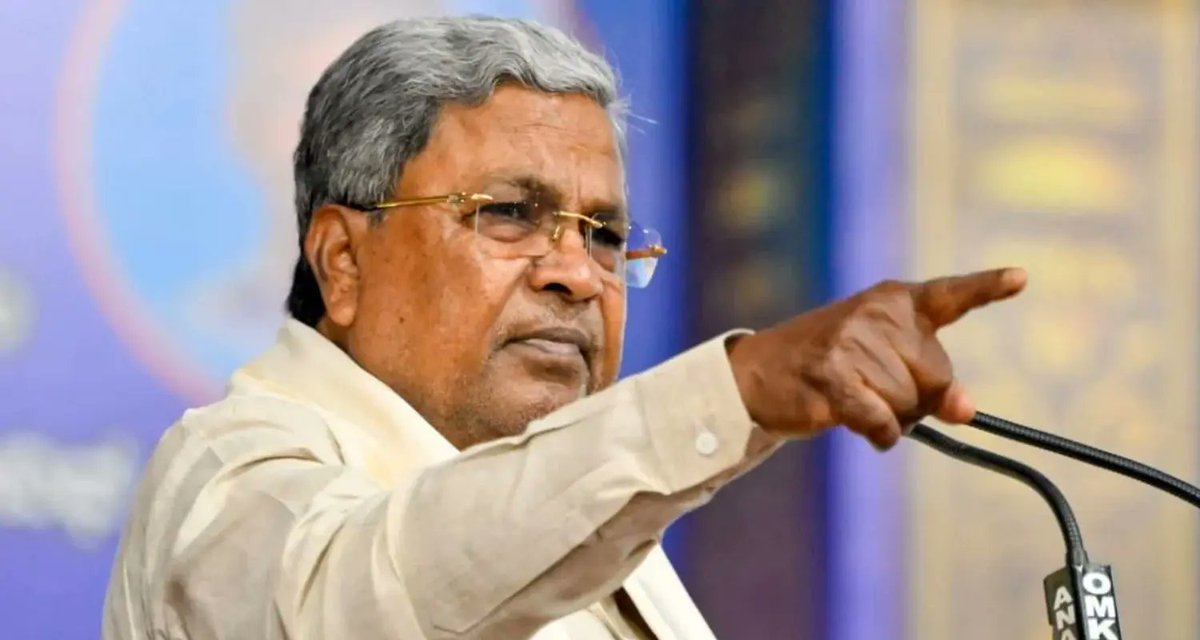
Siddaramaiah Ji was never that kind of leader.
He carried government finances in his fingertips and social justice in his spine. He refused to tour places that reeked of feudalism. He spoke plainly, governed sharply, and stood on the side of the last person in the room.
If there was one political figure I have genuinely admired, from the stage and up close, it has been him. His legacy is not in the schemes he launched or the budgets he read. It is in the kind of Chief Minister he chose to be when no one was watching. . On that quiet phone call. In the way he asked a nervous young officer to go out and keep the peace.
And now, as he steps back with the same quiet dignity with which he always led, I find myself moved. He has handled this transition with the grace of someone who always knew that principles outlast positions.
Siddaramaiah Ji....long life, good health, and please keep guiding us. The Congress, and this country, still needs the kind of moral clarity only you carry so naturally.
पूर्व प्रधानमंत्री चौधरी चरण सिंह जी की पुण्यतिथि पर उन्हें कोटि-कोटि नमन। किसानों, ग्रामीण भारत और लोकतांत्रिक मूल्यों के प्रति उनका समर्पण सदैव प्रेरणास्रोत रहेगा।
साथ में रामनिवास मिर्धा जी एवं चौधरी चरण सिंह जी का 12 दिसंबर 1978 का यह दुर्लभ चित्र साझा कर रहा हूँ।