Dugo sam radio na ovome.
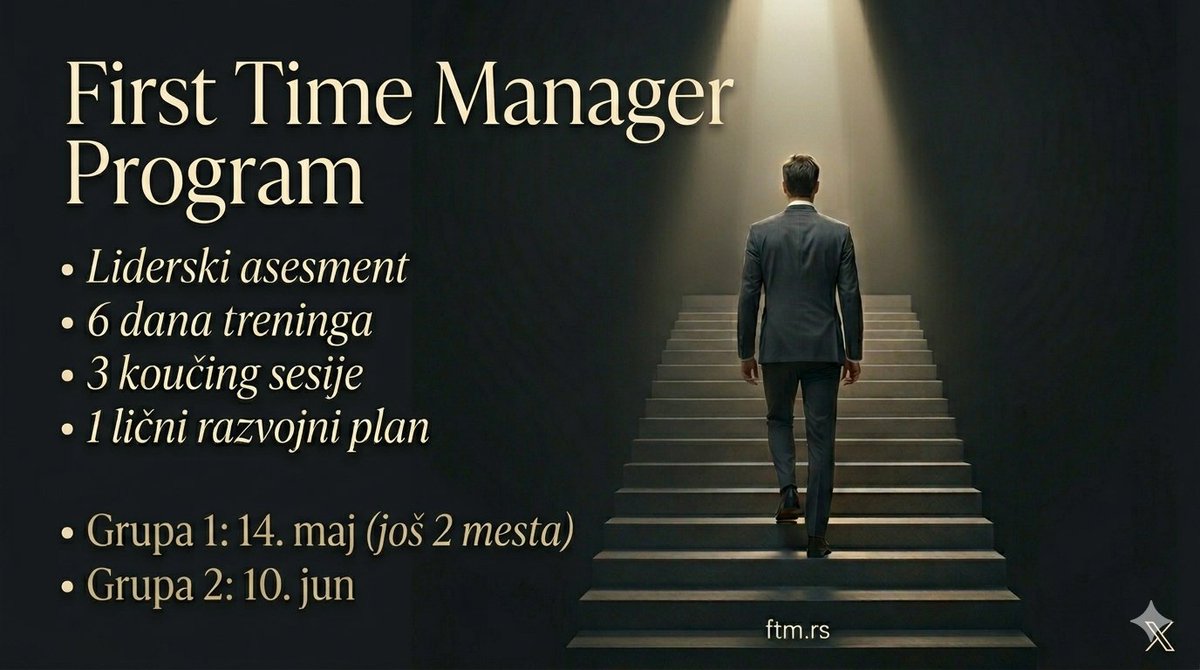
First Time Manager Program — 90 dana. Pravi sistem. Prava podrška.
🔍 Liderski asesment
📚 6 dana treninga
🎯 3 koučing sesije
📋 1 razvojni plan
📅 Grupa 1: 14. maj (još 2 mesta)
📅 Grupa 2: 10. jun
Broj mjesta je ograničen.
👉 https://t.co/dhvRI1X0zA
BREAKING: Israءl has directly struck Beaufort Castle (Qalaat Al-Shaqif), one of Lebanon’s most important cultural heritage sites, after days of relentless artillery bombardment targeting its immediate surroundings.
@UNESCOBEIRUT@UNESCOarabic
You've listened.
You've planned.
You've built the system.
You've stepped back and let the team lead.
Now comes the question nobody can avoid.
Did it work?
Not "does it feel better."
Not "is the team happier."
Not "are things smoother."
Did the numbers move?
This is where leadership stops being philosophy and becomes proof.
And most new managers fail here.
Not because the results aren't there.
Because they never set up a way to see them.
They improved things. They know it. The team knows it.
But when leadership asks "what changed?" — they have stories.
Stories are not enough.
The executives who decide your future don't experience your team's daily reality.
They experience data.
And if you can't show the data, you can't show the impact.
This isn't about vanity metrics or building dashboards nobody reads.
It's about one simple discipline:
Pick the three numbers that matter most for your team.
Track them weekly.
And by day 90, show that at least one has moved.
Maybe it's cycle time — how fast your team ships.
Maybe it's quality — fewer defects, fewer escalations.
Maybe it's retention — the people who were thinking about leaving decided to stay.
Maybe it's something only your team would understand.
But it has to be measurable.
And the change has to be visible.
Here's what the best managers do:
They build a simple dashboard — not for themselves, for the leadership team. They celebrate wins loudly and with numbers attached.
They document the ROI of every process they fixed.
They connect the team's work to business outcomes the company cares about.
And they do something most managers never think of.
They share the data with the team first.
Before leadership sees it. Before any presentation.
Because the team deserves to see the proof of their own transformation.
That moment — when a team looks at the numbers and realizes they actually got better — is worth more than any strategy you'll ever write.
Measure what matters.
Show what changed.
And let the results speak for you.
What's the one number that would prove your team improved in the last 60 days?
If you're stepping into a leadership role — or you're an HR leader or executive supporting someone who is — the next First Time Manager open programme starts June 10th.
Visit https://t.co/dhvRI1X0zA or send me a message.
@sportklub@BasketNews_com Rasplakaću se zbog Reala. Nakon sramote u seriji sa Partizanom, kada je trebalo da budu obrisani i kada su Partizanu suspendovani ključni igrači, tada su im bile ok odluke EuroLeague.
Do you remember the series with @PartizanBC when @RMbasket players could not stand humiliation and played the most disgusting 5 min in the history of basketball and started a fight. @EuroLeague suspended the key Partizan players and saved Real of the disaster. What goes around, comes around.
History of Leadership · Alexander the Great (4th century BC)
Alexander the Great conquered half the known world by the age of 32.
He didn't do it from a tent.
He did it from the front.
At the Battle of the Granicus, his generals told him to wait. The ground was bad. The timing was wrong. The cautious move was to hold.
Alexander crossed the river first.
Not because he was reckless. Because he understood something most leaders never learn:
Speed is a strategy. Presence is a message. And an army that sees its commander hesitate will hesitate itself.
Sun Tzu said: know before you move. Alexander said: sometimes moving is how you come to know.
Both were right. The difference was timing.
Sun Tzu operated in complexity — where patience and intelligence gathered over weeks decide the outcome before the battle starts.
Alexander operated in momentum — where the window is short, the terrain shifts fast, and the leader who waits for perfect information loses it entirely.
Most new managers live somewhere between these two.
They either move too fast — title in hand, changes announced before trust is built.
Or they wait too long — studying the ground until the team stops believing anything will change.
The real skill is knowing which moment you're in.
Alexander also understood something about people that no military manual can teach:
His men didn't follow his rank. They followed his willingness to bleed alongside them.
He ate what they ate. He slept where they slept. He took the same risks — often greater ones.
By the time he asked something hard of them, the question was almost unnecessary.
A leader who shares the burden earns the right to set the pace.
A leader who only issues direction from safety earns compliance — and quiet resentment.
—
The question isn't whether you lead from the front or from strategy.
The question is: does your team see you in the hard moments — or only hear from you about them?
If you've been following this series, you just finished the second phase of your leadership transition.
Days 31 to 60.
And something should feel different now.
Not easier. Different.
In the first 30 days, you were learning the system.
In the last 30 days, you've been shaping it.
You gave the team a North Star — a reason beyond the job description.
You built a rhythm that replaced chaos with predictability.
You looked at every person and asked: are they in the right seat?
You fixed the processes everyone suffered through — and did it where the team could see it.
You found your voice. Named your values. Made your principles visible.
And you built the relationships outside your team that will determine your speed inside it.
That's not a checklist.
That's a transformation.
From listener to architect.
And here's what you should be able to say right now:
My team knows where we're going.
My team knows how we work.
My team knows what I stand for.
And the people around us know we exist.
If you can say all four, you're ready for what comes next.
If one is missing, go back. There's no shortcut.
Because Phase III doesn't reward managers who skipped the foundation.
It rewards managers who built one.
Starting at day 61, the game changes one final time.
You've listened.
You've planned.
Now you execute.
But not the way you think.
Your job in the final 30 days is not to work harder.
It's to disappear.
To build a team that performs without you in the room.
To grow people who don't need your permission.
To create results that speak louder than any presentation.
Phase III: Execute & Lead.
That's where good managers become the ones people remember.
What was the hardest decision you made between day 31 and 60?
If you're stepping into a leadership role — or you're an HR leader or executive supporting someone who is — the next First Time Manager open programme starts June 10th.
Visit https://t.co/dhvRI1X0zA or send me a message.
History of Leadership · Sun Tzu (5th century BC)
Sun Tzu wrote The Art of War 2,500 years ago.
Almost none of it is about fighting.
Most of it is about knowing.
Knowing yourself. Knowing your people. Knowing the ground you're standing on — before a single move is made.
"If you know the enemy and know yourself, you need not fear the result of a hundred battles."
Most new managers skip the knowing.
They get the title and they start moving. They want to look decisive. To prove the promotion was right.
But authority without understanding is just noise in someone else's system.
The first 30 days as a manager are not for fighting battles.
They are for studying the ground.
Who actually runs this team — by title, and by trust? What's broken that nobody talks about openly? What does this team need that the previous manager never gave them?
Sun Tzu's generals didn't lose because they were weak.
They lost because they were certain too early.
The same is true of new managers.
—
What are you still pretending to understand about your team that you should be quietly studying instead?
There's a pattern I see in almost every new manager who struggles after day 60.
Their team works well.
Their processes are solid.
Their people are in the right seats.
But they're isolated.
They built a strong team — and forgot to connect it to everything around it.
The product team doesn't know what your team is working on.
The sales team finds out about changes after they've shipped.
The engineering lead who controls your biggest dependency hasn't heard from you once.
And when you finally need something — budget, support, a faster turnaround — you're starting from zero.
No relationship. No context. No trust.
Just a cold request from a name they barely recognize.
The most effective managers I've coached understand something early:
Your team's speed is determined by your relationships outside of it.
Not by how hard your people work.
Not by how smart your strategy is.
By how well you're connected to the people your team depends on.
That's why the best managers invest in cross-functional relationships before they need them.
Not after a crisis.
Not when a project is blocked.
Before.
Here's what that looks like in practice:
Schedule coffees with five peer managers in the next two weeks.
Not to ask for anything. To understand their world.
Identify your key internal stakeholders — the people who can accelerate or block your team's work.
Learn each partner team's goals. Not your assumptions about their goals. Their actual priorities.
And find one way to create value for each of them first.
Before you ask. Before you need. Before there's pressure.
Because influence inside an organization works exactly like trust inside a team.
It's built slowly.
It's earned through generosity.
And it's only available when you've invested in it before the moment you need it.
Your team's ceiling isn't talent.
It's connection.
Who is the one peer manager you should have talked to weeks ago but haven't?
If you're stepping into a leadership role — or you're an HR leader or executive supporting someone who is — the next First Time Manager open programme starts May 14th.
Visit https://t.co/dhvRI1X0zA or send me a message.
Your team is already forming an opinion about your leadership.
Not based on what you say in meetings.
Based on what you do between them.
Which problems you escalate and which you solve quietly.
Who you give credit to.
How you react when something goes wrong.
Whether your words on Monday match your decisions on Friday.
By day 60, your team shouldn't have to guess how you think.
They should be able to predict it.
That's not rigidity.
That's credibility.
The most trusted managers I've worked with all share one trait.
Consistency.
Not consistency in mood.
Not consistency in energy.
Consistency in principles.
Their team knows what they value.
Their team knows what they won't tolerate.
Their team knows how decisions get made — and why.
There's no mystery. No surprises. No politics.
Just clarity.
And clarity is rare enough in organizations that when people find it, they hold on to it.
So here's what the best managers do before the end of month two.
They name their three non-negotiable values.
Not company values. Personal ones.
The principles that will guide every decision, every conversation, every difficult call.
Then they share them. Openly. With the team.
Not as a speech. Not as a slide.
As a conversation.
"Here's what I believe. Here's how I'll lead. Here's what you can hold me accountable to."
And then the hardest part.
They live it.
Every day. Especially on the days when it's inconvenient.
Because leadership isn't what you say when things are easy.
It's what you do when things get hard.
Your team doesn't need a perfect leader.
They need a predictable one.
What are your three non-negotiable leadership values? I'd challenge you to write them down right now.
If you're stepping into a leadership role — or you're an HR leader or executive supporting someone who is — the next First Time Manager open programme starts May 14th.
Visit https://t.co/dhvRI1X0zA or send me a message.
Die israelische Armee (IGF) vernichtet gerade Städte im #Libanon (hier Al-Khiam) und die Bundesregierung liefert weiterhin die Waffen. Stoppt diese widerwärtige Politik!
Every team has a process everyone hates but nobody fixes.
You already know which one it is.
It came up in your listening tour. It came up in your 1:1s. It came up in the hallway when people thought you weren't paying attention.
The broken approval workflow.
The weekly report nobody reads.
The handoff that creates confusion every single time.
The meeting that should have been an email three years ago.
Everyone sees it.
Nobody owns it.
Until now.
This is the moment your listening phase pays off.
You've spent weeks collecting data.
You know what's working.
You know what's not.
Now pick two or three of the most painful problems — and fix them.
Not all of them. Not the biggest ones.
The ones with the highest pain-to-effort ratio.
The ones where the fix is straightforward but the impact is felt immediately.
And here's what matters most:
Do it visibly.
Don't fix things quietly in the background.
Announce what you're changing and why.
Involve the team in designing the solution.
Show the before and after.
Because this isn't just about the process.
It's about proof.
Proof that you listened.
Proof that their frustrations weren't ignored.
Proof that this team, under this leadership, solves real problems.
When a team sees their manager take something they've complained about for months and actually fix it — something shifts.
They stop waiting for permission.
They start believing things can change.
And that belief spreads.
One visible fix creates more trust than ten strategy presentations.
Don't try to redesign everything.
Fix what hurts.
Fix it fast.
And let the team see it happen.
What's the one broken process your team has been suffering through the longest?
If you're stepping into a leadership role — or you're an HR leader or executive supporting someone who is — the next First Time Manager open programme starts May 14th. Visit https://t.co/dhvRI1Xyp8 or send me a message.
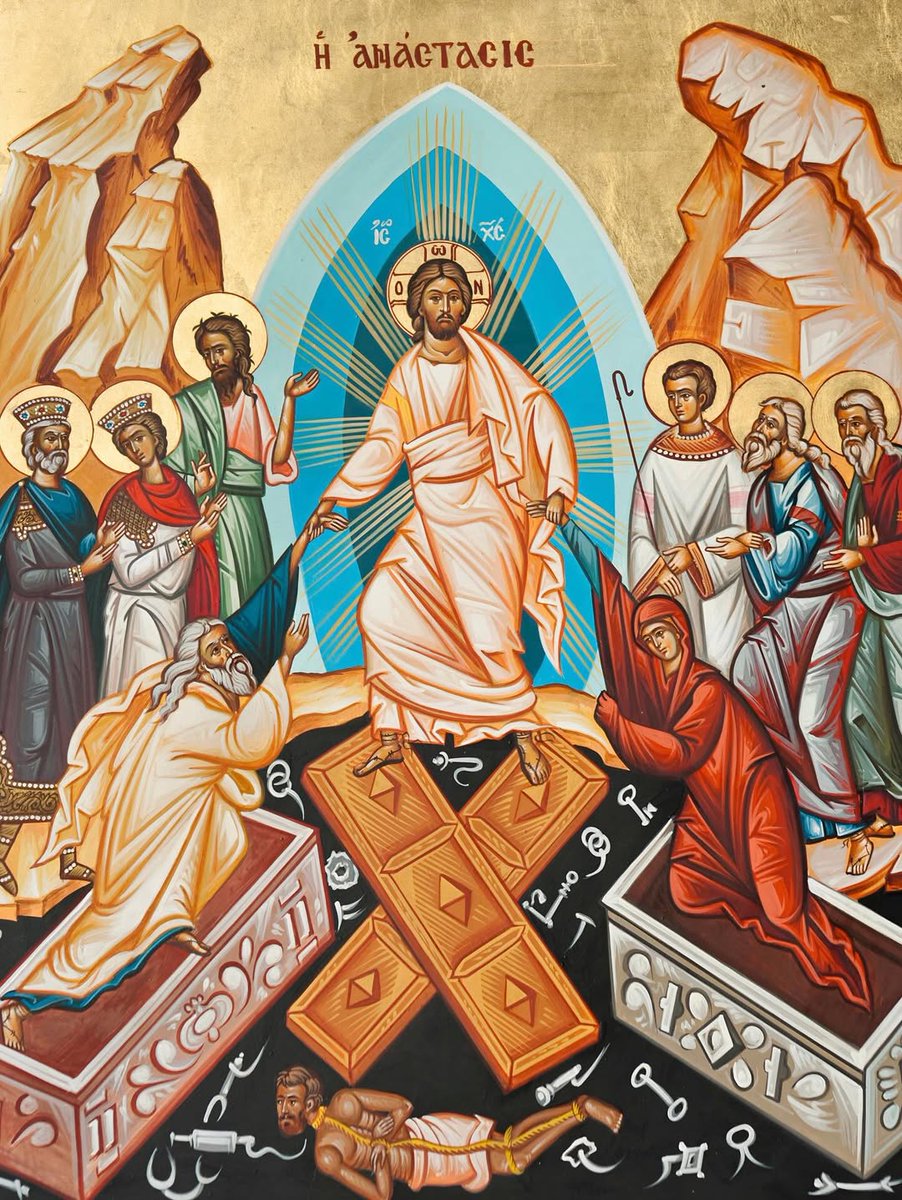
🔸 CHRIST IS RISEN! 🔸
On the Great and Holy Feast of Pascha, we celebrate the Life-giving Resurrection of our Lord Jesus Christ. This Feast of Feasts is the most significant day in the life of the Church, for it reveals the salvation of mankind and the trampling of death. During the midnight service for Holy Pascha, we hear the account of the Resurrection from the Gospel of Mark.
When the Sabbath was past, Mary Magdalene, Mary the mother of James, and Salome bought spices to anoint the body of Christ, and they saw at His tomb a young man clothed in a white robe (traditionally held to be the Archangel Gabriel). The angel said to them, “Do not be alarmed. You seek Jesus of Nazareth, who was crucified. He is risen! He is not here See the place where they laid Him. But go, tell His disciples - and Peter - that He is going before you into Galilee; there you will see Him, as He said to you.” (Mark 16:6).
But this rising from the tomb is not merely a return to life. When Christ descended into Hades, He did so not as captive, but as Conqueror, shattering its gates and trampling its power of death. This was foretold in the 8th century BC by the Prophet Hosea: “After two days He will revive us; on the third day He will raise us up, that we may live in His sight” (Hosea 6:2). Hades, which had held mankind in bondage since the fall, was overthrown.
The souls of the righteous of all ages, from Adam and Eve to the last of the Prophets, were freed from corruption, as Christ stretched forth His hand and raised them up from the darkness of death. Thus, the Resurrection is not only that Christ rose from the tomb, but that He destroyed death itself. As the Apostle Paul proclaims: “O Death, where is your sting? O Hades, where is your victory?” (1 Corinthians 15:55). Through this victory, Christ offers us hope of restoration and eternal life.
Your team knows where they're going.
But do they know what next week looks like?
This is where most new managers lose momentum.
They define the vision.
They set the goals.
They build the plan.
And then Monday comes.
And everything feels exactly the same as before.
Meetings pile up with no clear purpose.
Updates happen in random Slack threads.
People work hard but nobody knows if they're working on the right things. The manager spends every day firefighting instead of leading.
The problem isn't effort.
The problem is rhythm.
The best-performing teams I've seen don't run on motivation.
They run on structure.
Not rigid, bureaucratic structure.
A simple operating rhythm that answers three questions every week:
What are we focused on?
Where are we stuck?
What do we need from each other?
That's it.
A 30-minute weekly standup where those three questions get answered. Bi-weekly 1:1s where each person gets your full attention. A monthly retrospective where the team reflects honestly. A quarterly checkpoint where the plan gets recalibrated.
Four rituals. That's the entire system.
When the rhythm is clear, something shifts.
People stop guessing what's expected.
Decisions move faster because context is shared.
The manager stops being the bottleneck for every question.
And the team starts solving problems without waiting for permission.
Predictability sounds boring.
But in leadership, predictability is a superpower.
Because when people know what to expect from the system, they can put all their energy into the work.
What's the one meeting or ritual that changed how your team operates? I'd love to hear it.
If you're stepping into a leadership role this spring — or you're an HR leader or executive supporting someone who is — the next First Time Manager open programme starts May 14th.
Visit https://t.co/dhvRI1X0zA or send me a message.