The warning that many dismissed decades ago by Imam Moussa Al Sadr is unfolding before our eyes. Expansionist projects by the Zionist occupation do not stop at a border, a village, or a temporary military objective. They advance when met with denial, hesitation, and the illusion that they can be managed later. Today, Lebanon stands as a painful example.
While occupation continues to expand and violations of sovereignty become normalized, the response of the state has too often been symbolic rather than strategic. Not only are direct negotiations with the Zionist state illegal, the latest announcement of direct talks in Washington; by declaring "pilot zones" and deploying an under-equipped and unarmed Lebanese army into increasingly fragile areas cannot substitute for a national defense policy capable of protecting the country's territory and people.
More troubling is the growing attempt to desensitize and politically isolate the Shiite sect from the national fabric, as though security, dignity, and sovereignty can be divided along communal lines. History shows the opposite: expansionist regimes interpret concessions as opportunities, not settlements. Yet many regional and international actors remain blinded by the belief that such forces can be contained at will. Lebanon is paying the price of that illusion.
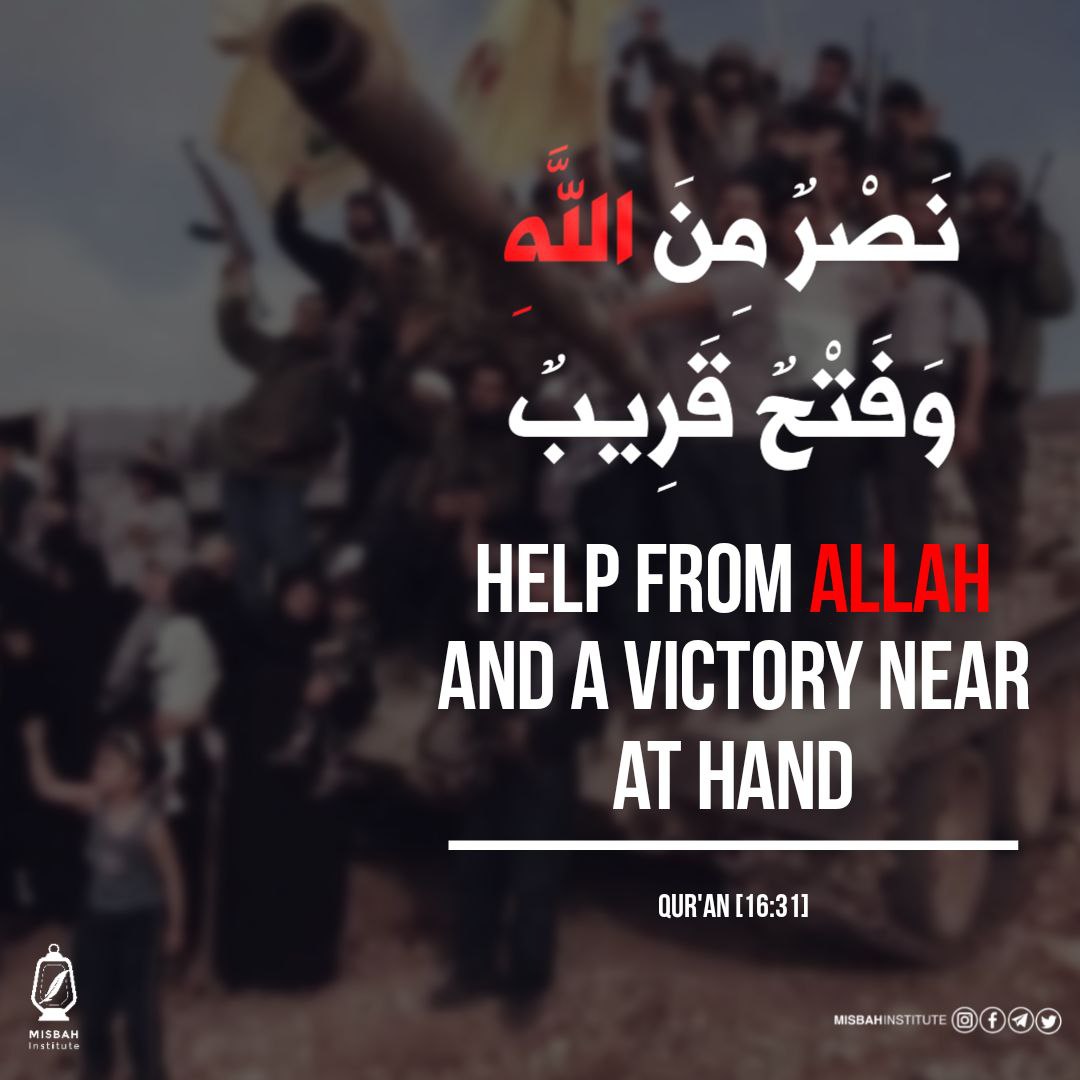
On May 25th 2000, after 18 years of occupation that began with the Israeli Zionist 1982 invasion of Lebanon, the world watched the last Israeli Zionist soldier flee southern Lebanon under the cover of night. The occupation that was meant to break the will of the people instead collapsed in humiliation. The images of abandoned positions, retreating troops, and liberated villages became proof that even the most heavily armed occupier can be defeated by a people rooted in their land.
Today, Lebanon once again lives under occupation, invasion, and constant aggression; in a different era, with different tools of war. The occupier now hides behind Merkava tanks, drones, fighter jets, surveillance systems, and screens, waging war from a distance with far greater military power than existed between 1982 and 2000. But history did not end with technological superiority, nor has resistance remained frozen in time. Warfare evolves, and so do the tactics of confrontation, endurance, and survival.
The lesson of 2000 remains unchanged: indigenous people cannot be defeated indefinitely. Those who belong to the land outlast those who occupy it. Patience, sacrifice, and steadfastness turned liberation from a dream into reality once before, and they will do so again. Occupation always believes itself permanent ; until the day it collapses and leaves in humiliation.
When life feels heavy and every path seems blocked, remember: Allah can open doors your mind never even imagined existed.
Ya Allah, send blessings upon Muhammad and his family, and open for us paths of ease, mercy, and relief beyond our understanding.
People in Lebanon return to their villages today not because it is safe, but because it is theirs. They know that danger is constant, not hypothetical. And still, they go back.
To be indigenous to a place is not only to live on it, but to be bound to it in history, law, and identity. It is memory in the soil, ancestry in the walls, and a refusal to be displaced. Staying becomes a form of resistance—quiet, unarmed, but deeply political. Presence itself becomes a claim to land and to rights.
This reality also exposes a deeper crisis of governance. The Lebanese constitutional framework, shaped by mid-20th century legal structures and later reconfigured by the Taif Agreement, rests on principles of representation, sovereignty, and the protection of citizens. Yet when state institutions fail to uphold these obligations, or when executive authority oversteps its constitutional limits, the social contract fractures. The Lebanese president, Joseph Aoun, bound by constitutional constraints, cannot unilaterally conduct consequential negotiations with the Zionist occupation without parliamentary legitimacy and the dissolution of the Lebanese Law 1/1955 issued on June 23 1955 and known as the "Israeli Boycott Law”. Recently, Aoun confirmed to the Lebanese public his agreement to the “Ten Day Cessation of Hostilities to Enable Peace Negotiations Between Israel and Lebanon” published by the US Department of State on April 16th, which under clause 3 reserves the right for the Zionist occupation to “take all necessary measures in self-defense at any time, against planned, imminent, or ongoing attacks”. The latter signals a failed state, that not only is conducting illegal agreements, but is legitimising the genocide of its own people.
In that vacuum, resilience shifts from being a choice to a necessity. Villagers in the South of Lebanon become their own line of continuity, their own form of political presence.
Holding ground thus becomes more than survival: it is a lived insistence on both belonging and accountability in the face of the occupier and the state which failed to protect them.
In the words of Sayyed Abbas al-Moussawi, time doesn’t move in a straight line, it circles back, testing people in new ways each era.
In his words, he reflects on a period in South Lebanon when the absence of the state was a lived reality during the Zionist occupation of South Lebanon. In that vacuum, communities were left to define their own role amid conflict and uncertainty.
Today, as regional dynamics shift, the same question re-emerges:
Have the equations really changed or is history reshaping itself with new tools?
Debates around direct engagement involving the Lebanese state and the Zionist entity raise complex issues of sovereignty and legality within Lebanon. Under the Lebanese Law 1/1955 issued on June 23 1955 and known as the "Israeli Boycott Law”, any dealing with the Zionist enemy, ranging from conversational to economic relations, is punishable by law.
At the same time, unprecedented developments along the Lebanese border, with the Zionist announcement of a “yellow line” on April 18 2026, are comparative to the ongoing conflict in the Gaza Strip. People indigenous to the land, are prohibited from their right of return to 55 Lebanese towns and villages, while the Zionist entity continues mass destruction and has not halted its acts of genocide and ecocide. The Lebanese state has chosen to remain silent, and with turning points in history, come large vacuums that allow for people’s resolve and convictions towards resistance to become stronger.
In the words of Sayyed Al-Moussawi, “we must be the most decisive force of all..” remains constant today, and has outlived the martyrdom of what is most valuable to the people of Jabal Amel. Lessons learned of resistance teach us that ideas, once rooted, do not disappear with those who voice them, especially when the price is paid in sacrifice and blood.
This line, in particular, has outlived its moment. For some, it speaks to resilience and self-determination; for others, it echoes a longer history of confrontation in the region.
Indeed, The People Have Awakened O Abbas, a sound that transcends time and has shaped narratives of resistance connecting past, presents, and generations to come from the school of Imam Husayn (as).
From the day of the Battle of Karbala, when Imam Husayn (as) stood alone and refused to yield to injustice, Karbala did not end; it continued, carried through history in the hearts of those who chose dignity over surrender.
In Jabal Amel, Southern Lebanon, Karbala was never just remembered; it was lived.
For centuries, since the early formation of its Shi’a community between the 8th and 10th centuries, this land has known abandonment, siege, and neglect from empires that ruled from afar yet never truly held it. Under Mamluk campaigns, Ottoman marginalization, and through modern Zionist occupation, the people of Jabal Amel remained rooted, unbroken, and present.
And when the state turned its back, and when leaders disappeared, the people did not.
They did not forget who they were.
They did not forget the earth beneath them.
They did not forget Karbala.
Like Imam Husayn (as) even if left alone in the face of thousands, they did not retreat, they did not waver, and they did not betray.
Because they are not strangers to this land, they are indigenous to it. Their history is not written in singular moments, but in continuity: in the scholars they raised from Al-Amili, to Sayyed Abdul-Hussain Sharaf al-Din, and Sayyed Musa al-Sadr, the fields they cultivated, and the resistance they carried from generation to generation.
No occupation has erased them.
No destruction of land has uprooted them.
No attempt at erasure whether by war, displacement, or silence has made them abandon what is theirs.
They have fought before.
And they will fight again.
Because in Jabal Amel, Karbala does not live in books. It lives in people.
We hold onto the words of Sayyed Hassan Nasrallah, may he rest in eternal peace, in these unprecedented times in Lebanese history. In the face of hardship, we hold on to صمود—steadfastness that refuses to break. Patience becomes our strength, and resistance our voice against occupation and injustice. Even when the Lebanese “government” fails its people in their final moments by shaking hands with Zionists that occupy our land and commits genocide against our people, hope does not fade. We continue, fighting until the very end, because we believe justice is not lost—it is delayed. Light will always overcome darkness, no matter how long the night. This is not مجرد أمل, but a conviction rooted deep in our history and faith in the coming of Imam Mahdi (aj), that what has been written will come to pass, and truth will rise again.
أنا مواطن لبناني، جوزف عون لا يمثلني. وصل إلى قصر بعبدا بإرادة خارجية، ومثله نواف سلام. وقرار التفاوض المباشر مع العدو ليس سوى نتيجة الامتثال لإرادة خارجية، ولا يعبّر عن مصالح لبنان واللبنانيين. التفاوض المباشر هو العار المحض الذي أرى من الواجب أن أتبرأ منه.
Imam Ali (as) in Nahj al-Balagha says: كُونَا لِلظَّالِمِ خَصْماً، وَلِلْمَظْلُومِ عَوْناً. Oppression transcends religion, sects, and race. Today two Lebanese Armenians stood in the face of Zionist oppression and were martyred. Resistance is a fundamental and inherent right that cannot be stripped away, even if some have chosen to take the path of darkness against their own people.
Two young Lebanese-Armenians went to our holy South Lebanon, fought the Israeli enemy, and died as martyrs defending their land and dignity.
Resistance is the right of every Lebanese—not the monopoly of any group. Anyone from any sect can choose to confront. And more may follow.
Meanwhile, others have chosen to stand against this resistance and its people. The first will be immortalized in history. The second? Consigned to its dustbin.
#Lebanon
Two young Lebanese-Armenians went to our holy South Lebanon, fought the Israeli enemy, and died as martyrs defending their land and dignity.
Resistance is the right of every Lebanese—not the monopoly of any group. Anyone from any sect can choose to confront. And more may follow.
Meanwhile, others have chosen to stand against this resistance and its people. The first will be immortalized in history. The second? Consigned to its dustbin.
#Lebanon
In the book “الطّاغوت في فكر الإمام الخامنئي “ , Sayyed Ali Khamenei draws on the narration of Imam al-Sadiq (as) which warns that injustice endures when people are allowed to speak about “justice” in theory, but are kept from recognizing ظلم in practice. The book goes further: the defining trait of a tyrannical ruler is arrogance: distancing oneself from the people, acting above them, and ruling without sharing their reality.
We can draw parallelisms between this discourse and present day Lebanon. Under Nawaf Salam’s political leadership this framework feels uncomfortably relevant. When communities are left exposed to Zionist threat and occupation, when services and protection fall short, and when political decisions—like rejecting de-escalation or ceasefire paths—appear disconnected from the urgency of people’s suffering, the gap between ruler and ruled widens.
Historically, Salam attempted to castrate Southern Lebanon and give legitimacy to the Zionist invasion of Lebanon by helping to draft the 17 May 1983 Agreement as Ghassan Tueini’s political aide, under the presidency of Amine Gemayel. The Lebanese resistance to this betrayal led to the collapse of the agreement in 1984. Decades later, we see history repeat itself, with Salam lobbying for direct negotiations and normalisation with the Zionist entity, at the expense of Lebanese people and their suffering.
When injustice is not clearly named or confronted, it becomes normalized—and when leaders grow distant, that distance itself becomes a form of injustice.
Understanding ظلم is the first step to refusing it, and lessons learned from history should never be forgotten.
"Dear youth, if you want to ascend to the heavens, start from within your home! If you have broken your sister's heart, go amend this. If you have broken your parent's hearts, go amend this. Start from your own home"
Ayatollah Sayyid Abdullah Fateminiya [ra]
#islam#Allah
"This is not the school of Lady Fatima (as). How can it be when people all over the planet are gazing at their faces? ”
Samahat al-Sayyed -[ha]
#islam#allah#Ahlulbayt#hijab#woman
The Declaration of International Quds Day
For many years I have been warning Muslims of the menace posed by the usurper Israel which has recently intensified her savage raids on our Palestinian brothers and sisters.
#palistine#qudsday#freedomfighters#lastfriday#qudsday2022
as ‘Quds Day’ and to proclaim the international solidarity of Muslims in support of the legitimate rights of the Muslim people of Palestine.
I pray to the Almighty for the victory of the Muslims over the infidels.
May peace and mercy of God be upon you.


![MisbahInstitute's tweet photo. "Dear youth, if you want to ascend to the heavens, start from within your home! If you have broken your sister's heart, go amend this. If you have broken your parent's hearts, go amend this. Start from your own home"
Ayatollah Sayyid Abdullah Fateminiya [ra]
#islam #Allah https://t.co/numS3CSXTo](https://pbs.twimg.com/media/FVt8wZDXwAA8Jtl.jpg)
![MisbahInstitute's tweet photo. Islamic Rulings according to Sayyid Ali Khamenei [ha]
#islam #Allah #ahlulbayt #child #quran #islamicrules https://t.co/D6aDCWwyJY](https://pbs.twimg.com/media/FVjUjKeWQAEyumy.jpg)
![MisbahInstitute's tweet photo. The invitation to homosexuality is a call to a human society lower than that of animals, and this is what evolution is in the eyes of the United States and the West.
Sheikh Issa Qassem [ha]
#islam #Allah #Ahlulbayt #homosexuality #hadith #quote #sheikhissaqassem https://t.co/VAcRkM1HFX](https://pbs.twimg.com/media/FVPMGw5XoAgxm7v.jpg)


![MisbahInstitute's tweet photo. "This is not the school of Lady Fatima (as). How can it be when people all over the planet are gazing at their faces? ”
Samahat al-Sayyed -[ha]
#islam #allah #Ahlulbayt #hijab #woman https://t.co/RhpAdeddXe](https://pbs.twimg.com/media/FUJrkWKWYAYC0Gb.jpg)


![MisbahInstitute's tweet photo. Islamic Rulings according to Sayyid Ali Khamenei [ha]
#islam #Allah #ahlulbayt #child #quran #islamicrules https://t.co/D6aDCWwyJY](https://pbs.twimg.com/media/FVjUjjtWQAEsQLO.jpg)
![MisbahInstitute's tweet photo. The invitation to homosexuality is a call to a human society lower than that of animals, and this is what evolution is in the eyes of the United States and the West.
Sheikh Issa Qassem [ha]
#islam #Allah #Ahlulbayt #homosexuality #hadith #quote #sheikhissaqassem https://t.co/VAcRkM1HFX](https://pbs.twimg.com/media/FVPMHH3XEAUxf4z.jpg)
![MisbahInstitute's tweet photo. "This is not the school of Lady Fatima (as). How can it be when people all over the planet are gazing at their faces? ”
Samahat al-Sayyed -[ha]
#islam #allah #Ahlulbayt #hijab #woman https://t.co/RhpAdeddXe](https://pbs.twimg.com/media/FUJrkwvWAAAKBok.jpg)