@RutgersAltRoute A5: For my art classes, I like to use rubrics as a mindset conscious assessment. This has been a good way to allow students to know what is expected of them in each project. It also allows them to self-reflect and determine what areas they can improve upon.
@RutgersAltRoute A4: I like to use the "sandwich method" of feedback. Here's what you're doing well. Here's where you can improve. Here's a compliment/encouragement. #GrowthMindset
@RutgersAltRoute A3: In art, the most common mindset is "Woah, that's so detailed. I could NEVER put that much time into a project." to combat this mindset, which is rooted in being overwhelmed, I break big projects into smaller assignments with shorter due dates.
@RutgersAltRoute A2: Classroom climate should be one of growth! The teacher should believe and reinforce ideas of growth verbally or through posters. Additionally, giving real time critique (something good and something that can improve) to all students shows that there is always room for growth!
@RutgersAltRoute A1: Mindset is the basis of learning! Students can only learn when they believe they are capable of learning. Providing a way for students to have a growth mindset is therefore crucial. It can be as simple as starting the class with positive affirmations.
@RutgersAltRoute Q5: It is important to have a variety of reminders of behavior expectations in your classroom. I like to use posters with clear text, modeling demonstrations, and positive reinforcement (stickers, candy).
@RutgersAltRoute Q4: Like the video, I allow students to choose their own seating in my art classroom. In addition, my classroom is open to talking and dialogue as students work. I also use check lists for my students! I would love to have the students collaborate to write our goals on the board.
@RutgersAltRoute A3: Through the nature of an art classroom, assignments are primarily individual focused. My role is to support student with one-on-one or small group guidance and frequent progress check ins. I also use a daily check list to keep students on track throughout the period.
@RutgersAltRoute A2: Students often do not know how to advocate for themselves. I do my best to vocalize accommodations. For example, when assigning a project, I show students that some may need more time than others. Some use different materials. All these differences lead to equity.
@RutgersAltRoute A1: I have found that it is important to reflect on my own experience & challenges when working on an art project. Students feel validated when they know it is normal to find something challenging. I can then model & verbalize my thought process to solving the challenge.
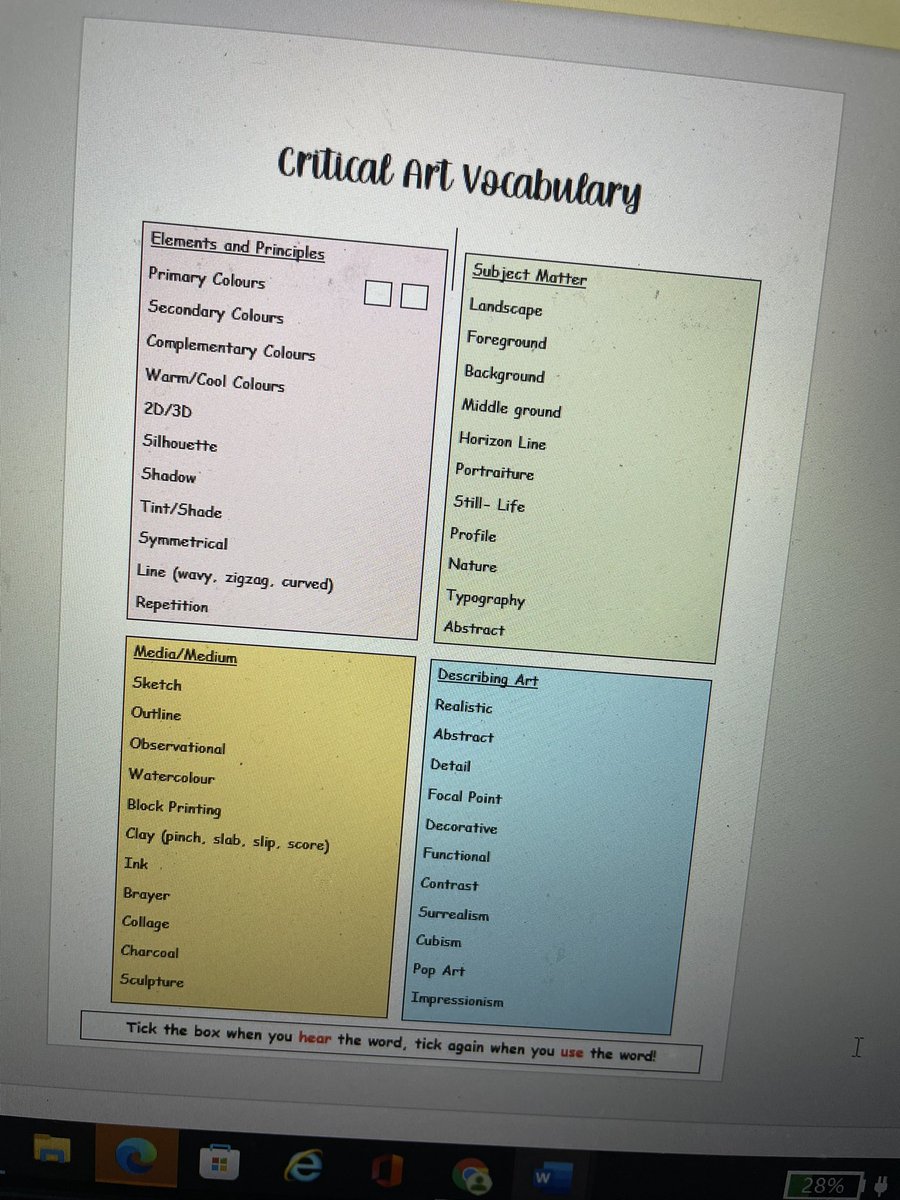
Art teachers!
I want to make a vocabulary sheet for sketchbooks as a form of self assessment for the children.
My idea is that they tick one box when they hear the word and the other when they use the word? Do you think this would work? Any other ideas? Thank you!🎨
@RutgersAltRoute It is important to provide students with an escape from their situation. In our school, students are allowed to speak to counselors whenever they would like. Additionally, I emphasize the importance of self advocacy in my classes in order to prevent...
@RutgersAltRoute These challenges provide an opportunity for students to reflect on their experiences. What led up to this? How could this have been prevented? What did I learn? Some students may not be ready for that conversation, especially if they feel they didn't do...
@RutgersAltRoute that happens in the classroom. Additionally, discussing classroom management plans with colleagues can bring new ideas to creating a family environment with students and diffuse tensions.
@RutgersAltRoute When parents are more connected with what happens in the classroom, students are less likely to experience behavior issues. It is important to keep parents connected with a bi-weekly newsletter or occasional positive phone calls home to reinforce the good...