2/ But stopping an agent and understanding an agent are different problems.
After an incident, teams still need to reconstruct what it attempted, which decisions led there, and which outputs entered downstream systems.
@inference_labs Yeah, exactly. Kill switch is one thing, being able to actually reconstruct the chain of decisions and side effects after the fact is a whole separate (and harder) problem. Without decent traces, you’re basically guessing.
Just finished the Sertn demo and the practical side is what stuck with me.
They take ordinary camera footage (even from a phone or existing airport cameras), auto-label fuel leaks with segmentation, train a model, and turn it into an actual operational workflow. Detect a leak under an aircraft → fire a Slack, email, or webhook alert in real time so the team can respond without someone staring at screens all day.
What elevates it is the cryptographic side. Every inference comes with a downloadable verification certificate and QR code. Anyone can check that the exact approved model produced that specific output on that exact frame, no “trust the black box.” Useful for fuel leaks, smoke/fire, or other anomalies where you later need to prove what the system actually saw and decided.
Existing cameras become more than passive recorders. They become auditable, actionable systems.
Full demo here: https://t.co/hFjG2aLbG1
Snow removal is only useful if the right areas are actually cleared.
Sertn can track vehicle movement and surface conditions over time, comparing real coverage against the winter plan so airport teams can see what was done, what was missed, and where attention is still needed.
@inference_labs That's a fair point. The real gap is usually not knowing what's actually been covered versus the plan, especially when conditions shift and multiple crews are out.
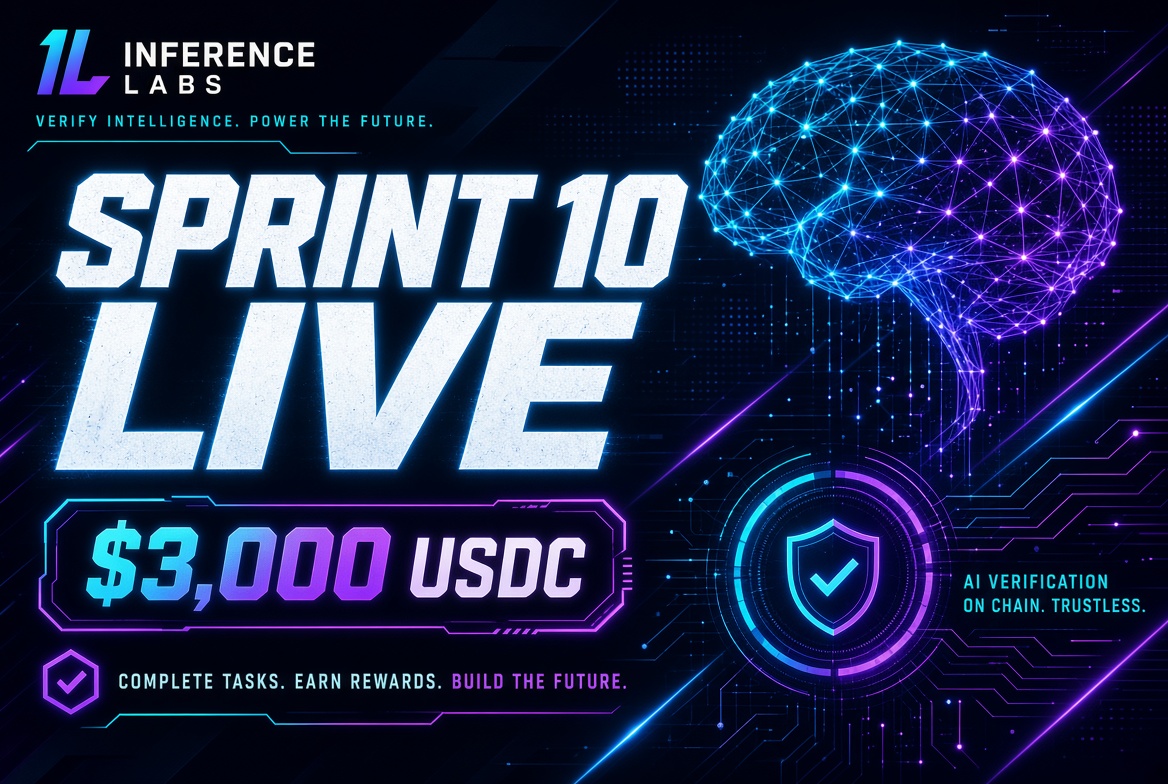
🚀 Sprint 10 is officially LIVE — fresh energy, new missions, and a clear shot at rewards for everyone in the @inference_labs ecosystem!
Sprint 9 ran with a $3,000 USDC Reward Pool:
🏅 1st–40th: $36 each
🥈 41st–120th: $19.50 each
Sprint 10 is here with the same high-stakes structure and a clean slate. Everyone starts at 0 XP. No carry-over advantage. Just pure activity.
New to the community? This is the best moment to jump in. Early movers get more time to stack XP, climb the board, meet builders, and actually understand what Inference Labs is shipping (verifiable AI, auditable autonomy, and real infrastructure).
👉 Join the Discord: https://t.co/G3G6rzAI8V
👉 Start the Zealy quests: https://t.co/7YUxRJ8Sqs
Complete quests, earn XP, and position yourself while the sprint is still wide open. The people who show up early usually end up higher on the leaderboard — and more connected to the project.
Let’s build the future of #Web3AI and #DeAI together. 🔥
@inference_labs #InferenceLabs #ZealySprint #Web3AI #DeAI
1/ The same airport camera can mean different things to different teams.
Operations sees aircraft movement. Safety sees people and zones.
Baggage sees flow. Winter ops sees surface coverage.
The underlying visual data is shared.
@inference_labs Yeah. Same pixels, different jobs.Ops watches the turn. Safety watches people and lines. Baggage watches flow. Winter ops reads the ground. The feed doesn’t change , the question does.
DAT and LQDM are not the same.
A DAT is connected to a specific asset and the structure of its offering. LQDM provides utility, access, liquidity, and participation across the LiquidManzana ecosystem.
Which one should we break down next?
Learn more: https://t.co/j8ZxzHxjxW
@LQDmanzana what the token actually represents, how the vault locks the deed, and what fractional versus full ownership means in practice.https://t.co/fMzamfjbCS
Always-on agents create a new enterprise problem: AI can keep working even when nobody is actively watching.
Persistent systems need persistent evidence.
Inference Labs is focused on making autonomous activity easier to trace, verify, and audit.
This is the part that gets glossed over. An agent that keeps running after you close the laptop is useful until something goes wrong and nobody can show what it actually did. “The logs say so” isn’t going to hold up. If these systems are going to act on their own, the evidence has to outlast the session
Night shift. The weld camera says clear. The vessel ships.Three weeks later it fails a pressure test at the customer. Insurance wants the frame. The regulator wants the model version. Legal wants to know if anyone swapped weights after sign-off.A normal log just says pass. Anyone can edit that.Sertn’s receipt pins that exact frame, the approved model, and the “no defect” call together. Auditors can check it without opening the weights. The argument stops being what the system claimed and starts with what it actually saw.
#Sertn #VisionAI #ProofOfInference #AICompliance #ComputerVision
A mis-parked aircraft should be caught when it happens, not at the next reconciliation.
Sertn can track stand entry, marshalling, and aircraft position against the lead-in line in real time, giving airport teams an immediate operational record when something is off.
https://t.co/iDkNXZRMUU
@inference_labs Catching the offset while the marshaller is still on the wands beats fixing it after the jet bridge is committed. A live record of entry and position is also something ops can actually audit.
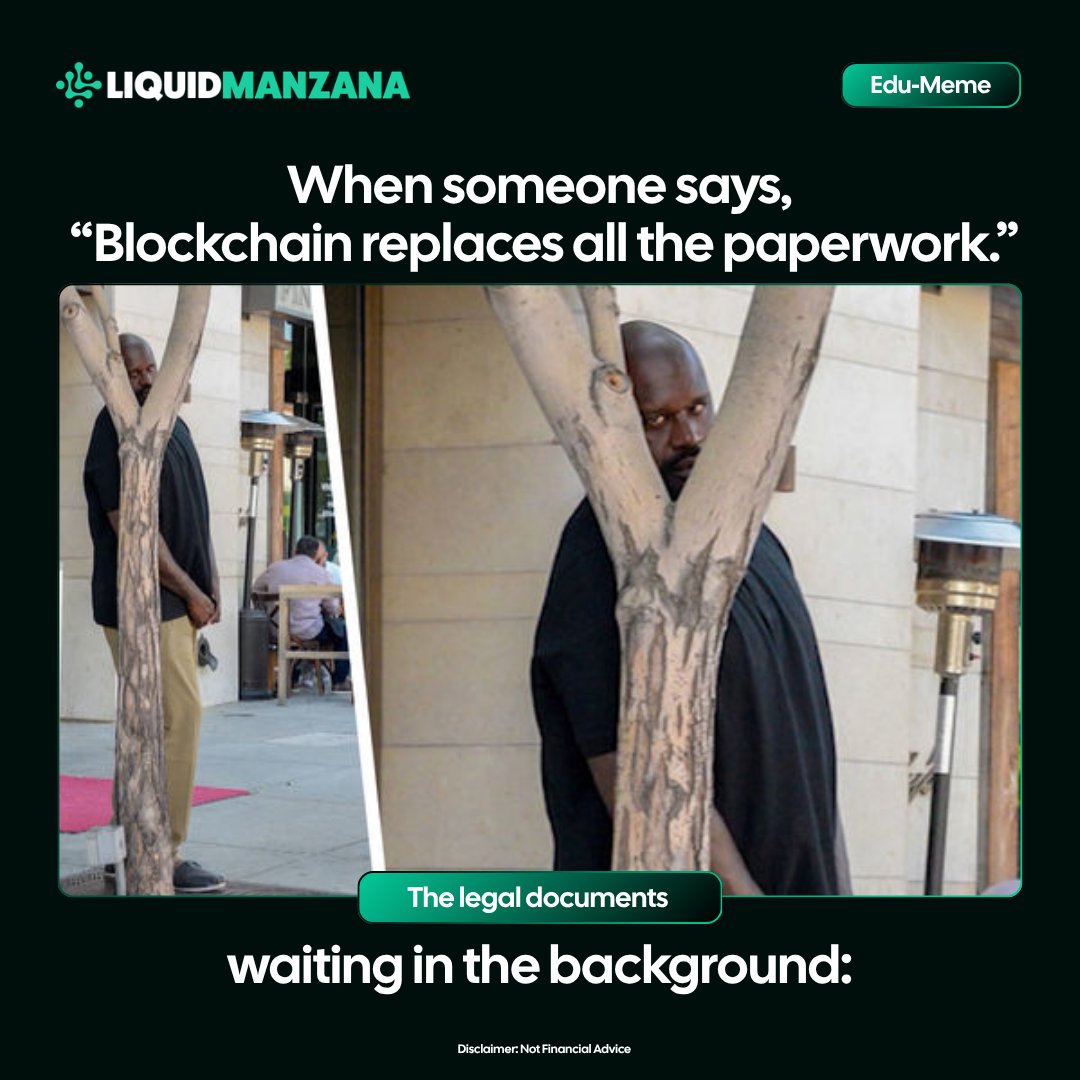
When someone says, “Blockchain replaces all the paperwork.”
The legal documents waiting in the background:
Tokenization can improve processes, but it does not make legal structure disappear.