In 1707, two thousand sailors DROWNED.
Not because of a storm.
Because nobody could tell where they were at sea 🇬🇧
This was the longitude problem. The deadliest puzzle in science.
Parliament offered £20,000 to anyone who could solve it.
Nearly four million today.
Every great scientist in Europe tried. Newton. Halley. The finest minds alive.
All of them failed.
The man who solved it was a carpenter from Yorkshire.
His name was John Harrison.
No formal education. No university. No wealthy patron. He taught himself clockmaking.
Built timepieces out of wood.
His idea was “simple”. If you know the exact time at home and the exact time at sea, you can calculate exactly where you are.
The problem?
No clock could keep accurate time on a moving ship. Heat warps metal. Cold contracts it. The ocean never stops moving.
Harrison spent DECADES on it.
H1. Twenty years of work. Not good enough.
H2. Better. Still not enough.
H3. Seventeen years. Over 700 parts.
Still not enough.
Then he did something nobody expected. He stopped building clocks.
He built a watch.
H4. Thirteen centimetres across. The most important watch ever made.
They sent it across the Atlantic. Eighty-one days at sea.
When they arrived, it had lost five seconds.
Five seconds. In eighty-one days. The problem was solved.
But here's the uncomfortable part.
They didn't give him the prize.
The Board of Longitude was run by astronomers.
The very men who'd been trying to solve it their own way.
The Astronomer Royal was both judge and competitor.
They changed the rules. Demanded his designs. Refused to pay.
A working-class carpenter had beaten every astronomer in Europe. And the establishment couldn't accept it.
Harrison was nearly EIGHTY before he got justice.
He went directly to King George III.
The king tested the watch himself and told Harrison to petition Parliament with the king's full backing.
Parliament paid. Harrison died three years later.
After his death, every ship on earth carried a chronometer based on his design.
Every GPS satellite. Every ship's navigation. Every flight path. All of it traces back to a carpenter from Yorkshire who taught himself to build a watch.
His watches are still at the Royal Observatory in Greenwich. Still ticking.
Still perfect.
The establishment tried to bury him once.
We're not letting it happen again 👇 https://t.co/rih7iKwnvf
Be part of us.
Be proud of us. 🇬🇧
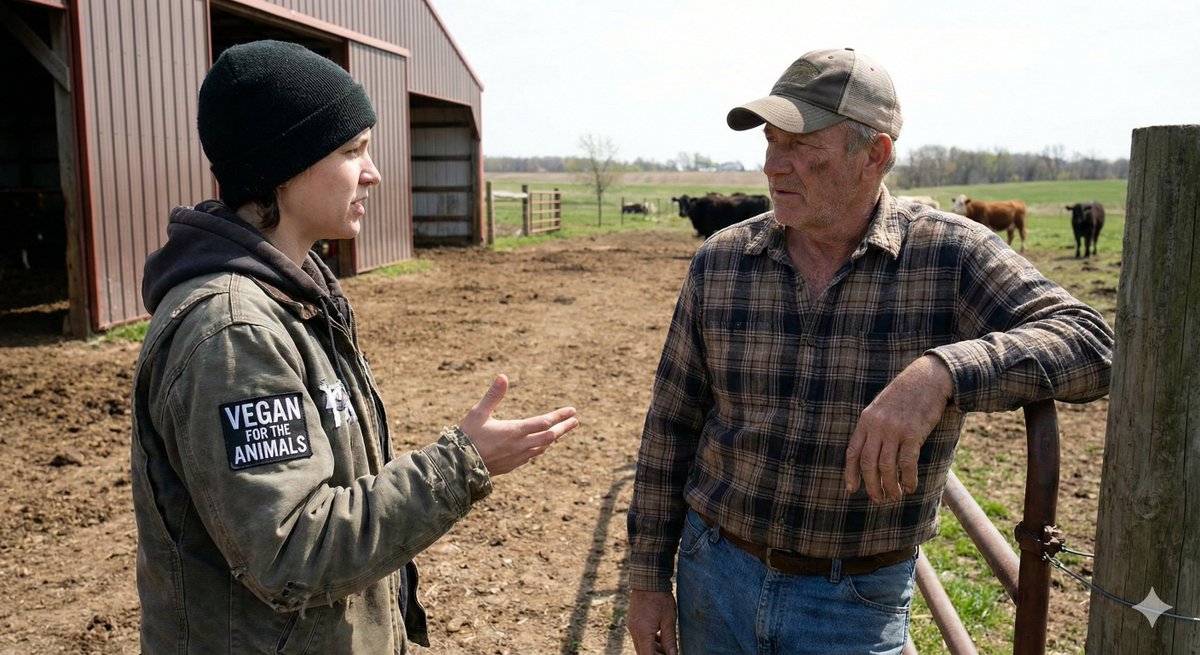
Activist: "Going vegan will save the planet."
Farmer: "Going vegan means importing more food from industrial monocultures."
Activist: "But local beef uses too much land."
Farmer: "That land won't grow anything else."
Activist: "Then leave it wild."
Farmer: "It was grazed by wild ruminants for millennia."
Activist: "Cattle aren't wild."
Farmer: "Cattle are doing what wild aurochs did."
Activist: "The methane though."
Farmer: "Has been part of the ecosystem forever."
Activist: "We need to reduce animal agriculture."
Farmer: "And grow what on this rocky hillside?"
Activist: "Something sustainable."
Farmer: "Grass is sustainable. That's why it's growing here."
🚨🚨HEARTWARMING🚨🚨
#Texans coach DeMeco Ryans and the #Steelers chain operator shared an extremely wholesome moment together at the end of the playoff game.
The man has been doing this job for 50 years now and Ryans took time to thank him.
Damn 🥹🥹🥹https://t.co/xPdFPMhKnR
The end of forklift🧐
These are Filics Units by Filics, a Munich-based German robotics startup. They're autonomous mobile robots that slide under pallets, lift loads up to 1 ton, and move omnidirectionally with lights for navigation.