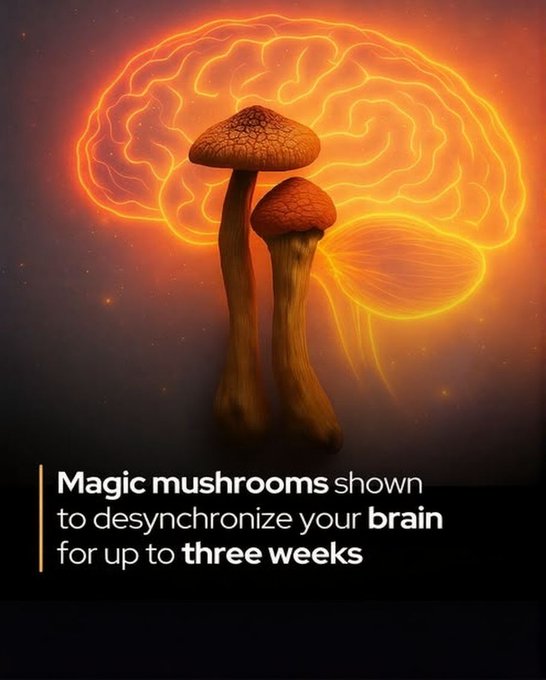
A study shows psilocybin works by scrambling your sense of self.
A groundbreaking study from Washington University followed healthy volunteers who received a single high dose of psilocybin while researchers monitored their brain activity before, during, and for weeks afterward. The results were striking.
Rather than simply changing perception, psilocybin profoundly desynchronized the default mode network (DMN)—a key brain system responsible for self-reflection, memory, and our sense of identity.
During the peak experience, this network essentially fell apart. Remarkably, subtle alterations in its functioning continued for up to three weeks afterward. The stronger a participant’s psychedelic experience—marked by awe, ego dissolution, and feelings of connectedness—the longer these brain changes persisted.
Scores from a standardized questionnaire assessing the depth of the mystical-type experience aligned closely with the degree of DMN disruption observed in brain scans, confirming that psilocybin’s transformative effects are rooted in measurable neurological shifts.
This temporary “unplugging” of the default mode network may explain why psilocybin shows therapeutic potential for conditions like depression and PTSD, where the DMN is often rigidly overactive. By breaking entrenched patterns—even briefly—the brain appears to gain an opportunity to rewire itself in healthier ways.
Researchers emphasize, however, that these findings come from controlled clinical settings. Psilocybin remains unapproved by the FDA for general use and carries real risks when taken recreationally or without medical supervision.
["Researchers Uncover How Psilocybin Works in the Brain." Psychiatrist, 2024]
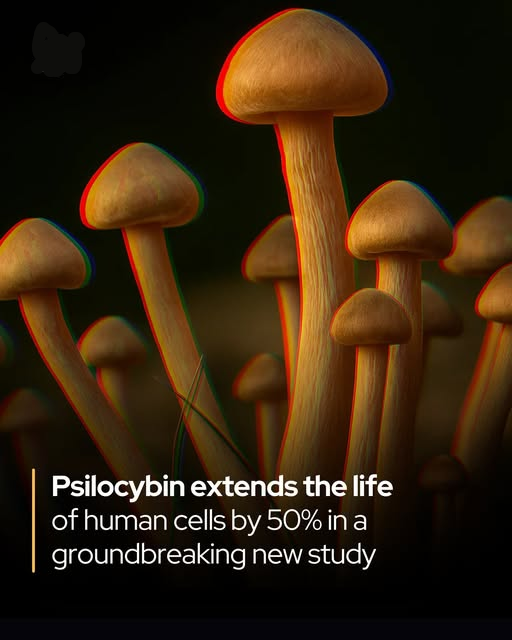
Psilocybin made human cells live 50% longer.
A new study has uncovered surprising anti-aging potential in psilocin—the active metabolite produced when the body breaks down psilocybin, the psychoactive compound found in magic mushrooms.
In laboratory experiments, researchers exposed two human cell lines (skin fibroblasts and fetal lung fibroblasts) to a 100 μM concentration of psilocin. The results were striking: lung cells took 57% longer to reach replicative senescence (the point at which cells permanently stop dividing and accumulate damage), while skin fibroblasts extended their replicative lifespan by 51%.
These findings suggest psilocin may slow fundamental cellular aging processes, possibly by lowering oxidative stress, enhancing DNA-repair pathways, supporting mitochondrial health, or dampening chronic inflammation—mechanisms that overlap with those targeted by leading experimental longevity drugs.
The benefits extended beyond cell culture. In aged female mice (19 months old at the start, equivalent to approximately 60–65 human years), a single monthly dose of psilocybin dramatically improved outcomes. After 10 months of treatment, 80% of the psilocybin-treated animals remained alive, compared with only 50% of untreated controls. Treated mice also displayed markedly fewer visible signs of aging, including reduced fur loss and graying.
This research marks the first direct demonstration that psilocybin/psilocin can influence biological aging itself, rather than solely producing psychological effects. The authors emphasize that the study used relatively conservative dosing and are now advocating for follow-up work with higher or more frequent administration, detailed assessments of immune, metabolic, and cognitive function, and investigations into whether the extended lifespan corresponds to genuine improvements in healthspan and quality of life.
["Psilocybin treatment extends cellular lifespan and improves survival of aged mice." npj Aging, 2025]